

When Geraldine Brooks writes about Tim Winton, you can hear the axes grind
- Written by Donna Mazza, Associate professor, Edith Cowan University
The earthiness of Tim Winton’s homegrown language and storytelling has its share of critics, but also plenty of fans – enough to sustain 40 years or so of professional writing. His works are a feast of strange words and characters. There is a lot to admire, and a few butterfly wings to pick off if you like that kind of thing.
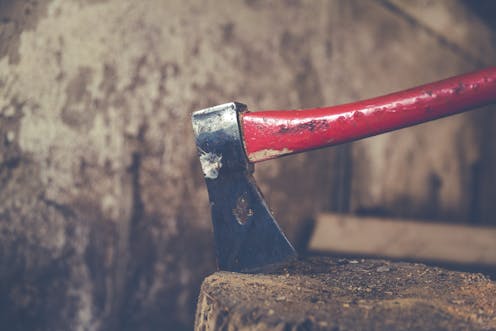
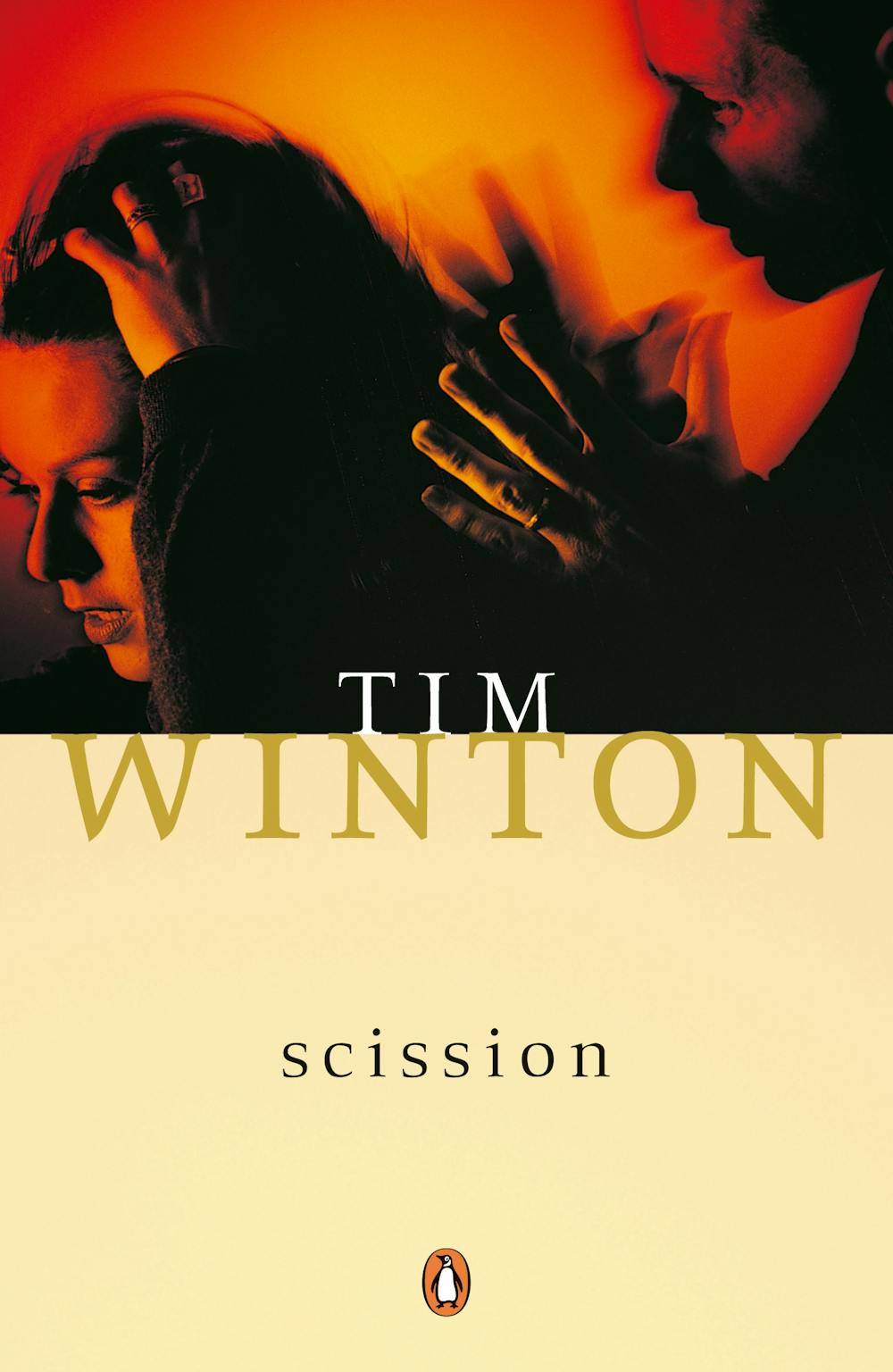
Winton wrote about axes in one of his early short stories: My Father’s Axe, from the 1985 collection Scission. The axe is symbolic of the relationship between the young protagonist, who wields the axe, and his absent father:
Short, winter afternoons I spent up the back splitting pine for kindling, long, fragrant spines with neat grain, and I opened up the heads of mill-ends and sawn blocks of sheoak my father brought home: Sometimes in the trance of movement and exertion I imagined the blocks of wood as teachers’ heads. It was pleasurable work when the wood was dry and the grain good and when I kept the old Kelly axe sharp.
Frustration is mixed with sadness in a sublime emotional soup and captured in the ordinary – it’s classic Winton.
Review: Geraldine Brooks on Tim Winton (Black Inc.)
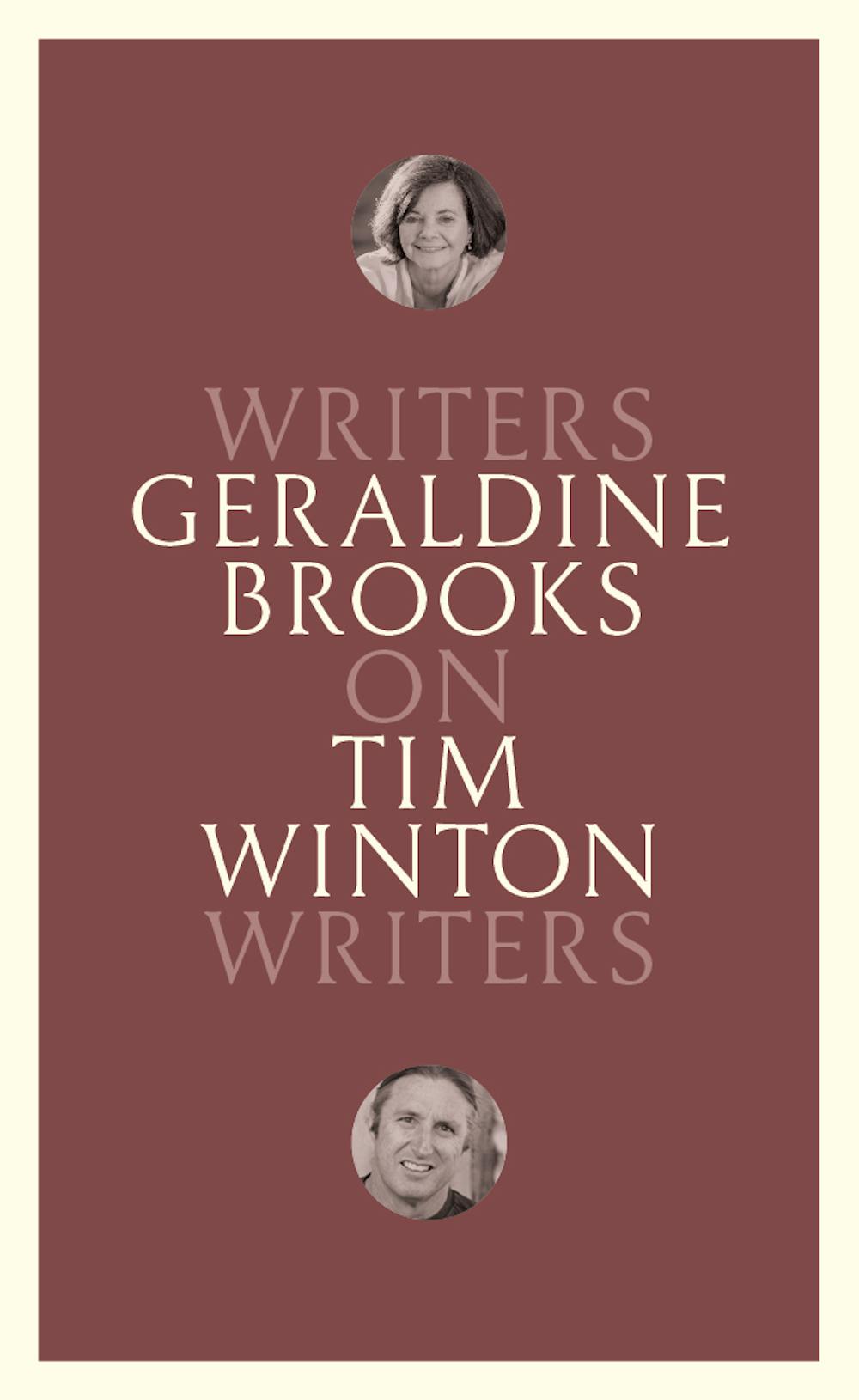
 I want to cite Colleen McGloin’s essay Reviving Eva in Tim Winton’s Breath in the Journal of Commonwealth Literature, because Brooks has not. The essay tackles the important issues of gender and race in Winton’s work. And the thing is, the paragraph from McGloin’s essay that Brooks quotes is not a terribly purple example of wordy academic jargon. Taking a fragment out of context is a strategy to allow Brooks to embark on a series of put-downs aimed at a shadowy mortarboard-wearing foe.
The book is looking for a punch-up with literary critics and academics. It’s clear from the start that Brooks has a problem with universities. Early on, she says Winton went to “tech because they had a creative writing course there and he wanted to learn to make literature, not theorise about it” (with no clue to where this gem about Tim Winton came from).
Winton in fact went to what is now Curtin University, in its previous incarnation as the Western Australian Institute of Technology – a college of advanced education. These institutions were a tier of education that existed between “tech” and university back in the 1970s and early 1980s, when gatekeepers kept new universities out of the echelons of sandstone institutions. The creative writing course to which Brooks refers is famous. It was the only one in the state at the time – and one of very few in the country. Winton was taught by published authors including Elizabeth Jolley.
Creative writing is part of the academic world (sorry Geraldine) and many academic creative writers manage to write literary criticism that is readable. The same goes for fictional work. Despite Brooks’ claim – based on a single textbook, James Wood’s How Fiction Works – that literary critics consider plot “the blowfly in the bisque”, there generally has to be a plot in a novel to get it published in Australia, because publishing is a commercial enterprise.
This argument is just another opportunity to plunge the axe-head into the academics who educate the country’s future writers and thinkers, and it makes no sense in light of the book’s subject – who was that again?
I want to cite Colleen McGloin’s essay Reviving Eva in Tim Winton’s Breath in the Journal of Commonwealth Literature, because Brooks has not. The essay tackles the important issues of gender and race in Winton’s work. And the thing is, the paragraph from McGloin’s essay that Brooks quotes is not a terribly purple example of wordy academic jargon. Taking a fragment out of context is a strategy to allow Brooks to embark on a series of put-downs aimed at a shadowy mortarboard-wearing foe.
The book is looking for a punch-up with literary critics and academics. It’s clear from the start that Brooks has a problem with universities. Early on, she says Winton went to “tech because they had a creative writing course there and he wanted to learn to make literature, not theorise about it” (with no clue to where this gem about Tim Winton came from).
Winton in fact went to what is now Curtin University, in its previous incarnation as the Western Australian Institute of Technology – a college of advanced education. These institutions were a tier of education that existed between “tech” and university back in the 1970s and early 1980s, when gatekeepers kept new universities out of the echelons of sandstone institutions. The creative writing course to which Brooks refers is famous. It was the only one in the state at the time – and one of very few in the country. Winton was taught by published authors including Elizabeth Jolley.
Creative writing is part of the academic world (sorry Geraldine) and many academic creative writers manage to write literary criticism that is readable. The same goes for fictional work. Despite Brooks’ claim – based on a single textbook, James Wood’s How Fiction Works – that literary critics consider plot “the blowfly in the bisque”, there generally has to be a plot in a novel to get it published in Australia, because publishing is a commercial enterprise.
This argument is just another opportunity to plunge the axe-head into the academics who educate the country’s future writers and thinkers, and it makes no sense in light of the book’s subject – who was that again?
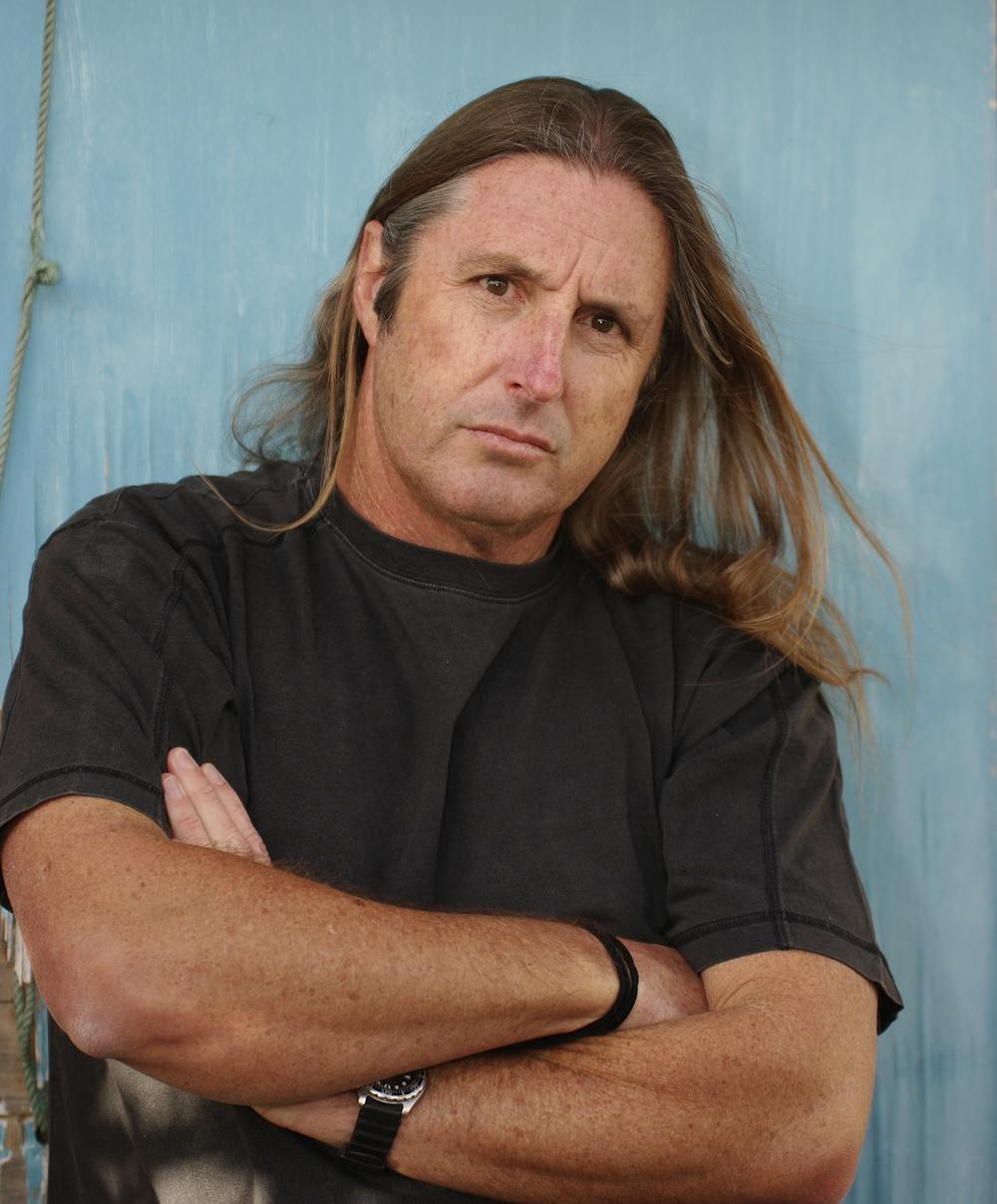 Tim Winton.
Hank Kordas/AAP
Read more:
Tim Winton's answer to toxic masculinity: god?
Speaking of God
I get that the author is a journalist and not an academic, but the axe-grinding is annoying because Brooks doesn’t say enough about Winton and his writing. Brooks intersperses her consideration of Winton’s work and life with personal narrative. A good chunk of the book is about her.
The chapter titled And Speaking of God, for example, meditates a bit on the absence of religion in Australian and US fiction, then dedicates a few pages to Winton’s work and its relationship to Christianity. This is a juicy topic, but Brooks hijacks the chapter to unpack her own religious upbringing, her atheism, and her subsequent conversion to Judaism, which was “driven by history rather than faith”.
She goes on to quote Winton explaining his position on religion in an (unidentfied) interview, where he said “if it’s not about love, if it’s not about mercy, if it’s not about kindness, if it’s not about liberation, then I’m just not that interested”.
Brooks quotes a speech at the 2015 Palm Sunday Walk for Justice for Refugees in Perth, in which Winton comes across as deep and compassionate. He cites the Gospel of Matthew and reaffirms (against the odds, apparently) his Christian faith. Brooks then refers to the Jewish concept of tikkun olam – which refers to a person’s social responsibilities – as something that has meaning for her. She draws on Judaism for cultural capital at various points.
The contrast is profound – Winton has authenticity and Brooks seems disingenuous. She is selecting fruits from religious traditions to boost her credibility and link herself to something akin to that which Winton has deeply communicated.
Read more:
Geraldine Brooks's Horse is a richly detailed examination of the violence of America's past
Technique and appreciation
Don’t get me wrong, I want you to read this book. It made me like Winton more, because he was the underdog in this clash of Titans. I was waiting for him to be in the spotlight.
Brooks writes historical fiction and, in some ways, Winton does too. Although his work is often set in contemporary times, some of his characters hark back to the language and types of his grandparents, or the idyllic days of his childhood. His fiction is both historical and contemporary. It is realism, but there are elements of magical realism and speculative fiction. It is Australian, but not really my Australian, and perhaps not yours either.
There are glimpses of what Brooks sees in Winton’s work in the chapter Words, Just Words. Here she considers Winton’s narrators in relation to his own narrative voice. She reveals some insights into his technique, which she can see because she too is an author:
Somehow, this boy of scant vocabulary [Jaxie Claxton in The Shepherd’s Hut] must carry a first-person narrative up some of the sheerest cliffs of the soul. To do it, Winton has to suppress his own rich troves of language, deny himself sentences of syntactical perfection, but inch his way up those treacherous walls anyway. It’s summitting Everest without an oxygen tank. And he makes it work.
Tim Winton.
Hank Kordas/AAP
Read more:
Tim Winton's answer to toxic masculinity: god?
Speaking of God
I get that the author is a journalist and not an academic, but the axe-grinding is annoying because Brooks doesn’t say enough about Winton and his writing. Brooks intersperses her consideration of Winton’s work and life with personal narrative. A good chunk of the book is about her.
The chapter titled And Speaking of God, for example, meditates a bit on the absence of religion in Australian and US fiction, then dedicates a few pages to Winton’s work and its relationship to Christianity. This is a juicy topic, but Brooks hijacks the chapter to unpack her own religious upbringing, her atheism, and her subsequent conversion to Judaism, which was “driven by history rather than faith”.
She goes on to quote Winton explaining his position on religion in an (unidentfied) interview, where he said “if it’s not about love, if it’s not about mercy, if it’s not about kindness, if it’s not about liberation, then I’m just not that interested”.
Brooks quotes a speech at the 2015 Palm Sunday Walk for Justice for Refugees in Perth, in which Winton comes across as deep and compassionate. He cites the Gospel of Matthew and reaffirms (against the odds, apparently) his Christian faith. Brooks then refers to the Jewish concept of tikkun olam – which refers to a person’s social responsibilities – as something that has meaning for her. She draws on Judaism for cultural capital at various points.
The contrast is profound – Winton has authenticity and Brooks seems disingenuous. She is selecting fruits from religious traditions to boost her credibility and link herself to something akin to that which Winton has deeply communicated.
Read more:
Geraldine Brooks's Horse is a richly detailed examination of the violence of America's past
Technique and appreciation
Don’t get me wrong, I want you to read this book. It made me like Winton more, because he was the underdog in this clash of Titans. I was waiting for him to be in the spotlight.
Brooks writes historical fiction and, in some ways, Winton does too. Although his work is often set in contemporary times, some of his characters hark back to the language and types of his grandparents, or the idyllic days of his childhood. His fiction is both historical and contemporary. It is realism, but there are elements of magical realism and speculative fiction. It is Australian, but not really my Australian, and perhaps not yours either.
There are glimpses of what Brooks sees in Winton’s work in the chapter Words, Just Words. Here she considers Winton’s narrators in relation to his own narrative voice. She reveals some insights into his technique, which she can see because she too is an author:
Somehow, this boy of scant vocabulary [Jaxie Claxton in The Shepherd’s Hut] must carry a first-person narrative up some of the sheerest cliffs of the soul. To do it, Winton has to suppress his own rich troves of language, deny himself sentences of syntactical perfection, but inch his way up those treacherous walls anyway. It’s summitting Everest without an oxygen tank. And he makes it work.
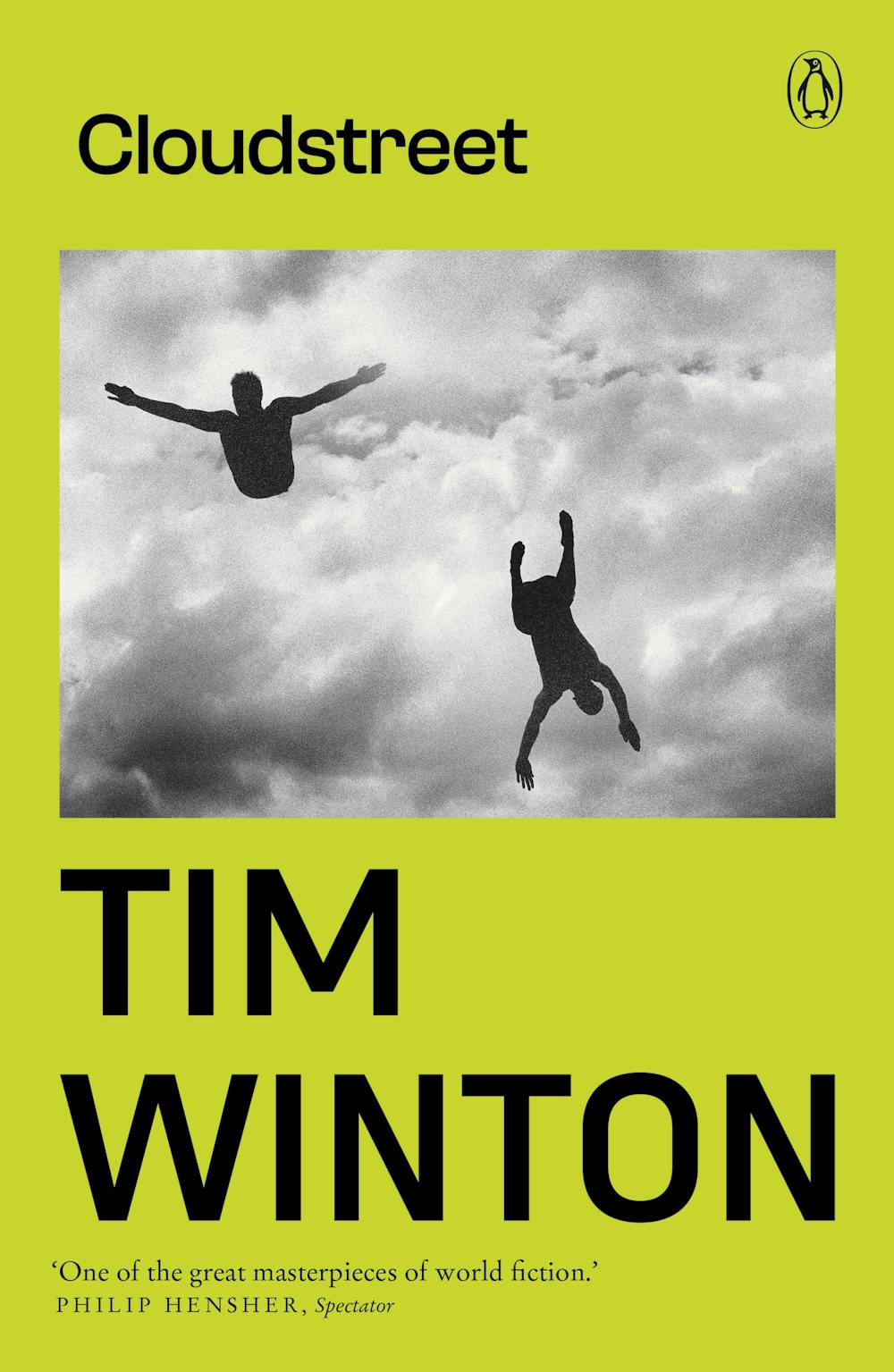 It is clear that Brooks appreciates Winton’s astonishing body of writing. She admires its impact and technique and breadth. It is an awe-inspiring career. Brooks’s work is also awe-inspiring. She has achieved amazing success in Australia and internationally. To be a writer in Australia is difficult. To be a successful writer is even more difficult, and I could say the same for being an academic in this field. And yet Brooks is compelled to observe that Winton had a “head start” on her because he began publishing when he was 21. Authorship is an art, not a competition.
Book reviews are sometimes the domain of journalists with sharp instruments they want to plunge into the hearts of authors, but I really wanted to like this work. I wanted to see the writer’s work anew. I wanted to devour it with enthusiasm, as I did Winton’s Breath and Brooks’s The Year of Wonders. But it alienated me very swiftly. Every time I thought it was back on track, it renewed the charge.
It would have been better without the axe. Brooks offers some shiny insights but, in the words of a great writer (from an unnamed source): “if it’s not about love, if it’s not about mercy, if it’s not about kindness, if it’s not about liberation, then I’m just not that interested”.
Authors: Donna Mazza, Associate professor, Edith Cowan University
It is clear that Brooks appreciates Winton’s astonishing body of writing. She admires its impact and technique and breadth. It is an awe-inspiring career. Brooks’s work is also awe-inspiring. She has achieved amazing success in Australia and internationally. To be a writer in Australia is difficult. To be a successful writer is even more difficult, and I could say the same for being an academic in this field. And yet Brooks is compelled to observe that Winton had a “head start” on her because he began publishing when he was 21. Authorship is an art, not a competition.
Book reviews are sometimes the domain of journalists with sharp instruments they want to plunge into the hearts of authors, but I really wanted to like this work. I wanted to see the writer’s work anew. I wanted to devour it with enthusiasm, as I did Winton’s Breath and Brooks’s The Year of Wonders. But it alienated me very swiftly. Every time I thought it was back on track, it renewed the charge.
It would have been better without the axe. Brooks offers some shiny insights but, in the words of a great writer (from an unnamed source): “if it’s not about love, if it’s not about mercy, if it’s not about kindness, if it’s not about liberation, then I’m just not that interested”.
Authors: Donna Mazza, Associate professor, Edith Cowan University 
















