

An Indigenous Voice to Parliament will not give 'special rights' or create a veto
- Written by Anne Twomey, Professor of Constitutional Law, University of Sydney
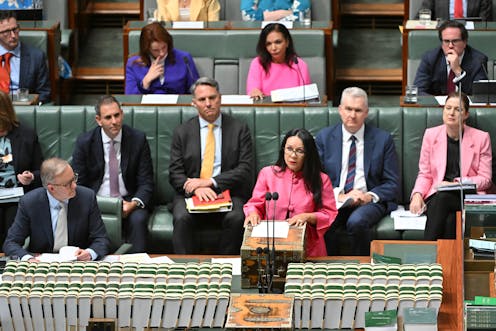
The Constitutional Expert Group, appointed to advise on the proposed Voice to Parliament referendum, has concluded that the “draft amendment is constitutionally sound” and does not amount to a “veto” power or provide anyone with “special rights”.
How does this fit into the current debate?
What is the composition and role of this expert group?
In the lead-up to its proposed referendum on an Indigenous Voice, the Commonwealth government appointed three bodies to advise it. The first is the Referendum Working Group. It is comprised of Indigenous leaders from across the country, including Marcia Langton, Tom Calma, Pat Anderson, Jackie Huggins, Ken Wyatt and Galarrwuy Yunupingu. It is co-chaired by Minister for Indigenous Australians Linda Burney and Special Envoy Patrick Dodson.
There is also a second broader group, the Referendum Engagement Group, which includes representatives from land councils, local government and community organisations to advise on how to build community understanding and awareness of the referendum.
Finally, the third smaller group is the Constitutional Expert Group. It is comprised of Greg Craven, Megan Davis, Kenneth Hayne, Noel Pearson, Cheryl Saunders, George Williams, Asmi Wood and me. Its role is to answer legal and constitutional questions raised by the Referendum Working Group. It is chaired by Attorney-General Mark Dreyfus.
What advice has the Constitutional Expert Group given?
The Constitutional Expert Group has had three meetings, and has provided advice to the working group on a number of specific questions.
At its meeting on December 13, the working group released a communique, to which it attached a brief summary from the Constitutional Expert Group of the conclusions it reached about the first round of questions sent to it from the Working Group.
Additional questions have been asked and further advice will be given by the Constitutional Expert Group in the future.
What did the advice say?
The first point made by the expert group was that while there were different policy and process approaches that could be followed, the draft amendment proposed by the prime minister was constitutionally sound and provided a strong basis on which to conduct further consultation. That proposed amendment is as follows:
- There shall be a body, to be called the Aboriginal and Torres Strait Islander Voice.
- The Aboriginal and Torres Strait Islander Voice may make representations to Parliament and the Executive Government on matters relating to Aboriginal and Torres Strait Islander Peoples.
- The Parliament shall, subject to this Constitution, have power to make laws with respect to the composition, functions, powers and procedures of the Aboriginal and Torres Strait Islander Voice.
No veto power
The expert group unanimously agreed this form of an amendment would not result in the Voice having a veto power over the actions of parliament or the executive government. The power and function of the Voice is to make representations. It cannot dictate, demand or veto.
What use the parliament or the executive government makes of those representations is a matter for it, as is appropriate in a system of representative and responsible government.
The aim is to ensure those institutions are better informed when they make decisions and exercise their powers on matters relating to Aboriginal and Torres Strait Islander peoples. There is no intention to create a body that would have any overriding power.
Read more: Changing the Australian Constitution is not easy. But we need to stop thinking it's impossible
No special rights
The expert group was also unanimously of the view that the proposed amendment would not confer “special rights” on anyone. It would instead establish a body that could make representations to parliament and the executive.
Anyone and any organisation can also make representations to parliament and the executive. This often happens when parliamentary committees examine bills, or governments consult stakeholders on proposed policy changes, or when bodies (such as business organisations, unions, industry groups, community groups and charities) lobby the government.
The constitutionally implied freedom of political communication ensures individuals and groups within Australia remain free to make representations to parliament and the government on political matters. The expert panel noted the establishment of the Voice would not “change or take away any right, power or privilege of anyone who is not Indigenous”.
The proposed constitutional amendment does not confer special rights upon people to participate in, or choose the membership of, the Voice. It leaves for parliament the power to decide the composition of the Voice.
A new chapter in the Constitution
The Constitutional Expert Group agreed the placement of this proposed amendment should be in its own separate chapter of the Constitution. There were different views about where it should be placed, but it was agreed it should be somewhere after the first three chapters, which deal with the parliament, the executive government and the courts.
Functions of the Voice
The proposed amendment states the Voice “may make representations to Parliament and the Executive Government on matters relating to Aboriginal and Torres Strait Islander Peoples”. This is its primary function. But it also permits parliament to “make laws with respect to the composition, functions, powers and procedures” of the Voice.
Further advice
The Constitutional Expert Group will continue to provide advice to the working group, at its request, as issues arise. This advice will feed into the public debate as we proceed towards the proposed referendum.
Authors: Anne Twomey, Professor of Constitutional Law, University of Sydney

















