

Want to pre-drink before going out? It probably won't save you money, and can be risky to boot
- Written by Kim M Caudwell, Lecturer - Psychology | Chair, Researchers in Behavioural Addictions, Alcohol and Drugs (BAAD), Charles Darwin University
You’re catching up with a few friends before you go out. Everyone’s having a drink, listening to some tunes, and the mood is good. A ride share is pulling up in the driveway – everyone quickly finishes their drinks and piles into the car, headed to a gig where more alcohol will be consumed.
This is the typical pre-drinking scenario – drinking alcohol in one place, typically someone’s home, before drinking more somewhere else, such as a pub, club or event.
You might be familiar with pre-drinking (colloquially known as pre-loading) and think nothing much of doing it.
In reality, it’s a complex behaviour that has been of great interest to health psychologists and public health strategists for the past 15 years.
And as popular as it is, pre-drinking isn’t without risk.
Why do people pre-drink?
The considerable public health effort to reduce excessive drinking in licensed venues has meant some drinkers appear to have abandoned the traditional “pub to club” model in favour of a “home to pub to club” version.
You can understand the appeal – compared to a busy venue, someone’s house is likely to be less noisy, less cramped, and probably doesn’t include a cover charge.
In Australia, a common reason people cite for pre-drinking is the relatively cheaper cost of pre-purchased alcohol compared with prices at a licensed venue.
Indeed, behavioural economists have observed we tend to be quite discerning when figuring out the most cost-effective way to drink.
Add our complex taxation system and public health initiatives such as minimum unit pricing to the mix, and it’s no surprise we are looking for ways to get a buzz on the cheap.
More than money?
Outside Australia, evidence shows alcohol price is less of a driver for pre-drinking. Other motivational themes have emerged – mainly from psychological research in North America and Europe.
These include the “enhancement” aspect of pre-drinking itself (as the opening scenario illustrates), controlling alcohol consumption in situ (such as only drinking your preferred brand), or in anticipation of less access to alcohol later on (think long lines for beer at the footy).
Generally, the aim of pre-drinking appears to be getting “sufficiently intoxicated” before going out.
But one motive, commonly mentioned by men, has been labelled as “intimate pursuit”. This is where hanging out during pre-drinks is used to built rapport with someone you might be romantically interested in.
Although these themes are generally endorsed by Australian pre-drinkers, cost is still an important driver of our pre-drinking, especially among young Australians.
Read more: Trying to cut back on alcohol? Here's what works
In our research, we asked participants about the cheaper cost of pre-drinking, alongside these other motives. It was the strongest predictor of pre-drinking, and also predicted participants’ experience of alcohol-related harm over the previous 12-month period.
Surprisingly, some people report that pre-drinking doesn’t save them that much money.
From a psychological perspective, this may be because alcohol affects our “inhibitory control”. Although our goal with having pre-drinks is to keep total alcohol expenditure down, the drunker we get, the harder it is to resist buying another round.
The unique harm of pre-drinking
Unfortunately, research consistently shows pre-drinking is uniquely linked to excessive alcohol consumption, and alcohol-related harm.
One reason may be that we drink faster while pre-drinking, relative to sitting on a pint at the pub. This means pre-drinkers may reach higher levels of intoxication, more quickly.
This can be highly dependent on a range of factors – for instance, who we are pre-drinking with, and whether or not people are playing drinking games.
Adding to the risk, people tend to be pretty bad at estimating how much they are drinking.
Sadly, the “sweet spot” of a buzz can quickly give way to increasing levels of alcohol intoxication – and increased risk of alcohol-related harm.
How can pre-drinking risks be minimised?
Research shows pre-drinking serves important practical and social functions – catching up with friends in a more relaxed environment, and warming up for a night out.
As such, it is unlikely we will eliminate pre-drinking entirely, but we can try to make it a bit less risky.
One challenge for pre-drinking is that people may drink out of whatever vessel is around – say, a mug – and will find it difficult to keep track of their consumption.
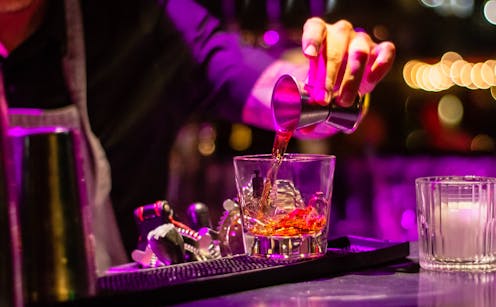
Licensed premises serve alcohol in standardised containers such as pints and schooners, or use measured pours. So, having schooners or jiggers on hand when pre-drinking would be a good place to start.
Health psychologists often promote “protective behavioural strategies” – things that help keep our alcohol consumption under control. For example, we can set ourselves a drink limit, or set a timer between drinks to slow our intake. Work is ongoing to investigate how these strategies might be better tailored to the pre-drinking context.
Ultimately, if you’re planning a pre-drinking session before an event, it’s a good idea to make sure there are plenty of non-alcoholic or low-alcohol options, and food – as you would with any party.
The most important thing pre-drinkers can do is keep an eye on each other, making sure everyone makes it to the event, has a good time, and gets home safely.
Authors: Kim M Caudwell, Lecturer - Psychology | Chair, Researchers in Behavioural Addictions, Alcohol and Drugs (BAAD), Charles Darwin University

















