

Can we ethically justify harming animals for research? There are several schools of thought
- Written by Julian Koplin, Lecturer in Bioethics, Monash University & Honorary fellow, Melbourne Law School, Monash University
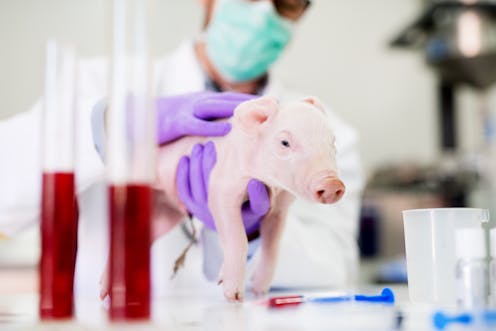
Neuralink, the biotechnology company co-founded by Elon Musk, has been accused of animal cruelty and is under federal investigation in the United States for potential animal welfare violations.
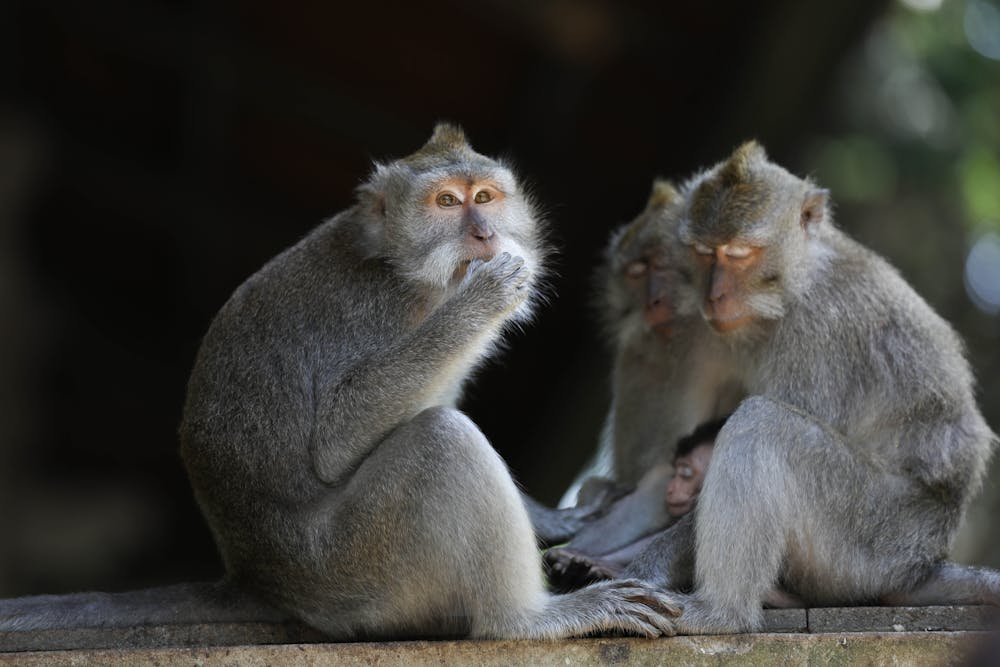
The company has tested its brain-implant technology in animals including monkeys, sheep and pigs. Whistleblowers allege it has killed about 1,500 animals since 2018.
They claim testing was rushed, which caused significant animal suffering and required botched experiments to be repeated – harming more animals than necessary.
This scandal highlights an old but important question: when is it acceptable to harm non-human animals for human ends?
Moral confusion
The condemnation of Neuralink suggests many people view animal suffering as a serious moral problem. We find similar attitudes when people are outraged by pet owners neglecting or abusing their pets.
But our responses to animal suffering are complicated. Surveys show many people think at least some forms of animal research are ethically acceptable, such as medical research where alternatives aren’t available. Most people also think it is not morally evil to buy a hamburger, animal welfare concerns aside.
Our attitudes towards animals are confusing – and arguably self-serving. We need to think more carefully about how animals ought to be treated.
Do animals matter?
In the 17th century, philosopher René Descartes famously described animals as mere “automata”. He believed they lack a soul and a mind, and are therefore incapable of suffering.
But progress in fields such as ethology and the cognitive sciences has improved our understanding of animal behaviour, and we have come to appreciate animals have rich mental lives. There is now scientific consensus that mammals, birds and many others are capable of feeling pain and pleasure.
One might argue that, even if animals can suffer, ethics should only concern how we treat fellow humans since animals are not “one of us”. But this view is unsatisfying.
If somebody were to say it doesn’t matter how we treat people with a different skin colour, because they are not “one of us”, we would (rightly) call them racist. Those who claim the same about animals can be accused of making a similar mistake.
Our treatment of animals has come under increasing philosophical scrutiny since the time of Descartes. Some of the most powerful challenges have come from utilitarian philosophers such as Jeremy Bentham (1748-1832) and Peter Singer, whose 1975 book Animal Liberation was a rallying point for critics of livestock farming and animal research.
But the case for animal welfare isn’t just utilitarian. Thinkers from diverse philosophical traditions share this position.
Philosophical views on animal welfare
Philosophers usually think about animal suffering in accordance with one of three moral theories: utilitarianism, deontology and virtue ethics.
Utilitarians believe we should do what best promotes the overall wellbeing of everybody affected by a choice. They typically hold that all suffering matters equally, regardless of who experiences it, or even what species they belong to.
In 1789, Bentham argued that when it comes to animal welfare:
[…] the question is not, can they reason? Nor, can they talk? But can they suffer?
Deontologists emphasise duties and rights over welfare. They maintain we are not morally permitted to violate rights, even when doing so would promote overall wellbeing.
The great deontologist philosopher Immanuel Kant held that humans have rights because of our rationality (which more or less refers to our abilities to reason and make moral decisions). Kant believed animals aren’t rational and therefore don’t have rights (although he claimed we should still refrain from mistreating them since, according to him, that might make us more likely to mistreat humans).
Kant’s rejection of animal rights faces two challenges. First, some argue certain intelligent species, such as elephants and chimpanzees, are also rational and hence deserve rights.
Second, many contemporary deontologists argue we should set a less demanding threshold for moral rights. Rather than requiring rationality, they suggest it might be enough for an animal to have desires and interests.
Virtue ethicists take yet another approach. They think morality is a matter of developing and practising good character traits, such as honesty and compassion, while avoiding traits like dishonesty and cowardice. Virtue ethicists who deal with animal ethics have argued animal experimentation displays and reinforces vices like callousness and cruelty, particularly when research is unlikely to achieve morally important goals.
Neuralink revisited
In Australia and the United States, animal research is governed largely by the “three Rs”: directives to replace animal research with other strategies when feasible, reduce the number of animals used as much as possible, and refine experimental techniques to minimise animal pain.
If the reports about Neuralink are correct, the company failed to adhere to these. But what if Neuralink had conducted experiments in line with the three Rs – would this have resolved all ethical concerns?
Probably not. The three Rs are silent on one crucial question: whether the scientific gains from a particular study are great enough to justify the harms that research may inflict.
So long as an experiment is scientifically sound, one could, in principle, follow the three Rs to the letter while still inflicting severe suffering on a great many animals, and with little prospect of benefiting humans. If animals have moral worth, as the utilitarian, deontological and virtue ethical views state, then at least some scientifically sound animal research should not be conducted.
Neuralink has admirable goals, which include curing paralysis, blindness and depression.
But utilitarians might question whether the expected benefits are great enough (or likely enough) to outweigh the significant harms to animals. Deontologists might question whether any of the species used have moral rights against being experimented on, particularly intelligent ones such as monkeys and pigs. And virtue ethicists might worry the testing performed involves vices such as callousness.
Credit: Neuralink.Where are we headed?
Animal research is widely practised in Australia, with more than 6 million animals reportedly used per year. Some (but not all) of this research involves significant pain and suffering. Mice are the most common animal used, though species such as dogs, cats and non-human primates are also used.
The vast number of lives at stake mean it is imperative to get the ethics right.
This means developing a more comprehensive set of principles for animal research than the three Rs: one that will help us more effectively balance scientific benefit against harms to research animals. At least among philosophers, this work is already under way.
It might also involve revisiting the question of when (if ever) certain species should be used in research. Australia imposes special restrictions on the use of non-human primates. Other jurisdictions have banned or considered banning ape research. What other intelligent species ought to receive additional protections?
We need to look beyond the three Rs for a full assessment of the ethics of animal research – both for Neuralink and beyond.
Read more: What is ethical animal research? A scientist and veterinarian explain
Authors: Julian Koplin, Lecturer in Bioethics, Monash University & Honorary fellow, Melbourne Law School, Monash University

















