

Trove's funding runs out in July 2023 – and the National Library is threatening to pull the plug. It's time for a radical overhaul
- Written by Mike Jones, Postdoctoral research fellow, Australian National University
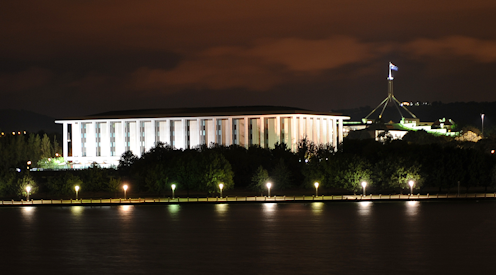
The National Library is threatening to pull the plug on Trove, its free online service that provides public access to collections from Australian libraries, universities, museums, galleries and archives.
In its recent Trove Strategy, the library has indicated that without additional government support, it will shut the service down by July next year:
The future of Trove beyond July 2023 will be dependent upon available funds […] In a limited funding environment, Trove may reduce to a service focused on the National Library of Australia’s collections. Without any additional funds, the Library will need to cease offering the Trove service entirely.
It’s been nearly seven years since the #fundTrove campaign, a response to budget cuts to the National Library of Australia in 2016. (These were part of the Turnbull government’s “efficiency dividend”, which cut $20 million from the budgets of six Canberra-based cultural institutions over four years.)
That campaign resulted in a government funding package for Trove intended to rescue the popular service, which was topped up with more cash last year.
But in recent months it has become increasingly clear the National Library of Australia was never cured of its funding ills, and Trove was just on life support.
Read more: Treasure Trove: why defunding Trove leaves Australia poorer
Threats to public access
Launched more than a decade ago, Trove now contains more than 6 billion digital items. Users can find information about books, journals, maps and archives without incurring any charges. There are digitised newspapers and magazines, photographs, web archives, parliamentary papers, reports, theses and more.
The content comes not just from the National Library’s collections, but from almost 1,000 contributing organisations around the country. Many of these organisations also provide funding to Trove, subsidising more than 40% of its current operating costs.
For many people – and not just academic researchers – Trove is now part of their daily lives. The service boasts more than 22 million visits per year: around 63,000 a day on average. Trove is one of only two Australian government websites in Australia’s top 15 global internet domains – the other is the ABC.
The repeated threats to the public’s access to nationally significant collections are part of a broader malaise. Australia’s national collecting institutions have been hobbled by funding cuts and debilitating efficiency dividends for decades, with the some of the deepest cuts occurring in the years since Trove was launched.
Reduced access to these publicly funded resources is more than an inconvenience: it is an attack on democratic accountability.
Read more: What good is a new national cultural policy without history?
Trove needs a radical overhaul
We believe Trove and the National Library deserve better than ad hoc injections of cash – there’s little value in a one-shot dose of vitamins if you are suffering from malnutrition. We’ll just all be back in the emergency room again in another few years.
Trove itself needs a radical overhaul. What is currently a Frankenstein’s monster of dead and mouldering technologies and systems needs more than just cosmetic surgery. It needs to be rebuilt from the ground up as an essential component of national library services.
On this note, we might ask why Trove is yet again the part of the library that ends up terminal. There is no suggestion that without additional funding the library’s catalogue will be shut down, or the shelves sold and the books kept on the floor, or the oral history collection deleted to save on server space. Such things would be unthinkable.
The fact that the demise of Trove remains thinkable means it is still seen (by some at least) as an optional extra rather than a vital organ. Public access should not be the first sacrificial offering every time there is a budget crisis.
All our cultural institutions need sustainable funding
We also know the impact of chronic underfunding runs far deeper than Trove. After years of neglect, the roof of the National Library’s heritage building is currently being repaired, restricting public access to significant collections material for months. It shouldn’t be this way.
Other peak cultural institutions are faring no better. The National Archives of Australia was left begging for public donations to save parts of its collections before a one-off dose of funding. The National Gallery of Australia has a $265 million budget shortfall that could lead to extensive job losses and reduced opening hours. The National Film and Sound Archive is losing the battle to preserve thousands of hours of film, television and audio stored on obsolete and deteriorating media.
Only the Australian War Memorial seems in rude health.
Yet here we are, sitting at Trove’s bedside, begging the government for another injection – when far more sustained and holistic treatment is required.
We need a comprehensive health strategy for all our national cultural institutions. We need sustainable, recurrent funding, rather than just a series of booster shots. And we need government investment that recognises that access to our national and state collections – including via digital platforms like Trove – is essential for researchers and writers, family historians, school students, and the incurably curious.
Authors: Mike Jones, Postdoctoral research fellow, Australian National University

















