

4 creepy crawlies you'll see more of this wet summer – and one iconic beetle you'll probably miss
- Written by Erin Siostrom, Associate Lecturer in Science Education, University of the Sunshine Coast
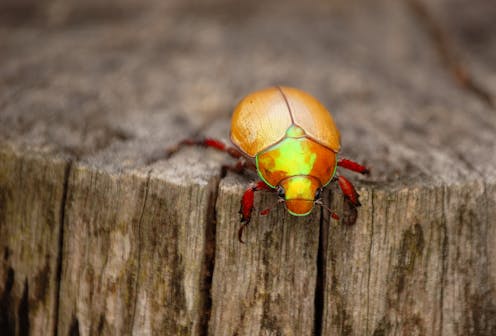
For Australians, memories of childhood Christmas often include gifts, prawns and shooing uninvited buzzing guests away from the pavlova.
But have you ever wondered why the air is full of bugs some years and almost empty in others? Insect populations boom and bust frequently.
This year is our third successive La Niña, and a wet summer is forecast yet again for Australia’s east.
Wet, warm weather is ideal for many of the insects, spiders and slugs that share our homes and gardens. That means we’re likely to have a very buggy Christmas.
Aren’t all the insects dying?
As we heat up the planet and take over natural areas, invertebrate species are responding in unpredictable ways. Many species are in trouble: researchers have warned of an insect apocalypse facing flying bugs like wasps, butterflies, and beetles in densely populated Europe.
Subsequent research has drawn less drastic conclusions, and some American researchers claim that population sizes haven’t significantly changed overall, with some species booming and others dying off.
Longer term, climate change and human takeover pose real challenges for many bugs – but not all.
When ecosystems tip out of balance, the most adaptable species find opportunities despite – or because of – unpredictable and changing conditions. Consider the locust swarms vast enough to blot out the sun and threaten crops in many East African nations.
So what should you look for? Here are four creepy crawlies that might arrive at your place more often this summer.
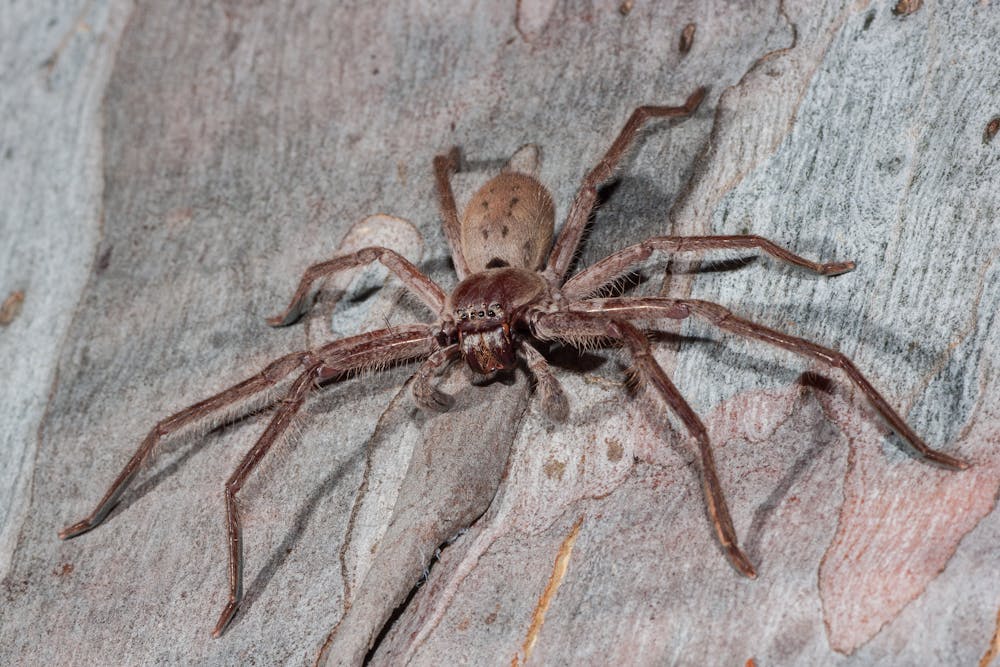
Huntsman spiders
Although spiders have shared our houses for thousands of years, huntsmans have rarely been popular roommates. That’s probably because of their heart-stopping habit of skittering across the wall when you least expect them.
Despite this, most of Australia’s 155 huntsman species are shy and rarely aggressive. They generally live solitary lives, although female huntsman spiders will actively guard their egg sacs after mating – and protect the up to 200 spiderlings which hatch from them.
Like many introverts, huntsman spiders prefer the indoors – especially in bad weather, when they like to enter houses and cars to get out of the rain. This is actually good news, believe it or not. Having huntsman spiders in residence means you’ll have less cockroaches and mosquitoes.
So be ready not to freak out. With recent heavy rains and the predicted influx of roaches and mozzies this summer, you can expect to see a few more eight-legged off-lease roommates than usual.
Read more: Insect apocalypse? Not so fast, at least in North America
Mole crickets
Nicknamed the platypus of insects, mole crickets look like several different creatures jammed together. Seeing one aboveground is always a shock. The shovel-like forelegs. The yabby-like carapace. The surprising size of it.
Don’t panic. These minibeasts are meant to be here. They live happily across Australia, preferring life beneath well-watered vegetation. They use their leg-shovels to dig tunnel networks where they can lay their eggs. After young adults dig their tunnels, they come to the surface in spring to find a mate.
 Mole crickets look like mash-ups of other creatures.
Wikimedia, CC BY
Mole crickets look like mash-ups of other creatures.
Wikimedia, CC BY
So why are you likely to see them in summer? Rain. When heavy rain hits, underground creatures have to activate contingency plans. Tunnels and rain don’t mix. For mole crickets, that means digging upwards through sodden ground and clambering across the surface looking for higher ground.
You’ve probably heard the male mole cricket’s persistent chirping on rainy evenings as he looks for a mate. Their characteristic call is so loud it’s sometimes confused with a frog. The powerful sound is due to clever engineering. Mole crickets sculpt a horn-shaped burrow to maximise their noise. Think of it as building an underground bugle.
European Earwigs
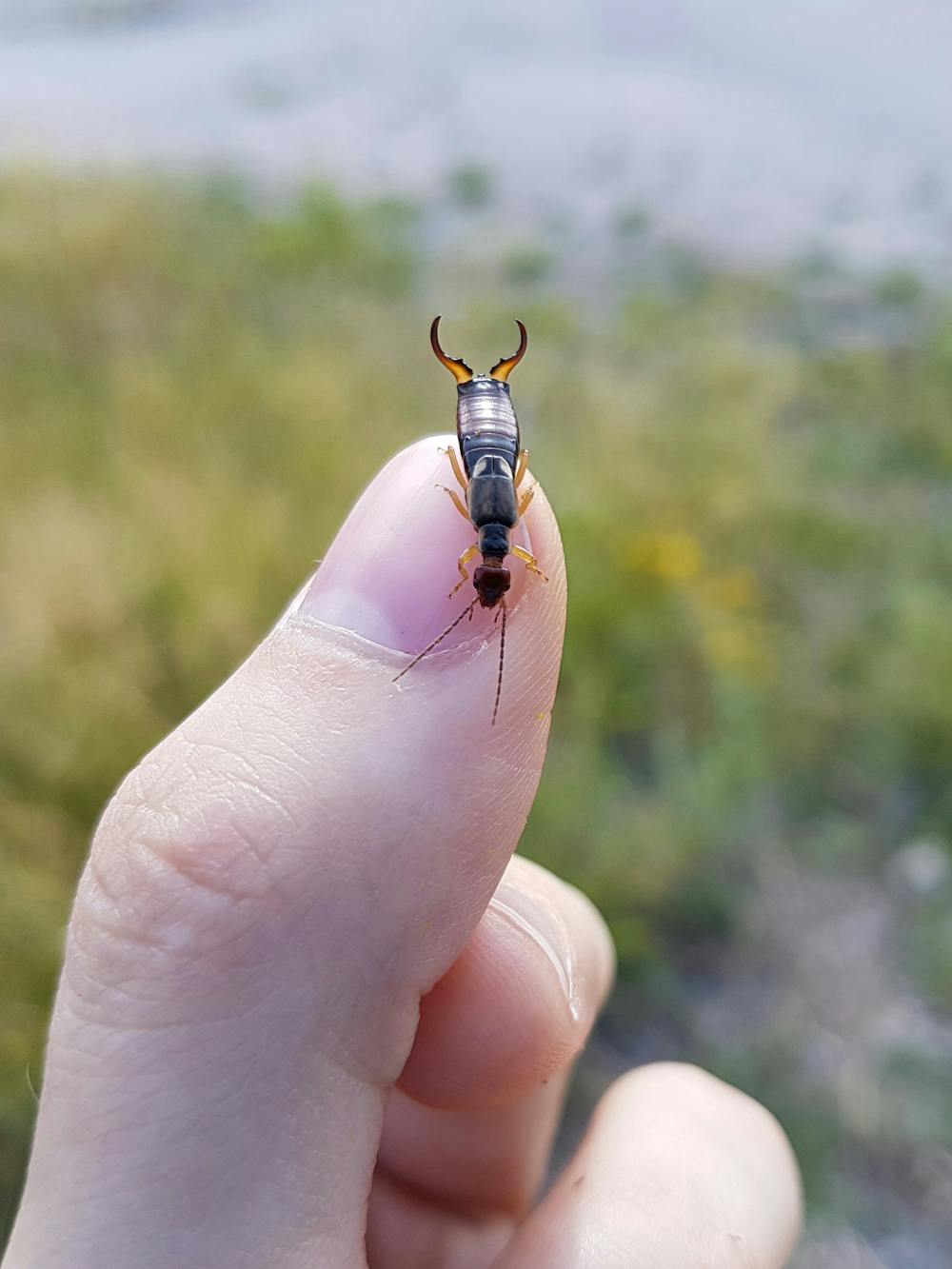 European earwigs are harmless despite their pincers.
Wikimedia, CC BY
European earwigs are harmless despite their pincers.
Wikimedia, CC BY
European earwigs are everywhere in Australia’s temperate south – even though they’re not from here. These invasive pinchy bugs from Europe are unmistakable, with elongated abdomens topped with forcep-like pincers. Most of our 85 earwig species are natives, but you’re likely to see the European variety.
Their name may come from the Old English phrase “ear wiggler”, which in turn comes from an enduring belief that earwigs invade people’s ears when you sleep. Thankfully, this is false. When researchers tested this story, they found earwigs weren’t interested. It’s actually cockroaches that can sometimes get stuck inside our ears.
While earwig pincers can hold onto human skin, they don’t usually hurt. The pincers are used for courting, defence, and catching prey. Earwigs are omnivores, eating plants and critters.
Rainy winters boost earwig numbers, as the increased rainfall keeps burrows moist. This helps their eggs and nymphs to survive and ensures plenty of plants for them to eat.
This winter was our wettest nationwide since 2016. This means conditions are perfect for an earwig bonanza. Researchers say grain-growing areas outside Melbourne and Adelaide are prime real estate for earwig expansion.
Red triangle slugs
These gaudy gastropods live happily in urban vegetation along the Queensland and New South Wales coastline. Australia’s largest native land slug can be cream, greyish-green, yellow or orange-red, but you’ll know them from the distinctive red triangle shield on their back. While it might not look it, this is actually camouflage. It helps these nocturnal slugs blend in with leaf litter.
 Red triangle slugs are hard to miss - especially in large numbers.
Shutterstock
Red triangle slugs are hard to miss - especially in large numbers.
Shutterstock
After rain, these slugs come out of hiding and slurp up moisture through their skin, leaving a slimy mucus trail. It’s not just for gliding along – it’s defence. Their mucus acts like a slug superglue, with scientists finding it’s strong enough to stick predators like green tree frogs firmly in place.
They’re already popping up in Brisbane backyards, but there are more to come, given ideal conditions for the growth of the algae these slugs eat.
These four species are set to boom. But what about the iconic Christmas beetle?
Christmas beetles
If you can remember the 1980s and 1990s, chances are you have fond childhood memories of these metallic beauties clinging to your screen door, or buzzing indignantly as they try to turn themselves right side up on your driveway.
These days, Christmas beetles don’t seem to arrive in large numbers. There are 36 species of these shiny scarab beetles nationwide, but sightings are falling.
We don’t know the full story, but we have clues. Almost one in four of Australia’s native eucalyptus species are now threatened with extinction, with some populations dropping by half due to land clearing and urbanisation.
That’s a major problem for Christmas beetles. Their larvae depend on plant roots and the adults emerge after thunderstorms to snack on eucalyptus leaves. Two key species they like to eat – yellow box and fuzzy box – have just been listed as threatened.
Without intervention, such sightings will become increasingly rare.
If you do see Christmas beetles this summer, you can help by logging your sighting on the iNaturalist beetle count to help scientists understand where these Christmas favourites are still visiting.
Authors: Erin Siostrom, Associate Lecturer in Science Education, University of the Sunshine Coast

















