

Is the terrorism threat over?
- Written by Greg Barton, Chair in Global Islamic Politics, Alfred Deakin Institute for Citizenship and Globalisation, Deakin University
Eight years after raising the national terrorism threat level, Australia recently lowered it again – from mid-range (probable) to low-range (possible).
Does this mean the threat from terrorism is over?
Few are better placed to answer this than Mike Burgess, Director-General of Security and head of ASIO, Australia’s domestic intelligence agency.
Burgess is one of the handful of people who can talk openly about his agency’s work. And when he speaks, his words are carefully calibrated and warrant close attention.
In a rare public address in November he told the Australian public that, for the time being at least, they could stop worrying about the threat of a terrorist attack in Australia. He said:
When ISIL formed its caliphate in the Middle East, significant numbers of Australians were seduced by slick propaganda and false narratives, and that led ASIO to raise the terrorism threat level to PROBABLE. Our decision was tragically justified.
Since 2014, there have been 11 terrorist attacks on Australian soil, while 21 significant plots have been detected and disrupted.

Decades of hard work by police, communities and government agencies have ultimately reduced the capacity of terrorist groups (al-Qaeda and the Islamic State movement in particular) to significantly threaten stable, democratic states.
But in weak or failing states (including Syria, Iraq, Afghanistan and Somalia) al-Qaeda and Islamic State affiliates continue to represent an existential threat.
According to the Global Terrorism Index, Sub-Saharan Africa accounts for almost half of all terrorist deaths, and the Sahel (a region of North Africa that includes countries such as Niger, Mali and Burkina Faso) is home to some of the most potent terrorist networks on the planet.
Read more: Jihadists and bandits are cooperating. Why this is bad news for Nigeria
How have stable democracies minimised the terror threat?
Established democracies have developed police-led counterterrorism intelligence capacity to the point where ambitious, large-scale, terrorist plots are largely detected and disrupted, and terrorist social networks are effectively pinned down.
And this is not just the case with Western democracies. In our region, for example, Indonesia, Malaysia and the Philippines have made impressive progress in constraining a resilient and pernicious terrorist threat.
For Indonesia, and Australia, the bomb attacks in Bali 20 years ago were transformative. In the wake the bombings, successful forensic investigations by the Indonesian National Police, in partnership with the Australian Federal Police (AFP), profoundly reshaped the police forces of both nations.
The AFP was established in 1979 and tasked with leading counterterrorism, in response to the Sydney Hilton bombing of 1978. This was an unprecedented attack that killed three and injured 11. By the turn of the century, however, the modest resources of the AFP were being reorientated towards more pressing threats, such as counternarcotics and port security.
The September 11 al-Qaeda terrorist attacks on America in 2001, however, forced an abrupt pivot, returning the AFP to its original focus on counterterrorism. A year later, in October 2002, AFP agents Mick Keelty and Graham Ashton were forced to draw on their relationships of trust with Indonesia National Police officers to figure out who was responsible for the Bali bombings, and to limit their capacity to launch further attacks.
Their successful cooperation led to the arrest of members of a breakaway bombing cell of an Indonesian al-Qaeda affiliate, Jemaah Islamiyah. Formed in 1993 along the Afghanistan-Pakistan border by so-called mujahideen, or holy fighters, this group supported the resistance to Soviet occupation in Afghanistan.
The Bali attacks resulted in the establishment of a specialist counterterrorism unit of the Indonesia police called Densus 88. In the 18 years since its establishment Densus 88 has arrested, and contributed to the successful prosecution of, more than 2,000 terrorists (this is my estimate based on the hundreds of arrests reported year on year).
Read more: How Indonesia's counter-terrorism force has become a model for the region
The challenge now for Indonesian police is breaking the cycle of radicalisation. The recent release of Bali bomb-maker Umar Patek, on closely supervised parole, is confronting. But it’s also an encouraging indication of the success of Indonesian police in rehabilitating former terrorists.
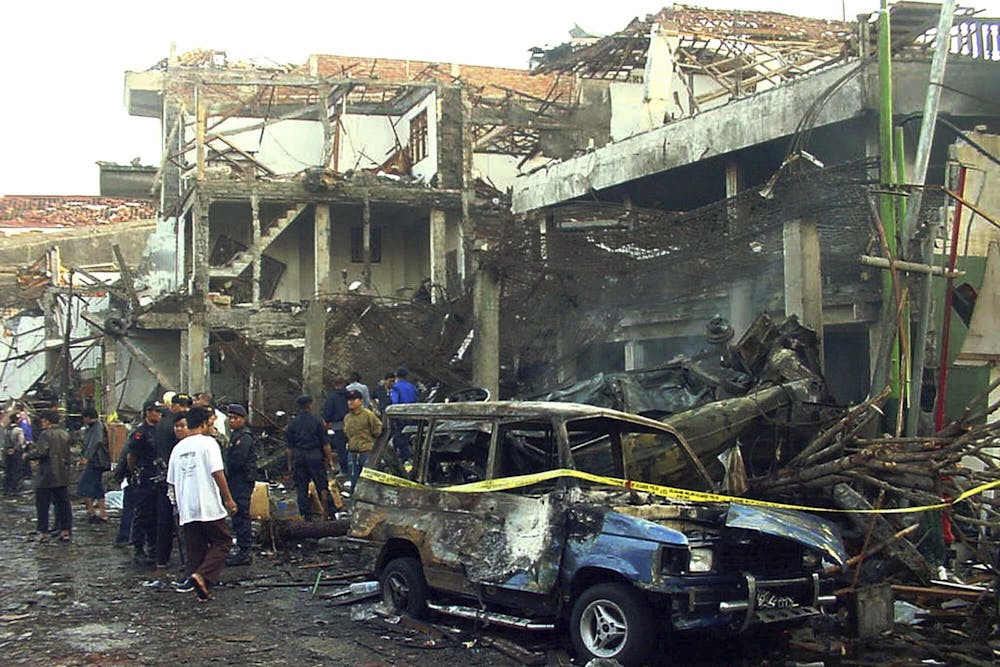 The Bali bombings 20 years ago changed policing in Indonesia.
AP
The Bali bombings 20 years ago changed policing in Indonesia.
AP
Read more: Violent extremism could beckon in north-western Nigeria if local dynamics are ignored
The rise of the Islamic State caliphate in Syria and Iraq in mid-2014 marked a disturbing setback in counterterrorism in Australia and Southeast Asia. It was, in large part, a product of an unwise, and unwarranted, military intervention in Iraq a decade earlier. This toppled the regime of Saddam Hussein and opened the door to insurgent forces, including Al Qaeda in Iraq, which later became Islamic State in Iraq, and then Islamic State of Iraq and Syria (ISIS).
The 2003 invasion of Iraq and the toppling of Saddam Hussein proved deeply destabilising, with cascading perverse outcomes. The international military operation, in which Australia played a significant role, contributed both to the rise of ISIS and to its ultimate defeat.
A similar, though strikingly incomplete, cycle of events played out in Afghanistan. Initially, the US-led military operation that began in October 2001 constrained al-Qaeda, almost to the point of defeat. But ultimately, the military intervention led to the reconquest of Afghanistan by the Taliban, and the opening of the door to al-Qaeda and its rival Islamic State.
Not only does al-Qaeda now enjoy safe haven in Afghanistan, Islamic State continues to launch devastating attacks across Afghanistan.
For the time being, however, police counterterrorism intelligence has constrained the capacity of both al-Qaeda and ISIS to project a threat into Australia.
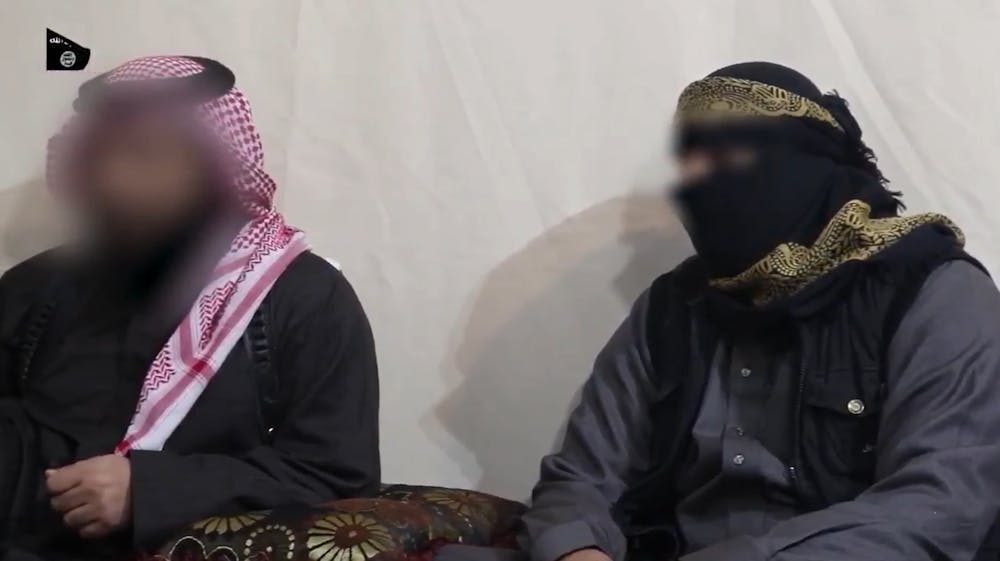 The rise of Islamic State in Syria and Iraq marked a disturbing set-back in counterterrorism in Australia.
AL FURQAN ISIS MEDIA WING HANDOUT/EPA
The rise of Islamic State in Syria and Iraq marked a disturbing set-back in counterterrorism in Australia.
AL FURQAN ISIS MEDIA WING HANDOUT/EPA
What about far-right terror?
Far-right and related conspiracy extremism has gone from representing just 10-15% of the counterterrorism caseload of ASIO and the AFP to almost 50%. This is a pattern matched across North America and Europe.
For the moment, this new threat is mostly likely to manifest in lone-actor attacks that are mostly smaller-scale and less lethal (but not always, as we saw in Christchurch in 2019).
Read more: Far-right extremists still threaten New Zealand, a year on from the Christchurch attacks
For Western democracies, and increasingly Asian democracies as well, toxic ultranationalism in the form of ethnic and religious supremacist movements is the rising threat. Currently it’s less well organised and coordinated than jihadi terrorism. But that’s likely to change.
And, as the tragic attacks in Wieambilla have shown, it has all became much more complex and unpredictable. Paranoia fuelled by conspiracy theories, mixed with religious fundamentalism and hatred of governments and police, is generating new forms of violent extremism.
As Mike Burgess reminded us:
Terrorism is an enduring threat. And terrorism is an evolving threat […] We keep the terrorism threat level under constant review. There can be no ‘set and forget’ in security intelligence.
Authors: Greg Barton, Chair in Global Islamic Politics, Alfred Deakin Institute for Citizenship and Globalisation, Deakin University
Read more https://theconversation.com/is-the-terrorism-threat-over-195706

















