

Modern Australian
The Times

The rich history of our love affair with luxury

  • Written by Peter McNeil, Distinguished Professor of Design History, UTS, University of Technology Sydney
The rich history of our love affair with luxury

In today’s world it could be said, to a certain degree, that even a relatively impoverished person engages with luxury, in some way.

If you enjoy regulated heating or cooling at home, regular lighting, chicken meat, or eat chocolates, you are engaging with formats that once indicated luxury.

But what is, and is not, considered to be a luxury, changes with the times.

Decadence and luxury

When we describe a dessert as “decadent” today, we must remember it really means decaying, a concept related to the “Romans of the decadence” whose lavish lifestyles are held up as proof of why the Empire had to fail.

The Romans saw luxury as quintessentially foreign and therefore alien to the true and olden spirit of the Roman polis. This is why luxury was often represented as coming from “the Orient”, the source of rare scents, spices, gems, ivories and enslaved peoples.

As a result, the Romans introduced sumptuary laws, which were prescriptions to manage conspicuous consumption of things like expensive clothing and jewellery worn by social groups, but also the amount spent on banquets and even funerals.

This was necessary, because the ancient Romans enjoyed conspicuous luxury. They liked to eat food whose ingredients resembled another. They enjoyed delicacies such as fattened fowls, peacock, oysters, ham, wild boar and fig-peckers, the latter eaten whole, sometimes all combined together in a crusted paté, even though this was forbidden by the new laws. There were even luxuries in enslaved peoples. The poet Juvenal commented satirically that clearly it was better to have a bevy of pretty pageboys (exoleti) arranged according to their nationality, size and hair colour serving the drinks rather than coarse household help.

There is a long continuity in this type of consumption. In the 19th century, for example, there was a premium on tall footmen matching in size and the Victorians loved elaborate feasts with multiple courses.

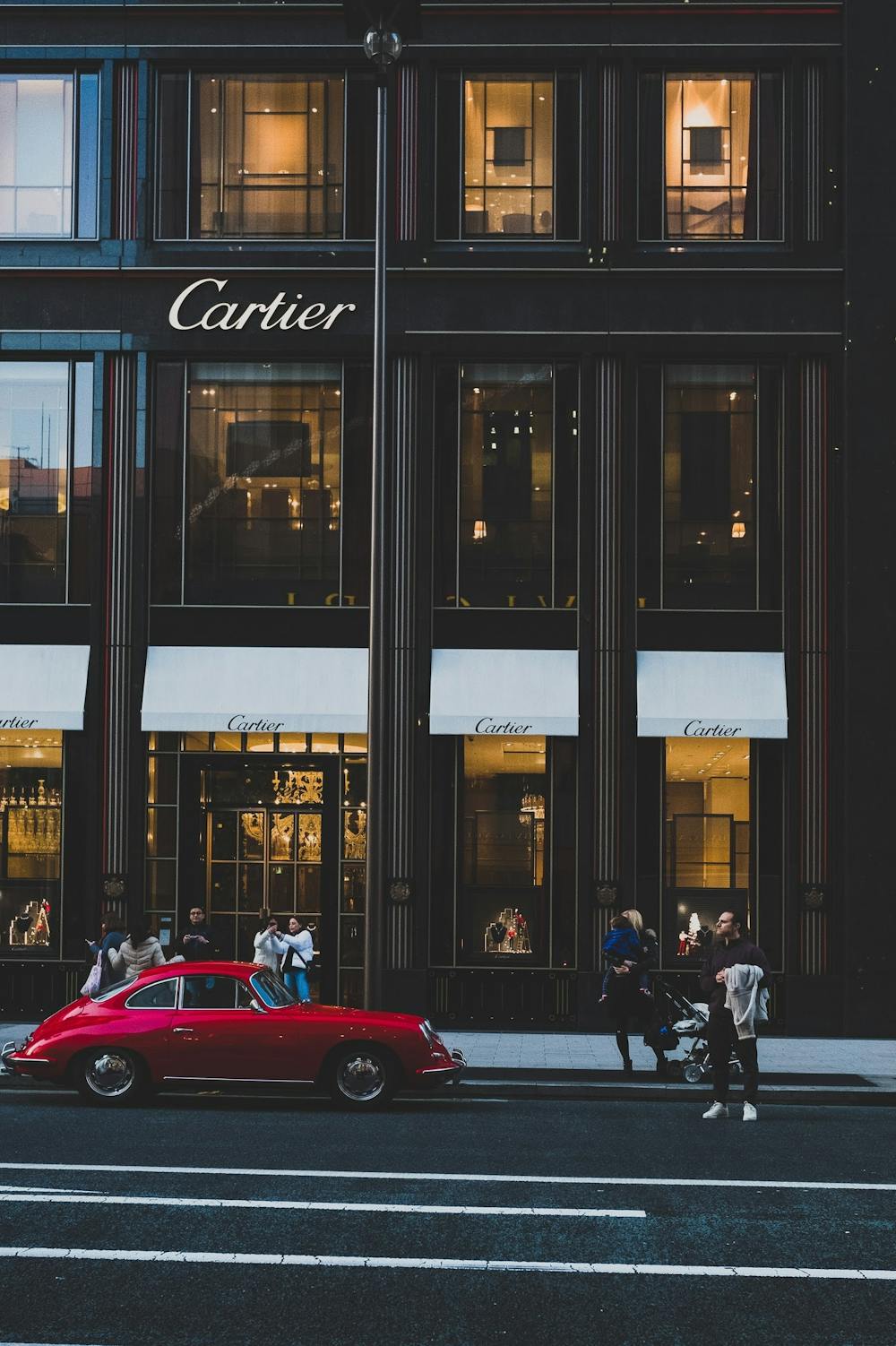
Marissa Grootes/ Unsplash Follow the money By the mid 19th century, wealth from new industries created enormous fortunes at a time when taxation and labour costs were low. North Americans became the richest people in the world. Clare Booth Luce, formerly married to the chairman of Time- Life, said: In America money is a thing less valued in the spending than in the earning. It is less a symbol of luxury than of ‘success’, less of corruption than of virtue. While Americans were good at making money, they seemed to need Europeans to spend it. The raft of rich American women who began to marry into the European aristocracy in the late 19th century were known as the “dollar princesses”, the term coming from a popular song. The British aristocracy were, of course, in turn marrying into this American wealth. Between 1890 and 1914, half the world’s capital flowed through London. The Dollar Princesses paid for enormous renovations and modernisation of stately homes, were photographed with dozens of trunks as they moved across the Atlantic, and patronised the luxury establishments of jewellers, couturiers, florists and caterers. The arrival of the wealthy Americans heiresses coincided with a series of challenges to the British aristocracy including the introduction of death duties, the rise in income tax and The Great Unrest of 1912. Living in style Between the end of the 19th century and the start of the first world war, luxury was widely reported and commented upon in diaries and memoirs. The house parties about which so much was written were characterised by excessive meals of great refinement, elaborate flowers and large numbers of visible servants. Much luxury was French. Edward VII was a famed Francophile. The Entente Cordiale of 1904 benefited British French trade and travel. Louis Vuitton opened in Bond St in 1900. His new flat trunks for cars were stackable, replacing older domed tops designed to repel water. Cartier opened in London in 1902. Faberge also had a new London store. The Paris Ritz opened in 1898 and the London Ritz Hotel in 1905, decorated in a newly fashionable white and gilt Louis XVI style. Service Stripes This was a period when wealthy women were laden with jewels: Kenneth Clark, the art historian, noted of a New York party in 1930 that the women “even brought pieces of jewellery in their hands and laid them down on the dinner table. This could have happened in the Middle Ages.” Mrs Greville, one of the wealthiest women in England (daughter of a Scottish brewer), loved her jewels, owning pieces that could be traced back to Marie Antoinette and the Empress Josephine. The late Queen Mother, a great lover of luxury and thoroughly Edwardian figure, inherited key pieces of jewellery from Mrs Greville in 1942, a friend from the time she was still Duchess of York. But, as Elizabeth wrote in her diaries, she did not wear the lavish Cartier and Boucheron pieces until 1947, so as to not appear “out of sync” with the austerity movement immediately after the war. Profligate luxury risks looking out of step with public morals. Simon Launay/ Unsplash The Queen Mother wore all Mrs Greville’s jewels at her 80th Birthday party – and the owner of them now is Camilla, the Queen Consort. As Camilla is the grand-daughter of Edward VII’s mistress Mrs Keppel, the story comes full circle. Mrs Greville left an estate in the 1940s worth approximately £39 million or 67 million AUD. This is not much money if we compare it to the fortunes held by global billionaires today. Gina Reinhart has between A$28.8 and A$31.4 billion. She lives discreetly part of the year in Dalkeith Perth in her late father’s home, in Singapore at a gated community, and on an ocean liner. Luxury today Today, luxury is seen as the embodiment of growing income inequality within states and communities, and also between different nations in the world. This is not new, although in the past luxury and inequality were seen as part of how a hierarchical society was structured: acknowledged, rather than seen as a problem. Luxury is not the cause of inequality, though it might be one of its effects. When societies aims towards income and social equality (as some postwar societies did), luxury – or at least the public discussion of luxury – seems to disappear. By contrast, societies like the present, in which 1% of the population owns 49% of the world’s wealth, lead luxury to the fore. Authors: Peter McNeil, Distinguished Professor of Design History, UTS, University of Technology Sydney

Read more https://theconversation.com/the-rich-history-of-our-love-affair-with-luxury-192732

Road Signs: Understanding Their Role in Clear and Effective Signage

Effective signage and display hardware can help businesses communicate information, promote products and organise customer or visitor movement. Road...

Bottle Label Printing: Key Factors to Consider Before Your Next Packaging Run

Effective packaging begins with understanding the product, bottle material, artwork and production requirements when planning bottle label printing. H...

Planning a Long-Distance Move With Interstate Movers Melbourne

Moving between states involves more planning than a typical local relocation. Along with packing and transporting household belongings, you need to...

Understanding the Role of an I/O Controller in Industrial Automation

Modern industrial systems depend on accurate communication between sensors, machines and control systems. An I/O controller can help manage this commu...

How the Right Mining Hose Supports Demanding Operations

Mining environments place considerable demands on equipment used for material transfer, water management and processing. Hoses operating in these co...

Simple Ideas for Making Social Gatherings More Memorable

We have all been to those parties where everyone just stands around the kitchen island, staring at their phones, waiting for someone else to make a mo...

Outdoor Wall Lights: Improving Exterior Lighting Around Your Home

Lighting can influence how a room looks, feels and functions, so the right fitting should be selected according to both appearance and practical req...

Commercial Office Cleaning: Combining Routine Office Cleaning With Melbourne Service

Keeping a workplace clean requires a service that can accommodate everyday tasks as well as the particular needs of the business. Professional comme...

Caravan Sales in Queensland: How to Find the Right Caravan for Sale QLD

Caravan ownership is about more than having somewhere to sleep while travelling. For many Queenslanders, it is one of the best ways to explore regio...

What Sir Walter Buffalo Turf Actually Costs in 2026 (And Why Quotes Vary So Much)

Two quotes landed on a Hills District homeowner's kitchen table last spring for the exact same 80-square-metre backyard. One said $12 a metre. The o...

Nearly 1,300 NSW Hospital Beds Are Occupied By People Who Are Ready To Go Home

1,276 people in NSW hospitals have been medically cleared for discharge but remain in hospital because they're still waiting for NDIS or aged care sup...

National Survey Launched to Measure Operational Impacts of Federal NDIS Policy Reforms

The effects of recent NDIS reforms are beginning to move beyond policy papers and into day to day service delivery. A new national survey is asking ...

Beyond the Nappy Cake: Baby Shower Gifts That Get Used

What new Australian parents unwrap, keep, and quietly thank you for months later. Six weeks after my daughter was born, I did an audit of the baby sh...

Parent-Advocates Are Reshaping Frontline Disability Service Delivery

Parents have always been part of the disability sector. They advocate, coordinate services, challenge decisions and often become the person holding ev...

Vista Cruises Enters "Two-Flagship Era" as Vista Aurora Completes Inaugural Voyage

Vista Aurora Sets Sail along the Yangtze. (Photo courtesy of the company)YICHANG, China — August 5, 2026 — Vista Aurora, a high-end interprovinc...

A Digital Preparation Checklist For International Medical Conferences

An international medical conference compresses many responsibilities into a few days. A delegate may need to present research, move between venues, ...

The Growing Popularity of Lab Grown Diamonds in Sydney and Hong Kong

The diamond industry has changed significantly in recent years as more buyers seek ethical, affordable, and sustainable alternatives to mined diamon...

Modern AI SEO Agency vs Traditional SEO: What’s the Difference

Search engine optimisation has changed dramatically over the past few years. Search engines have become smarter, user behaviour has evolved, and bus...
















