

how to stay safe from blue-ringed octopus this summer
- Written by Zoe Doubleday, Marine Ecologist and ARC Future Fellow, University of South Australia
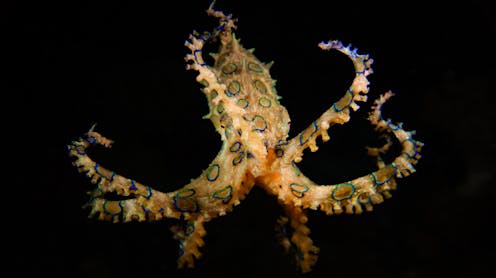
As an octopus biologist, I get a call from the media every summer because someone has had an encounter with a blue-ringed octopus. Thankfully, everyone has been OK.
Blue-ringed octopus are famed for being one of the most venomous animals on the planet, and the symptoms from a bite are the stuff of nightmares. But how worried do you need to be?
Read more: Who would win in a fight between an octopus and a seabird? Two marine biologists place their bets
1,000 times more powerful than cyanide
It’s a common myth that blue-ringed octopus are found only in the tropics. These tiny marine animals are, in fact, found all around Australia, including Tasmania.
There are three official species in Australia, with a maximum size ranging from 12 to 22 centimetres, and they are all extremely venomous. There are also many scientifically “undescribed” species, which have yet to be named and officially added to the blue-ringed family.
The venom of blue-ringed octopus contains tetrodotoxin, a potent neurotoxin claimed to be a thousand times more potent to humans than cyanide.
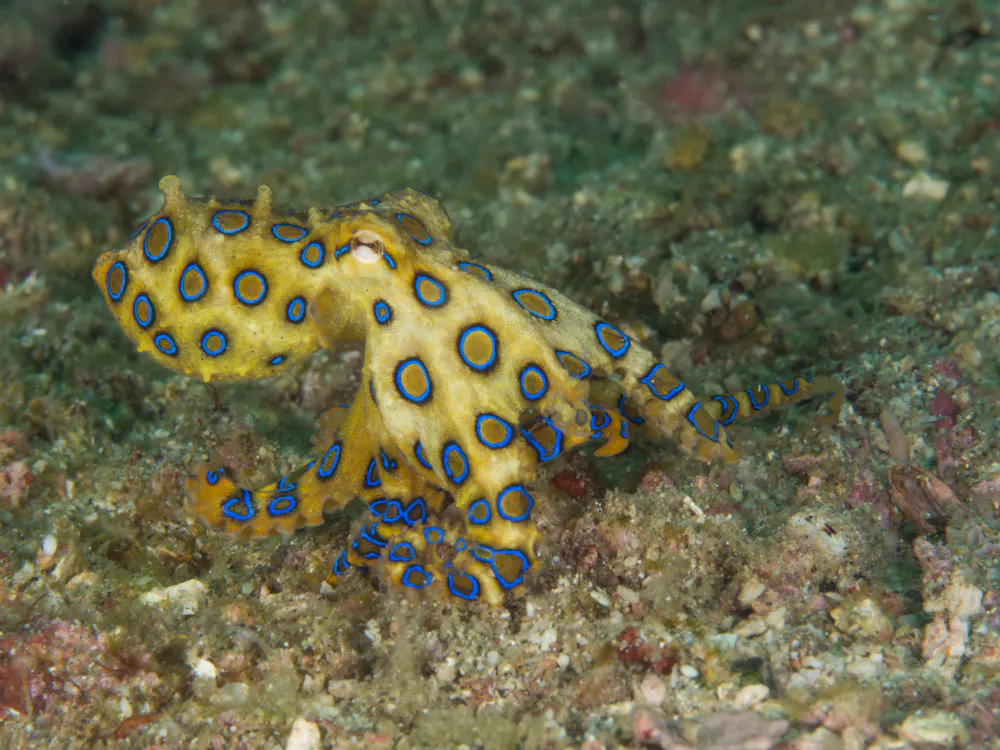
First discovered in pufferfish, tetrodotoxin is actually found in more than 100 species including the Panamanian golden frog and rough-skinned newt. But levels of the toxin varies hugely between species, and levels in blue-ringed octopus are high.
Surprisingly, scientists are debating where blue-ringed octopus and other marine animals source their tetrodotoxin. One theory is that it’s produced by bacteria that live inside the host species, the other is that it’s sourced from the diet.
Most of these animals use tetrodotoxin for defence, but blue-ringed octopus also use it to hunt and kill their prey, such as fish and crabs.
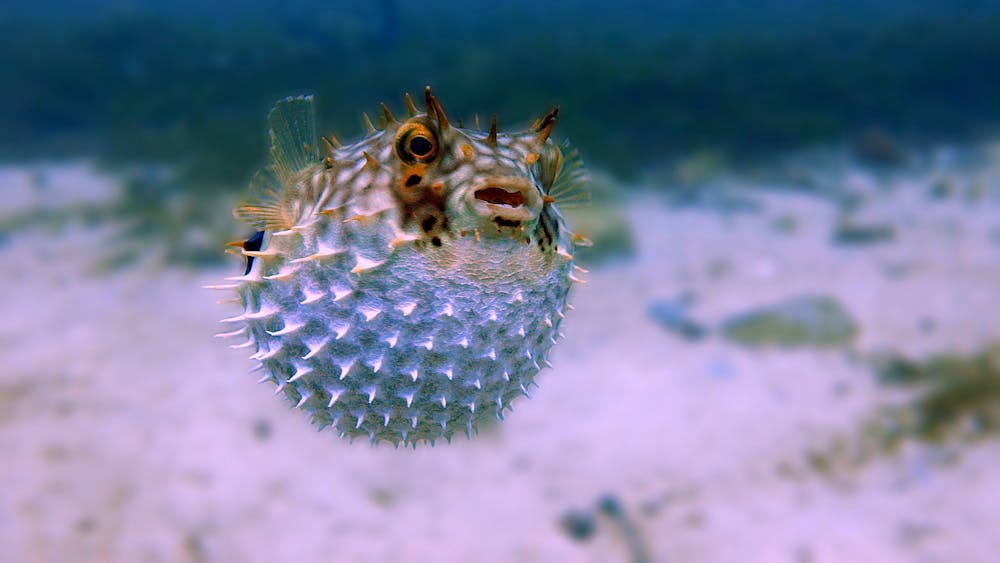 Tetrodotoxin is found in over 100 species, including pufferfish.
Stelio Puccinelli/Unsplash, CC BY
Tetrodotoxin is found in over 100 species, including pufferfish.
Stelio Puccinelli/Unsplash, CC BY
Are blue-ringed octopus proliferating?
The media often report spikes or record numbers in blue-ringed octopus sightings.
While we don’t have the long-term data to confirm this, the populations of some octopus species are increasing. For example, there are reports the common European octopus is proliferating in France right now.
Octopus are short-lived – the blue-ringed octopus only lives for a few months – and are highly responsive to changing environmental conditions.
Hypothetically, some human-made habitats, such as breakwalls and lobster pots, or marine litter, such as bottles and cans, could be providing additional habitat for blue-ringed octopus. Likewise, climate change could confer an advantage to some octopus species that can better adapt to warming waters.
But we simply do not know if this is the case for blue-ringed octopus. Octopus populations may also undergo natural “boom and bust” cycles in response to fluctuations in temperature, food, and other factors in their environment, resulting in rapid increases and decreases in population numbers.
How to keep safe
Blue-ringed octopus deliver venom by biting using their parrot-like beak, which is found at the base of the arms.
Blue-ringed octopus bites are rare – they are docile, shy animals and are not interested in people. But they may bite when they are threatened or provoked, so NEVER, EVER pick them up.
And remember, these octopus only flash their characteristic blue rings when upset, so stay clear of any small octopus, no matter what they look like.
Blue-ringed octopus are found in shallow coastal waters, including the foreshore, so accidental encounters do happen. Their preferred habitats include rocky reefs and coral reefs, seagrass and algal beds, and rubble. Given they’re found throughout the Indo-West Pacific, you may encounter them while on holiday.
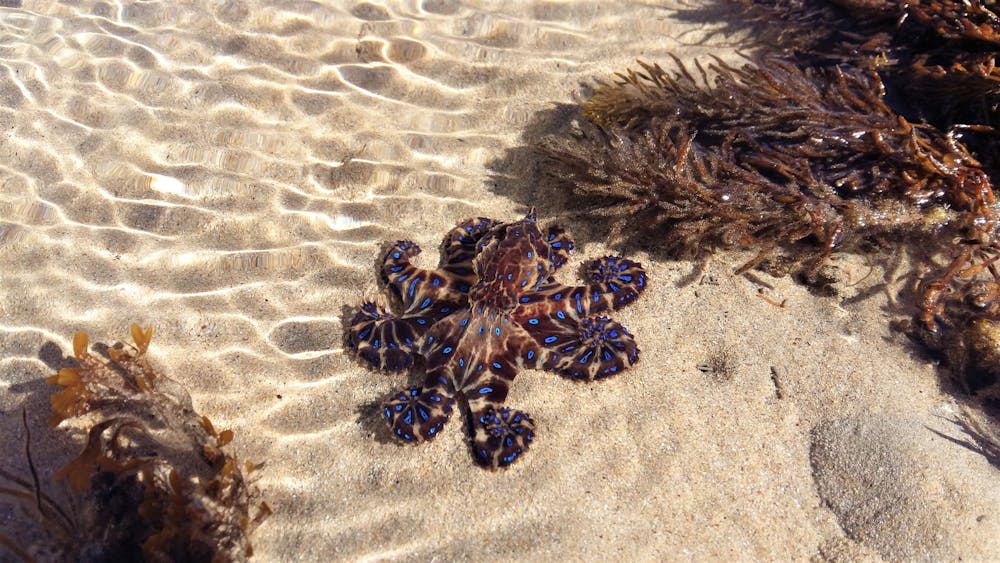 A blue-ringed octopus in a shallow tide pool.
Shutterstock
A blue-ringed octopus in a shallow tide pool.
Shutterstock
Be careful exploring rock pools, cracks or crevices, or picking up empty shells or bottles at the beach, where the octopus may make a home or den, or even when retrieving fishing gear, such as octopus pots or lobster pots.
Curious, young children may also be at risk of an encounter as they explore the beach environment – I know my own toddler would seek out the ideal octopus habitat if given a chance.
This month also, many dead blue-ringed octopus were found on the beach after a mass death event of marine critters in South Australia. It’s best not to pick them up as they could be dying and stressed. Please also keep pets and young children well away as ingestion could lead to poisoning.
Read more: Curious Kids: could octopuses evolve until they take over the world and travel to space?
What to do if bitten, and symptoms to watch for
All three blue-ringed octopus species in Australia have killed people, but cases are extremely rare. The severity of symptoms depends on how much venom someone receives.
A mild case of envenomation may result in tingling around the mouth and mild weakness. A severe case may lead to flaccid paralysis (weak or limp muscles), including respiratory paralysis and the inability to breathe.
A tricky thing with blue-ringed octopus is that bites may be painless, so people can be unaware they have been bitten. But the onset of symptoms can be rapid (within minutes) and so an equally rapid first-aid response is crucial.
If you believe someone has been bitten by a blue-ringed octopus, remove them from water immediately and seek urgent medical care. You do not need to put anything on the bite, such as vinegar or hot water. Rather, pressure bandaging and immobilisation is recommended, as for snake bites.
If the envenomation is severe, first aid is also focused on providing basic life support, particularly breathing support. Full first aid response details can be found here and here.
Read more: The hidden world of octopus cities and culture shows why it’s wrong to farm them
Importantly, undertaking a first-aid course may help equip you with some of the skills to support a person who has been bitten before medical help arrives.
While there is no antivenom available for a blue-ringed octopus bite, the venom has short-lived effects (usually hours).
At the end of the day, enjoy the ocean. But if you see any small octopus, whatever you do, do not pick it up.
The author gratefully acknowledges clinical toxinologist, Professor Julian White AM (Women’s & Children’s Hospital, Adelaide), who provided advice on this article.
Authors: Zoe Doubleday, Marine Ecologist and ARC Future Fellow, University of South Australia

















