

Modern Australian
Men's Weekly

.

Free speech or 'genocide cheering'? Ukranian authors withdraw from Adelaide Writers' Week

  • Written by Jane Goodall, Emeritus Professor, Writing and Society Research Centre, Western Sydney University
Free speech or 'genocide cheering'? Ukranian authors withdraw from Adelaide Writers' Week

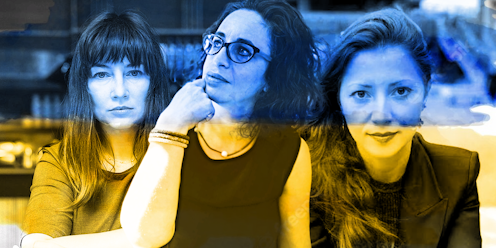
This week, Ukrainian writer Maria Tumarkin announced her withdrawal from Adelaide Writers’ Week, along with fellow Ukrainians Olesya Khromeychuk and Kateryna Babkina. (Tumarkin writes that she doesn’t support calls for resignations, cancellations, or boycotts of the event.)

A statement posted on Tumarkin’s website quotes from letters the three Ukranian writers wrote to Writers’ Week director Louise Adler about the festival’s inclusion of Palestinian author Susan Abulhawa, who has shared a tweet from Putin: “DeNazify Ukraine”, and stated:

Zelenskyy would rather drag the world into the inferno of World War III, instead of giving up NATO ambitions. He would rather pull us all into slaughter than allow Ukraine to prosper as a neutral nation.

According to Denis Muller, writing on The Conversation last week, arguments against Abulhawa’s language are “fundamentally political”.

Tumarkin’s statement takes issue with this perspective:

Statements in which Zelensky (who’s Jewish) is called a Nazi, fascist, someone responsible for Russia’s invasion of Ukraine and/or WWIII are not anti-Zelensky and/or pro-Putin. They are forms of genocide cheering (a step up from genocide apology). They do not exist in the space of discourse only and do not represent something that can be classified as merely a contentious political opinion.

Read more: Are calls to cancel two Palestinian writers from Adelaide Writers' Week justified?

Anti-war can mean pro-genocide

Tumarkin’s response is a small masterpiece of tone control, fluency and incisiveness. Anyone committed to the importance of writing in a complex and dangerous world should study it.


As author of a multi-award-winning book, Axiomatic, Tumarkin is concerned about the resort to supposedly self-evident truths in the face of traumatic experience. Her alertness to ready-made phrases and automatic thinking is evident as she deftly sidesteps the ways she may be positioned by them. “I feel rage and no outrage,” she says. She won’t be lectured on developing a higher tolerance for “confronting ideas”, although when it comes to confronting ideas, she has a few of her own to share. In the past year she’s learned a lot, she says, and “perhaps the most salient lesson is that anti-war can mean pro-genocide”. It means pro-genocide in Ukraine now, she writes, while: Russian troops are killing, raping, torturing and kidnapping civilians across Ukraine, and so long as Russian missiles are destroying hospitals, schools and residential highrises with sleeping families inside them daily and nightly. Ukraine by now is the most mined country in the world. They mine dead mothers with still-alive babies tied to them. Read more: A year on, Russia's war on Ukraine threatens to redraw the map of world politics – and 2023 will be crucial Not about ‘cancel culture’ Adler has described objections to her programming as “cancel culture”. In her letter to Adler, Tumarkin rejects the term as “caked in so much ideology and used so self-servingly” that it is not remotely useful. Adler says if we “cannot with care and considered approach engage with complex and contentious issues, then we have a problem in civil society”. But how useful are our notions of free speech when some of the participants in those conversations are from active war zones, and their lives and loved ones are being affected in real time? The language used by Adler presumes a certain level of civility between participants, and in the wider milieu. For Tumarkin, the situation has another level of gravity. She writes: Literary festivals, as they operate in Australia, are not robust enough structures to hold space for writers with irreconcilable views and politics when these concern ongoing wars or genocidal violence, ie. life and death. Irreconcilability. Tolerance, difference of opinion, dialogue, openness, civic discourse – even if we generously think of these as principles not self-serving slogans, they’re useless in the face of dehumanisation and violence which such irreconcilability creates overtly and covertly. Festivals’ insistence that it is possible and advisable to inhabit a realm of ideas when the living struggle to keep up with burying their dead make things worse. This insistence works to empty conversations (ostensibly about books) of actual politics and fills them instead with over-determined ideology. On all sides. She urges us to read the work of the two other Ukranian writers who now won’t be appearing at Writers’ Week, Olesya Khromeychuk and Kateryna Babkina. “Both of them are astounding, by the way.” Read more: Is cancel culture silencing open debate? There are risks to shutting down opinions we disagree with Olesya Khromeychuk’s ‘drive to explain’ Khromeychuk is an historian specialising in East-Central Europe, and director of the Ukrainian Institute in London. Born in Lviv, she left Ukraine at the age of 16 when her parents chose to escape the environment of rampant corruption that prevailed at the time. “I grew up in a building, city and region filled with untold stories,” she says, and as a migrant Ukrainian living in London, it was always a struggle to have her voice heard. In a recent interview for BBC HardTalk, she comes across as someone with a drive to explain what is happening in a country poorly understood in Western Europe. It is a drive that preceded the current Russian invasion. Her brother was killed fighting in eastern Ukraine in 2017, during the Russian occupation of the Crimea. He had urged her to go to the front line because, he said, only those who were there could see what was going on. As a migrant Ukrainian living in London, it was a struggle for Olesya Khromeychuk to have her voice heard.Not wanting to be a liability as an unarmed observer, she instead chose to bear witness by recording the testimony of others. “We were already aware of the concentration camp in Donetsk,” she says. But people at a distance found it very difficult to separate the Russian propaganda from reports of reality on the ground.“ They still do. "Donetsk” is a trigger word in the propaganda environment, attracting clusters of people with fierce opinions about what happened there and why, but little or no knowledge. She chose to write about it by telling her brother’s story, “a universal story of grief”, in the hopes it might be a way to explain what was at stake to a wider public that had chosen to turn a blind eye to the Russian incursion. Her book The Death of a Soldier Told by his Sister, published in 2022, has been updated with new chapters responding to the full invasion that began last year. Kateryna Babkina: can only write about war Babkina, a poet and currently International Writer in E-Residence at McMaster, is also living in exile after fleeing her home in Kyiv with her mother and young daughter in March last year. She spoke at the Ukrainian Institute in London in November, telling her story as someone who grew up in Western Ukraine in a Soviet, Russian-speaking family. Her grandfather was a Russian army commander. They were, she says “totally brainwashed”. Kateryna Babkina is a writer in exile after fleeing her home in Kyiv with her mother and young daughter last year.Her adolescence was a process of gradually discovering the freedoms of Ukrainian culture, and waking up to the paradox that, though her family needed to defend their right to speak their mother tongue, that in itself was an historic imposition on Ukrainian citizens, under regimes that punished Ukrainian speakers and imprisoned their teachers. A drive to write took over in adulthood, but I discovered that I can’t really write about anything except for war, feeling of loss, feeling of fear […] Two, three generations have lost our basic feeling of safety for ever, because this is not something that is coming back. Never ever are we going to be confident in our tomorrow. Read more: Friday essay: Svetlana Alexeviech didn't make it to the Royal Commission Rage born of grief and loss They’ve been through a lot, these three women who will not be appearing at Writers Week. If they have some rage to express, it is rage born of grief and loss, and a fierce sense of justice. There is such a thing as legitimate political rage: against the violent invasion of cities and homes, atrocities committed against civilians. What is lost for us here is some important public intelligence and human insight about war and invasion. “I am not interested in being part of the discourse,” writes Maria Tumarkin in what is intended to present her final word on the matter. There will be no interviews. “If you still feel agitated, please donate to Ukraine, Turkey, Syria or Iran.” Authors: Jane Goodall, Emeritus Professor, Writing and Society Research Centre, Western Sydney University

Read more https://theconversation.com/free-speech-or-genocide-cheering-ukranian-authors-withdraw-from-adelaide-writers-week-200550

Considering Cryolipolysis Fat Freezing? Here’s What You Need to Know

Body confidence can shift over time, and sometimes even good diet and training can still leave a stubborn area of fat that won’t budge. If you’r...

From Local Tradie to Digital Leader: The Strategy Behind Auto Gate Guys Sydney’s Growth

For many small trade businesses, digital marketing still feels like a buzzword, not a necessity. They rely on word-of-mouth referrals, repeat clients...

Electric Automation System: Smarter Control for Modern Electrical Infrastructure

Modern buildings and industrial facilities are increasingly dependent on intelligent control and efficiency. An electric automation system brings t...

The Damp Truth: Why Your Overflowing Gutters Are an Open Invitation for Termites

When it comes to protecting your home, most people think about visible threats — storm damage, cracked tiles, break-ins. But one of the most destruc...

Is Your Inventory a Sitting Duck? 2 Critical Upgrades to Protect Your Business Assets and Your Bottom Line

Imagine this: you finish a long day on the job, lock up your tools, materials, and work vehicle in the garage, and head home. But overnight, someone b...

Electrician in Melbourne: Reliable Electrical Solutions for Homes and Businesses

Finding a dependable electrician Melbourne is essential when safety, efficiency, and long-term performance matter. Electrical systems form the back...

Rims and Tyres for Sale in Sydney: Performance, Safety, and Style Combined

Finding the right rims and tyres for sale Sydney is about far more than appearance. Tyres and rims directly influence how a vehicle handles, brakes...

Why Access to Doctors in Bundoora Is Essential for Ongoing Community Health

Reliable access to healthcare plays a vital role in maintaining physical wellbeing and peace of mind. Having trusted doctors in Bundoora available ...

Pendant Lights: Elevating Interior Spaces With Style and Purpose

Well-chosen pendant lights have the power to transform interiors by combining focused illumination with strong visual impact. More than just a ligh...

What Sets Professional Family Lawyers in Sydney Apart from General Lawyers?

Choosing the right legal support can make a noticeable difference when dealing with family-related matters. This article will explore what separates...

Balancing Teen Academic Expectations and Wellbeing

For many teenagers, school years are shaped by increasing expectations. Academic performance, future pathways, and comparison with peers can create pr...

Why Ceiling Fans Remain One of the Most Effective Solutions for Year-Round Comfort

Creating a comfortable indoor environment without relying heavily on energy-intensive systems is a priority for many households. Installing ceiling ...

Why an Industrial Air Compressor Is Vital for Modern Manufacturing

In many industrial environments, compressed air is as essential as electricity or water. An industrial air compressor provides the power needed to ...

Why Commercial Carpet Cleaning Services Matter for Professional Spaces

Clean carpets play a major role in shaping how a commercial space looks, feels, and functions. Commercial carpet cleaning services are essential fo...

5 Things to Consider Before Choosing a Commercial Painter

Choosing the right painter for a commercial business can be challenging. Regardless of the type and the size of the property, all commercial project...

Why Medical Fitout Melbourne Practices Rely on for Modern Healthcare Spaces

A well-planned medical fitout Melbourne is essential for creating healthcare environments that support patient care, clinical efficiency, and regula...

Luxury Builders Melbourne Crafting Homes Defined by Design and Detail

Building a premium home is about far more than size or appearance. It is about precision, craftsmanship, and a deep understanding of how refined spa...

Electric Sliding Door Solutions for Modern Living and Commercial Spaces

The way people move through spaces has changed dramatically over the years, and the electric sliding door has become a defining feature of that evol...
















