What do women want? Freud's infamous question invites voyeurism – but examining what they do is far more revealing
- Written by Camilla Nelson, Associate Professor in Media, University of Notre Dame Australia

Ten years ago, artist Linda Fregni Nagler’s archival collection of more than a thousand studio-made portraits of infants went on show at the Venice Biennale.
Mostly dating from the 19th century, the pictures belong to a genre of “hidden mother” photography, featuring very young children supported by a mother whose presence is concealed in the composition, either swathed in blankets or curtains, or – with bizarre frequency – disguised as a chair.
Review: A Little Give: The Unsung, Unseen, Undone Work of Women – Marina Benjamin (Scribe) and What Women Want: Conversations on Desire, Power, Love and Growth – Maxine Fei-Chung (Viking)
To modern eyes, as Marina Benjamin writes in her exquisite book of essays, A Little Give: The Unsung, Unseen, Undone Work of Women, the pictures are “uncanny, violent, disturbing” – particularly those in which the mother has been reduced to a dark blot, scratched, or burnt off the negative after the photograph was taken.
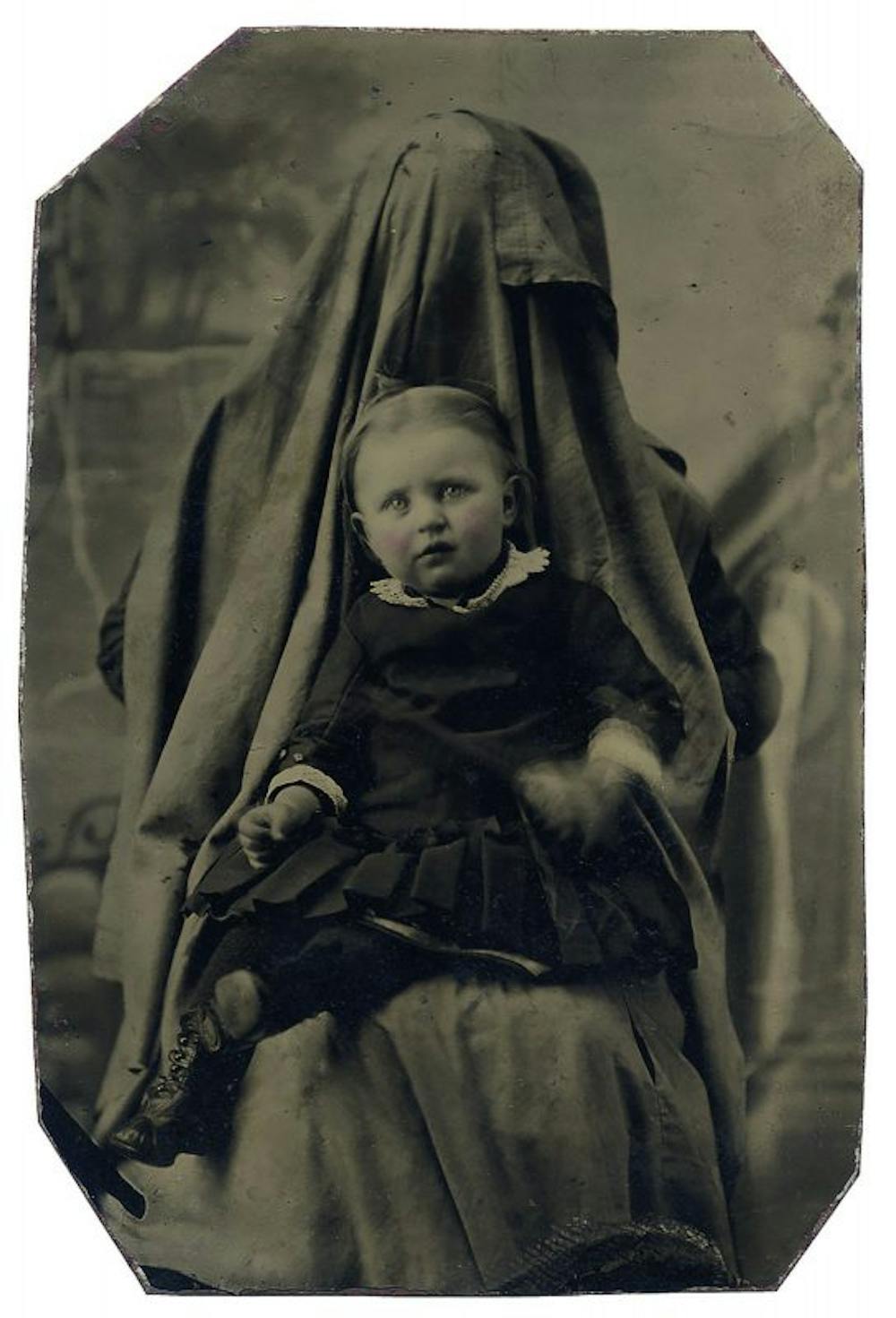
The photographs stage the infant as self-sufficient and autonomous, an ideologically fraught form of make-believe that requires the viewer to “unsee” the woman crudely concealed beneath the fringed damask cloak or piece of carpet.
The cruder the disguise, the more the image fits the definition of uncanny; it makes the social and cultural invisibility of women’s unpaid physical and emotional labour both frightening and strange.
Read more: Is it possible to describe the complexity and absurdity of motherhood?
Invisible labour
Housework – all the “Cleaning”, “Caring”, “Feeding” and “Pleasing” (the titles of the essays in Benjamin’s book) – is an activity that makes homes, worlds and human realities. But it is also, as Benjamin writes, an “activity that erases itself”.
This is not just because a swept floor will soon be muddied again, or a spotless bookshelf covered in another layer of dust. Rather, as Benjamin writes,
the success of housework turns on its invisibility, on the quiet conspiracy of women who do it and then hide the fact of its doing, denying the physicality of their own labour.
 Benjamin’s essays investigate the social and philosophical dimensions of housework, tracing the fine filaments that bind women to a system of gender inequality. Each thread is followed compellingly through Benjamin’s own life, as the daughter of Jewish-Iraqi migrants, as a conflicted or rebellious adolescent, and as a mother to a child she calls “my teenager”.
The book is a careful unravelling – or, more precisely, an unthinking – predicated on a very different form of storytelling to that in Maxine Mei-Fung Chung’s What Women Want: Conversations on Desire, Power, Love and Growth.
Chung’s book is in the now firmly established genre of the therapist-patient memoir. Its title derives from Sigmund Freud’s question “What does a woman want?”, which Freud famously declared himself unable to answer, despite what he alleges was 30 years of trying.
One problem with Freud’s question – and, indeed, there are very, very many problems with it – is that it constructs women (or “Woman”) as a mystery to be solved. As it turns out, this creates problems for Chung.
Benjamin’s book takes a different tack. It zigzags between memory, discovery and reflection, taking the reader to the heart of the essay form. It is a journeying style of writing that constantly drives at its ideas without needing to be sure of their endpoints; it expects a question, not an answer.
A gendered economy of care
“Oh my God, a fairy has come and made magic …”
Benjamin’s aunt’s carer says this as she walks into the kitchen, where Benjamin, “a middle aged woman on her knees”, has spent hours squatting on the floor “skirt hitched up around her thighs”, “one hand splayed”, among the “bleach, floor cleaner, J-cloths, paper towels” and “anti mould spray”.
Benjamin’s aunt – frail, incontinent, and increasingly mute – sits with Benjamin’s mother in the sitting room adjacent. The author is attempting to restore “if not exactly her [aunt’s] dignity, then at least some version of order”. “I want to leave a physical marker, a totem of shiny pots and pans, a cairn”, she writes. This is
payback for the care my aunt showered on me growing up; jumping in to take my side in my endless arguments with my mother: driving me home across London at maniac speeds on nights I’d changed my mind about sleeping over.
The author is making her housework a gift. But then, the fairy idea brings her up short.
It is, Benjamin writes, “a clever thing to say”. It means the author has not “debased herself” by doing menial work, amidst the “swamp mist” and “dirty grey dishcloth[s]”. In a swift sentence, punishing housework has been vanished into “fairy dust and glitter; a wand waved rather than demeaning labour”.
Benjamin’s essays investigate the social and philosophical dimensions of housework, tracing the fine filaments that bind women to a system of gender inequality. Each thread is followed compellingly through Benjamin’s own life, as the daughter of Jewish-Iraqi migrants, as a conflicted or rebellious adolescent, and as a mother to a child she calls “my teenager”.
The book is a careful unravelling – or, more precisely, an unthinking – predicated on a very different form of storytelling to that in Maxine Mei-Fung Chung’s What Women Want: Conversations on Desire, Power, Love and Growth.
Chung’s book is in the now firmly established genre of the therapist-patient memoir. Its title derives from Sigmund Freud’s question “What does a woman want?”, which Freud famously declared himself unable to answer, despite what he alleges was 30 years of trying.
One problem with Freud’s question – and, indeed, there are very, very many problems with it – is that it constructs women (or “Woman”) as a mystery to be solved. As it turns out, this creates problems for Chung.
Benjamin’s book takes a different tack. It zigzags between memory, discovery and reflection, taking the reader to the heart of the essay form. It is a journeying style of writing that constantly drives at its ideas without needing to be sure of their endpoints; it expects a question, not an answer.
A gendered economy of care
“Oh my God, a fairy has come and made magic …”
Benjamin’s aunt’s carer says this as she walks into the kitchen, where Benjamin, “a middle aged woman on her knees”, has spent hours squatting on the floor “skirt hitched up around her thighs”, “one hand splayed”, among the “bleach, floor cleaner, J-cloths, paper towels” and “anti mould spray”.
Benjamin’s aunt – frail, incontinent, and increasingly mute – sits with Benjamin’s mother in the sitting room adjacent. The author is attempting to restore “if not exactly her [aunt’s] dignity, then at least some version of order”. “I want to leave a physical marker, a totem of shiny pots and pans, a cairn”, she writes. This is
payback for the care my aunt showered on me growing up; jumping in to take my side in my endless arguments with my mother: driving me home across London at maniac speeds on nights I’d changed my mind about sleeping over.
The author is making her housework a gift. But then, the fairy idea brings her up short.
It is, Benjamin writes, “a clever thing to say”. It means the author has not “debased herself” by doing menial work, amidst the “swamp mist” and “dirty grey dishcloth[s]”. In a swift sentence, punishing housework has been vanished into “fairy dust and glitter; a wand waved rather than demeaning labour”.
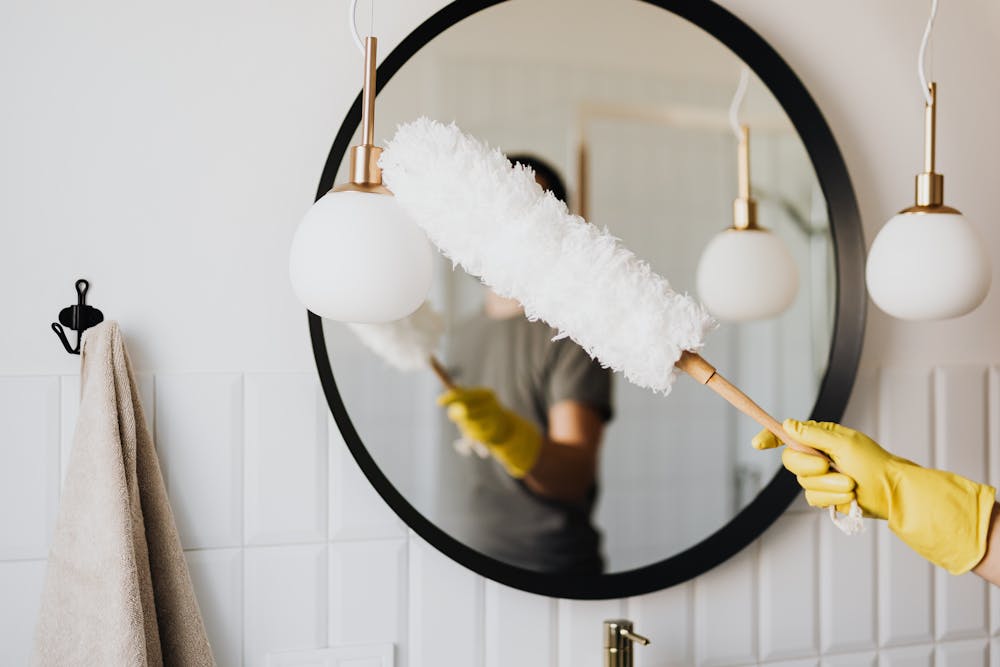 The success of housework depends on its invisibility – 'a wand waved’ – writes Marina Benjamin.
Pexels/Karolina Grabowska, CC BY
The essay in which this scene appears – titled “Cleaning” – delves deep into the politics of housework where one woman’s freedom or self care is frequently purchased through the work of another, and where oppression and privilege often sit alongside each other.
Benjamin summons the ghosts of the invisible servants that once populated grand Victorian homes. “Concealed behind walls, they moved through the many-storeyed houses they upkept using a labyrinth of back passages, narrow corridors and separate stairways”, then – at night time – were banished to the attics where they “melted into the air”.
The modern world parallels are striking. The vast economy of care that keeps the world turning continues to vanish under the weight of economic indices and measures of GDP. And the problem is a profoundly gendered one.
Read more:
Friday essay: a sex-positive feminist takes up the 'unfinished revolution' her mother began – but it's complicated
Factory of femininity
The gendering of housework is further explored in an essay called “Pleasing”. Here, vivid scenes paint pictures of Benjamin’s father’s couturier business, which, she says, transformed her childhood home into a “factory of femininity”; a “site of cultural reproduction” where gender inequality is manufactured from exquisite silk.
It is a world in which women, according to Benjamin’s mother, must work hard to “push [their menfolk] forward and have their backs, swallowing their own anger and aspirations in order to be the glue that bonds families together”.
Women should also be “easy on the eye”; a feat predicated on “shoving under the glossy cover of their exterior bodywork all the effort it took to get there”. And so it turns out that beauty – much like cleaning – is something that must appear effortless, for it to be appreciated as successful.
Benjamin’s concern is not to present fashion as anti-woman or anti-feminist, but rather to explore the ways ideas about fashion get conscripted into ideas about women’s position in the world. Her father, for example, was a devotee of Dior’s “New Look” long after it gave way to other trends. He held Chanel’s lean, “androgenous” [sic] tweed suits responsible for creating “an army of cross-dressers as militant in the social freedoms they claimed as [Coco Chanel] had famously been”.
The success of housework depends on its invisibility – 'a wand waved’ – writes Marina Benjamin.
Pexels/Karolina Grabowska, CC BY
The essay in which this scene appears – titled “Cleaning” – delves deep into the politics of housework where one woman’s freedom or self care is frequently purchased through the work of another, and where oppression and privilege often sit alongside each other.
Benjamin summons the ghosts of the invisible servants that once populated grand Victorian homes. “Concealed behind walls, they moved through the many-storeyed houses they upkept using a labyrinth of back passages, narrow corridors and separate stairways”, then – at night time – were banished to the attics where they “melted into the air”.
The modern world parallels are striking. The vast economy of care that keeps the world turning continues to vanish under the weight of economic indices and measures of GDP. And the problem is a profoundly gendered one.
Read more:
Friday essay: a sex-positive feminist takes up the 'unfinished revolution' her mother began – but it's complicated
Factory of femininity
The gendering of housework is further explored in an essay called “Pleasing”. Here, vivid scenes paint pictures of Benjamin’s father’s couturier business, which, she says, transformed her childhood home into a “factory of femininity”; a “site of cultural reproduction” where gender inequality is manufactured from exquisite silk.
It is a world in which women, according to Benjamin’s mother, must work hard to “push [their menfolk] forward and have their backs, swallowing their own anger and aspirations in order to be the glue that bonds families together”.
Women should also be “easy on the eye”; a feat predicated on “shoving under the glossy cover of their exterior bodywork all the effort it took to get there”. And so it turns out that beauty – much like cleaning – is something that must appear effortless, for it to be appreciated as successful.
Benjamin’s concern is not to present fashion as anti-woman or anti-feminist, but rather to explore the ways ideas about fashion get conscripted into ideas about women’s position in the world. Her father, for example, was a devotee of Dior’s “New Look” long after it gave way to other trends. He held Chanel’s lean, “androgenous” [sic] tweed suits responsible for creating “an army of cross-dressers as militant in the social freedoms they claimed as [Coco Chanel] had famously been”.
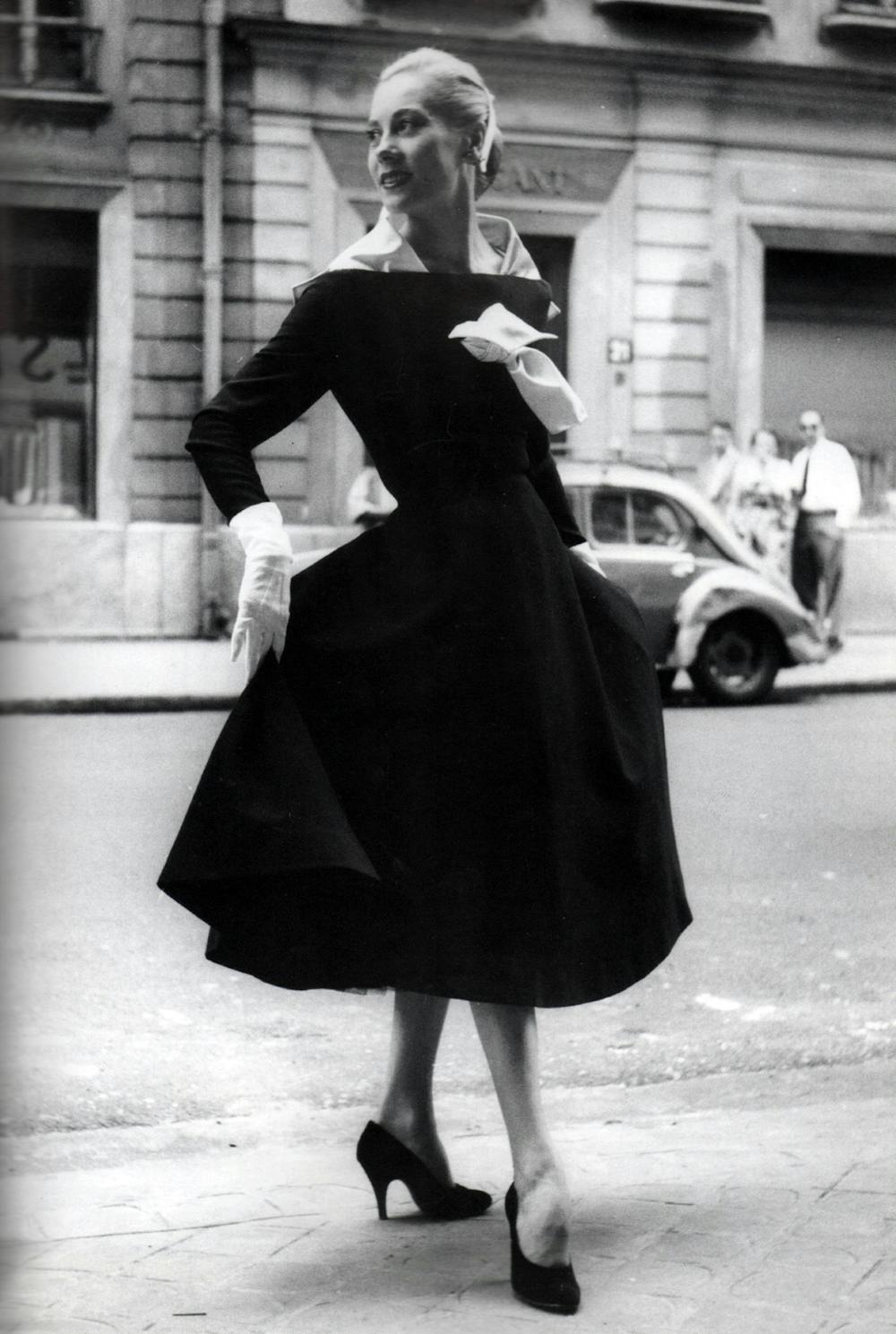 Marina Benjamin’s father was a devotee of Dior’s ultra-feminine ‘New Look’.
Laura Loveday/Flickr, CC BY
Oddly, Benjamin’s mother gets little sympathy. The author acknowledges her father’s “explosive temper”, describing him as “a volcano emitting noxious fumes”. She also acknowledges behind the scenes, it was always her mother who “exhausted herself, paddling madly […] to keep the shiny surface of our lives afloat”. And yet, her mother’s contributions to the family enterprise are comically described as “yanking her housewife’s agenda into the public sphere as far as it would go without pulling out its gendered roots”.
Her father receives more sympathy. “He and I had more in common than I knew”, writes Benjamin. When his business collapsed, his health imploded. Benjamin writes, “Patriarchy, it seems, could fell us both.”
Time is cyclical in this essay collection, much like the activity of housework itself. The essay “Launching” is as much about her father’s death as it is about the launching of “my teenager”.
The six years Benjamin’s mother spends caring for her father in the lead-up to his death gives way to the years Benjamin spends caring for her mother, “paying the bills” and “organising cleaners and tradesmen”. Increasingly it falls to the author to “bring food”, “fetch her cash, accompany her to the doctor, chiropodist and dentist – and to increasingly frequent hospital appointments” for “X-rays, ECGs, echoes, ultrasounds and lung capacity tests”.
Read more:
'Suburban living did turn women into robots': why feminist horror novel The Stepford Wives is still relevant, 50 years on
Uncomfortably voyeuristic
Maxine Mei Fung-Chung’s book What Women Want follows a more linear trajectory. It gives an often-harrowing account of the lives of eight women who struggle with eating disorders, issues of childhood abandonment and intersectional oppressions of racism, gender and class: including, in one story, the extraordinary cruelty of a mother who rejects her teenage daughter’s same-sex sexuality, labelling her “disgusting”.
Marina Benjamin’s father was a devotee of Dior’s ultra-feminine ‘New Look’.
Laura Loveday/Flickr, CC BY
Oddly, Benjamin’s mother gets little sympathy. The author acknowledges her father’s “explosive temper”, describing him as “a volcano emitting noxious fumes”. She also acknowledges behind the scenes, it was always her mother who “exhausted herself, paddling madly […] to keep the shiny surface of our lives afloat”. And yet, her mother’s contributions to the family enterprise are comically described as “yanking her housewife’s agenda into the public sphere as far as it would go without pulling out its gendered roots”.
Her father receives more sympathy. “He and I had more in common than I knew”, writes Benjamin. When his business collapsed, his health imploded. Benjamin writes, “Patriarchy, it seems, could fell us both.”
Time is cyclical in this essay collection, much like the activity of housework itself. The essay “Launching” is as much about her father’s death as it is about the launching of “my teenager”.
The six years Benjamin’s mother spends caring for her father in the lead-up to his death gives way to the years Benjamin spends caring for her mother, “paying the bills” and “organising cleaners and tradesmen”. Increasingly it falls to the author to “bring food”, “fetch her cash, accompany her to the doctor, chiropodist and dentist – and to increasingly frequent hospital appointments” for “X-rays, ECGs, echoes, ultrasounds and lung capacity tests”.
Read more:
'Suburban living did turn women into robots': why feminist horror novel The Stepford Wives is still relevant, 50 years on
Uncomfortably voyeuristic
Maxine Mei Fung-Chung’s book What Women Want follows a more linear trajectory. It gives an often-harrowing account of the lives of eight women who struggle with eating disorders, issues of childhood abandonment and intersectional oppressions of racism, gender and class: including, in one story, the extraordinary cruelty of a mother who rejects her teenage daughter’s same-sex sexuality, labelling her “disgusting”.
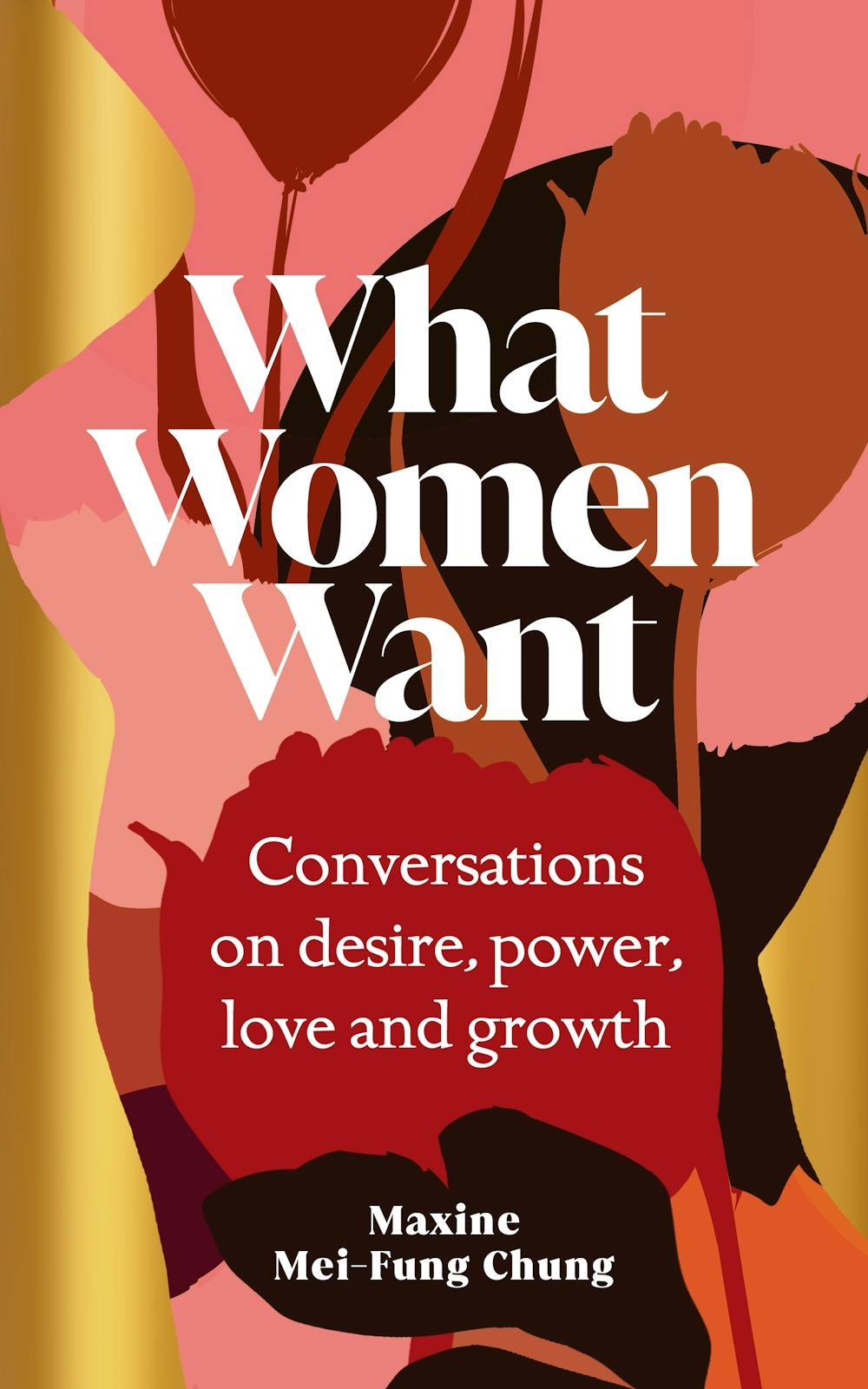 There is Marianna who desperately wants a baby, Ruth who wants to understand her stepfather’s cruelty, and Agatha who wants her son to accept her desire to embark on a late-life romantic relationship. And there’s Terri, who, in the opening chapter, attempts to force herself into a heterosexual marriage with an older man, then finds herself “skyfalling” into sex with strangers and attempting suicide, before she finds a woman who is right for her.
And yet, there is something uncomfortably voyeuristic in these fictionalised accounts of women’s experience, although Chung says she shares the stories with her patients’ consent.
There’s also a sense that the oddly gendered shopping list of things her patients “want” at the end of the book – including a baby, great sex and a man to love – may not bring them any kind of permanent joy. To the wary reader, these end-goals – though deeply felt – seem destined to give way to other wants. Or the patient may well decide their trajectory had been set in the wrong direction, before veering off elsewhere.
The things that are wrong with society – in this book, racism and homophobia, for example – have complicated dimensions, which need to be explored on a larger social canvas than afforded by a therapist’s couch.
“Women are not a mystery and neither are our wants and needs”, writes Chung.
But there is a complexity attached to our desire. What I want to understand more deeply is what it is that keeps us in denial, loveless, a constant state of longing.
But are women perpetually so lost and longing?
Read more:
From reproducers to 'flutters' to 'sluts': tracing attitudes to women's pleasure in Australia
What does a woman want?
In taking off from Freud’s question, “What does a woman want?” Chung appears to succumb to Freud’s infamous construction of women as “lack” and “absence”; as perpetually needy (and, for Freud, hysterical).
The book’s promise to liberate and empower women to “claim what we truly want” is unlikely to be realised – despite the book’s blurb assuring the reader Chung “knows the answers”.
Changing the world, running a multi-million-dollar business enterprise, or managing a household and raising a child are unlikely to keep anybody – women or men – happy and joyful all the time. It will almost certainly leave you tired, cranky and exhausted. But it’s probably worth a try.
Benjamin points out that although housework’s “hard-won order is destined not to last”, women’s “never-ceasing housekeeping is not just beginning over”. There will be tensions and cruel divisions between working and caring, between the need to “earn my living without short-changing my child”, and doubts about work that may or may not have been “pursued at too high a cost”. And there will always be a shimmery illusion of “priceless freedom” on the “far side of constraint”.
In some ways, the end of Benjamin’s book points the reader back to the beginning. For me, the image that lingers is a sketch that appears in the early pages: a word portrait of her aunt and mother embarking on their journey from Baghdad to London.
They are “dressed in white shorts and full skirts, tightly belted at the waist in the 1950s style”. They are “leaning over the railing of the ocean liner that would sweep them away from Jewish Baghdad forever, faces turned to the wind […]” And it’s the wind, the salt air filled with possibilities, that makes Benjamin’s final point – it’s not the end-point that counts, but the way of travelling.
Authors: Camilla Nelson, Associate Professor in Media, University of Notre Dame Australia
There is Marianna who desperately wants a baby, Ruth who wants to understand her stepfather’s cruelty, and Agatha who wants her son to accept her desire to embark on a late-life romantic relationship. And there’s Terri, who, in the opening chapter, attempts to force herself into a heterosexual marriage with an older man, then finds herself “skyfalling” into sex with strangers and attempting suicide, before she finds a woman who is right for her.
And yet, there is something uncomfortably voyeuristic in these fictionalised accounts of women’s experience, although Chung says she shares the stories with her patients’ consent.
There’s also a sense that the oddly gendered shopping list of things her patients “want” at the end of the book – including a baby, great sex and a man to love – may not bring them any kind of permanent joy. To the wary reader, these end-goals – though deeply felt – seem destined to give way to other wants. Or the patient may well decide their trajectory had been set in the wrong direction, before veering off elsewhere.
The things that are wrong with society – in this book, racism and homophobia, for example – have complicated dimensions, which need to be explored on a larger social canvas than afforded by a therapist’s couch.
“Women are not a mystery and neither are our wants and needs”, writes Chung.
But there is a complexity attached to our desire. What I want to understand more deeply is what it is that keeps us in denial, loveless, a constant state of longing.
But are women perpetually so lost and longing?
Read more:
From reproducers to 'flutters' to 'sluts': tracing attitudes to women's pleasure in Australia
What does a woman want?
In taking off from Freud’s question, “What does a woman want?” Chung appears to succumb to Freud’s infamous construction of women as “lack” and “absence”; as perpetually needy (and, for Freud, hysterical).
The book’s promise to liberate and empower women to “claim what we truly want” is unlikely to be realised – despite the book’s blurb assuring the reader Chung “knows the answers”.
Changing the world, running a multi-million-dollar business enterprise, or managing a household and raising a child are unlikely to keep anybody – women or men – happy and joyful all the time. It will almost certainly leave you tired, cranky and exhausted. But it’s probably worth a try.
Benjamin points out that although housework’s “hard-won order is destined not to last”, women’s “never-ceasing housekeeping is not just beginning over”. There will be tensions and cruel divisions between working and caring, between the need to “earn my living without short-changing my child”, and doubts about work that may or may not have been “pursued at too high a cost”. And there will always be a shimmery illusion of “priceless freedom” on the “far side of constraint”.
In some ways, the end of Benjamin’s book points the reader back to the beginning. For me, the image that lingers is a sketch that appears in the early pages: a word portrait of her aunt and mother embarking on their journey from Baghdad to London.
They are “dressed in white shorts and full skirts, tightly belted at the waist in the 1950s style”. They are “leaning over the railing of the ocean liner that would sweep them away from Jewish Baghdad forever, faces turned to the wind […]” And it’s the wind, the salt air filled with possibilities, that makes Benjamin’s final point – it’s not the end-point that counts, but the way of travelling.
Authors: Camilla Nelson, Associate Professor in Media, University of Notre Dame Australia