
How did millions of fish die gasping in the Darling – after three years of rain?
- Written by: Richard Kingsford, Professor, School of Biological, Earth and Environmental Sciences, UNSW Sydney
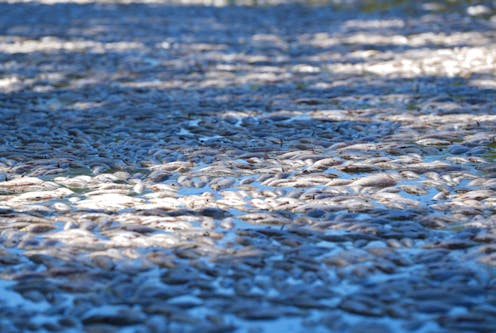
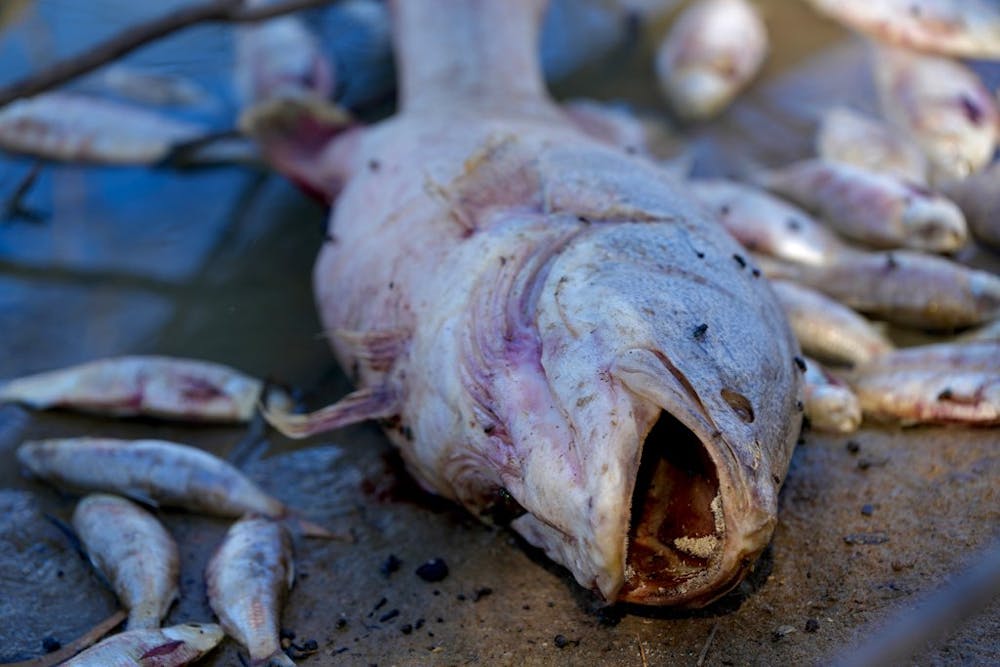
Millions of dead fish float on the surface of the river. Native bony herring and introduced young carp, as well as a few mature Murray cod and golden perch. History is repeating on the Darling River at Menindee. This new fish kill is even worse than the enormous 2018–2019 fish kill. And it’s in almost the same location.
But how can so many fish die when we’ve been having floods? What’s killing them?
In both 2018 and 2023, the immediate answer is the same: the fish ran out of oxygen. Five years ago, it was because the river was almost dry. This time, it’s likely to be factors like the heatwave days earlier, receding floodwaters, bacteria pulling oxygen from the water – and no escape.
But two events like this in five years speaks to a deeper cause. The Darling River – known as the Baaka by Barkandji Traditional Owners – is very sick. Too much of its water is siphoned off for agriculture. Our native fish are hardy. They’re used to extremes. But this is too much, even for them.
Short term pressure, long term pain
I was a member of the expert panel investigating the 2018–2019 Menindee fish kills. Everyone agreed the fish ran out of oxygen. It was a very dry period, and a cool front arriving after a heat wave mixed deep low-oxygen river water with the thin top layer which had oxygen.
But our panel also examined the long-term changes to the river. We found the long-term cause for the river’s decline was simple: too much water was being diverted upstream.
It wasn’t just climate change – it was irrigation. We warned it could happen again. Now it has.
When faced with such environmental disaster, our leaders tend to reach for Dorothea MacKellar’s famous poem, My Country, and its line about a land “Of droughts and flooding rains.” Coalition water ministers at both federal and state level confidently blamed the drought for the first fish kill. Now, NSW premier Dominic Perrottet has linked this kill to the recent floods.
This is part of the reason. But only part. When floodwaters engorged the Darling and its tributaries, it was a bonanza for bacteria that broke down dead wood lying on the floodplain. Unfortunately, this explosion of microorganisms had a devastating side effect: they sucked oxygen out of the water.
This is what’s known as a blackwater event (in reality, more greeny-brown). As the floodwaters moved downstream and the Darling’s flow decreased, millions of fish fled the floodplains and found themselves crammed back in the narrow river channel where they were hit by plummeting oxygen levels.
Desperate, the fish looked to escape. But upstream, their exit was blocked. In December, authorities had fully opened the gates to the Menindee main weir for the first time in a decade to let fish migrate. But now the gates are shut.
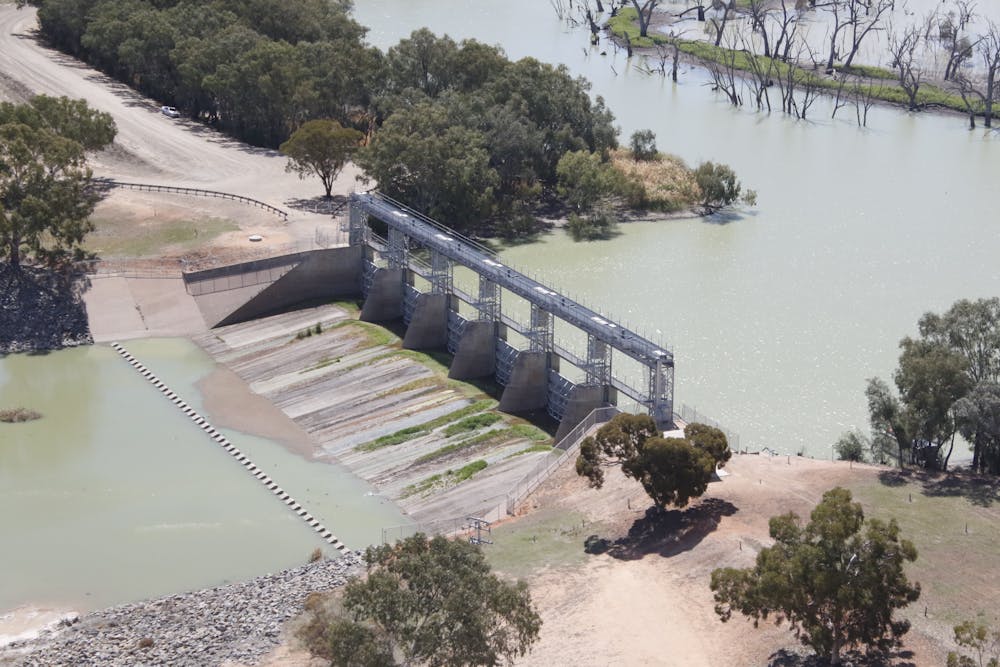 Fish could swim up river past the Menindee main weir in December - but as flows slowed, the gates have been shut.
Richard Kingsworth, Author provided
They couldn’t get into the main Menindee Lakes, where they might have found water with more oxygen, as they were blocked by the regulators – large taps used mainly to let water out.
Could they escape downstream? Perhaps some did. But for millions of fish, there was no time. Their bodies will only make the problem worse, as tonnes of rotting fish deposit vast quantities of nutrients into the river. That’s great for bacteria, algae and some fish-eating birds. But it’s not healthy for the river, its fish, or its people.
Yes, fish kills have always occurred but not at this scale. The fundamental reason the fish of the Darling keep dying is because there is not enough water allowed to flow.
Read more: Fish kills and undrinkable water: here's what to expect for the Murray Darling this summer
Why is the Darling in such trouble?
Since the 1980s, the Darling’s tributaries have steadily shrunk. The Macquarie, the Namoi, the Gwydir, the Border Rivers and the Condamine-Balonne are all shadows of the rivers they once were. Much of their water is captured in large dams, like Burrendong Dam, or intercepted by floodplain harvesting, which was legalised only last year by the NSW Government to the dismay of environmentalists and farmers downstream.
Just last week, before news of the fish kills at Menindee, water allocations in the Namoi and Gwydir Rivers were a staggering 113% and 275% respectively. That is to say, all the water farmers and other users could take from these rivers is well beyond the total flows left in the rivers.
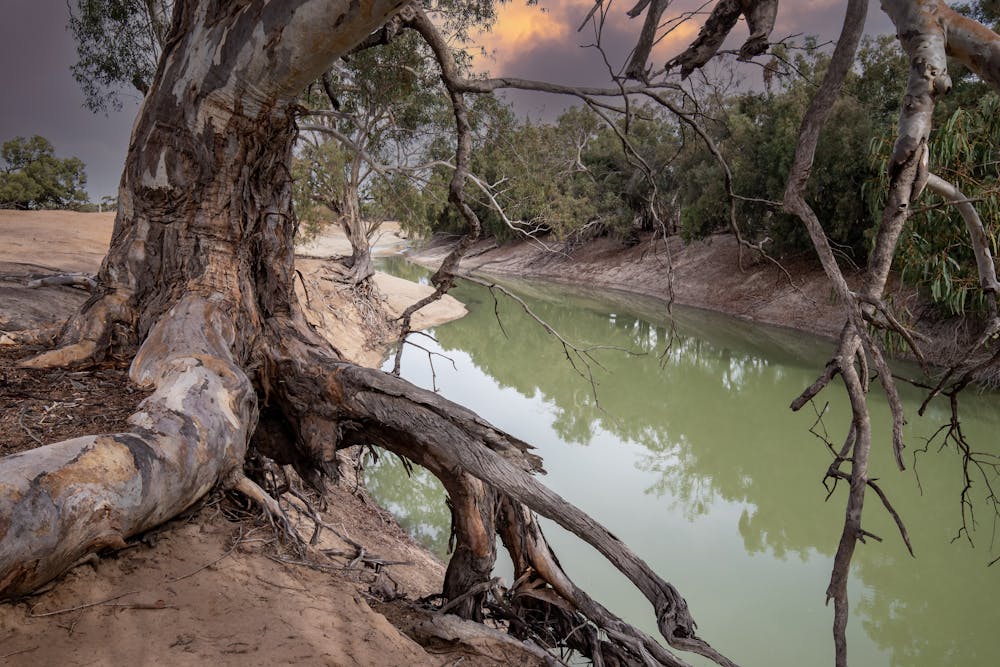 River red gums rely on periodic flooding. Without floodwaters, they can die.
Shutterstock
The fish kills at Menindee are the clearest sign yet of how policy and management have failed the Darling. These catastrophes were inevitable. And the pain isn’t limited to fish. We are suffering too.
Taxpayers forked out nearly half a billion dollars for a pipeline from the Murray to Broken Hill, which nearly ran out of water in 2019. Why? Because the Darling was no longer dependable. In 2019, the towns of Wilcannia and Brewarrina ran out of water, significantly affecting Aboriginal communities. Why? Because the Darling was so low.
Fish kills like this one make news for a few days, and then get forgotten. But unless we tackle the fundamental problem of a lack of water in our rivers, there will be many more to come. This is not a natural disaster. It is man-made.
Authors: Richard Kingsford, Professor, School of Biological, Earth and Environmental Sciences, UNSW Sydney