

Chernobyl was history's worst nuclear disaster. Now it's teaching geologists about the history of our planet
- Written by Denis Fougerouse, Research Fellow, School of Earth and Planetary Sciences and The Institute for Geoscience Research (TIGeR), Curtin University
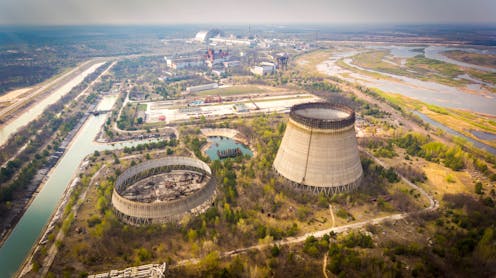
Thirty-seven years ago, on April 26 1986, the reactor of the Chernobyl nuclear power plant suffered a catastrophic meltdown. In the weeks that followed, the deadly event drove hundreds of thousands of people to relocate from the surrounding area, which is still a deserted “exclusion zone” today.
The Chernobyl nuclear accident was caused by an unfortunate cocktail of human error and flawed reactor design. It was the worst nuclear disaster in history, releasing more than 400 times as much radioactive material as the Hiroshima atomic bomb.
An uncontrollable chain reaction inside the reactor caused a sharp increase in temperature that ultimately resulted in the fusion of the fuel rods, a steam explosion and a fire. The melted fuel rods pooled temporarily at the bottom of the reactor chamber before making their way into the deeper levels of the power plant.
This hellish molten soup has proved an unexpected source of insight for geologists like me. In new research published in American Mineralogist, my colleagues and I show tiny zircons formed at Chernobyl change our understanding of how these crystals behave – and what they tell us about Earth’s past.
Corium and the elephant’s foot
Molten reactor material is called corium, and it’s a serious contender for the most dangerous substance on Earth.
Nearby radiation exposure to corium can kill within minutes, but that is not all. Corium is extremely hot and generates its own heat from radioactivity. It’s very difficult to cool it down.
The corium at Chernobyl reached 2,600℃, almost twice as hot as the surface temperature of the space shuttle during atmosphere re-entry or half the temperature at the surface of the Sun. For comparison, the temperature of natural lava from volcanoes ranges from 500 to 1,000℃.
Read more: Forget Fukushima: Chernobyl still holds record as worst nuclear accident for public health
Corium is so hot, it eats everything in its way. It can dissolve steel, sand and concrete, and it transforms water into radioactive steam almost instantly.
At Chernobyl, it was estimated 1,500 tons of corium was generated, flowing like lava and eating its way through metres of concrete in the basement of the power plant.
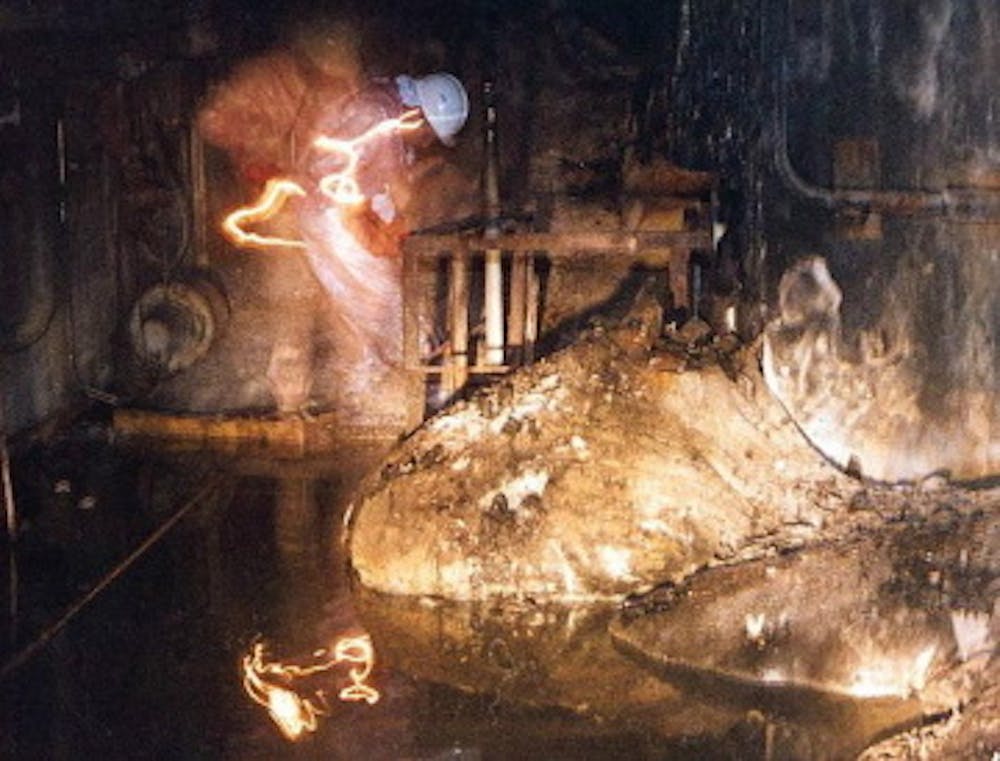
A second, even more devastating explosion was only just avoided by pumping the water used to extinguish the fire from the basement levels. Ultimately, the corium incorporated enough foreign building materials that it could not generate enough heat to keep its liquid state, and solidified into a lump that looks like the foot of an elephant.
Zircon and geologists: a love story
Uranium fuel rods are made of enriched uranium oxide, clad in zirconium alloy. Corium dissolved sand and concrete, which have a high silicon composition.
Zirconium, silicon and oxygen: all the ingredients were present in the Chernobyl melt to crystallise zircons (ZrSiO₄) about the width of a human hair.
Geologists and Earth scientists love zircon, because studying it can reveal the age when rocks formed and what geological process formed them. It is also very resilient to harsh geological conditions and is stable for billions of years.
Read more: A disappointing earring, and the world's hottest rock: zirconia
Zircons sampled from the solidified corium at Chernobyl are special because we know a lot about the conditions in which they formed and their history.
In many ways they can be considered analogous to controlled experiments, but from an extremely dangerous setting that cannot be reproduced safely in a laboratory environment. On the contrary, zircons from natural rocks have long, convoluted histories that are hard to untangle.
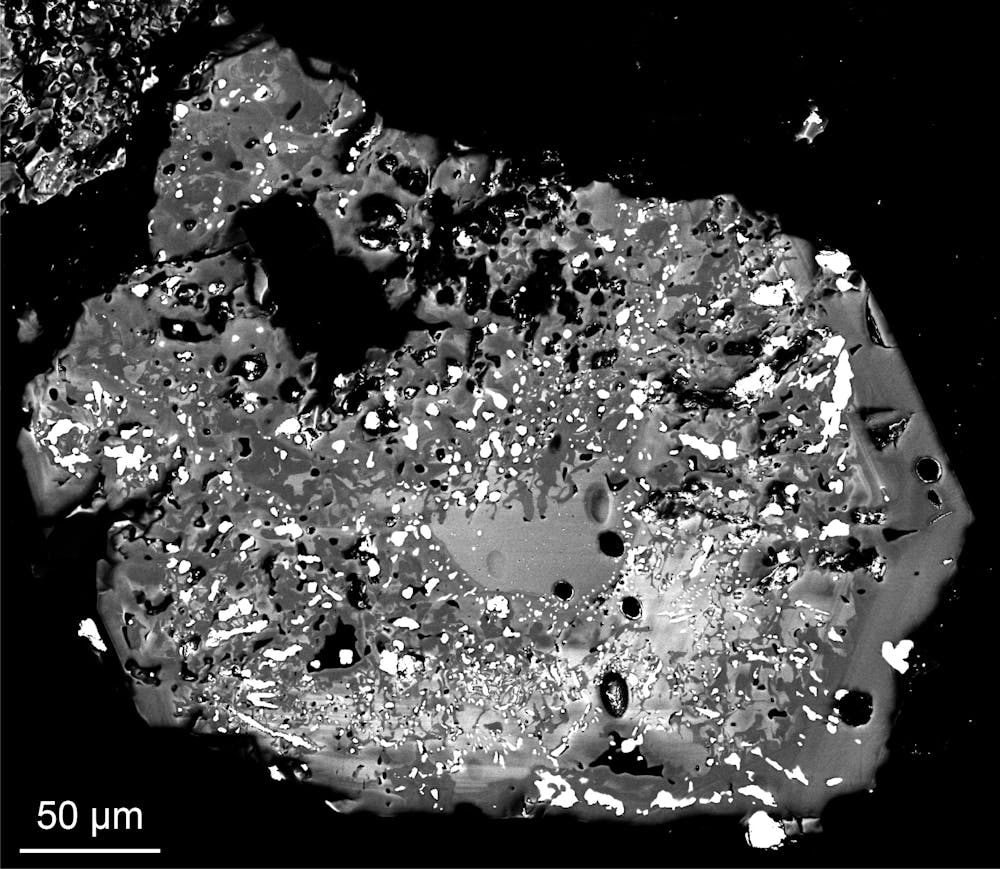 A zircon crystal from the Chernobyl melt shows surprising ‘re-equilibration textures’ that geologists had previously assumed were created by contact with water.
Denis Fougerouse, Author provided
A zircon crystal from the Chernobyl melt shows surprising ‘re-equilibration textures’ that geologists had previously assumed were created by contact with water.
Denis Fougerouse, Author provided
Surprisingly, the zircons from Chernobyl displayed features called “re-equilibration textures”, which are also found in many natural zircons. Until now, these features were attributed to the action of water dissolving the mineral.
However, the Chernobyl melt contained little or no water. This tells us the features were created by the melt directly, without the influence of water.
The zircons from Chernobyl taught geologists that zircons are not as resilient as they thought and this should be considered when studying complex rocks.
Nuclear forensics: CSI for nuclear safety
Studying the aftermath of nuclear incidents is a kind of detective work called nuclear forensics. It’s not just useful for geologists.
Nuclear power plant reactor meltdowns have happened only three times in history: at Chernobyl, at Three Mile Island in the USA in 1979, and at Japan’s Fukushima Daiichi in 2011.
Modern nuclear power reactors have incorporated more safety features to avoid another Chernobyl disaster.
Using extremely complex instrumentation, it is possible to measure the exact composition of uranium and other radioactive elements found at the site of an incident.
By measuring the proportion of the isotopes of uranium and plutonium, information about the type of fuel used in the reactor can be determined.
This is not only useful for understanding accidents and improving safety. Answering questions about the kind of fuel in use can help us draw many other conclusions as well, including the causes of the accident and how to mitigate them.
Nuclear forensics is also helpful in controlling nuclear facilities overseen by the International Atomic Energy Agency (IAEA), promoting the safe, secure and peaceful use of nuclear technologies.
Authors: Denis Fougerouse, Research Fellow, School of Earth and Planetary Sciences and The Institute for Geoscience Research (TIGeR), Curtin University


















#/media/File:Chernobyl_Elephant's_Foot.jpg)