Yes, the 1.5 million Australians getting rent assistance need an increase, but more public housing is the lasting fix for the crisis
- Written by Liam Davies, PhD Candidate, Centre for Urban Research, RMIT University
Australia is in the grip of a housing crisis, with low-income households hit hardest by rising rents and falling vacancy rates.
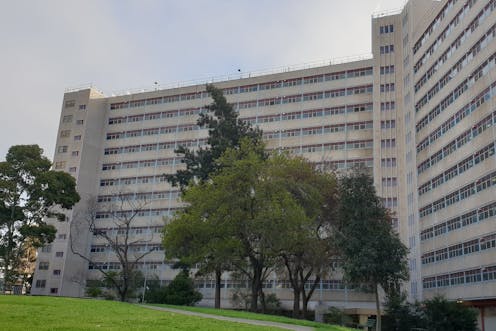
Social housing tenants were insulated from the 10.2% jump in advertised private rental prices in 2022. However, the proportion of people in social housing (an umbrella term covering public and community housing) fell by a fifth, from 4.6% to 3.7%, over the past decade. The Productivity Commission reports social housing waiting lists grew by over 17% in just three years, from 148,520 in 2019 to 174,624 in 2022.
The Albanese government has tabled a legislative package to address the housing crisis. The flagship $10 billion Housing Australia Future Fund is intended to help pay for 30,000 social and affordable housing units to be built in its first five years. That’s far less than the estimated 216,000-dwelling gap between the level of need for social housing and the current supply.
In the lead-up to the federal budget in May, advocates are pushing for other measures to provide faster relief for low-income households in housing stress. At the forefront are calls to increase Commonwealth Rent Assistance (CRA). Some academics have made the case for doubling rent assistance, as have the Greens.
However, primarily advocating for an increase in rent assistance risks prioritising short-term and partial relief over much-needed systemic change in how Australia delivers affordable housing. Social housing is a more cost-effective and lasting way of ensuring low-income households have affordable and secure housing.
Read more: The rent crisis is set to spread: here's the case for doubling rent assistance
Subsidies reflect state shift away from providing housing
The Commonwealth provides financial assistance to eligible individuals or families in private rentals or community housing (where rents are generally set below 30% of income). The payment is meant to help people on low to moderate incomes meet the cost of renting a home in the private market.
To be eligible for the program, an individual or family must be receiving a qualifying social security payment and paying rent to a private landlord or community housing provider. The amount of rent assistance depends on their income, rent and household circumstances.
The program plays a similar role to rental assistance overseas. These programs include the Housing Benefit in the United Kingdom, the Rent Supplement in Ireland and the Housing Allowance in France. All provide assistance directly to people on low incomes in private rental housing. Section 8 in the United States and the Housing Benefit in Canada differ in paying a portion of low-income households’ rent directly to landlords.
These programs are part of a sustained trend away from governments directly providing housing and towards subsidising market participation.
Read more: The market has failed to give Australians affordable housing, so don't expect it to solve the crisis
Can increasing rent assistance solve housing insecurity?
Commonwealth Rent Assistance cost the government about A$4.9 billion in 2021–22. Since eligibility was broadened in 1985, the amount has increased from $250 million a year, paid to roughly 500,000 people, to nearly $5 billion paid to roughly 1.5 million people today.
By comparison, the National Housing and Homelessness Agreement provides $1.7 billion to the state housing authorities and community housing organisations that provided 439,386 tenancies across Australia in 2022.
Despite rent assistance increasing over time, 43.9% of recipients are paying more than 30% of their income in rent – the benchmark for housing stress. So, while government CRA spending is similar to what it spends on social housing on a per-dwelling basis, rent assistance is not as effective at ensuring low-income households have access to affordable and secure housing. This indicates a need to fix the structural problems that are worsening the housing crisis.
Australia’s rental housing system has issues that increases in rent assistance cannot fix. Most CRA recipients rent in the tightening private market. With so few vacancies and rents soaring, finding a new private rental is near-impossible for low-income households.
Adding to their difficulties are tenancy laws that fail to offer long-term tenant security. Some states and territories have ended “no grounds” or “no fault” evictions. Even so, renters can still face housing uncertainty when a lease ends.
Read more: How 5 key tenancy reforms are affecting renters and landlords around Australia
Issues with housing quality in lower-cost private rentals are also widespread. In a recent ACOSS survey, 89% of Centrelink recipients said they couldn’t keep their homes cool in summer and sometimes or always felt unwell as a result.
Renters also often fear eviction or rent increases in response to asking for repairs. As a result, 51% live in homes in need of repairs.
Rent assistance also does little to reduce the concentration of disadvantage in certain areas, as shown below. Lower-income households are increasingly pushed to seek housing in cheaper areas, which have poorer access to infrastructure, services and amenities.
Lasting solution is to rebuild public housing stock
A 2020 Australian Housing and Urban Research Institute (AHURI) study modelled the effects of increasing the maximum rate of Commonwealth Rent Assistance by 30%. It found this would “improve affordability outcomes” for 623,800 private renters, but at a cost of $1 billion to the federal budget.
No doubt a supplementary housing payment akin to rent assistance will be a useful interim measure. Expanding eligibility and a higher rate would both help struggling households.
However, this should be considered a temporary step towards easing housing stress. It needs to be implemented alongside long-term measures that tackle the root causes of the housing crisis. The best systemic solution is a sustained reinvestment in public housing on a scale that matches the hundreds of thousands who need it.
Authors: Liam Davies, PhD Candidate, Centre for Urban Research, RMIT University