Modern Australian
The Times

commercial fishers help monitor rising temperatures in coastal seas

  • Written by Julie Jakoboski, Oceanographic Data Scientist, Moana Project's Te Tiro Moana Team Lead, MetService — Te Ratonga Tirorangi
commercial fishers help monitor rising temperatures in coastal seas

The world’s oceans are buffering us from the worst climate impacts by taking up more than 90% of the excess heat generated by greenhouse gas emissions. This has warmed them by 0.88℃ (on average globally), according to the latest climate report released this week.

The warming of the ocean affects marine ecosystems, drives changes in ocean circulation and heat distribution, and strongly influences atmospheric weather systems. All these processes are critically important to the health of our planet.

Read more: Ocean heat is at record levels, with major consequences

Scientists measure subsurface ocean temperature around the world, but there is a coastal gap in those measurements. This is where fishing, aquaculture, recreation and ocean managers need good data the most.

MetService’s Moana Project is changing that. We have joined forces with the commercial fishing sector to deploy sensors on vessels nationwide to gain insights into how ocean temperatures are changing near the coast.

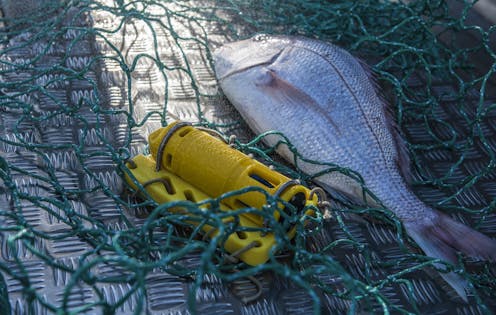
A small sensor in a yellow container is attached to fishing gear.
A temperature sensor is attached to fishing gear to track temperature data in coastal waters. John Radford/ZebraTech, CC BY-SA

Monitoring coastal changes

Ocean temperature measurements are critical for understanding and accurately predicting extreme events, including severe storms and unusually warm coastal waters, which have serious economic and societal impacts.

During the past few years, Aotearoa New Zealand has been plagued by extreme rainfall and persistent marine heatwaves. This has severely affected marine life, fisheries and aquaculture.

Increased ocean temperatures can exacerbate severe weather events like Cyclone Gabrielle, contributing to the conditions for intense rainfall and potential devastation.

Read more: Floods, cyclones, thunderstorms: is climate change to blame for New Zealand's summer of extreme weather?

To prepare for a changing climate and provide early alerts for extreme events, we need to monitor temperature changes below the ocean’s surface. These measurements are usually expensive, often requiring oceanographic research vessels to deploy instruments.

Pioneering international programmes like Argo (autonomous floats that move with the world’s ocean currents collecting measurements) provide unprecedented world coverage of deeper waters.

But they are not primarily designed to measure coastal and shelf seas. The lack of coastal observations is recognised in New Zealand and globally, and is a priority for the United Nations Decade of Ocean Science 2021-2030.

A map of coverage by the Argo programme and by sensors on fishing vessels
This graph shows the average number of Argo profiles per month around Aotearoa New Zealand (left, blue colours) and the average number of sensor deployments (right, red colours) from June 2020 to February 2023, highlighting the coverage obtained by these complementary programmes. Moana project, CC BY-ND

Crowd-sourcing ocean observations

As part of the Moana Project, MetService and the commercial fishing industry partnered with Nelson-based company ZebraTech to develop the Mangōpare sensor, a small, lightweight, robust and accurate temperature sensor that attaches to commercial fishing gear.

The Mangōpare sensor
The Mangōpare sensor, named by Moana Project partner Whakatōhea iwi, fits into the palm of a hand. Moana project, CC BY-ND

The sensor was distributed to volunteer inshore and deep-water fishing vessels and citizen scientists. Thanks to more than 200 skippers and crew, there are now 300 sensors on commercial fishing vessels, providing more than one million subsurface observations a month from across Aotearoa New Zealand.

The sensor attaches to any type of fishing gear and automatically collects ocean temperature and depth measurements through the water column. This information is automatically sent to the cloud, quality checked, returned to the fisher collecting it and incorporated into MetService ocean forecasts.

Vital temperature record to improve forecasts

Temperature observations are used to improve ocean forecasting models and verify the depth of marine heatwaves around Aotearoa New Zealand.

Similar to a weather station on land collecting real-time data that improves weather forecasts, sensor data helps improve three-dimensional predictions of ocean temperature, currents and sea level. These forecasts are used to prepare coastal communities for approaching storms, optimise fishing and alert aquaculture to extreme ocean temperatures.

Read more: Māori hold a third of NZ’s fishing interests, but as the ocean warms and fish migrate, these rights don't move with them

Scientists use the sensor data to understand how ocean temperature affects our marine ecosystems. Recently, severe marine heatwaves have affected coastal and offshore areas leading to changes in fish distribution and impacts on sensitive species.

The sensor provides measurements exactly where fishing occurs, helping fishers make sense of changes in their catch.

A sensor attached a commercial fishing pot.
Like weather stations on land, sensors attached to fishing gear help collect data to improve three-dimensional predictions of ocean temperature. William Maclardy, CC BY-SA

Temperature measurements are an invaluable record of subsurface ocean structure, allowing scientists to determine impacts of marine heatwaves, such as the bleaching of Fjordland sponges. Increased understanding is essential to a climate-resilient future for our oceans and marine species over the coming decades.

Partnering with technology innovators, the commercial fishing sector, citizen scientists and researchers from across New Zealand, this project breaks down traditional barriers.

This approach demonstrates how we can solve critical environmental issues and provide important insight into our changing oceans. The continuation of this system will lead the way toward informing a climate-resilient blue economy and understanding the coastal ocean, providing measurements that will only become more critical in the coming years.

Authors: Julie Jakoboski, Oceanographic Data Scientist, Moana Project's Te Tiro Moana Team Lead, MetService — Te Ratonga Tirorangi


Read more https://theconversation.com/fishing-for-data-commercial-fishers-help-monitor-rising-temperatures-in-coastal-seas-202115

Why Your Skin Breaks Out: The Science of Acne Explained

Acne is the most common skin condition in the world. An estimated 85% of people experience it at some point between the ages of 12 and 24, and a gro...

10 Swimwear Trends Australian Women Are Wearing This Summer

Every Australian summer brings a fresh wave of swimwear trends, but some styles have much greater staying power than others. While fashion constantly ...

Why Regular Skills Updates Are Essential for Licensed Security Officers

A guard at a Brisbane shopping centre gets a call about a shoplifter who's turned aggressive.  They’ve done the job for six years. But their de-...

10 Benefits of Choosing Professional Tutoring Penrith Services

Every student has unique learning strengths, challenges, and academic goals. While classroom teaching provides essential knowledge and structure, so...

Sunshine Coast Baby Classes Prove Big Hit Among First-Time Mums

There's a movement gaining traction on the Sunshine Coast, providing a village of support, socialisation and relief for first-time mothers and babie...

Father's Day Gift Ideas for Men Who Are Hard to Buy For

Some dads are easy to buy for. Others do not want anything, already have everything, or give you the classic "don't worry about me" answer every yea...

Top 5 Mistakes That Wear Out Your Brakes Faster

Brakes don't need frequent replacements like oil changes do.   But a lot of the wear happens quietly, over months, because of habits most drivers...

Plantation Shutters vs Curtains: Which Is Better for Your New Home?

Moving into a new home is an exciting opportunity to personalise your space and make it your own. While many homeowners focus on furniture, flooring...

Celebration of Life vs Traditional Funeral: What's the Difference?

When saying goodbye to someone you love, there is no single way to honour their life. Every family has different traditions, beliefs, and preference...

Building Approval for Roofing Projects: What Homeowners Need to Know

Roofing projects are an important part of maintaining and protecting your home. Whether you're repairing storm damage, replacing an ageing roof, or ...

Chatswood Tutoring And Its Role In Academic Achievement

Academic success often requires more than classroom attendance alone. Students face increasing expectations as they progress through school, particu...

Why Laser Hair Removal Treatments Continue Growing In Popularity

Managing unwanted hair can become time-consuming and frustrating for many people, especially when shaving, waxing, and other temporary methods requi...

Choosing the Right Devices for a Flexible Workplace

For IT leaders managing large fleets, the device layer is where workforce productivity and security policy meet. The shift towards flexible and hybrid...

How Business Advisory Services Help Companies Achieve Sustainable Growth

Every business owner aims to build a profitable and sustainable organisation. While dedication, innovation, and hard work are important, achieving l...

Why Body Contouring Has Become A Popular Cosmetic Treatment

Many people maintain healthy lifestyles through regular exercise and balanced eating habits but still struggle with stubborn areas of fat that are d...

How to Choose the Right POS Hardware for Your Business in Australia

A lot of Australian business owners spend weeks researching POS software but buy hardware almost as an afterthought. That's a mistake. The wrong har...

Why Material Handling Hose Is Critical for Industrial Efficiency

A high-performance material handling hose is an essential component in industries that transport abrasive, dry, or bulk materials on a daily basis...

How to Choose the Right Lawyer in Melbourne for Your Situation

Choosing legal support can feel difficult, especially when the stakes are personal or business-related. The right lawyer in Melbourne should underst...