

Greens will back Labor's safeguard mechanism without a ban on new coal and gas. That's a good outcome
- Written by Tony Wood, Program Director, Energy, Grattan Institute
Labor and the Greens have reached a compromise on the safeguard mechanism after months of tense negotiations, giving the government the numbers it needs to pass the bill into law.
Greens leader Adam Bandt on Monday announced his party had secured a hard cap on emissions from polluters covered by the scheme. The cap will potentially affect new or expanding fossil fuel projects. But it falls short of the main concession the Greens originally demanded from Labor – an outright ban on new gas and coal projects.
The safeguard mechanism aims to curb emissions from about 215 of Australia’s biggest polluters. Labor’s tightening of the policy is crucial if Australia is to meet its emissions reduction target of 43% by 2030.
Building a hard emissions cap into the safeguard mechanism will go some way to giving this policy teeth. By limiting emissions to 140 million tonnes – the current emissions from industries covered by the scheme – it will make it harder for new fossil fuel projects to be viable.

How will the hard cap work?
Under the hard cap, the energy minister of the day will decide whether to permit a new fossil fuel project. The decision will be based on advice from the Climate Change Authority on projected gross emissions – meaning without carbon offsets being used.
The carbon budget for the sector will ensure Australia’s net emissions are in line with the central objective of the policy.
While the cap doesn’t prevent new projects, it does give us a level of confidence that any future projects can’t emit past a certain level.
Some 116 fossil fuel projects are being planned in Australia. Bandt says the cap means half of them will no longer proceed – and projects further along, such as fracking in the Northern Territory’s Beetaloo Basin, may no longer be feasible.
Bandt says Labor “still wants to open the rest” of the 116 projects in the pipeline, adding: “now there is going to be a fight for every new project that the government wants to open”. In reality, history suggests many of these projects would not have proceeded anyway, so we shouldn’t put too much weight on Labor’s concession.
Read more: Australia's 116 new coal, oil and gas projects equate to 215 new coal power stations
No new fossil fuels was a hard sell
From the outset of negotiations, Labor would not budge on the Greens’ demand to ban new coal and gas projects. On Monday, Bandt said trying to strike a deal with Labor was:
like negotiating with the political wing of the coal and gas corporations. Labor seems more afraid of the coal and gas corporations than climate collapse. Labor seems more afraid of Woodside than global warming.
But banning new coal and gas projects is a hard sell.
Fossil fuel projects in Australia have traditionally enjoyed bipartisan support. The Coalition likes them because they support corporations and exports. And many in Labor’s union base like the well-paid, reliable work the mines offer.
And then there’s the simple fact of supply and demand. Right now, the world is still 81% powered by fossil fuels. We have not yet built enough clean alternatives.
Right now, we ship large volumes of liquefied natural gas (LNG) and coal to countries in our region such as China, Japan and South Korea. If Australia banned new gas projects, these exports would be at risk. Our Asian trading partners would probably have to find new suppliers once the long-term contracts ended.
For these reasons and more, the odds were stacked against the Greens and their demands.
Read more: A tonne of fossil carbon isn't the same as a tonne of new trees: why offsets can't save us
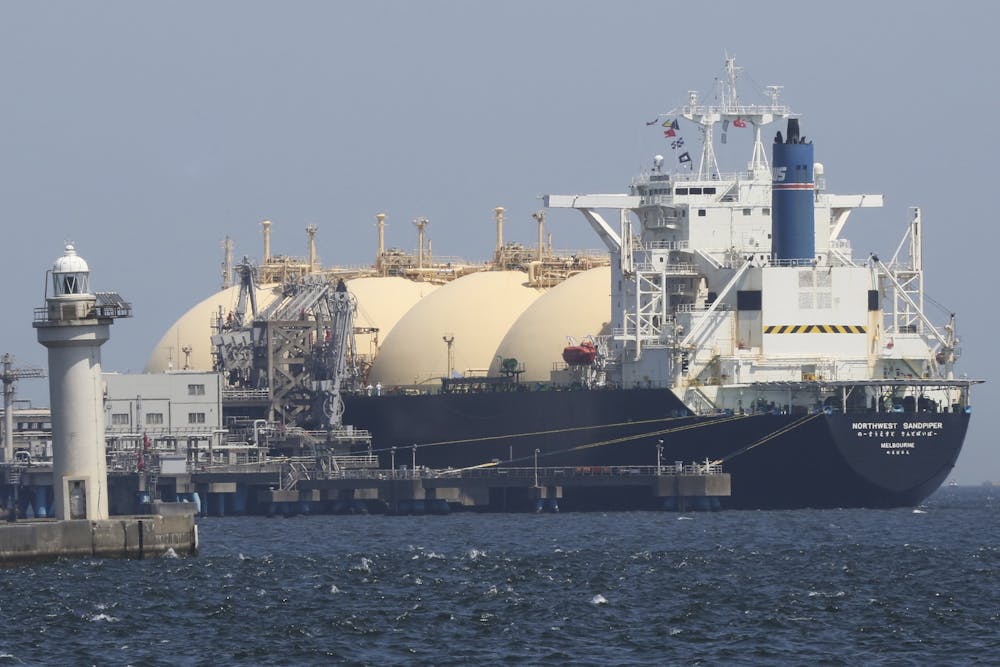 If Australia unilaterally ended new fossil fuel projects, what would that mean for trading partners like Japan? Pictured: Australian LNG tanker anchored in Yokohama near Tokyo.
Koji Sasahara
If Australia unilaterally ended new fossil fuel projects, what would that mean for trading partners like Japan? Pictured: Australian LNG tanker anchored in Yokohama near Tokyo.
Koji Sasahara
Where to now?
Bandt has rightly pointed to the latest report by the Intergovernmental Panel on Climate Change, which makes it clear the world must stop opening coal and gas mines if it wants to avert the worst damage from climate change.
But for the next few decades, the world is likely to keep using fossil fuels alongside renewables and other clean options. So what options does Australia have to make a significant dent in global emissions?
It should publicly plan to for a future without fossil fuel exports – and work with our fossil fuel customers in Asia to offer them green alternatives.
Australia is well placed to explore industries such as green cement, critical minerals such as cobalt, green iron ore and green hydrogen. If we can ramp these industries up as demand for legacy fossil fuels wanes, we could find a sweet spot.We should take punts on technologies and products which may – or may not – become vitally important. Not every clean tech development will succeed. But some will.
We want companies such as Nippon Steel to invest in green steel in Australia. We need business leaders to invest in green hydrogen exports – even though there’s a chance of failure.
United States President Joe Biden has embraced this logic. Environmentalists have condemned his approval of new fossil fuel projects. But the Biden administration last year passed a A$530 billion bill to pump huge funds into heat pumps, solar, wind and other clean technologies. If we don’t tackle demand, there will be no way to stop supply.
And Australia must also reduce its own fossil fuel demand, by shifting to zero-emissions in power and transport sectors as quickly as possible.
Do we now have a legitimate emissions policy?
The policy outcome announced on Monday will make a major contribution to meeting Australia’s emissions reduction targets, and marks a major jump in climate ambition.
But as ever, the devil can be in the detail. We must wait to see how the reformed scheme, with its new conditions, will work.
Authors: Tony Wood, Program Director, Energy, Grattan Institute

















