First Nations people have made a plea for 'truth-telling'. By reckoning with its past, Australia can finally help improve our future
- Written by Julia Hurst, Faculty of Arts Indigenous Postdoctoral Fellow, Indigenous and Settler Relations Collaboration, The University of Melbourne
This is the third article in our series explaining Voice, Treaty and Truth. Read the other articles in the series here and here.
Australia has never been good at listening to Aboriginal and Torres Strait Islander people. Despite the truths that have already been told in processes like the Royal Commission into Aboriginal Deaths in Custody or the Inquiry into the Separation of Aboriginal and Torres Strait Islander Children from their Families, time and again governments have ignored recommendations designed to address the impacts of Australia’s settler-colonial past and present.
State refusals to respond to truth have led to renewed calls for processes that will detail the impacts of colonisation in the everyday lives of Indigenous people. These calls were an important part of the Uluru Statement from the Heart, which sought “the establishment of a First Nations Voice enshrined in the Constitution”, complimented by “a Makarrata Commission to supervise a process of agreement-making between governments and First Nations and truth-telling about our history”.
As legal scholars Gabrielle Appleby and Megan Davis have commented, the call for truth-telling in the Uluru Statement is just one part of a wider call for structural reform intended to ensure improvement in the lives of Aboriginal and Torres Strait Islander people.
Read more: What actually is a treaty? What could it mean for Indigenous people?
Why truth?
Beginning in the 1980s, formal truth-telling processes (usually called truth commissions) emerged as a method of reckoning with the past in deeply divided societies around the world. Perhaps the most famous example is the South African Truth and Reconciliation Commission, which aimed to address the gross violations of human rights that happened under apartheid.
Truth commissions like this are generally temporary, state-sanctioned inquiries that typically last from one to five years, with a remit to investigate particular events and examine specific violations over a defined period of time. This typically involves collecting testimony from victims and (sometimes) perpetrators.
It is only relatively recently that truth-telling processes have been used as a response to settler colonial violence, most notably via Canada’s Truth and Reconciliation Commission, which arose after a class action lawsuit on behalf of the roughly 150,000 First Nations children taken from their familes and placed in residential schools.
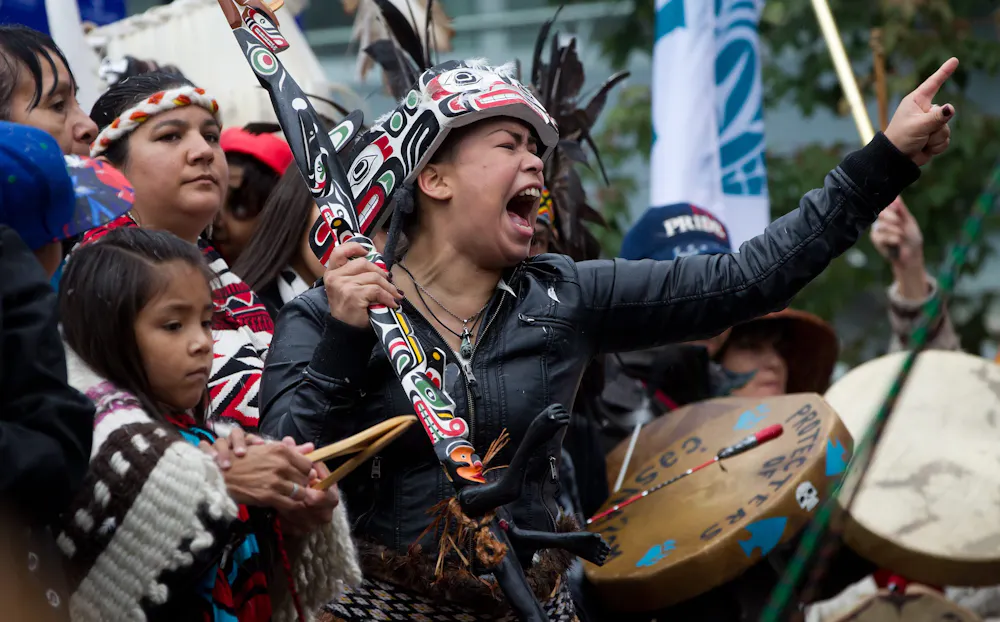
The Uluru Statement isn’t the first time First Nations on this continent have called for truth-telling. Since colonisation, Indigenous peoples have insisted that Australia must not look away from their experiences of dispossession and survival.
When these truths have been told, however, they have all too often been met with denial, defensiveness or even aggression. For example, when the Stolen Generations inquiry pointed to evidence of the forcible removal of Indigenous children that, it charged, constituted a breach of the UN Convention on Genocide, there was an immediate conservative backlash. The Howard government rejected the findings of the inquiry in one of the earliest salvos against what conservatives have termed a “black armband” view of Australian history.
There is a reason settler governments have been reluctant to engage in truth-telling. First Nations often seek truth as a means of changing an untenable status quo, reshaping society’s attitudes so as to improve their own future prospects and reaffirm their distinct sovereignties and their right to self-determination.
As the non-Indigenous Canadian political scientist Courtney Jung has argued, while settler governments may try to use the conclusion of a truth commission to “draw a line through history”, First Nations seek to build “not a wall but a bridge”, using truth-telling to “draw history into the present, and to draw connections between past policy, present policy, and present injustices”.
Whose truths? What truths?
Broadly speaking, First Nations peoples seek truths that address three key themes: narrative and memory; trauma and healing; and responsibility and justice.
We have described this potential as “the promise of truth”, in which truth-telling leads to a kind of agreement between Indigenous and settler peoples, rather than being a process centred on the state and its violence.
The promise of truth is that it will change national narratives and produce a new, shared collective memory that acknowledges crimes of the past; it will contribute to the healing and recovery of Indigenous people who have been harmed by colonisation and dispossession; and it will compel settlers and their institutions to take responsibility for the harms of colonisation.
This approach stands in contrast to what we have called the “colonisation of truth”, through which truth-telling is seen primarily as rehabilitative of the settler colonial state while obscuring ongoing injustices. When truth is colonised, it may reproduce narratives that restore aspects of settler legitimacy and treat injustices as being solely in the past. Alternatively, this version of truth may treat First Nations people merely as victims, telling stories of harm and trauma without delivering reparation. Or it may suggest that the demand for responsibility and justice has been fulfilled simply by engaging in the truth-telling process, rather than treating the telling of truth as a starting point for a fairer future.
Truth, then, is complex, and what it may achieve in the Australian context is not yet clear. As treaty processes progress in several Australian jurisdictions, the commitment to truth-telling seems likely to be a part of future negotiations. This close connection between treaty and truth is unique to the Australian case and confirms the strongly held belief that truth has transformative potential. We do not yet know whether the linking of truth and treaty will produce the transformation in relationships that is so urgently needed.
 The Yoorrook Truth and Justice Commission is the first in Australia to explicitly include the word ‘truth’.
Yoorrook Commission
The Yoorrook Truth and Justice Commission is the first in Australia to explicitly include the word ‘truth’.
Yoorrook Commission
Victoria, which announced a commitment to treaty in 2016, is the jurisdiction most advanced in testing this proposition. In 2022, Victoria established the Yoorrook Truth and Justice Commission (Yoorrok is a Wemba Wemba word meaning “truth”), marking a new era in Australian truth-telling focused on the history of invasion and colonisation of First Nations’ territories. Until the creation of Yoorrook, no previous commission, royal commission or inquiry into colonisation in Australia has included the word “truth” in its official title.
Yet still, truth is not a straightforward proposition. “Truth burns,” as Indigenous academic Marcia Langton recently put it. Sometimes, truth-telling is painful and connects directly to harm and injustice.
Read more: The Voice: what is it, where did it come from, and what can it achieve?
Truth is tricky. It can appear to open spaces for new understandings, while simultaneously shutting these spaces down and reinforcing the colonial status quo.
Ultimately, truth-telling is uncomfortable but necessary, as change in any relationship inevitably is. But this is where the possibility lives. As new truth-telling takes place across this continent we have an opportunity to imagine what it might mean to be in a relationship that does not deny the truth of First Nations’ lives, or the truth of how Australia has come to be.
Authors: Julia Hurst, Faculty of Arts Indigenous Postdoctoral Fellow, Indigenous and Settler Relations Collaboration, The University of Melbourne