Diseases gave us the rise of Christianity, the end of the Aztecs and public sanitation. How might future plagues change human history?
- Written by Adrian Esterman, Professor of Biostatistics and Epidemiology, University of South Australia
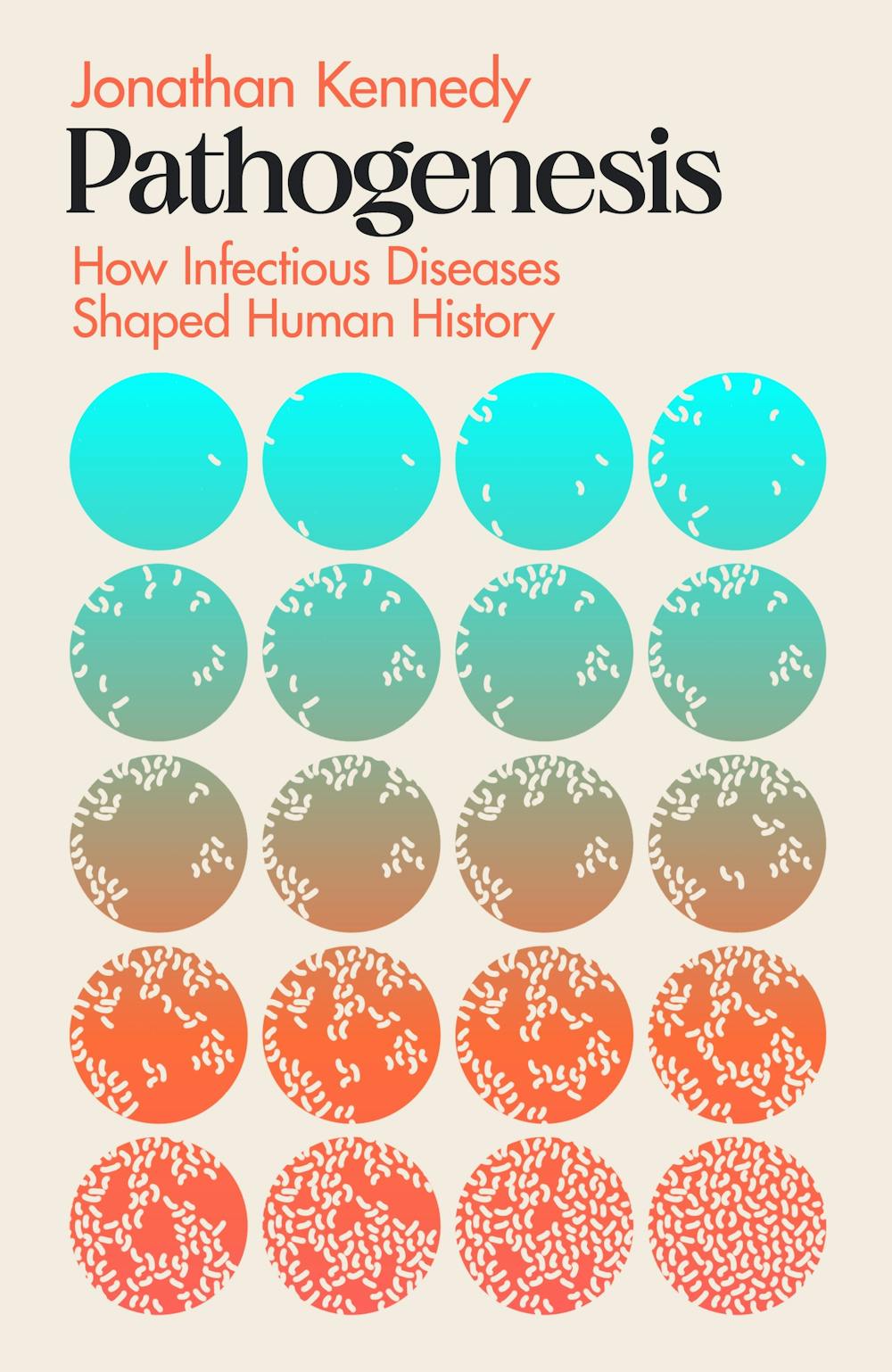
“Every once in a while a book lands on your desk that changes the way you perceive the world you live in, a book that fundamentally challenges your understanding of human history.” So began the blurb that came with this book. Aha! I thought. The usual advertising hyperbole, a gross exaggeration.
Yet Pathogenesis did challenge much of my understanding of world history. Who knew that if it wasn’t for an Ebola-like pandemic in the 2nd century CE, Christianity would never have become a world religion? Or that if it weren’t for retroviruses, women would be laying eggs rather than having live births? (According to Kennedy, a retrovirus inserted DNA into our ancestor’s genome that caused the placenta to develop.)
Book review: Pathogenesis: How germs made history – by Jonathan Kennedy (Torva)
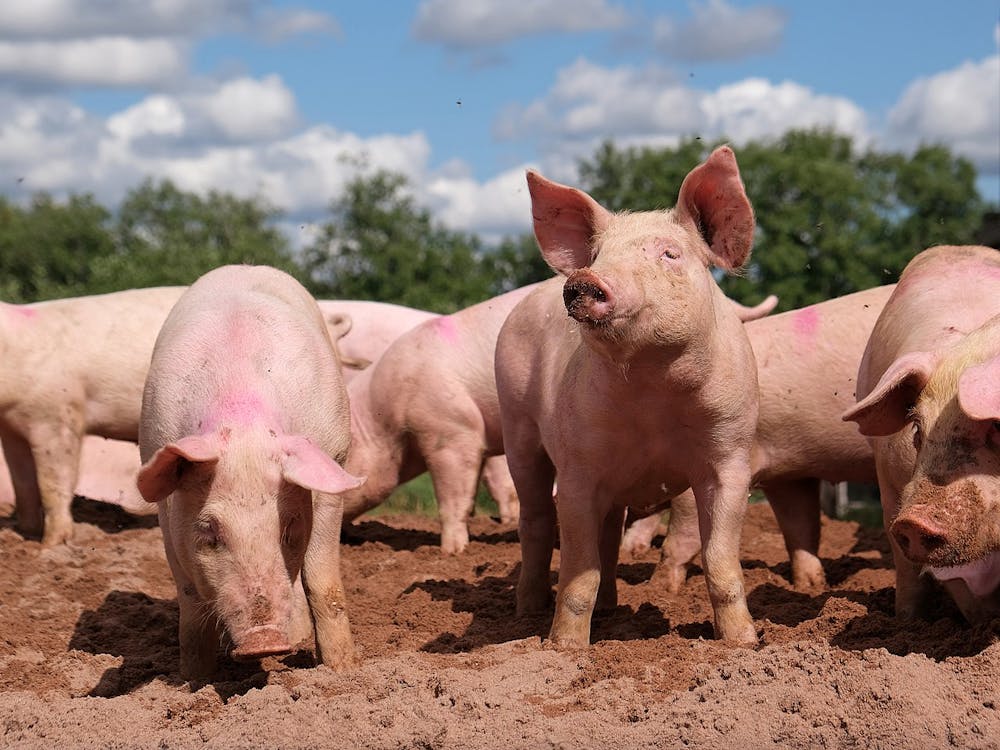 Settlement and the farming of domestic animals led to the emergence of diseases spread by animals.
kallerna/Wikimedia Commons, CC BY
Read more:
Disease evolution: our long history of fighting viruses
Plagues and social upheavals
In a chapter on ancient plagues, Kennedy quotes from Monty Python’s The Life of Brian:
All right, but apart from the sanitation, the medicine, education, wine, public order, irrigation, roads, a fresh water system, and public health, what have the Romans ever done for us?
He points out that Roman cities were, in fact, “filthy, stinking and disease-ridden”, and goes on to describe the great plagues that weakened the Roman Empire. The first was the Antonine Plague, possibly caused by smallpox. This was followed some 70 years later by the Plague of Cyprian from AD 249-262, which led to the splitting of the Roman Empire and the rise of Christianity.
Kennedy completes this chapter with a description of the Plague of Justinian, caused by bubonic plague. The massive deaths caused by this epidemic led to the demise of the Roman Empire, and the Muslim conquest of the Middle East.
In the period 1346–53, the Black Death tore through North Africa and Europe, killing an estimated 75 million to 200 million people. Kennedy describes the devastation and huge social upheavals that resulted from this pandemic. Until then, the Roman Catholic Church dominated society. But:
During the Black Death and subsequent plague outbreaks, people looked to the Church for comfort. All too often they didn’t find it.
Settlement and the farming of domestic animals led to the emergence of diseases spread by animals.
kallerna/Wikimedia Commons, CC BY
Read more:
Disease evolution: our long history of fighting viruses
Plagues and social upheavals
In a chapter on ancient plagues, Kennedy quotes from Monty Python’s The Life of Brian:
All right, but apart from the sanitation, the medicine, education, wine, public order, irrigation, roads, a fresh water system, and public health, what have the Romans ever done for us?
He points out that Roman cities were, in fact, “filthy, stinking and disease-ridden”, and goes on to describe the great plagues that weakened the Roman Empire. The first was the Antonine Plague, possibly caused by smallpox. This was followed some 70 years later by the Plague of Cyprian from AD 249-262, which led to the splitting of the Roman Empire and the rise of Christianity.
Kennedy completes this chapter with a description of the Plague of Justinian, caused by bubonic plague. The massive deaths caused by this epidemic led to the demise of the Roman Empire, and the Muslim conquest of the Middle East.
In the period 1346–53, the Black Death tore through North Africa and Europe, killing an estimated 75 million to 200 million people. Kennedy describes the devastation and huge social upheavals that resulted from this pandemic. Until then, the Roman Catholic Church dominated society. But:
During the Black Death and subsequent plague outbreaks, people looked to the Church for comfort. All too often they didn’t find it.
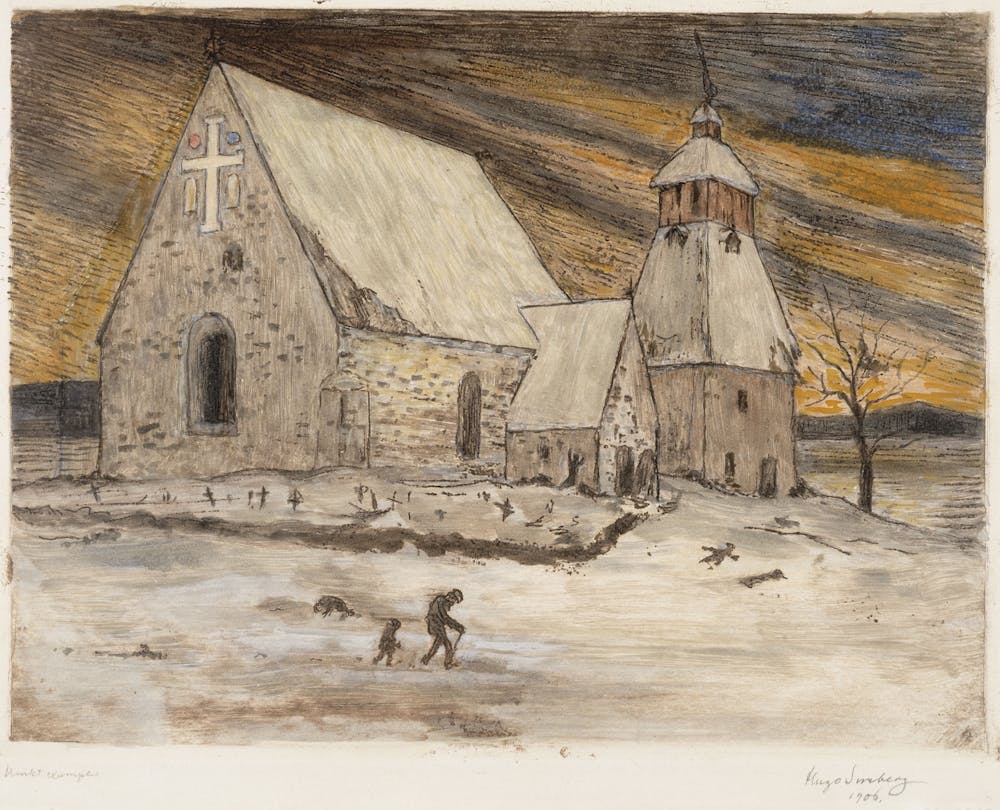 The Black Death killed an estimated 75–200 million people in Europe and North Africa. Hugo Simberg Black Death.
Wikimedia Commons, CC BY
This led to the rise of Protestantism, aided by the invention of the printing press - a shortage of labour encouraged the development of such labour-saving devices. Over the next 200 years, waves of plague repeatedly hit Europe. A quarantine system was developed in Venice, and cordon sanitaires established, to prevent movement of people between cities - ring any bells?
Read more:
Did the Black Death give birth to modern plagues?
Pathogens as New World killers
In the period from 1500 onwards, white colonialists nearly wiped out indigenous people by infecting them. Kennedy starts with the early 16th century, when Spanish conquistador Hernán Cortés led an expedition to Mexico. His arrival introduced smallpox, which resulted in the total destruction of the Aztec Empire within just two years. However, this was just the start.
In the early 1530s, Mexico was hit by an epidemic of measles that killed 80% of its population, making it the deadliest epidemic in recorded history. Over the following decades, across the whole of the Americas, the introduction of infectious diseases from Europe resulted in a 90% fall in the population.
The Black Death killed an estimated 75–200 million people in Europe and North Africa. Hugo Simberg Black Death.
Wikimedia Commons, CC BY
This led to the rise of Protestantism, aided by the invention of the printing press - a shortage of labour encouraged the development of such labour-saving devices. Over the next 200 years, waves of plague repeatedly hit Europe. A quarantine system was developed in Venice, and cordon sanitaires established, to prevent movement of people between cities - ring any bells?
Read more:
Did the Black Death give birth to modern plagues?
Pathogens as New World killers
In the period from 1500 onwards, white colonialists nearly wiped out indigenous people by infecting them. Kennedy starts with the early 16th century, when Spanish conquistador Hernán Cortés led an expedition to Mexico. His arrival introduced smallpox, which resulted in the total destruction of the Aztec Empire within just two years. However, this was just the start.
In the early 1530s, Mexico was hit by an epidemic of measles that killed 80% of its population, making it the deadliest epidemic in recorded history. Over the following decades, across the whole of the Americas, the introduction of infectious diseases from Europe resulted in a 90% fall in the population.
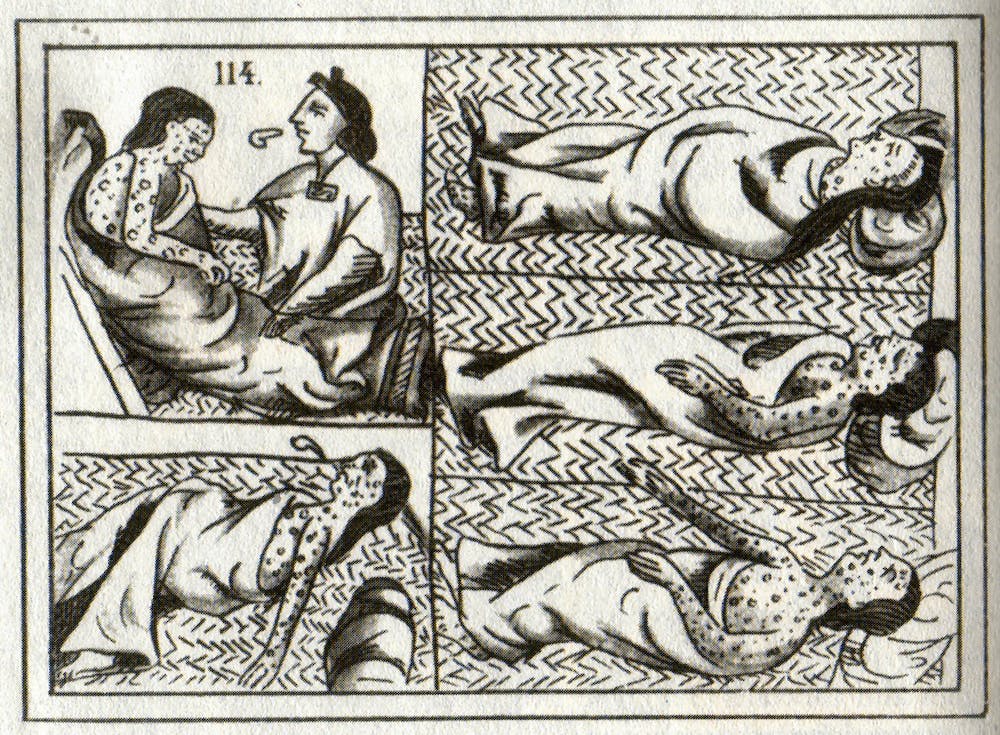 Hernán Cortés brought smallpox to Mexico, resulting in the total destruction of the Aztec Empire within two years, as illustrated in this 16th-century drawing of Aztec smallpox victims.
Wikimedia Commons
However, during this period, it wasn’t just the New World that was profoundly affected by pathogens. On the west coast of Africa, explorers and would-be colonialists died in droves from malaria and yellow fever.
Interestingly, Kennedy starts his chapter on revolutionary plagues with the murder of George Floyd and the Black Lives Matter movement, before delving deep into the history of slavery. He describes slavery in Greek and Roman times, and the booming trade in slaves in the medieval Mediterranean.
The association between black Africans and slavery only began in the 15th century. In fact, only 3% of the 12.5 million humans trafficked across the Atlantic ended up in the United States. The most common destinations of the slave ships were the European colonies in the Caribbean, where African slave labour was first used more than a century before their shipment to North America.
Meanwhile, in the Caribbean, slave labour from tropical West Africa toiled on sugar plantations owned by the English, Spanish, French and Dutch. Yellow fever carried by mosquitoes wiped out many of the Europeans, including military garrisons, leading to slave revolts.
Read more:
Friday essay: a slave state - how blackbirding in colonial Australia created a legacy of racism
Diseases ‘thrived’ in Dickensian habitats
When Kennedy switches his focus to Britain, and the industrial revolution, he describes it as the change from a Thomas Hardy novel to one by Charles Dickens. The crowded and unsanitary conditions in working-class urban districts created new habitats, in which pathogens thrived.
Kennedy again evokes Monty Python to invoke the scenery of those days, reminding readers of the famous four Yorkshiremen sketch. The scene made me think of a different quote from the same sketch:
You were lucky to have a house! We used to live in one room, all hundred and twenty-six of us, no furniture. Half the floor was missing; we were all huddled together in one corner for fear of falling!
Every Epidemiology 101 course covers the story of John Snow (no – not the “Winter is coming” one!). Two decades before the development of the microscope, Snow examined cholera outbreaks to discover the cause of disease and how to prevent it.
Hernán Cortés brought smallpox to Mexico, resulting in the total destruction of the Aztec Empire within two years, as illustrated in this 16th-century drawing of Aztec smallpox victims.
Wikimedia Commons
However, during this period, it wasn’t just the New World that was profoundly affected by pathogens. On the west coast of Africa, explorers and would-be colonialists died in droves from malaria and yellow fever.
Interestingly, Kennedy starts his chapter on revolutionary plagues with the murder of George Floyd and the Black Lives Matter movement, before delving deep into the history of slavery. He describes slavery in Greek and Roman times, and the booming trade in slaves in the medieval Mediterranean.
The association between black Africans and slavery only began in the 15th century. In fact, only 3% of the 12.5 million humans trafficked across the Atlantic ended up in the United States. The most common destinations of the slave ships were the European colonies in the Caribbean, where African slave labour was first used more than a century before their shipment to North America.
Meanwhile, in the Caribbean, slave labour from tropical West Africa toiled on sugar plantations owned by the English, Spanish, French and Dutch. Yellow fever carried by mosquitoes wiped out many of the Europeans, including military garrisons, leading to slave revolts.
Read more:
Friday essay: a slave state - how blackbirding in colonial Australia created a legacy of racism
Diseases ‘thrived’ in Dickensian habitats
When Kennedy switches his focus to Britain, and the industrial revolution, he describes it as the change from a Thomas Hardy novel to one by Charles Dickens. The crowded and unsanitary conditions in working-class urban districts created new habitats, in which pathogens thrived.
Kennedy again evokes Monty Python to invoke the scenery of those days, reminding readers of the famous four Yorkshiremen sketch. The scene made me think of a different quote from the same sketch:
You were lucky to have a house! We used to live in one room, all hundred and twenty-six of us, no furniture. Half the floor was missing; we were all huddled together in one corner for fear of falling!
Every Epidemiology 101 course covers the story of John Snow (no – not the “Winter is coming” one!). Two decades before the development of the microscope, Snow examined cholera outbreaks to discover the cause of disease and how to prevent it.
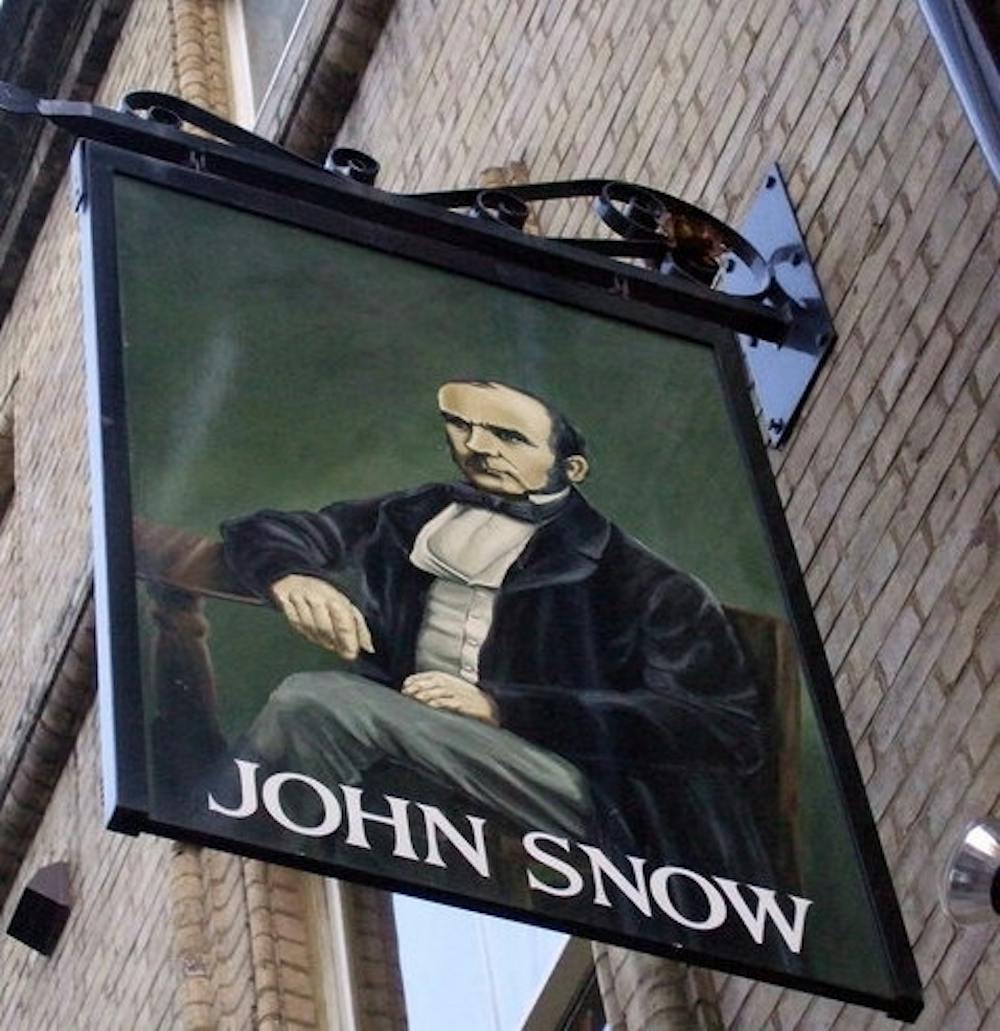 John Snow proved in 1854 that cholera is a waterborne disease: a London pub is named for him.
ceridwen/Wikimedia Commons, CC BY
During the third UK cholera outbreak in 1854, Snow famously removed London’s Broad Street water pump, to demonstrate that cholera was a waterborne disease. For those interested, there is a John Snow pub in London. Kennedy, of course, includes this story in his book.
Kennedy points out that 3.5 million people – half of the world’s population – have no access to proper toilets, while a billion don’t have clean drinking water and 1.5 million people, mainly children, die every year from waterborne diarrhoeal diseases.
We still have massive cholera outbreaks, especially in areas where normal life has been disrupted by war or natural disasters. Tuberculosis still kills 1.2 million people a year, despite the availability of antibiotics. Malaria kills another 600,000.
Finally in this section, he briefly covers COVID. He points out that not everyone in the world benefited from the medical advances that came about because of COVID, and the self-interested actions of high-income countries have deprived the poorer countries. As he puts it, “pathogens thrive on inequality and injustice”.
Read more:
Fleas to flu to coronavirus: how 'death ships' spread disease through the ages
Future plagues
Kennedy concludes by looking at future plagues. He points out humanity’s precarious position: we live on a planet dominated by bacteria and viruses. He believes our best chance of surviving the threat posed by pathogens will come from working collaboratively and reducing inequality both within and between countries.
Based on its title, I assumed this book would be about the role of pathogens in shaping civilisation. Instead, I found a social history of the world, with the odd foray into diseases and their influence on society. Nonetheless, I thoroughly enjoyed the book, and can highly recommend it to those with an interest in history, sociology and epidemiology.
Authors: Adrian Esterman, Professor of Biostatistics and Epidemiology, University of South Australia
John Snow proved in 1854 that cholera is a waterborne disease: a London pub is named for him.
ceridwen/Wikimedia Commons, CC BY
During the third UK cholera outbreak in 1854, Snow famously removed London’s Broad Street water pump, to demonstrate that cholera was a waterborne disease. For those interested, there is a John Snow pub in London. Kennedy, of course, includes this story in his book.
Kennedy points out that 3.5 million people – half of the world’s population – have no access to proper toilets, while a billion don’t have clean drinking water and 1.5 million people, mainly children, die every year from waterborne diarrhoeal diseases.
We still have massive cholera outbreaks, especially in areas where normal life has been disrupted by war or natural disasters. Tuberculosis still kills 1.2 million people a year, despite the availability of antibiotics. Malaria kills another 600,000.
Finally in this section, he briefly covers COVID. He points out that not everyone in the world benefited from the medical advances that came about because of COVID, and the self-interested actions of high-income countries have deprived the poorer countries. As he puts it, “pathogens thrive on inequality and injustice”.
Read more:
Fleas to flu to coronavirus: how 'death ships' spread disease through the ages
Future plagues
Kennedy concludes by looking at future plagues. He points out humanity’s precarious position: we live on a planet dominated by bacteria and viruses. He believes our best chance of surviving the threat posed by pathogens will come from working collaboratively and reducing inequality both within and between countries.
Based on its title, I assumed this book would be about the role of pathogens in shaping civilisation. Instead, I found a social history of the world, with the odd foray into diseases and their influence on society. Nonetheless, I thoroughly enjoyed the book, and can highly recommend it to those with an interest in history, sociology and epidemiology.
Authors: Adrian Esterman, Professor of Biostatistics and Epidemiology, University of South Australia