The IPCC's calls for emissions cuts have gone unheeded for too long – should it change the way it reports on climate change?
- Written by Ralph Sims, Emeritus Professor, Energy and Climate Mitigation, Massey University
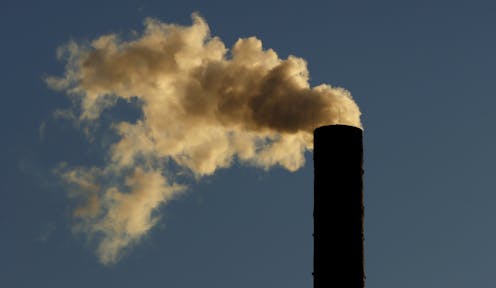
Emissions from human activities are substantially increasing the atmospheric concentrations of the greenhouse gases CO₂, methane, CFCs and nitrous oxide. These increases will enhance the greenhouse effect, resulting on average in an additional warming of the Earth’s surface.
Long-lived gases would require immediate reductions in emissions from human activities of over 60% to stabilise their concentrations at today’s levels.
These are not statements from the latest report released by the Intergovernmental Panel on Climate Change (IPCC). They come from its first assessment in 1990.
Back then, the IPCC acknowledged there were uncertainties in the predictions due to incomplete scientific understanding of sources and sinks of greenhouse gases. But what has actually happened in the 30 years since largely matches the predictions:
an average rate of global sea level rise of 30-100mm per decade due to the thermal expansion of the oceans and the melting of some land ice
an increase of global mean temperature of about 0.3℃ per decade under business as usual.
The IPCC also predicted the rise in temperature would slow as we ramped up efforts to cut emissions, but this scenario hasn’t been tested because emissions reductions never happened.
In 1990, the IPCC also presented the first warnings about potential climate change impacts. It then repeated them in one form or another in the following five assessment reports. But emissions continued to rise each year, resulting in a global temperature increase of 1.1-1.2℃.
Read more: IPCC's conservative nature masks true scale of action needed to avert catastrophic climate change
We know how to reduce emissions
On a more positive note, annual emissions from 18 countries have peaked during the past decades – but not always as a result of climate policies. For example, the UK’s manufacturing capacity reduced significantly as companies moved off-shore. Nevertheless, global emissions kept rising.
Chapters in IPCC reports covering agriculture, land-use change, energy supply, transport, buildings, industry and urban settlements repeatedly provided clear guidance on emissions cuts, such as this section from 2001:
Hundreds of technologies and practices for end-use energy efficiency in buildings, transport and manufacturing industries account for more than half of the potential to reduce greenhouse gas emissions.
Details of how to reduce emissions from improved energy efficiency in all sectors have been repeated in all six IPCC assessments. But many opportunities to reduce energy demand, and save costs, have not been implemented. Although scientific knowledge has advanced since 1990 and a range of low-carbon technologies have evolved and improved, the key IPCC messages have remained the same.
Given the many repeated warnings, why have global greenhouse gas emissions continued to rise? Typical answers include population growth, the rise of the middle classes in many developing countries, increased consumerism, greater tourism, lobbying by the fossil fuel industry and higher consumption of animal proteins.
National and local governments have also struggled to implement strong climate policies because the majority of their citizens and businesses remain unwilling to change their behaviour. This is even the case when co-benefits are clearly evident, including improved health, reduced traffic congestion and lower costs.
A possible future for the IPCC
Having assessed thousands of published research papers over 33 years, what has the IPCC actually achieved since its inception in 1988? And what should be its future role given that many of its strong messages have largely gone unheeded?
Arguably, present and future climate impacts would have been even worse without the IPCC’s work. With each report, the urgency to act on both mitigation and adaptation increased. Few climate deniers now remain. More people want their governments to act.
Read more: Climate change: multi-country media analysis shows scepticism of the basic science is dying out
Although total global emissions continue to rise, energy-related carbon dioxide emissions may be reaching a plateau. According to the International Energy Agency, these emissions rose by under 1% in 2022 – less than initially feared after the COVID dip – largely because of the growth of solar, wind, electric vehicles, heat pumps and improved energy efficiency measures.
So there is hope. But after 25 years of personal involvement with six IPCC reports, my view is that it’s time to review the role of the IPCC and its three main working groups before the next assessment cycle begins.
Since climate science continues to evolve, the IPCC’s Working Group One on the science of the climate system should continue to assess and present the latest knowledge every five to six years.
The need for adaptation and resilience is finally receiving greater attention, mainly as a result of more extreme climate impacts and growing insurance claims. Therefore, Working Group Two should continue but report every two years so that both scientific analyses and local real-world experiences can be shared quickly between local and national governments.
Read more: Communicating climate change has never been so important, and this IPCC report pulls no punches
Measures to cut emissions have evolved as newer technologies have been developed and refined. The present understanding of the policies and solutions to reducing emissions across all sectors is similar to 1990 knowledge – we just need to get on with implementing solutions by removing remaining barriers through regulation and advice.
Research to reduce and capture carbon dioxide emissions will continue, but given the urgency, it is too risky to hope that new low-carbon technologies and systems will one day prove to be commercially successful. Overall, the IPCC’s Working Group Three on mitigation has done its job and should be replaced by a new working group on changing human behaviour.
Behavioural science has been included in various chapters within more recent IPCC reports. Without significant social change in the near term, the emissions curve will not bend downwards. Renewed emphasis on how to best achieve societal change across cultures as a matter of urgency is crucial.
Authors: Ralph Sims, Emeritus Professor, Energy and Climate Mitigation, Massey University