New exposé of Australia's exotic pet trade shows an alarming proliferation of alien, threatened and illegal species
- Written by Adam Toomes, Ph.D. student at the Invasion Science & Wildlife Ecology Group, University of Adelaide
Australia has a global reputation for being tough on biosecurity. There are strict rules around the import and export of both native and exotic species. Security is tight, and advanced screening technology commonplace at ports of entry and mail centres.
But it’s a different story within the country, with plenty of movement of wildlife across state borders.
Our research published today in the journal Biological Conservation uncovers the surprising scale and diversity of the domestic online pet trade in Australia. Threatened species, invasive pests, banned imports, and animals not yet known to science are all for sale.
Over a 14-week period, prior to the commencement of Australian COVID-19 restrictions, we detected the trade of more than 100,000 individual live animals. This included more than 60,000 separate advertisements and a total of 1,192 species, including 81 threatened species, 667 alien (non-native) species, and 279 species that are not allowed to be imported into Australia.
We hope our results, from the first systematic survey of exotic vertebrate pets (this includes non-domesticated reptiles, amphibians, fish and birds) traded in Australia, will help biosecurity agencies identify high-risk and potentially illegal species.
What’s the problem with trading exotic pets?
Unregulated wildlife trade poses serious threats to animal welfare, conservation, human health and biosecurity.
As well as the conservation threat of unsustainably harvesting live animals from the wild, wildlife trade is a source of novel invasive species and their diseases. When exotic species escape from captivity they can become pests. An infamous example is the Burmese pythons of Everglades National Park in the United States, which continue to eat through the native wildlife at an unparalleled rate.
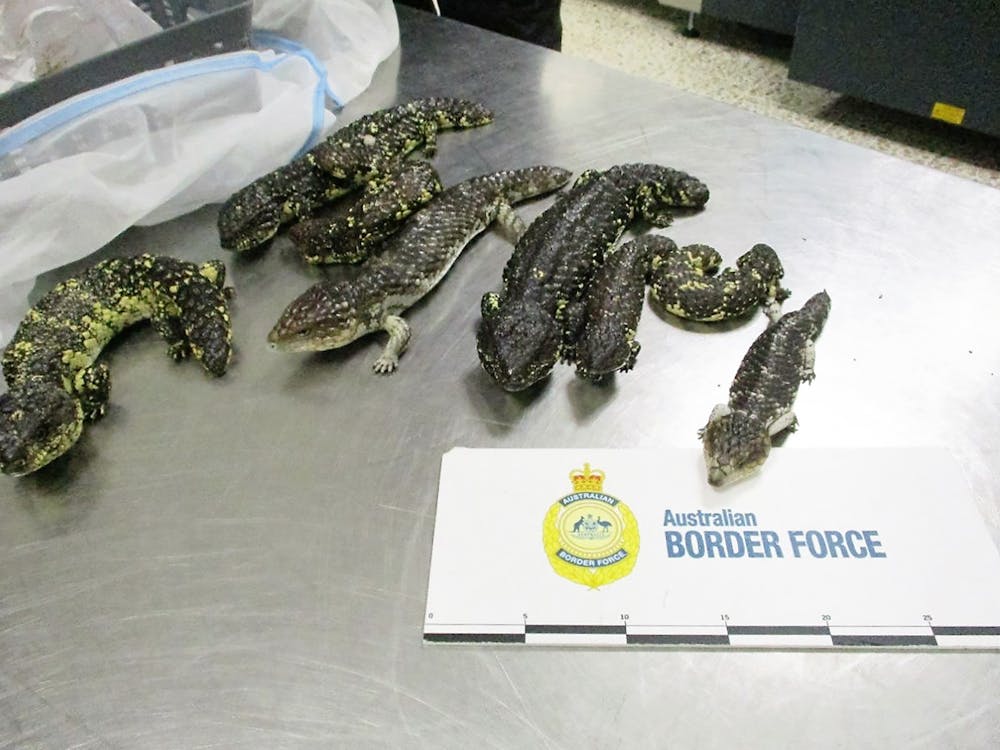
These issues are not lost on Australian biosecurity and conservation agencies. A recent crackdown on reptile smuggling, establishing additional international protection for 127 native species, shows a recognition of the need for more stringent regulation and surveillance. Although low prosecution rates and weak penalties continue to be a barrier to effective enforcement.
Australia goes well beyond its international obligations and prohibits the commercial import of most live animals. Yet audits of alien cagebird and ornamental fish trades show they are thriving within Australia.
Booming online trade
Traditionally, pets have been sold from brick and mortar stores or traded between informal networks of keepers and breeders. But now, thanks to online marketplaces, pet trade has largely shifted to the internet.
E-commerce trading sites reach more potential customers across a wider area than previously possible. They also offer a degree of anonymity, meaning that blatantly illegal activity can sometimes occur openly on websites and social media platforms.
To investigate if this was also happening in Australia, we identified 12 of the most prominent online platforms that sold exotic pets. We were able to rapidly monitor thousands of daily advertisements using an automated tool known as webscraping.
To our surprise and alarm, 56% of the trade involved alien species (over 600 species in total). Many of these are illegal to import into Australia or are known to be invasive overseas.
Read more: What risks could pet hamsters and gerbils pose in Australia?
Not everything is clearly illegal
But these are not all clear-cut examples of illegal activity. The reality is more ambiguous: Australia’s import ban of most animals only came into effect in the early 1980s. So some exotic pets may have arrived in Australia before the ban and have been bred in captivity ever since.
This provides an element of plausible deniability. Traders can declare their animals to be captive-bred within Australia, even if some have been smuggled into the country at a later stage. We found this issue was especially prominent for ornamental fish, with 279 illegal-to-import species being traded in an unregulated manner.
What’s worse is some traders are specialising in animals that are not yet known to science, meaning they haven’t been formally classified, named or described. The presence of undescribed species in Australia, mostly freshwater catfish and African cichlids, can only be explained by illegal smuggling or the exploitation of trade loopholes.
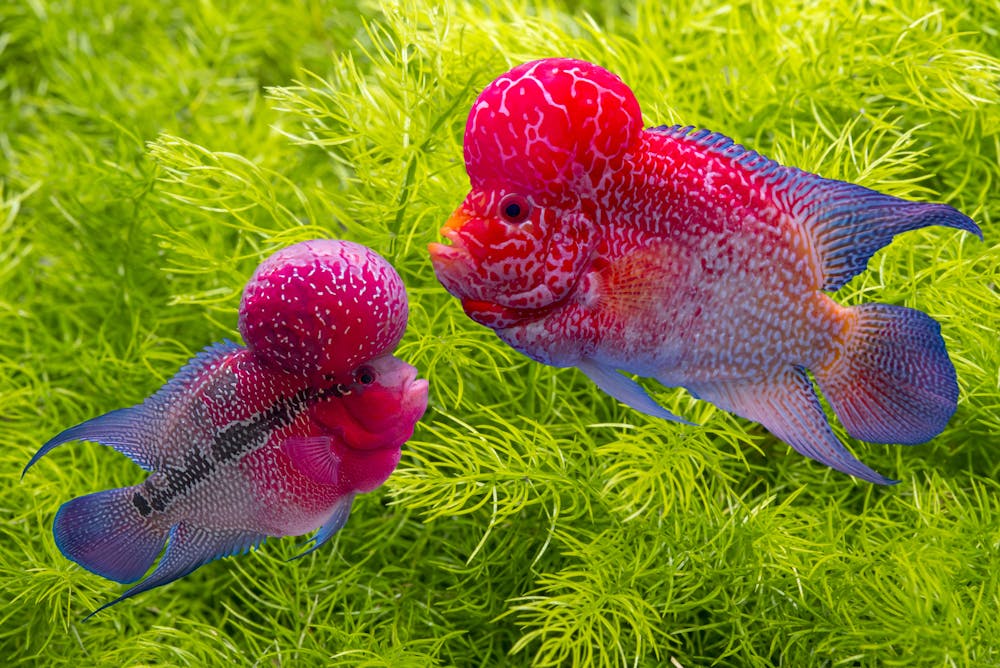 The flowerhorn cichlid is a multi-species hybrid – an example of a pet fish that is difficult to classify. Traders use pseudo-taxonomic units.
Independent birds/Shutterstock
The flowerhorn cichlid is a multi-species hybrid – an example of a pet fish that is difficult to classify. Traders use pseudo-taxonomic units.
Independent birds/Shutterstock
Is greater oversight needed?
It is clear Australia’s exotic pet trade is far more prevalent and less regulated than previously understood. Some researchers call for e-commerce platforms such as Facebook to take greater responsibility by policing wildlife trade. This would reduce opportunities for non-compliant activity occurring on their sites. Meta, the parent company of Facebook, was recently fined for failing to remove illegal trade.
Regardless of how future trade is managed, we are now left with the question of how to deal with thousands of live animals already present that should never have been brought to Australia.
The immediate prohibition of these pets is not feasible. The social licence to euthanise so many animals does not exist and there are no facilities large enough to house them all. Bans, when ineffectively communicated and enforced, can also bolster illegal trade and organised crime.
Permit systems are sometimes used to regulate native pets. A permit is harder to acquire if the species in question poses a greater threat. Recent evidence shows that this can reduce the number of captive animals, and potentially fewer escapees.
Whether such systems can be introduced for these problematic alien species remains to be seen, but new approaches are urgently needed if Australia is to tackle its pet trade problem.
Read more: Big tech, regulators and conservationists must unite to tackle online wildlife trade
Authors: Adam Toomes, Ph.D. student at the Invasion Science & Wildlife Ecology Group, University of Adelaide