are we pushing Earth out of the Goldilocks zone?
- Written by Andrew King, Senior Lecturer in Climate Science, The University of Melbourne
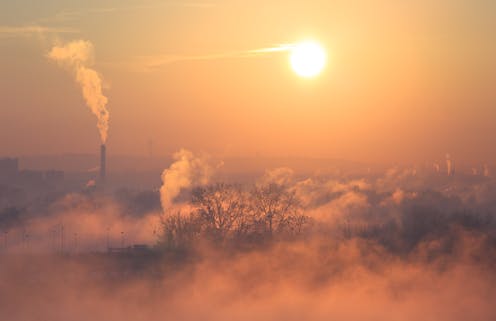
Since the 18th century, humans have been taking fossil fuels out of their safe storage deep underground and burning them to generate electricity or power machinery.
We’ve now converted coal, oil and gas into more than two trillion tonnes of heat-trapping carbon dioxide and other greenhouse gases and added them to the atmosphere.
The current result? The average temperature at the planet’s surface is about 1.2℃ hotter than in the pre-industrial era. That’s because adding new carbon to the world’s natural carbon cycle has caused an imbalance in the amount of energy entering and leaving the Earth system.
To warm the entire planet takes an extraordinary amount of extra energy. Recent research shows we’ve added the energy of 25 billion nuclear bombs to the Earth system in just the last 50 years.
Billions of nuclear bombs to produce 1.2℃ of heating – so what? It seems small, considering how much temperature varies on a daily basis. (The world’s average surface temperature in the 20th century was 13.9℃.)
But almost all of this energy to date has been taken up by the oceans. It’s no wonder we’re seeing rapid warming in our oceans.

The Goldilocks zone
Mercury is the closest planet to the Sun. It gets hot, at an average temperature of 167℃. But it has no atmosphere. That’s why the second planet, Venus, is the hottest in the solar system, at an average of 464℃. That’s due to an atmosphere much thicker than Earth’s, dense in carbon dioxide. Venus might once have had liquid oceans. But then a runaway greenhouse effect took place, trapping truly enormous quantities of heat.
One reason we’re alive is that our planet orbits in the Goldilocks zone, just the right distance from the Sun to be not too hot and not too cold. Little of the Earth’s internal heat gets through to the cold crust where we live. That makes us dependent on another source of heat – the Sun.
When the Sun’s light and heat hits Earth, some is absorbed at the surface and some is reflected back out into space. We see some of the energy emitted by the Sun because the Sun is hot and hotter objects emit radiation in the visible part of the electromagnetic spectrum.
Because Earth is much cooler than the Sun, the radiation it emits is invisible, at long infrared wavelengths. Much of this energy goes out into space – but not all. Some gases in our atmosphere are very effective at absorbing energy at the wavelengths Earth emits at. These greenhouse gases occur naturally in Earth’s atmosphere, and keep the planet warm enough to be habitable. That’s another Goldilocks zone.
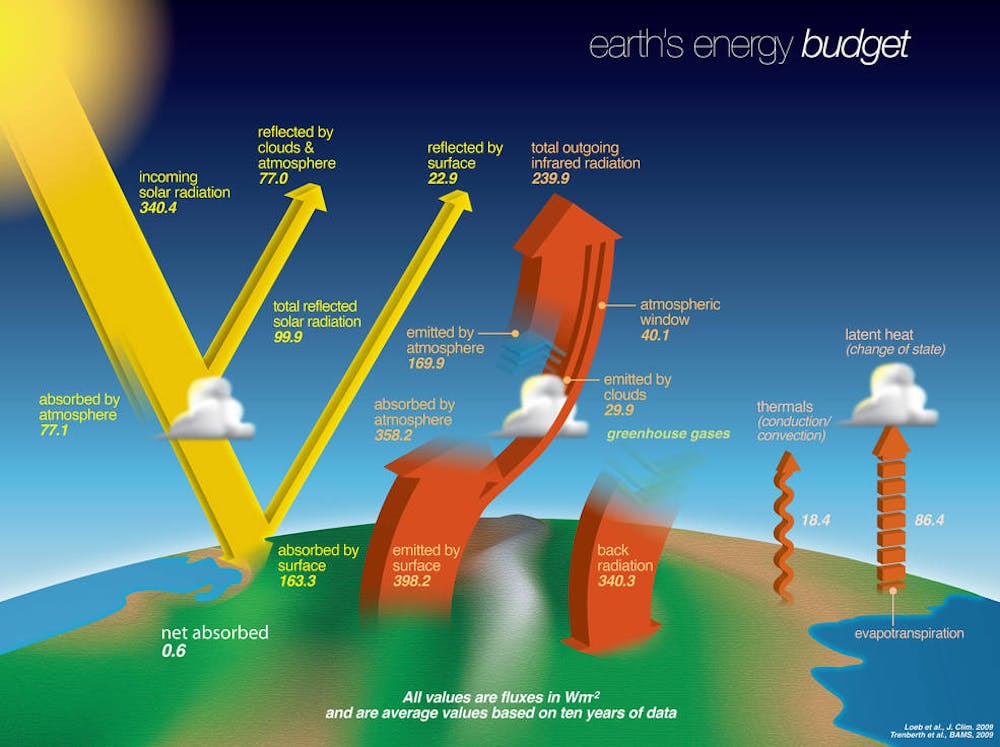 Incoming radiation from the sun is reflected or absorbed by Earth. There is a net imbalance where more energy is absorbed than emitted by the planet and this causes warming.
NASA, CC BY
Incoming radiation from the sun is reflected or absorbed by Earth. There is a net imbalance where more energy is absorbed than emitted by the planet and this causes warming.
NASA, CC BY
And then there’s a third Goldilocks zone: recent history. All of human civilisation has emerged in the unusually mild 10,000 years after the last ice age, when the climate has been not too hot and not too cold across much of the world.
But now, we are at very real risk of pushing ourselves outside of the comfortable climatic conditions which allowed humans to expand, farm, build cities and create.The energy dense fuels which made industrial civilisation possible come with an enormous sting in the tail. Burn now, pay later. Now the bill has become apparent.
How do we know this is real? Satellites measure the rate at which Earth’s surface radiates heat. At any one moment, thousands of Argo robotic floats dot our oceans. They spend almost all of their lives underwater, measuring heat, and surface to transmit data. And we can measure sea level with tide levels and satellites. We can cross-check the measurements between all three approaches.
 Thousands of these robotic Argo floats monitor ocean temperatures.
CSIRO/AAP
Thousands of these robotic Argo floats monitor ocean temperatures.
CSIRO/AAP
Climate change: more energy comes in than goes out
Greenhouse gases are potent. You only need small concentrations to get a big effect.
We’ve already boosted the amount of carbon dioxide in the atmosphere by about 50%, and added considerable volumes of methane and nitrous oxide as well. This is pushing our life-sustaining greenhouse effect out of balance.
A recent study suggests the energy imbalance is equivalent to trapping roughly 380 zettajoules of extra heat from 1971–2020. (The period between 1971 and the present accounts for about 60% of all emissions).
One zettajoule is 1,000,000,000,000,000,000,000 joules – a very big number!
Little Boy, the nuclear bomb which destroyed Hiroshima, produced energy estimated at 15,000,000,000,000 joules. This means the effect of humanity’s greenhouse gas emissions in that 50-year period to 2020 is about 25 billion times the energy emitted by the Hiroshima nuclear bomb.
If we’ve trapped so much extra heat, where is it?
To date, almost every joule of extra energy – about 90% – has gone into our oceans, particularly the top kilometre of water. Water is an excellent heat sink. It takes a lot of energy to heat it, but heat it we have. Hotter oceans are a major contributor to coral bleaching and sea level rise.
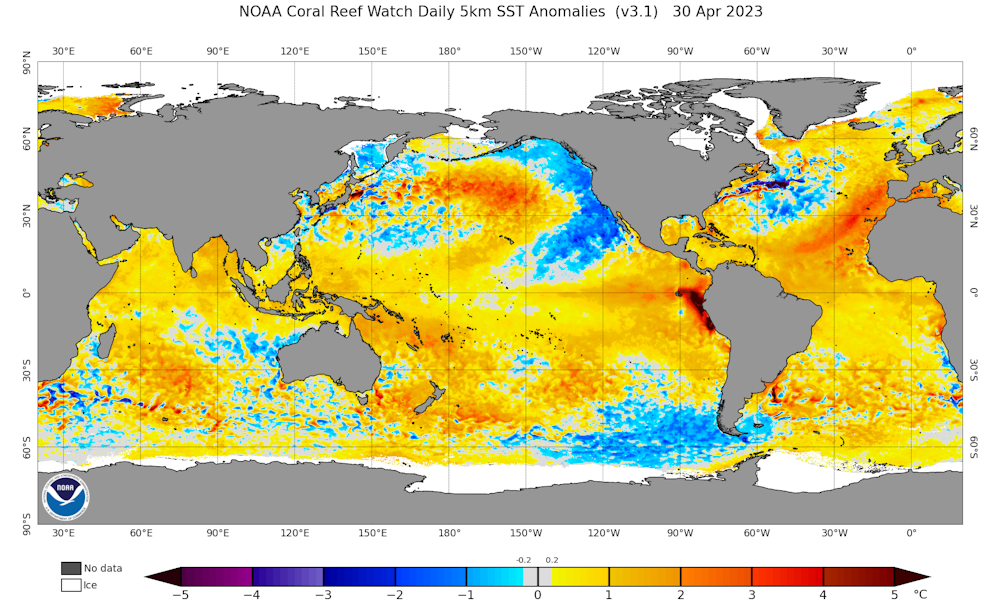 Where’s the heat? In our oceans. This sea surface temperature map shows the temperature anomalies above or below the long term average at 30th April 2023.
NOAA, CC BY
Where’s the heat? In our oceans. This sea surface temperature map shows the temperature anomalies above or below the long term average at 30th April 2023.
NOAA, CC BY
It takes a long time to get this much heat into the oceans, and once it is there it doesn’t disappear. Reversing global warming entirely may not be feasible. Just to stop temperatures going any higher means correcting the imbalance and bringing CO2 levels down towards the pre-industrial level of 280ppm.
If we can reach net-zero greenhouse gas emissions, we will most likely stop further global warming and carbon dioxide concentrations will slowly start to drop.
Realistically, this means rapid, large-scale reduction of emissions and deployment of carbon capture to compensate for the emissions we can’t eliminate.
To go further and cool the planet back down towards a pre-industrial climate would require net-negative emissions, meaning we would have to draw even more carbon back out of the atmosphere than any lingering emissions.
Unfortunately, we aren’t there yet. Human-caused greenhouse gas emissions are at near-record highs. But clean energy production is accelerating. This year might be the first time emissions from power begin to fall.
We’re in a race, and the stakes are as high as they could possibly be – ensuring a liveable climate for our children and for nature.
Read more: In hot water: here's why ocean temperatures are the hottest on record
Authors: Andrew King, Senior Lecturer in Climate Science, The University of Melbourne