Modern Australian
The Times

The end of offshore oil and gas exploration in NZ was hard won – but it remains politically fragile

  • Written by Amanda Thomas, Lecturer in Environmental Studies, Te Herenga Waka — Victoria University of Wellington

The end of offshore oil and gas exploration in NZ was hard won – but it remains politically fragile

Recent news that the New Zealand government has granted an offshore oil and gas exploration permit it had earlier declined demonstrates how fragile the current ban on such activity still is.

The permit was eventually granted because the application was lodged just before the government’s 2018 offshore exploration ban was in place. The High Court ruled it should therefore have been considered under the previous system.

It’s simply the latest twist in a long contest of ideas and ideologies. Between 2008 and 2017, Aotearoa New Zealand’s offshore environment was opened up for further oil and gas exploration on the promise of economic growth and energy independence.

The dominant narrative from the government and from industry was, at its core, that economic growth is essential, that oil was an untapped resource, and it would be irresponsible not to make use of it to generate capital and contribute to Aotearoa New Zealand’s economic development. During these nine years, the government sought to “secure” this resource.

The government took action to provide certainty and therefore security for overseas investors by cultivating ties with the fossil fuel industry. For example, when protest sought to disrupt oil and gas exploration activities, the government introduced legislation to curtail at-sea protest and offered only limited Māori and community engagement about commercial extraction activities in ocean spaces.
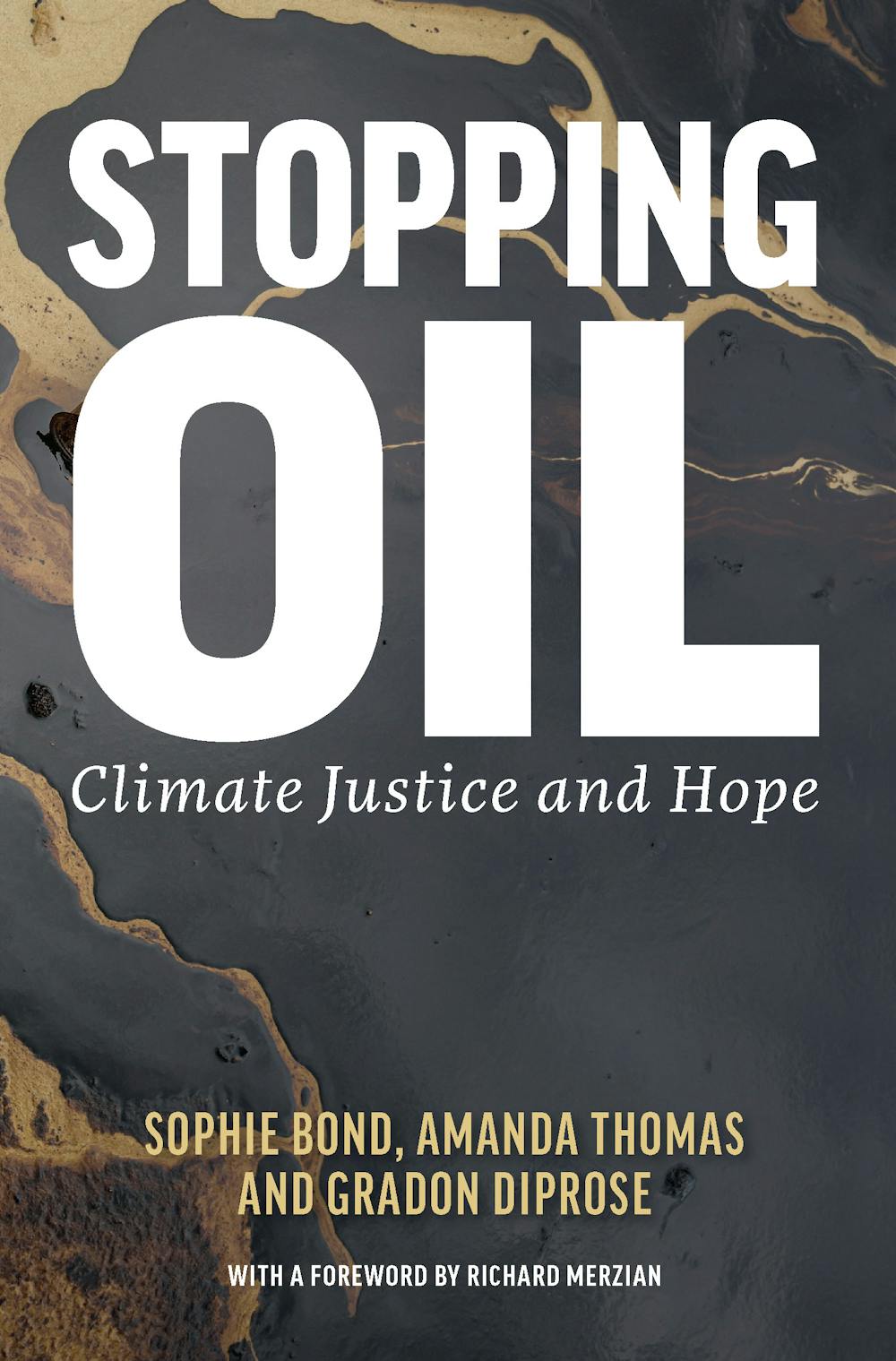

The story of the anti-deep sea oil campaign begins with increased efforts to entice transnational petroleum corporations to explore the country’s extensive Exclusive Economic Zone (EEZ). Aotearoa New Zealand was among the first countries to embrace wholesale neoliberal reforms in the 1980s, and this approach to governance, economic, social and environmental policy and practice has become embedded over subsequent decades. In 2008, John Key’s National-led government established what was described as a “Business Growth Agenda”, which included the sale of state assets, and the development of extractive industries. The orientation toward extractive industries was demonstrated through media that referred to an increasing need to catch up with Australia, and government ministers commenting on the need to make the “most use of the wealth hidden in our hills, under the ground and in our oceans”. Deep Water Horizon and the Rena The government’s agenda for the oil and gas sector described in its Business Growth Agenda didn’t go unnoticed by climate justice and environmental activists, nor iwi (tribal) groups, many of whom were already active against coal mining. In Aotearoa New Zealand, as the government sought to deliver on its Business Growth Agenda, two further events sensitised the public to the risks of engaging in extractive industry in ocean environments and the power of corporates to elude their responsibilities. Read more: The Bay of Plenty oil spill: loading the dice against disaster First, the Rena disaster occurred in Tauranga, off the east coast of the North Island. The Rena was a container ship that ran aground on the Ōtāiti/Astrolabe reef in October 2011 while on its way into Tauranga Harbour. The ship broke up over a period of months, leaving fuel and debris from containers littered across the ocean and local beaches. The second event, the Deepwater Horizon oil spill in the Gulf of Mexico, sensitised the public to the risks of offshore oil extraction. This disaster was a direct precursor to the emergence of the Oil Free campaign across Aotearoa New Zealand. The Waiho Papa Moana hikoi protesting against deep sea drilling at the New Zealand Petroleum Summit in 2014. Phil Walter/Getty Images Petrobras and the Raukūmara Basin On the east coast of the North Island of Aotearoa New Zealand, the iwi of Te Whānau-ā-Apanui, with support from Greenpeace New Zealand, disrupted a large Brazilian petroleum company, Petrobras, from seismic surveying of the Raukūmara Basin in the EEZ. The EEZ is an area over which a nation-state has partial sovereignty, including to extract resources, demarcated under the United Nations Convention of the Law of the Sea. It extends to approximately 200 nautical miles from the coastline. Petrobras had secured a five-year permit to explore for oil and gas under block offers released in 2010. Te Whānau-ā-Apanui had requested that no exploration for oil and gas be undertaken in their area. Nevertheless, Petrobras informed Te Whānau-ā-Apanui that they would begin their seismic survey work in early 2011 and began work in April using the large survey vessel, the Orient Explorer. Read more: Why New Zealand should not explore for more natural gas reserves Opposition to Petrobras began quickly both onshore and offshore, demanding “no drill, no spill”. A flotilla of five vessels sailed out to the seismic survey vessel to attempt to halt its work over a period of seven weeks, where actions included sailing in front of the survey vessel. Following these events, a number of meetings were reportedly held between government agencies and industry representatives concerned by the lack of a regulatory regime in the EEZ and the risk of protesters disrupting lawful permitted activities. Petrobras warned the government that they would withdraw if community action continued. Subsequently, a major piece of legislation was enacted as an amendment to the Crown Minerals Act 1991. This amendment criminalised protest at sea near a vessel engaged in oil and gas exploration or drilling. The ‘Andarko amendment’ The amendment to the Crown Minerals Act was dubbed the “Anadarko amendment” after the Texan oil corporation that was active in Aotearoa New Zealand at the time. It was also a silent partner to the Deep Water Horizon rig responsible for the massive spill in the Gulf of Mexico. The amendment contravened international human rights law, and went against a long tradition of protest at sea in Aotearoa New Zealand, by banning activists from coming within 500 metres of an oil and gas vessel. The Minister for Energy and Resources at the time said the protesters shouldn’t be trying to stop other people going about their lawful business. While the Anadarko Amendment sought to provide assurances and security to fossil fuel companies, activists changed the financial equation by disrupting exploration, blockading banks who refused to divest from oil and gas, and protesting annual fossil fuel conferences. Activists sought to secure a future that was not dependent on fossil fuels, and that both demanded and demonstrated a sense of responsibility and care for the impacts of continuing business as usual. National Party leader Christopher Luxon has said his party will repeal the offshore oil and gas exploration ban if elected in 2023. Kerry Marshall/Getty Images Change and uncertainty In 2018, a newly elected government enacted legislation that banned all new oil and gas exploration permits in Aotearoa’s EEZ, with the exception of an area of active production off the west coast of the North Island in Taranaki. At the time, media debate was polemical, either decrying the lost revenue and the impact it would have on the economy, or arguing it didn’t go far enough because it did not apply to existing permits. At the beginning of 2021, the last existing exploration permit outside Taranaki was surrendered, with companies claiming a combination of the pandemic and pricing uncertainties as the primary reasons for withdrawal. Read more: To fight the climate crisis, we need to stop expanding offshore drilling for oil and gas While we don’t suggest that these actions, or those of the current government in relation to climate change, are anywhere near enough, the Oil Free campaign successfully disrupted efforts to explore and extract from the “blue frontier” of Aotearoa New Zealand’s EEZ. The campaign made it challenging for fossil fuel companies to do business here, and contested the government’s narratives about the need for exploration and production. Campaigners also narrated what a hopeful, climate-just world might look like. But such a “win” could be precarious, with the opposition National Party claiming it will repeal the ban on new oil and gas exploration if elected in 2023. Indeed, the court case from earlier this year that revived an exploration permit demonstrates how messy and precarious stopping oil will be. This is an edited extract from Stopping Oil: Climate Justice and Hope by Sophie Bond, Amanda Thomas and Gradon Diprose (Melbourne University Press). Authors: Amanda Thomas, Lecturer in Environmental Studies, Te Herenga Waka — Victoria University of Wellington

Read more https://theconversation.com/the-end-of-offshore-oil-and-gas-exploration-in-nz-was-hard-won-but-it-remains-politically-fragile-203396

Chatswood Tutoring And Its Role In Academic Achievement

Academic success often requires more than classroom attendance alone. Students face increasing expectations as they progress through school, particu...

Why Laser Hair Removal Treatments Continue Growing In Popularity

Managing unwanted hair can become time-consuming and frustrating for many people, especially when shaving, waxing, and other temporary methods requi...

Choosing the Right Devices for a Flexible Workplace

For IT leaders managing large fleets, the device layer is where workforce productivity and security policy meet. The shift towards flexible and hybrid...

How Business Advisory Services Help Companies Achieve Sustainable Growth

Every business owner aims to build a profitable and sustainable organisation. While dedication, innovation, and hard work are important, achieving l...

Why Body Contouring Has Become A Popular Cosmetic Treatment

Many people maintain healthy lifestyles through regular exercise and balanced eating habits but still struggle with stubborn areas of fat that are dif...

How to Choose the Right POS Hardware for Your Business in Australia

A lot of Australian business owners spend weeks researching POS software but buy hardware almost as an afterthought. That's a mistake. The wrong har...

Why Material Handling Hose Is Critical for Industrial Efficiency

A high-performance material handling hose is an essential component in industries that transport abrasive, dry, or bulk materials on a daily basis...

How to Choose the Right Lawyer in Melbourne for Your Situation

Choosing legal support can feel difficult, especially when the stakes are personal or business-related. The right lawyer in Melbourne should underst...

Hoteliers Look to Clever Value Adds to Increase Revenue

The Australian hospitality industry is still in recovery mode after a notoriously rough patch in recent years. While there has been a post-COVID tra...

Moving to Queensland? Here’s How to Prep Your Car for the Big Move North

There’s no sign of the northern migration slowing down, with thousands of southerners fleeing from chaotic lifestyles and cooler climates for a brig...

Diesel Shortage to Impact Trades and Contractors

Strait of Hormuz blockage affecting all major parts of trades and construction Trades and construction across residential, commercial and industria...

Why Holiday Home Owners Turn to Rental Management Agents

The Allure — and the Reality — of Renting Out Your Property Owning a holiday home is a dream for many Australians. Whether it's a beachside sha...

Why Finding Reliable Doctors In Bundoora Is Important For Long-Term Health

Access to quality healthcare plays an important role in maintaining overall wellbeing and managing health concerns early. Trusted Doctors in Bundoor...

Understanding the Different Types of Car Services: Minor vs Major

When it comes to car maintenance, one of the most important things every vehicle owner should understand is the difference between a minor and a maj...

How Superannuation and TPD Insurance Work Together

Superannuation is an essential part of financial planning in Australia. It is designed to provide individuals with income during retirement, helping...

Tiny Towns funding granted for Mt Hotham and Mt Buller upgrades

Alpine Resorts Victoria (ARV) has welcomed funding support from the Victorian Government’s  Tiny Towns Fund, with both Mt Hotham and Mt Buller se...

Locksmith Services: Why Professional Security Solutions Matter More Than Ever

Security is a critical concern for homeowners, businesses, and vehicle owners alike. Whether it involves protecting a property, replacing damaged lo...

Why Tooth Fillings Are Important For Protecting Damaged Teeth

Cavities and minor tooth damage are common dental problems that can worsen if left untreated. Professional tooth fillings help restore damaged teeth, ...