Perfect perfume or eau de cat's bum? Why scents smell different and 4 fragrance tips
- Written by Magdalena Wajrak, Senior lecturer, Chemistry, Edith Cowan University

Mother’s Day is coming up in Australia and that means a surge in perfume sales. Of course, scents are purchased year-round and not just for mothers. Fragrance sales in Australia will amount to over A$1 billion this year.
The word “perfume” is derived from the Latin per fumus, meaning “through smoke”. The very first account of using perfumes dates back to 1200 BC when a woman called Tapputi mixed flowers, oils and various plants with water or solvents, then extracted their fragrance. The basis of this technique for making perfume is still used today.
But how do we smell? What makes perfume appealing? And why does it smell differently on different people?
The science of smell
A sense of smell is vital to all species on Earth. One study identified African elephants as having the “best noses” in the animal kingdom, not to mention the longest ones. It can help animals sniff out danger, food and mates.
For humans, too, being able to smell is not just for the enjoyment of pleasant odours. It can also protect us from toxic chemicals with noxious smells, such as hydrogen cyanide.
When something has an odour, it means it is chemically volatile – vaporising from a liquid to a gas. When we smell a scent, gas molecules enter our nose and stimulate specialised nerve cells called olfactory sensory neurons. When these neurons are triggered, they send a signal to the brain to identify the chemicals.
Humans have around 10 million of those neurons and around 400 scent receptors. The human nose can distinguish at least 1 trillion different odours, from freshly brewed coffee to wet dog to mouldy cheese.
The more volatile a compound is the lower its boiling point and, from a chemical perspective, the weaker the forces holding the molecules together. When this is the case, more molecules enter the gaseous state and the smell is more intense.

Read more: Curious Kids: How do we smell?
What makes things smell good though?
Different classes of chemical compounds can have more pleasant or offensive scents.
Fish and decaying animal cells, for example, release chemicals called amines, which don’t smell appealing.
Fruits, on the other hand, are composed of chemicals in a class of organic compounds called aldehydes, esters and ketones, which have sweeter and more pleasant odours.
Chemists have been able to identify the specific chemical smells released by substances we encounter in everyday life.
Smells different
So it makes sense that pleasant-smelling aldehydes, ketones and esters are used to create perfumes. However, some perfumes also contain unusual ingredients that don’t smell nice on their own.
For example, Chanel No. 5 perfume – the iconic 100-year-old favourite – contains civet as one of its base chemical notes. Civet is used by perfumers for its long-lasting, musky scent. It is traditionally extracted from the anal glands of civet cats but Chanel has used a synthetic form of civet since 1998.
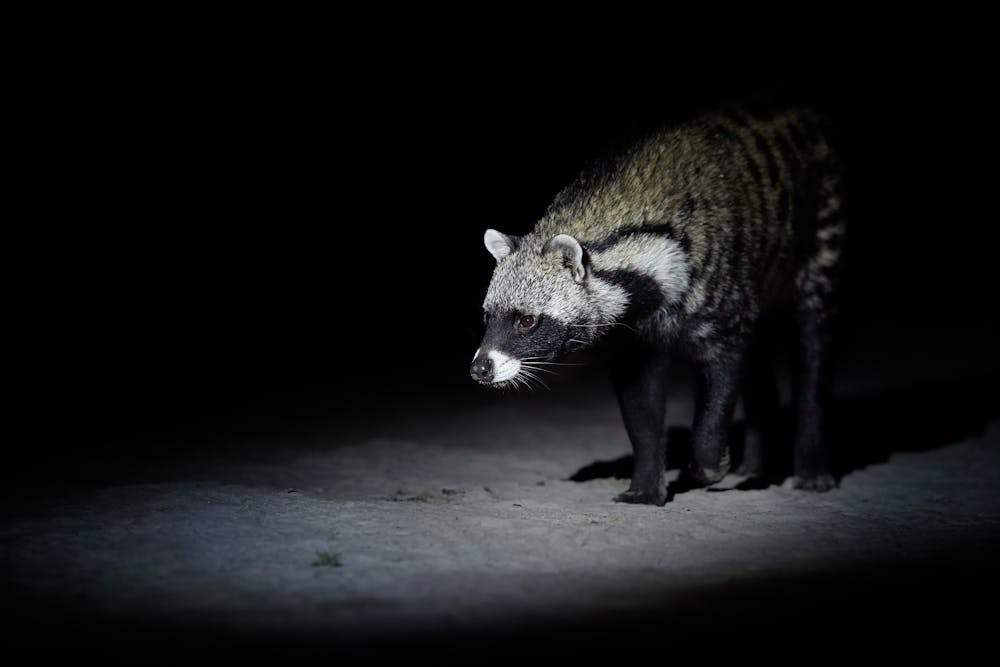 Today, perfumers can use synthetic civet in place of the real thing.
Shutterstock
Today, perfumers can use synthetic civet in place of the real thing.
Shutterstock
Tips for choosing and using perfumes
Our ability to smell a perfume will depend on two factors: how well our olfactory sensory neurons are performing (a virus or infection could affect function, for example) and the volatility of the chemicals in the perfume.
1. Try before you buy
You can’t really do much about your sensory neurons, but you can increase the intensity of perfumes, such as by warming up the perfume on your skin or applying to pulse points. This will help to give molecules more energy and increase the number of molecules entering the gaseous state.
Specific perfumes will not smell the same on different people’s skin because the chemicals in them can be affected by the skin’s type and condition (dry or oily, acidic or base) and even their diet. Some foods we eat, such as garlic, are released from our bodies through our skin. Those chemicals can mask perfume chemicals.
So, it is better to buy someone their tried and true favourite scent rather than risking a new one. And those department store sample sprays can be useful to try before you buy.
2. Moisturise before use
When you spray perfume on very dry skin, some of the perfume’s chemicals – the large organic ones that are similar to skin’s natural oils – are absorbed by the skin and then into the sebaceous glands. When some notes in a perfume are absorbed this way, it can take on a different smell. That’s also why it’s better to moisturise skin before spraying perfume, so perfume chemicals stay on the skin for longer.
 Try before you buy – scents smell different on different people.
Pexels/Ron Lach, CC BY
Try before you buy – scents smell different on different people.
Pexels/Ron Lach, CC BY
3. Experiment with spraying techniques
To avoid changes in the scent of your favourite perfume and increase the time the perfume stays on you, you could spray your hair instead. Your hair is porous so perfume molecules might remain there longer. However, most perfumes contain alcohol, which dries out hair. Spraying perfume directly onto a hairbrush first, then brushing your hair, might prevent some of this drying effect.
Spraying then walking through a mist of perfume so the chemicals settle on your hair, skin and clothes might work – but you risk losing a lot of precious perfume with that technique.
4. Keep it cool
Temperature will affect volatility. To keep perfumes lasting longer in the bottle, keep them in the fridge or cool dark place and tightly sealed to prevent your expensive, heat-sensitive scent evaporating into thin air.
Authors: Magdalena Wajrak, Senior lecturer, Chemistry, Edith Cowan University