Modern Australian
The Times

Supercomputers have revealed the giant 'pillars of heat' funnelling diamonds upwards from deep within Earth

  • Written by Ömer F. Bodur, Honorary Fellow, University of Wollongong

Supercomputers have revealed the giant 'pillars of heat' funnelling diamonds upwards from deep within Earth

Most diamonds are formed deep inside Earth and brought close to the surface in small yet powerful volcanic eruptions of a kind of rock called “kimberlite”.

Our supercomputer modelling, published in Nature Geoscience, shows these eruptions are fuelled by giant “pillars of heat” rooted 2,900 kilometres below ground, just above our planet’s core.

Understanding Earth’s internal history can be used to target mineral reserves – not only diamonds, but also crucial minerals such as nickel and rare earth elements.

Kimberlite and hot blobs

Kimberlite eruptions leave behind a characteristic deep, carrot-shaped “pipe” of kimberlite rock, which often contains diamonds. Hundreds of these eruptions that occurred over the past 200 million years have been discovered around the world. Most of them were found in Canada (178 eruptions), South Africa (158), Angola (71) and Brazil (70).

Between Earth’s solid crust and molten core is the mantle, a thick layer of slightly goopy hot rock. For decades, geophysicists have used computers to study how the mantle slowly flows over long periods of time.

In the 1980s, one study showed that kimberlite eruptions might be linked to small thermal plumes in the mantle – feather-like upward jets of hot mantle rising due to their higher buoyancy – beneath slowly moving continents.

Read more: Volcanoes, diamonds, and blobs: a billion-year history of Earth's interior shows it's more mobile than we thought

It had already been argued, in the 1970s, that these plumes might originate from the boundary between the mantle and the core, at a depth of 2,900km.

Then, in 2010, geologists proposed that kimberlite eruptions could be explained by thermal plumes arising from the edges of two deep, hot blobs anchored under Africa and the Pacific Ocean.

And last year, we reported that these anchored blobs are more mobile than we thought.

However, we still didn’t know exactly how activity deep in the mantle was driving kimberlite eruptions.

Pillars of heat

Geologists assumed that mantle plumes could be responsible for igniting kimberlite eruptions. However, there was still a big question remaining: how was heat being transported from the deep Earth up to the kimberlites?

A snapshot of the global mantle convection model centred on subduction underneath the South American plate. Ömer F. Bodur, Author provided

To address this question, we used supercomputers in Canberra, Australia to create three-dimensional geodynamic models of Earth’s mantle. Our models account for the movement of continents on the surface and into the mantle over the past one billion years.

We calculated the movements of heat upward from the core and discovered that broad mantle upwellings, or “pillars of heat”, connect the very deep Earth to the surface. Our modelling shows these pillars supply heat underneath kimberlites, and they explain most kimberlite eruptions over the past 200 million years.

A schematic representation of Earth’s heat pillars and how they bring heat to kimberlites, based on output from our geodynamic model. Ömer F. Bodur, Author provided

The model successfully captured kimberlite eruptions in Africa, Brazil, Russia and partly in the United States and Canada. Our models also predict previously undiscovered kimberlite eruptions occurred in East Antarctica and the Yilgarn Craton of Western Australia.

Earth’s “pillars of heat” in a global mantle convection model can be used to predict kimberlite eruptions. Credit: Ömer F. Bodur.

Towards the centre of the pillars, mantle plumes rise much faster and carry dense material across the mantle, which may explain chemical differences between kimberlites in different continents.

Our models do not explain some of the kimberlites in Canada, which might be related to a different geological process called “plate subduction”. We have so far predicted kimberlites back to one billion years ago, which is the current limit of reconstructions of tectonic plate movements.

Authors: Ömer F. Bodur, Honorary Fellow, University of Wollongong

Read more https://theconversation.com/supercomputers-have-revealed-the-giant-pillars-of-heat-funnelling-diamonds-upwards-from-deep-within-earth-204905

Chatswood Tutoring And Its Role In Academic Achievement

Academic success often requires more than classroom attendance alone. Students face increasing expectations as they progress through school, particu...

Why Laser Hair Removal Treatments Continue Growing In Popularity

Managing unwanted hair can become time-consuming and frustrating for many people, especially when shaving, waxing, and other temporary methods requi...

Choosing the Right Devices for a Flexible Workplace

For IT leaders managing large fleets, the device layer is where workforce productivity and security policy meet. The shift towards flexible and hybrid...

How Business Advisory Services Help Companies Achieve Sustainable Growth

Every business owner aims to build a profitable and sustainable organisation. While dedication, innovation, and hard work are important, achieving l...

Why Body Contouring Has Become A Popular Cosmetic Treatment

Many people maintain healthy lifestyles through regular exercise and balanced eating habits but still struggle with stubborn areas of fat that are dif...

How to Choose the Right POS Hardware for Your Business in Australia

A lot of Australian business owners spend weeks researching POS software but buy hardware almost as an afterthought. That's a mistake. The wrong har...

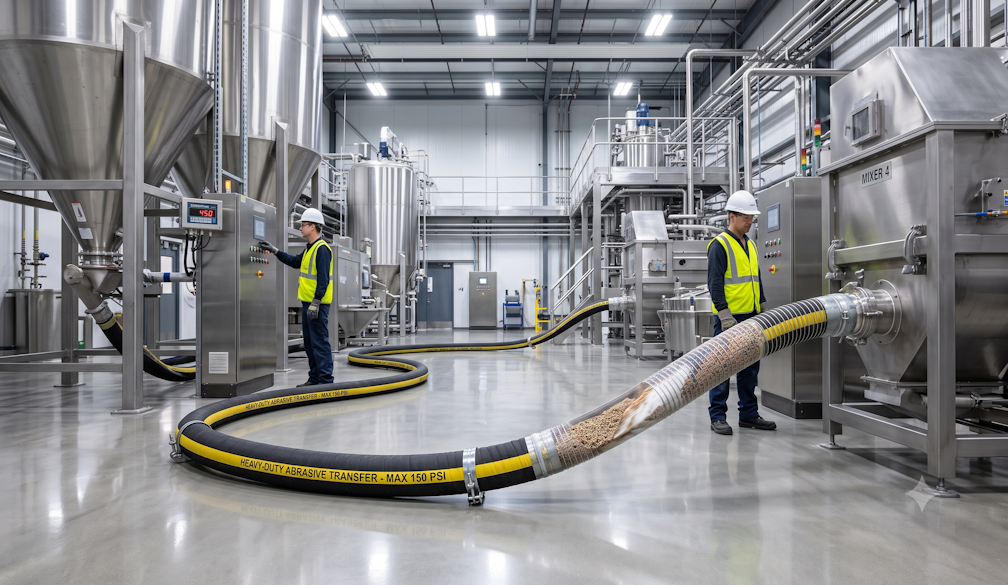
Why Material Handling Hose Is Critical for Industrial Efficiency

A high-performance material handling hose is an essential component in industries that transport abrasive, dry, or bulk materials on a daily basis...

How to Choose the Right Lawyer in Melbourne for Your Situation

Choosing legal support can feel difficult, especially when the stakes are personal or business-related. The right lawyer in Melbourne should underst...

Hoteliers Look to Clever Value Adds to Increase Revenue

The Australian hospitality industry is still in recovery mode after a notoriously rough patch in recent years. While there has been a post-COVID tra...

Moving to Queensland? Here’s How to Prep Your Car for the Big Move North

There’s no sign of the northern migration slowing down, with thousands of southerners fleeing from chaotic lifestyles and cooler climates for a brig...

Diesel Shortage to Impact Trades and Contractors

Strait of Hormuz blockage affecting all major parts of trades and construction Trades and construction across residential, commercial and industria...

Why Holiday Home Owners Turn to Rental Management Agents

The Allure — and the Reality — of Renting Out Your Property Owning a holiday home is a dream for many Australians. Whether it's a beachside sha...

Why Finding Reliable Doctors In Bundoora Is Important For Long-Term Health

Access to quality healthcare plays an important role in maintaining overall wellbeing and managing health concerns early. Trusted Doctors in Bundoor...

Understanding the Different Types of Car Services: Minor vs Major

When it comes to car maintenance, one of the most important things every vehicle owner should understand is the difference between a minor and a maj...

How Superannuation and TPD Insurance Work Together

Superannuation is an essential part of financial planning in Australia. It is designed to provide individuals with income during retirement, helping...

Tiny Towns funding granted for Mt Hotham and Mt Buller upgrades

Alpine Resorts Victoria (ARV) has welcomed funding support from the Victorian Government’s  Tiny Towns Fund, with both Mt Hotham and Mt Buller se...

Locksmith Services: Why Professional Security Solutions Matter More Than Ever

Security is a critical concern for homeowners, businesses, and vehicle owners alike. Whether it involves protecting a property, replacing damaged lo...

Why Tooth Fillings Are Important For Protecting Damaged Teeth

Cavities and minor tooth damage are common dental problems that can worsen if left untreated. Professional tooth fillings help restore damaged teeth, ...