HECS for farmers? Nature repair loans could help biodiversity recover – and boost farm productivity
- Written by Bruce Chapman, Director, Policy Impact, College of Business and Economics, Australian National University
Almost three billion hectares of farmland is in poor condition worldwide – an area the size of Russia. Biodiversity is in freefall. Extinctions are rising. Wild animal populations have fallen almost 70% since 1970.
Restoring damaged land and bringing back ecosystems is phenomenally expensive, estimated at A$21 trillion globally.
The sheer scale of the problem is beyond the capacity of traditional approaches to funding repair. That’s one reason why the Australian government is looking to alternatives such as a nature repair market. This, the government hopes, would boost biodiversity – especially on private land such as farms.
To make this market work, the government might consider creating a new version of Australia’s well-known HECS higher education loans. Call it FECS – Farm Environment Contribution Scheme.
The lead author of this article, Bruce Chapman, helped create HECS – the world’s first national income-contingent loan for higher education. Co-author David Lindemayer, ecologist and conservation biologist, has spent decades exploring ways to preserve biodiversity on farmland.
We have shown how farmers could access loans similar to HECS but based on annual revenue, not income to undertake work helping both their business and restoration of nature. This work will boost farm productivity and biodiversity with farmers repaying the loan when their revenues permit.
Why is this needed?
Australia has large swathes of degraded land and at least 100 species have gone extinct since European colonisation. To prevent further extinctions, the government announced it would introduce a new nature repair market.
This market could, if done well, tackle some of the drivers of biodiversity loss and land degradation – particularly on our farmland. Protecting habitat and waterways, preventing erosion and improving drought resilience would all be eligible.
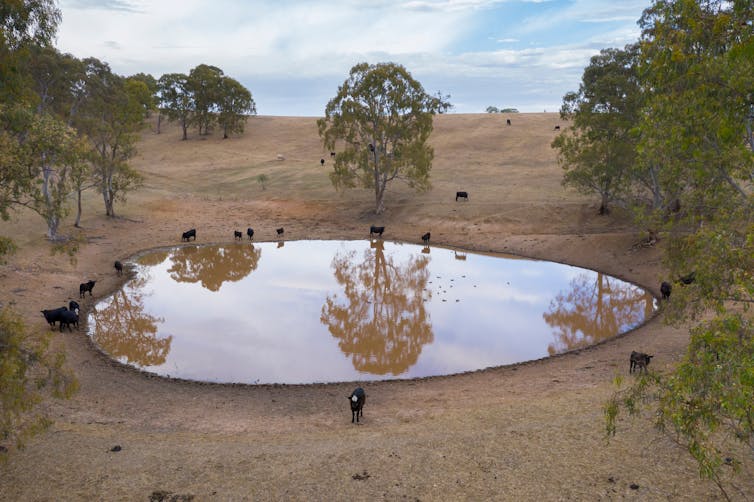
Take farm dams. The vast majority of the 650,000 dams in the Murray-Darling Basin are in poor condition. To renovate one by fencing and re-vegetating around it costs about $9000.
Read more: We must look past short-term drought solutions and improve the land itself
But farmers can make this money back. Livestock with access to better quality drinking water gains weight more quickly, giving farmers more cow to sell. There’s a climate benefit too, as renovated dams change rapidly from carbon sources to carbon sinks. Plus, healthier dams provide habitat for more birds, frogs and dragonflies.
The question is – how do you fund this market? Creating tradeable certificates is one way but could be complicated. Another option is to create a rolling fund, where biodiversity loans are given to farmers to do nature repair work such as dam upgrades which help their bottom line – and wildlife.
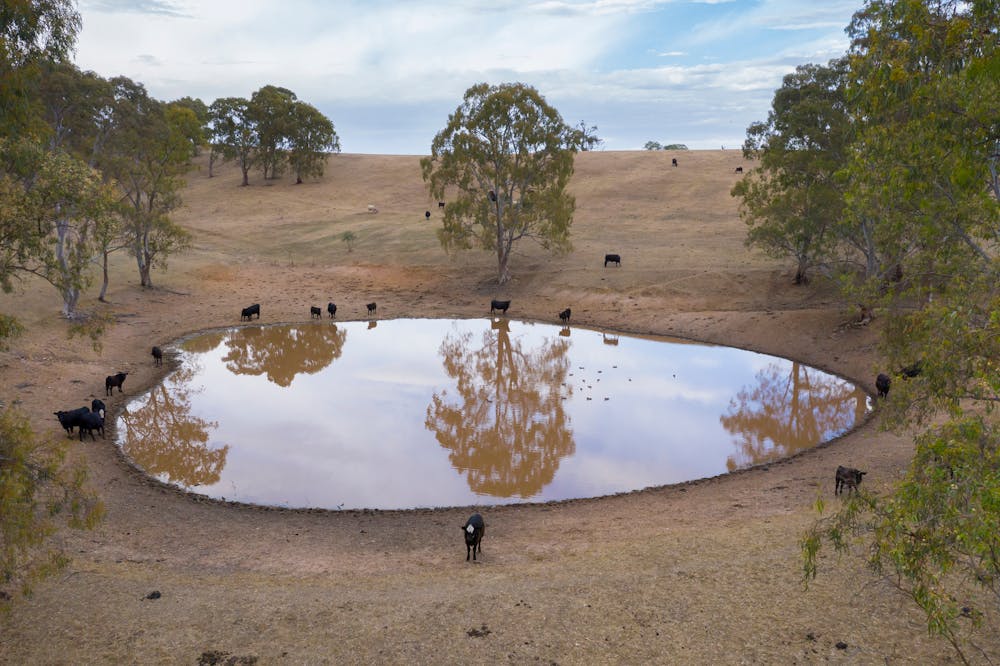 Farm dams can be rich habitats for many species – but only if managed well.
Shutterstock
Farm dams can be rich habitats for many species – but only if managed well.
Shutterstock
How would this work with the nature repair scheme?
The federal government has pitched its planned nature repair market as an offset scheme: farmers and landholders do repair work and get biodiversity certificates which can be bought by, say, another farmer wanting to clear land.
But there’s a complementary, parallel approach. All farms experience large swings in annual revenues from forces outside a farmer’s control, such as rain, drought, floods and commodity price shocks. The best financial tool to help farmers undertake nature repair is the type which smooths their income. That’s where revenue-dependent loans could work.
Farmers would get the money needed for work on restoration and biodiversity recovery, and incur a debt to be repaid only when future revenue makes it possible. During bad years when farm income is low, repayments would be low or zero. During good years, more debt would be repaid to the government.
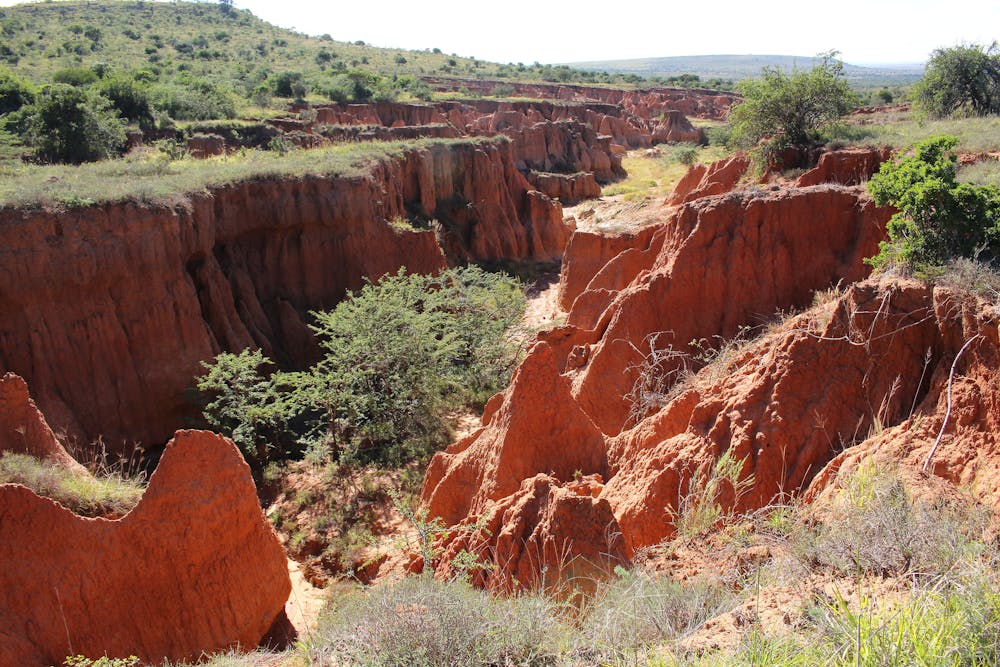 Tackling erosion is expensive, but could bring benefits to farmers and nature.
Shutterstock
Tackling erosion is expensive, but could bring benefits to farmers and nature.
Shutterstock
This isn’t wholly new. We already have policies allowing farmers to draw on savings from good years to help cope with poor years, coupled with associated tax benefits. By and large, this works well.
Loans like HECS have this vital income-smoothing feature – you only pay it back when you are in a position to do so. This scheme has worked well to share the cost of university education between the recipient, who will benefit directly from it, and society more broadly, which benefits from highly educated doctors, lawyers, business owners and so on.
With this type of loan, you don’t risk losing your farm if you can’t repay the debt. They’re better than extending your bank loan, because they don’t add to repayments until you’re in a position to make them.
If these loans were added to our nature market, it could get much more traction than a grant scheme. This is because most of the money outlaid by government would be returned as the loans are repaid. It creates a revolving fund, allowing the government to finance many more projects with many more farms than with a grant which, when spent, is gone.
What about the transparency problem?
Government schemes can attract people trying to game the system for their own financial benefit.
To avoid this, projects tied to a FECS loan would have ensure plantings, shelterbelts and dam renovations are effective and meet standards.
We could borrow from decades of monitoring hundreds of sustainable farms in endangered temperate woodlands to create robust standards.
These will be crucial to avoid perverse effects, such as the risk of promoting populations of the wrong species. Replanting along narrow strips can simply create habitat for damaging hyper-aggressive native birds like the noisy miner while introduced trees can harbour pests such as starlings. Robust monitoring will be needed to ensure restoration projects actually do produce more biodiversity.
We’ll need three types of monitoring:
- Compliance monitoring – did a landowner do what they said they would?
- Inputs monitoring – how much of the loan or grant was actually invested in fencing, planting trees or improving dams?
- Outcomes monitoring – what was the end result? Did we get more species of native animals and invertebrates (including species of conservation concern)?
As we wrestle with the best way forward for Australia’s first nature repair market, we should seriously consider rolling out revenue-dependent loans for farmers.
It could make life easier for farmers at little cost to the government – and get the ball rolling on the ever more urgent issue of restoring land and the species that rely on it.
Authors: Bruce Chapman, Director, Policy Impact, College of Business and Economics, Australian National University