how baby Nemo can ‘just keeping swimming’ from the open ocean to the reef
- Written by Adam T. Downie, Marine Biologist, James Cook University
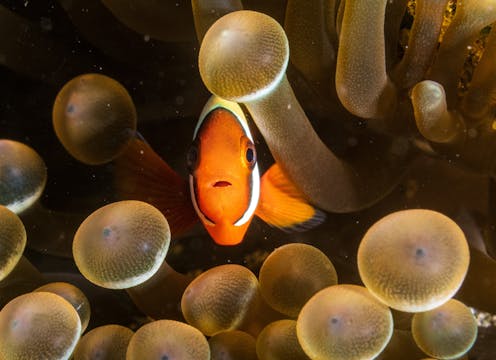
If you’ve seen the hit animated film Finding Nemo, you might recall the character Dory singing the catchy tune “Just Keep Swimming” to help her clownfish friend Marlin make the long journey from the Great Barrier Reef to Sydney.
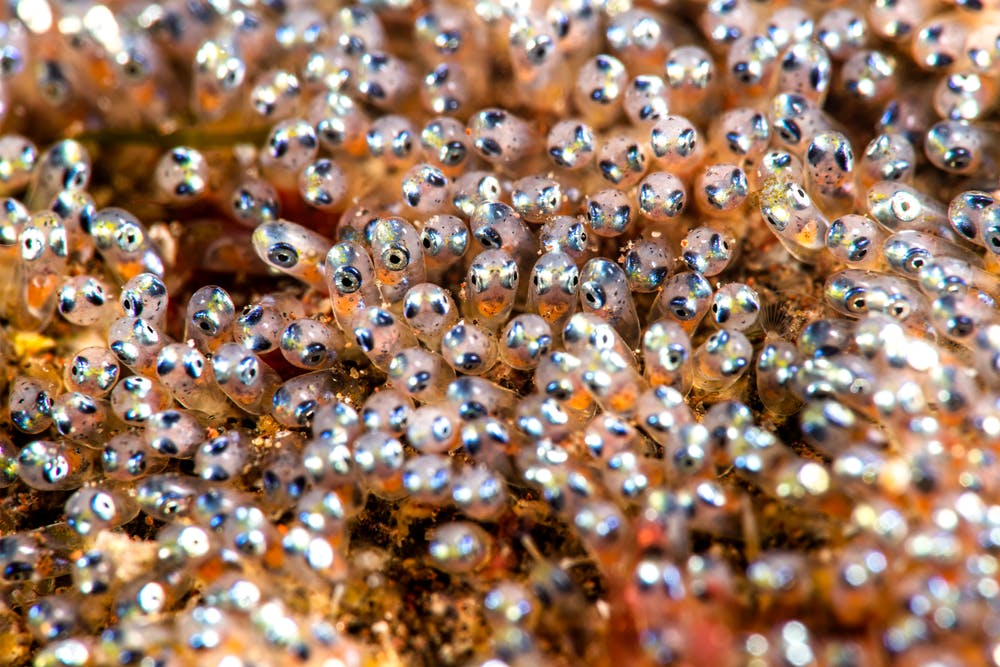
In this case, art imitates life. Marathon swimming performances are a vital part of early life for the vast majority of coral reef fish. Baby (larval) reef fish – smaller than the size of your thumbnail – hatch from eggs laid on the reef and spend a few weeks in the open ocean before swimming back to the reef.
But how does such a small creature make this impressive journey? Our research published today set out to answer this question.
We found larval clownfish dramatically alter their physiology to complete their journey from the ocean back to the reef. In particular, they take in more oxygen per breath and at a faster rate than any other fish species studied to date. Essentially, this makes baby clownfish some of the smallest athletes on the planet.
Just Keep Swimming from Finding Nemo.Read more: Dazzling or deceptive? The markings of coral reef fish
Mini athletes swimming 10-50 body lengths per second
Reef fish are vital to coral reef ecosystems. They play important roles in the food web, help keep the reef clean and recycle nutrients. Plus, their vibrant colours attract millions of tourists annually.
Adult reef fish keep to a small patch. Their eggs are carried off by wave action into the open ocean, where they hatch and develop.
Within a few weeks the tiny fish larvae must return to the reef. It’s a long, arduous journey that can last weeks to months. Depending on the species, they cover distances as far as 64 kilometres. So how do they do it?
Until the 1990s, scientists believed the development of larval reef fish was like that of other fish such as herring, cod and flatfish. These species “go with the flow”, passively riding ocean currents until they become large and developed enough to actively swim on their own, against the currents.
However, landmark studies from the early 1990s documented the impressive swimming capabilities of baby reef fish. It turns out reef fish are not passive particles after all.
Previous research has provided overwhelming evidence coral reef fishes are capable of amazing swimming performance as babies.
Some of these tiny athletes are capable of swimming 10-50 body lengths per second as a larva. For comparison, Olympic multi-gold medallist Michael Phelps races at just under two body lengths per second.
When paired with well-developed sensory systems such as vision and the sense of smell, such impressive athletic performance enables these babies to “just keep swimming” with or against ocean currents until they find an optimal reef on which to settle.
But 30 years after the discovery, we were still wondering how they manage it. Now we know.
Measuring the traits of an athlete
My colleagues and I measured physiological traits required to be an athletic swimmer across the entire larval phase of a clownfish. These traits included swimming speed, oxygen uptake rates, gene expression patterns, and tolerance to low oxygen (hypoxia).
Why hypoxia? At night, when it’s no longer possible to use sunshine and carbon dioxide to make energy by photosynthesis, corals and plants breathe in oxygen to make energy. This lowers oxygen levels on reefs. Larval reef fish returning home from the open ocean must prepare for such conditions.
We found larval clownfish have the highest oxygen uptake rates of any fish to date. This supports elite swimming, growth and development.
As they develop and swim faster, thousands of genes change. Genes that code for proteins that transport and store oxygen, such as haemoglobin and myoglobin (also found in our bodies), are especially important. They enable oxygen to be transported and stored during intense exercise and help retain oxygen in tissues when the fish experience hypoxia in their reef habitats.
The changes in haemoglobin and myoglobin genes also correspond to when these baby fish start to increase their hypoxia tolerance.
We’ve seen this before, in reverse. Salmon are one of the most studied fish of all time and, as adults, they’re pretty amazing athletes as well. However, baby salmon endure low oxygen conditions in the first few weeks of life, right after hatching, while they are hiding in the gravel of the freshwater riverbeds.
And, sure enough, back in the 1980s, research showed salmon switch their haemoglobin too – right when the baby salmon have to transition from being hypoxia tolerant, to training to become elite swimmers.
Why our research matters
The changes in physiological machinery that we uncovered are key to survival for clownfish. It’s likely other coral reef fish follow similar developmental pathways.
Reef fish – of all shapes, sizes, and colours – are integral for maintaining coral reef health and persistence of future coral reefs. This is crucial as climate change threatens these beautiful, delicate ecosystems.
Read more: I studied what happens to reef fish after coral bleaching. What I saw still makes me nauseous
Authors: Adam T. Downie, Marine Biologist, James Cook University