

Yes, Environment Minister Tanya Plibersek approved a coal mine. But save the angst for decisions that matter more
- Written by: John Quiggin, Professor, School of Economics, The University of Queensland
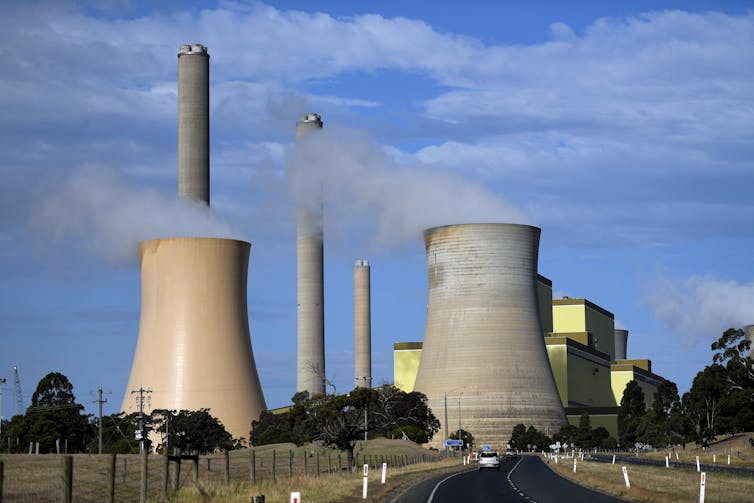
The outcry was loud and swift last week after Environment Minister Tanya Plibersek approved a new coal mine in central Queensland. It’s the first coal mine Labor has approved since coming to power a year ago.
The project, the Isaac River mine, will extract metallurgical coal to be burned for steel-making. Environmental groups decried the potential damage the mine would cause to wildlife, water quality and the climate.
Any new coal mine is inconsistent with the global goal of reaching net-zero emissions by 2050. But the Isaac River mine is probably the least bad of those recently under consideration.
The mine would produce only metallurgical coal, which is still needed by the steel industry, and would operate for just five years. Importantly, we shouldn’t let controversy over the approval of a small, short-lived mine distract from more consequential recent decisions on coal – and those still looming.
A lesson in spin-doctoring
Plibersek’s handling of recent coal mine announcements is a masterclass in egregious political spin-doctoring.
On May 5, Plibersek triumphantly announced she had rejected two Queensland coalmine proposals - the MacMines China Stone mine and the Stanmore Resources Range project – because the proponents failed to provide information about potential damage to the environment.
The decision was widely welcomed. But in reality, scuppering the mines was an easy and relatively uncontroversial decision for Plibersek. Both proposals had been moribund for a long time. Indeed, MacMines abandoned its proposal in 2019 and the phone number for its Darwin office is no longer even connected.
Plibersek rejected the mines not because of the damage they would cause to nature, but because the proponents had for years failed to provide basic information to the department.
Some observers suspected the announcement was meant to soften us up for bad news.
That news came six days later, when details of the Isaac River mine approval were quietly uploaded to the federal environment department’s website. The coal mine, east of Moranbah, will reportedly produce about 500,000 tonnes of metallurgical coal each year for five years.
The approval was made public right before Opposition Leader Peter Dutton’s budget reply speech. This follows a well-worn strategy of governments burying bad news by releasing it concurrently with bigger news events.
A spokesperson for Plibersek defended the approval, saying the federal government “has to make decisions in accordance with the facts and the national environment law – that’s what happens on every project, and that’s what’s happened here”.
Thermal vs coking coal
In weighing up the merits of Plibersek’s decision on the Isaac River mine, we must make a distinction between thermal coal, used in electricity generation, and metallurgical or “coking” coal, used in steel-making.
Metallurgical coal accounts for about half of Australia’s coal exports by tonnage, but the great majority by value.
The world is rapidly moving away from burning coal to generate electricity. Much of Europe will be coal-free by 2030. The United States and other developed countries are following suit.
The much-publicised “return of coal” resulting from the Russian invasion of Ukraine never amounted to much and is already over.
By continuing to export thermal coal, Australia is delaying the inevitable transition for the sake of short-term profits.
So what’s the picture for metallurgical coal? Low-emissions alternatives for steel-making are available, but it will be some time before they’re deployed at scale. So demand for metallurgical coal is expected to continue for years, or even decades.
Even bodies such as the International Energy Agency, which have called for an end to all new fossil fuel investment, could scarcely raise strong objections to a small-scale metallurgical coal mine set to close in five years.
Let’s not get distracted
In these circumstances, Plibersek played the media well by making the Isaac River mine the featured dish in a menu of bad news.
That approval was not the only decision made by Plibersek last week, or the most important one. She also allowed three other mine projects – two in New South Wales and one in Queensland – to proceed to the next stage of environmental assessment.
These projects had been sent back to Plibersek for further consideration after an environment group requested the effects of climate change be considered. The projects are still subject to further steps in the approvals process. But Plibersek’s decision to let them proceed provides a major boost.
The projects include an expansion of the Mount Pleasant mine in NSW. It would produce about 12 million tonnes of thermal coal a year – more than the Adani Carmichael mine. It’s expected to operate until 2050, by which time many countries have pledged to quit coal-fired power completely.
Plibersek now faces a huge political test when it comes time to decide on those, and many more coal projects in the planning pipeline. On current indications, climate impacts will be disregarded completely.
In February, Plibersek rejected mining magnate Clive Palmer’s proposed Central Queensland coal project, on the grounds it would damage rivers and the Great Barrier Reef.
So under this government, mines may be rejected because they would damage the local environment or for failing to get their paperwork right – but not because they enable emissions that will help destroy the global environment.
This is a clear weakness in national environment law. The Albanese government could have fixed it, by introducing a so-called “climate trigger”. This would have enabled it to knock back a development proposal on the grounds of its climate impact. But it has refused to do so.
Read more: Labor has introduced its controversial climate bill to parliament. Here's how to give it real teeth
Big coal tests remain
Optimists can console themselves with the idea that things would have been worse if the Morrison government was still in power. But none of the approval decisions announced by Labor so far differ from those we might have expected under the Coalition.
And there is one intriguing case where things look like going the other way. In the lead-up to last year’s federal election, then prime minister Scott Morrison blocked a gas-drilling proposal off the New South Wales coast, using ministerial powers he secretly conferred upon himself.
The Albanese government has taken legal action to nullify that decision.
Many more federal decisions on coal mining projects are yet to come. If all or most are approved, Labor’s efforts to reduce domestic emissions will count for little or nothing – a fact no amount of spin-doctoring can conceal.
Authors: John Quiggin, Professor, School of Economics, The University of Queensland


















