phasing out natural gas in homes demands affordable alternatives first
- Written by John Tookey, Professor of Construction Management, Auckland University of Technology
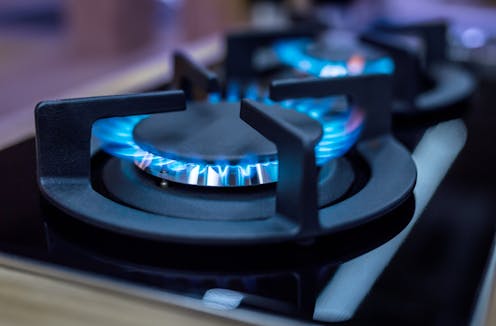
Do you have gas? It’s a personal question that may cause offence – and not always for the obvious reason. Because the way we choose to cook or heat our homes is increasingly becoming something of a sore point.
Since the Climate Change Commission issued draft advice recommending the banning of new gas installations by 2025, anyone with a gas hob or central heating has been put on notice.
With the government’s gas transition plan due for consultation this year, a long-term plan to phase out gas will require everyone affected to start thinking about the alternatives. But it may not be a simple transition. Moves to cancel the humble gas hob even ignited another culture war in the United Sates.
On one side, some environmentalists and health researchers point to the role of gas in global warming and respiratory conditions like asthma. On the other, conservatives have called it another “woke” outrage. One celebrity chef even taped himself to a stove in protest.
Nevertheless, New York recently became the first US state to ban new residential natural gas connections from 2026. This followed the 2022 Inflation Reduction Act, which introduced financial incentives for homeowners to switch from gas to electricity.
What are the arguments for a gas ban in Aotearoa New Zealand, then? Will it make a difference to our emissions profile? And are we likely to see something like the New York policy introduced?
Big change for minimal gain?
First the good news. When burned efficiently, natural gas – the stuff that’s piped into your home if you’re on the mains – produces 40% less carbon dioxide than coal, and 30% less than oil.
The amount of contaminants it contains (such as mercury and sulphur dioxide) is insignificant. It creates no soot or dust, and emits minimal particulates when it’s burned. Overall, it’s among the cleanest of the fossil fuels.
But natural gas is primarily methane – an active greenhouse gas which traps 86 times more atmospheric heat than the same amount of carbon dioxide over 20 years.
Read more: As NZ gets serious about climate change, can electricity replace fossil fuels in time?
A recent study of gas stoves in homes found the appliances can leak unburnt methane and nitrogen oxides even when turned off. This damages indoor air quality and creates more emissions than it saves in carbon dioxide from the cleaner burn.
Given the country’s commitment under the Climate Change Response (Zero Emissions) Amendment Act to reduce net greenhouse gas emissions to 50% below gross 2005 levels by 2030, the case against gas may seem clear. Just how urgent the situation is, however, is open to debate.
As of 2017, New Zealand’s natural gas consumption was 0.1% of the global total (putting us 55th in the world). Electricity and heat production accounted for 13% of New Zealand’s gross carbon dioxide emissions in 2020, but domestic consumption of gas and production of CO₂ are relatively low.
By contrast, agriculture-based emissions are very high. Livestock produced 90% of gross methane emissions in 2020.
With natural gas making up such a tiny portion of the country’s overall emissions, does ending home use really add up? Might a ban be seen as tokenism – or become the political hot potato it has in the US?
Invest in alternatives first
In the end, it’s about priorities. But it’s unlikely the supply of natural gas to New Zealand homes can end soon. The Climate Change Commission’s 2023 draft advice recommends the government introduce “targeted support” to help lower-income households replace gas infrastructure (perhaps similar to what is proposed in the US).
This in turn will require significant investment in the electricity sector first. As many have witnessed first-hand, the country’s electricity infrastructure can’t always withstand extreme weather events. The thought of going without hot food or water, especially in winter, might make one think twice about ditching gas.
Read more: Cyclone Gabrielle: how microgrids could help keep the power on during extreme weather events
Yes, sustainable and renewable sources of power are essential in the long term. But while there are alternatives to relying on an unreliable national grid, those who want to install solar panels and battery storage have to pay from their own pockets.
Moving off-grid is a slow process, too, even for for those who can afford it. And it achieves only incremental change in the wider energy system. Given the marginal reduction in overall emissions from a move away from natural gas, reliable alternatives must be in place first.
Grants to support individuals and communities looking to develop local micro-power generation (such as solar and wind turbines) will reduce demand on overstretched infrastructure. The same applies for hydrogen fuel cells for housing when these are launched commercially.
We need to put the means to develop alternative sources of power in place first, then phase out natural gas. Not before.
Authors: John Tookey, Professor of Construction Management, Auckland University of Technology