The world's worst animal disease is killing frogs worldwide. A testing breakthrough could help save them
- Written by Kaya Klop-Toker, Conservation Biology Researcher, University of Newcastle
For the past 40 years, a devastating fungal disease has been ravaging frog populations around the world, wiping out 90 species. Unlike the global COVID-19 pandemic, you may not even be aware of this “panzootic” – a pandemic in the animal world. Yet it’s the world’s worst wildlife disease.
Recently published in the journal Transboundary and Emerging Diseases, a multinational study has now developed a method to detect all known strains of this disease, caused by the amphibian chytrid fungus. This breakthrough will advance our ability to detect and research this disease, working towards a widely available cure.
An extreme mortality rate
Chytridiomycosis, or “chytrid” for short, has driven severe declines in over 500 frog species and caused 90 extinctions, including seven in Australia.
The extreme rate of mortality, and the high number of species affected, makes chytrid unequivocally the deadliest animal disease known to date.
Chytrid infects frogs by reproducing in their skin. The single-celled fungus enters a skin cell, multiplies, then breaks back out onto the surface of the animal. This damage to the skin affects the frog’s ability to balance water and salt levels, and eventually leads to death if infection levels are high enough.
Chytrid originated in Asia. It’s believed that global travel and trade in amphibians led to the disease being unwittingly spread to other continents.
Frogs in regions such as Australia and the Americas did not have the evolutionary history with chytrid that could grant them resistance. So, when they were exposed to this new pathogen, the results were devastating.
Many species’ immune systems were simply not equipped to defend against the disease, and mass mortalities ensued. In the 1980s, amphibian biologists began to notice sharp population declines, and in 1998, the chytrid fungal pathogen was finally recognised as the culprit.
Since then, much research has focused on infection trends and how to protect vulnerable frog species. To track such trends, we need a reliable way to detect chytrid in the first place.
An imperfect swab
To find out if a frog is carrying chytrid, researchers swab the animal and run the same type of test you might recognise from COVID-19 testing – a qPCR. It stands for quantitative polymerase chain reaction, and simply put, is a way to measure the volume of DNA from a species of interest. The test was developed at CSIRO in 2004; unlike a COVID test, however, scientists swab the frog’s skin, not the nose.
Because this test was developed from chytrid in Australia, decades after the pathogen’s arrival in the country, a divergence between the Australian and Asian strains meant this test could not detect chytrid in its region of origin. This has been a major limitation to the past two decades of chytrid research.
Over the past several years, a team led by researchers at the Council of Scientific and Industrial Research – Centre for Cellular and Molecular Biology in India has been working on a new qPCR test that can detect strains of chytrid from Asia. In collaboration with researchers in Australia and Panama, we have now verified the new test also reliably detects chytrid in these countries.
Furthermore, the test can detect another closely related species of chytrid that infects salamanders. The test is also more sensitive, meaning it can detect very low infection levels – thereby broadening the scope of species we can study.
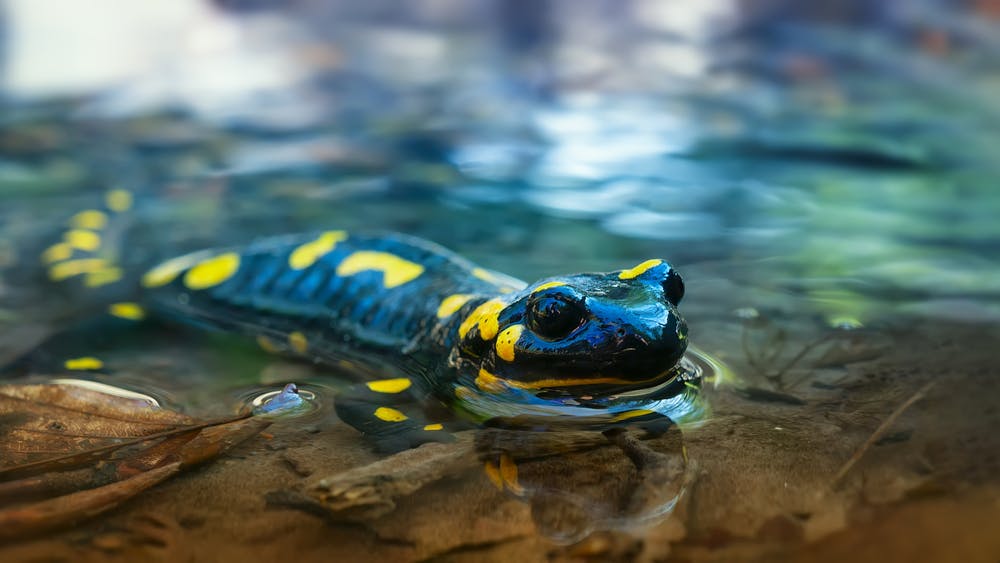 Salamanders are another group of animals at risk of widespread chytrid fungal disease.
Shutterstock
Salamanders are another group of animals at risk of widespread chytrid fungal disease.
Shutterstock
Natural immunity?
The most puzzling thing about chytrid is that some amphibian species – even those that have not evolved with the pathogen – don’t become sick when they carry the fungus. These species have some form of natural immune resistance.
However, frog immunity is extremely complex. Immunity might come from anti-microbial chemicals within the skin, symbiotic bacteria on the skin, white blood cells and antibodies in the blood, or combinations of these mechanisms.
So far, no clear trend has been found between resistance and immune function. To make matters more complicated, there is also evidence chytrid can suppress a host’s immune response.
Because there haven’t been any observed chytrid declines in Asia, and because detecting chytrid in Asia has been difficult, Asia is lagging behind the rest of the world in chytrid research. Yet the new qPCR test detected high levels of chytrid in a range of amphibian species across India.
Having the ability to study chytrid in its region of origin may help us understand how Asian species evolved resistance – research that may hold a key to help researchers develop a cure for those species in Australia, North and South America, and Europe that are now on the brink.
While the new qPCR test was successful at detecting chytrid in samples from India, Australia, and Panama, we will need to validate and promote the method so it becomes the new gold standard for chytrid testing. Future work will involve using the test to analyse samples from Europe, and samples from Brazil where genetic studies show that chytrid has diverged.
In time, this new way to detect chytrid could be the first step in helping to save frogs – the hidden gems of our forests and wetlands.
Authors: Kaya Klop-Toker, Conservation Biology Researcher, University of Newcastle