Why taxing the world's biggest companies at 15% won't fix the gaping hole in global tax rules
- Written by Kerrie Sadiq, Professor of Taxation, QUT Business School, and ARC Future Fellow, Queensland University of Technology
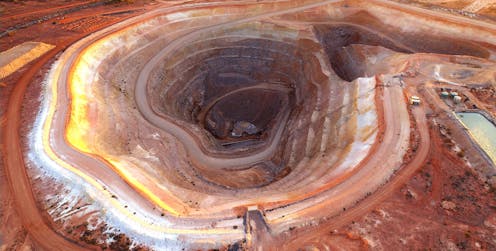
Australia’s federal government has a plan to discourage companies from shifting profits to tax havens. The idea is to impose a “global minimum tax” on large Australian and foreign-owned companies with subsidiaries in low or no-tax countries.
Australia’s largest mining companies are notorious for shifting profits to avoid the 30% company tax rate. It is common to use marketing hubs in Singapore, where the headline tax rate is 17% but various incentives often lower the effective rate to about 5%. Paying Singaporean subsidiaries for “services” performed, such as marketing or to use trademarks or patents owned by the group, can reduce a company’s Australian profits, and its tax bill.
The Albanese governent’s proposal, announced in the federal budget, embraces an OECD/G20 program to reduce profit shifting by multinationals through a uniform global 15% tax on all companies. Almost 140 countries have agreed to implement the tax, though to date only a handful have enacted it.
Any locally or foreign owned company in Australia that has overseas subsidiaries and annual global group revenue of more than €750 million (about A$1.2 billion) will be taxed the difference between the rate paid by the associated entities overseas and the 15% rate.
A 15% minimum tax rate will also apply to domestic companies with revenue of €750 million. Currently generous tax concessions – such as generous deductions or credits for activities like research and development – allow Australian businesses to reduce their tax burden from the headline 30% rate to less than 15%.
At first glance, these new taxes seem like a good idea. Proponents argue that putting a floor on corporate tax rates will slow “the race to the bottom”, which has seen governments lower corporate tax rates to attract or keep corporate capital.
However, for Australia it is likely to accelerate the problem. By implicitly accepting the legitimacy of profit shifting, the government does nothing to address the fundamental problem that enables multinationals to exploit the global tax system.
Recouping a pittance
The budget papers don’t say how many companies will be affected, but globally the OECD says no more than 100 corporations will have to pay the tax.
The budget estimates the Australian government will raise an extra $160 million in 2025-26, and $210 million in 2026-27. This is less than 0.5% of the $93 billion in company tax revenue in 2023-24, and a pittance compared with the tax lost through profit shifting by multinationals
For example, in the Australian Taxation Office’s most recent settlement with a company over disputed profit shifting, fuel company Ampol agreed to pay $157 million for avoided taxes dating back to 2014. This arose from Ampol Australia unnecessarily paying for oil imports acquired through a related Singapore procurement hub, instead of buying oil directly.
Rio Tinto, the world’s second-biggest mining company, agreed in 2022 to pay almost $1 billion to the tax office over money channelled to its Singapore marketing hub.
BHP, the world’s biggest mining company, agreed in 2018 to pay the tax office $529 million in extra taxes for profit-shifting arrangements between 2003 to 2018. This dispute also related to transactions between its Australian headquarters and marketing operations in Singapore.
In each of these settlements the companies admitted no wrongdoing. Details are confidential, so it is impossible to know how much tax the Australian Tax Office claimed was due. But it seems likely Australian taxpayers got less than the tax avoided.
Fundamental problem remains
Rather than ending the race to bottom from international profit shifting, the 15% tax is likely to entrench it. It ensures companies that successfully shift profits out of Australia will pay no more than a 15% tax rate.
This will continue so long as different parts of a multinational corporation are treated as if they are separate entities for tax purposes. This is nothing more than a legal fiction.
The only way to prevent this is through real and substantive changes in the way governments tax multinationals.
The obvious solution is to treat multinationals as the global entities they are. Then allocate profits for tax purposes to the countries in which real activities creating those profits take place.
In the case of Australian mining companies, that should be where they dig their riches out of the ground.
Authors: Kerrie Sadiq, Professor of Taxation, QUT Business School, and ARC Future Fellow, Queensland University of Technology