Think of solar panels more like apple trees – we need a fairer approach for what we use and sell
- Written by Niraj Lal, Visiting Fellow at the ANU Centre for Sustainable Energy Systems, Australian National University
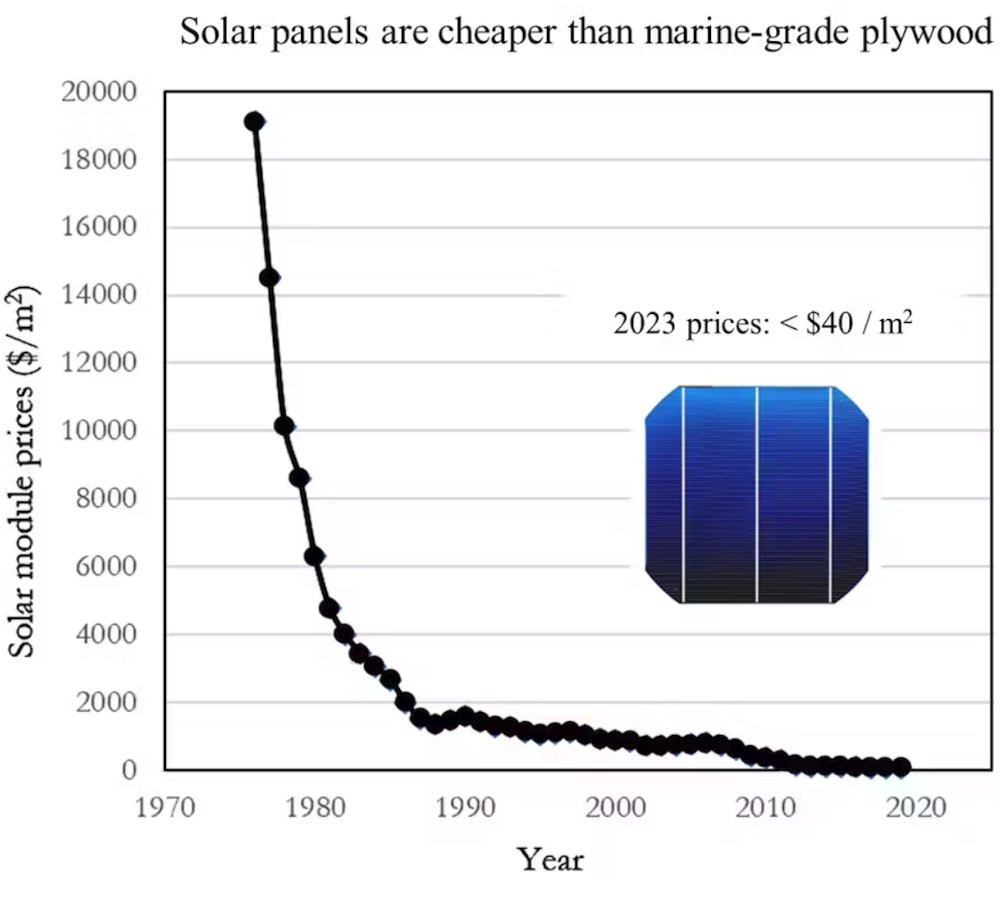
As we race to decarbonise by electrifying everything, solar panels – now cheaper per square metre than marine-grade plywood – will do much of the heavy lifting. But if we don’t rethink how our rooftop panels plug into the grid, the transition will be unfair and costly – for both people who own solar panels (and electric cars and smart appliances) and people who don’t.
Australia has the world’s highest solar installation rate per person. When solar panels generate more energy than a household is using, the excess electricity can be exported to the grid. Rooftop solar regularly provides more than a quarter of daytime electricity across the National Electricity Market. At times it exceeds 90% in South Australia.
The amount of solar in our grids is affecting how the Australian Energy Market Operator (AEMO) and distribution businesses (which own the powerlines) keep the lights on. The measures in place are costing households that are generating solar power, but also non-solar owners and network operators. So how can we make the system fairer for all?
We suggest solar panels should be thought of a little more like apple trees. If you have a tree in your backyard you should be able to use as many apples as you produce. But selling apples for profit creates extra responsibilities, along with uncertainties about supply and the fair selling price.
Our new research paper, published in The Electricity Journal, outlines principles for fairness and proposes a bill of rights and responsibilities for connecting to the grid.
What’s not fair about the current system?
At times, the amount of solar energy being exported can be too much for the network to handle.
That’s why inverters (the box on the side of a house with solar panels) have settings that automatically reduce exported electricity when network capacity is under strain. Other mechanisms are also being put in place to allow AEMO to occasionally curtail output from rooftop solar to maintain power system security.
However, such measures not only reduce how much electricity is flowing from a home to the grid, but the entire output of the home’s rooftop system. There aren’t any fundamental reasons for this, just that appropriate inverter and control settings haven’t been enabled.
But this means a household, at times, can’t use any of the electricity it’s generating. In South Australia, the annual cost to customers of this sort of curtailment is already between A$1.2 million and A$4.5 million. This isn’t fair.
But it also isn’t fair when solar owners get paid to export electricity when prices are negative – that is, when other generators must pay to keeping exporting to the grid. This is happening more often, totalling more than half of all daytime hours in SA and Victoria last quarter.
Nor is it fair for distribution businesses to build more poles and wires to accommodate everyone’s solar exports all the time. Or if the system operator has to buy more reserves to cover for the uncertainties of rooftop solar output.
In these instances, all customers foot the bill whether they own solar panels or not. But non-owners are hit hardest when the costs of such measures are passed on. People without rooftop solar are completely exposed to the 20-25% electricity price rises from July 1.
Some solar owners will hardly notice the increase.
Read more: How to maximise savings from your home solar system and slash your power bills
It’s time to rethink the social contract for grid electricity
Australia’s electrification will replace fossil fuels to run households, businesses, vehicles and industry. It’s expected rooftop solar will increase five-fold. How should households with these growing distributed energy resources interact with the grid in future?
We reckon the social contract for grid electricity needs to evolve from the pay-plug-play expectations dating from the 19th century to a two-way engagement to support fairness for all.
To return to the apple tree analogy, if you have a tree in your backyard you should be able to eat as many apples as you’d like, and make crumble, cider, whatever. But selling apples for profit comes with a responsibility not to carry codling moth. And selling crumble or cider is subject to food safety and licensing requirements.
And the prices? That depends on the availability of trucks and local market value. Maybe you or our government could pay more for trucks for everyone to be able to sell apples all the time, but it probably wouldn’t be efficient or fair.
The main distinction we draw is between growing for yourself and selling for profit. The analogy obviously isn’t perfect. Apples aren’t an essential service, apple trucks aren’t a regulated monopoly, and the supply and demand of apples doesn’t need to be balanced every second.
However, the principles remain – especially for a future where apple trees (rooftop solar) and apple warehouses (home batteries and electric vehicles) are everywhere.
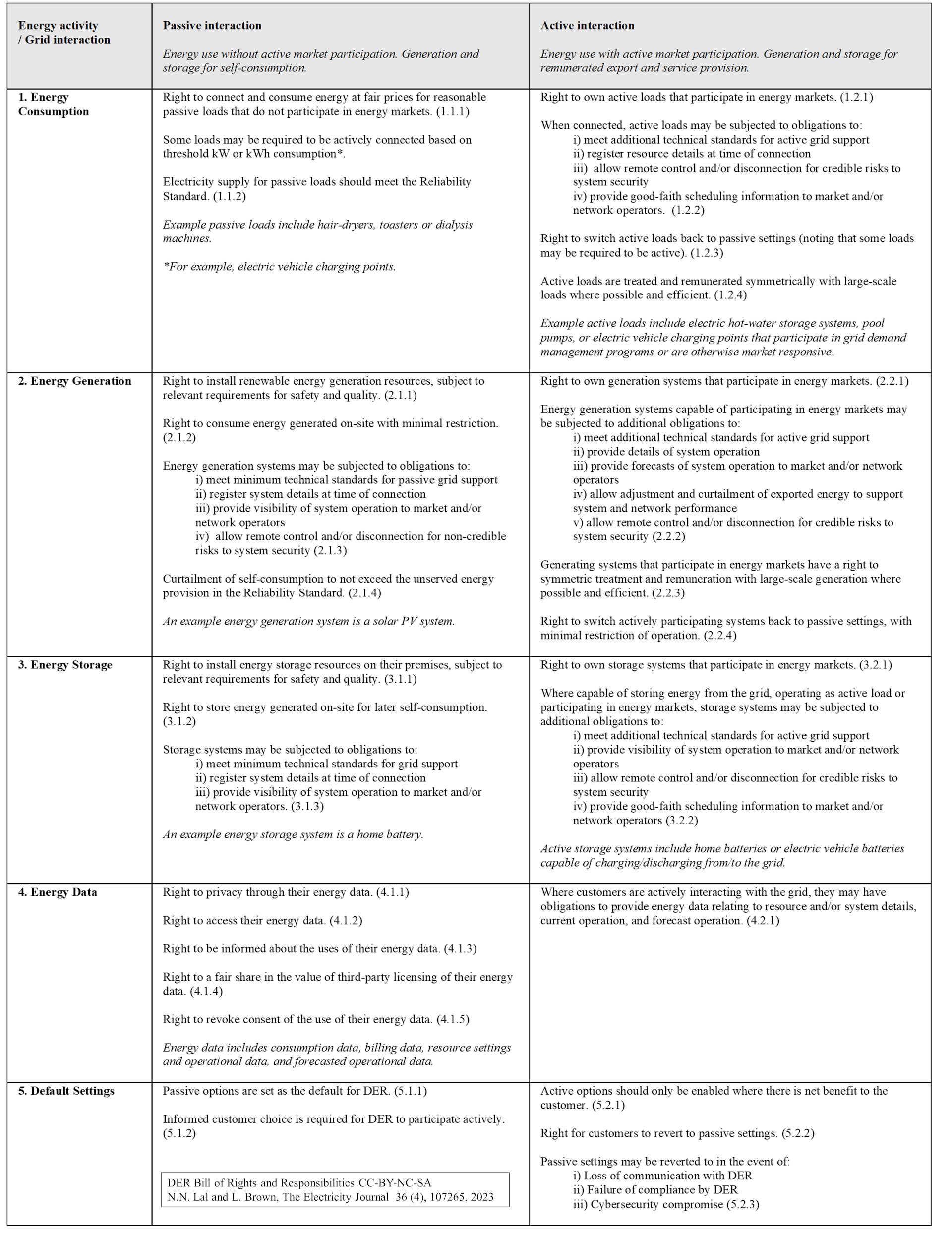
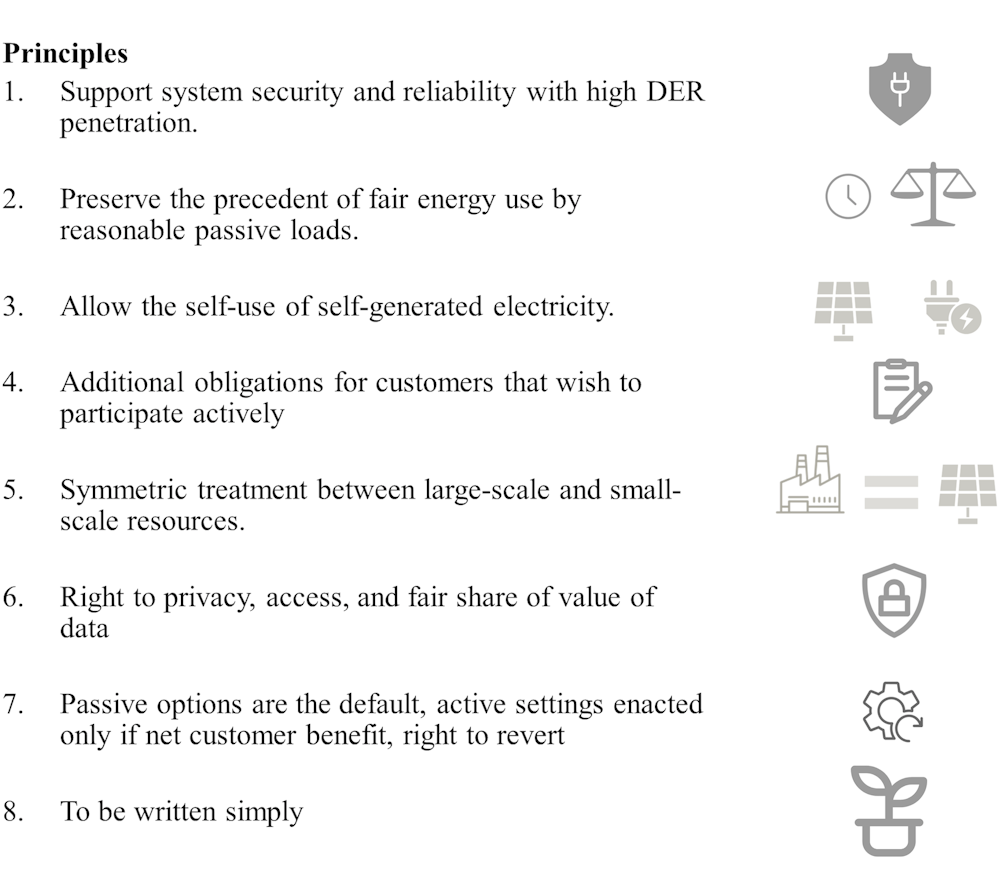 The principles guiding a bill of rights and responsibilities for distributed energy resources. CC-BY-NC-SA.
Author provided
The principles guiding a bill of rights and responsibilities for distributed energy resources. CC-BY-NC-SA.
Author provided
A fairer balance of rights and responsibilities
In our research paper we distinguish between rights for passive use (using your own rooftop solar electricity) and responsibilities for active use (selling electricity).
No-one should be able to stop you using your own self-generated electricity (for the vast majority of the time). But making money from the grid will likely come with responsibilities to allow trusted parties such as network operators to manage your exports at times (a system known as flexible export limits).
If you’re charging and discharging batteries for profit, you will likely have a responsibility to provide some visibility of your expected use to help the operator manage the grid.
In a country with lots of solar energy, prices for selling energy mightn’t be guaranteed all the time either.
We must think about this new social contract. If we don’t, electrifying everything will be harder, more expensive, less fair and more reliant on large-scale projects requiring new transmission lines, which are complex and costly to build.
The story of distributed electricity is incredible – the power is literally in our hands when we flick a switch, grab the wheel, buy a product. We have an opportunity now to make it work better and be fairer for all of us.
You can see a summary of the DER Bill of Rights and Responsibilities here.
Authors: Niraj Lal, Visiting Fellow at the ANU Centre for Sustainable Energy Systems, Australian National University