Whale of a tale? The stories about whales helping tackle climate change are overblown
- Written by Olaf Meynecke, Research Fellow in Marine Science, Griffith University
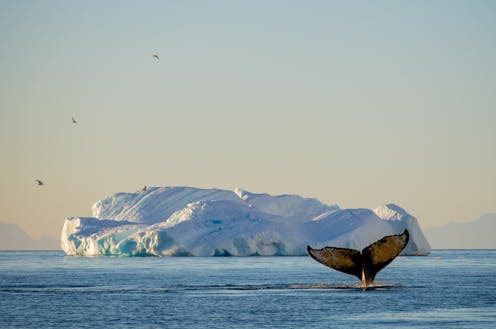
Whales have long fascinated us with their size and beauty. Once we stopped whaling, their populations have begun to recover, in a major win for conservation.
Research has suggested healthy whale populations could help us in unexpected ways – by storing carbon for the long term.
How? Whales are usually huge. Among their number is the blue whale, the largest animal ever to have lived. At up to 30 metres long and 190 tonnes, they’re bigger than any dinosaur. This gives these mega-mammals an oversized role in the oceans. Their plumes of poo contains so many nutrients that phytoplankton blooms can form in its wake. These tiny photosynthesising creatures soak up carbon dioxide in their bodies. When they die, they can sink to the bottom and be covered in sediment, storing the carbon.
As we look desperately for good news on climate amid the accelerating crisis, whales seemed to offer one. Bring back the whales, store more carbon naturally.
But this is premature, as our new research points out. This area is riddled with uncertainties and a lack of data. While the story sounds good, we simply cannot say more whales means more carbon storage at this point. If we focus on unproven measures like encouraging whale populations, we risk taking attention away from proven climate measures such as steadily reducing emissions from fossil fuel burning or protecting our stores of blue carbon in mangroves and seagrass meadows.
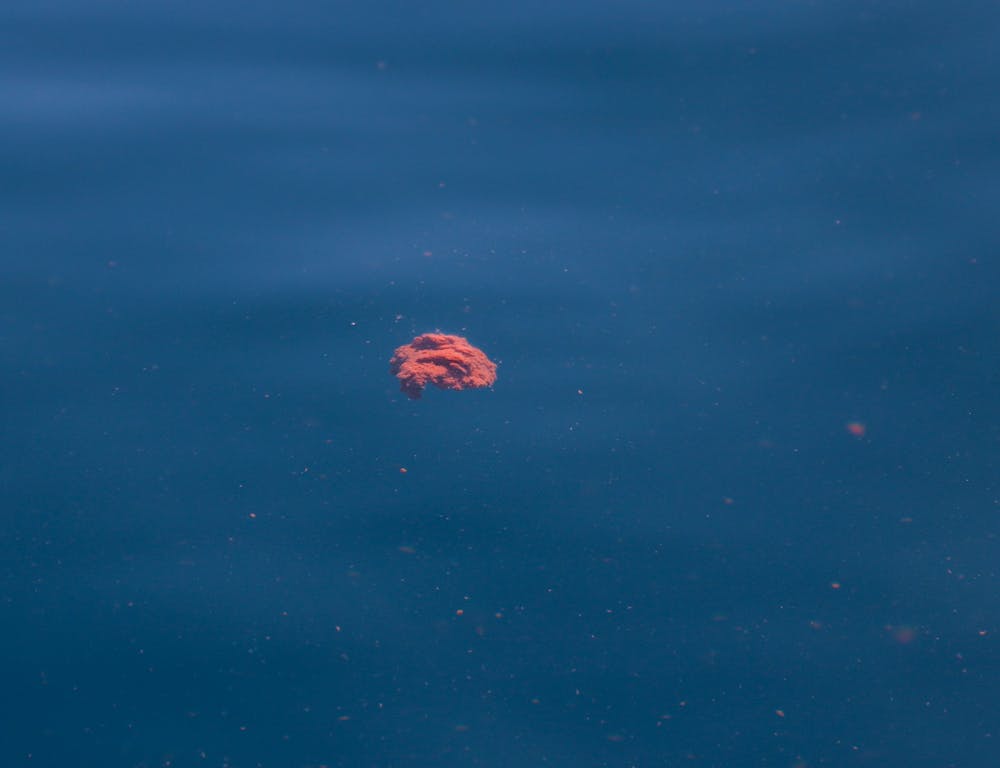
Why has there been so much focus on whales?
The climate crisis is intensifying. Our first year with over 1.5℃ of heating could come within five years. Given this, governments and researchers are looking for ways to tackle this global crisis by using nature to draw CO₂ back out of the air.
Trees and peatlands are natural carbon sinks. So is the ‘blue carbon’ stored in mangroves and seagrass meadows for thousands of years.
So why not whales? In recent years, there’s been mounting enthusiasm about whales – any marine animal able to boost phytoplankton growth is arguably adding to natural ways to store carbon.
Here’s how the chain of events would work. As whales feed and migrate, they pump large amounts of nutrients between different parts of the oceans and different depths – mainly through their poo. They also act as a conveyor belt, taking nutrients between different oceans. One species, the gray whale, is the largest animal involved in bioturbation, meaning they churn up sediment as they gouge the seafloor hunting shrimp.
These roles make whales ecosystem engineers. Their activities are significant enough to shape local ecosystems where they feed and fertilise the surface of the ocean through defecation. Whale poo, in particular, looks to have a significant effect on phytoplankton growth, especially in the Southern Ocean.
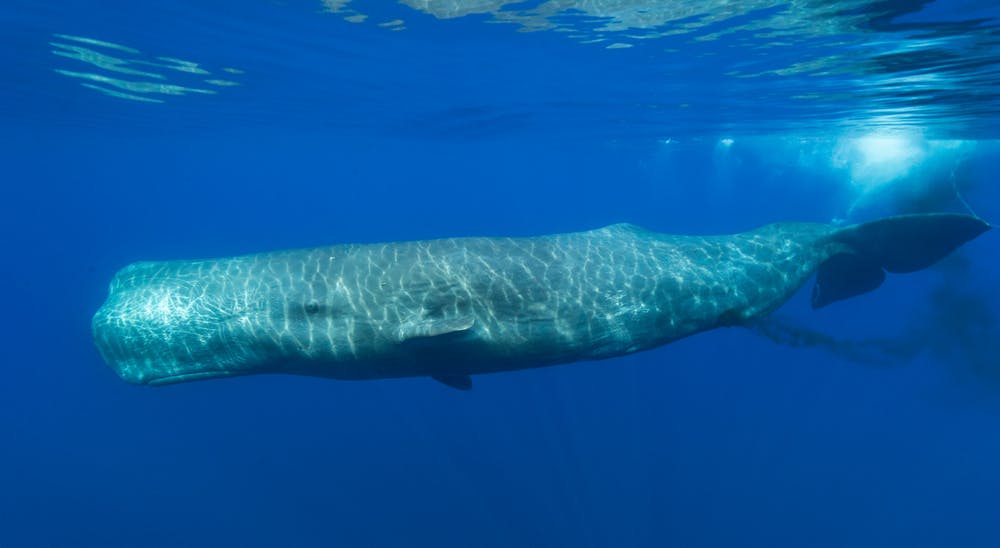 A whale pooing is quite an event, as this sperm whale shows. But is it enough to make a difference on an ecosystem scale?
Shutterstock
A whale pooing is quite an event, as this sperm whale shows. But is it enough to make a difference on an ecosystem scale?
Shutterstock
Fish and other marine species also contribute to the biological carbon pump. In this process, CO₂ is stored in organic matter through photosynthesis and washed into the deeper ocean where some is stored for long periods of time.
Whales could also potentially capture carbon in other ways: in their flesh, where they keep it for their long lifespans, and when a whale falls and sinks to the bottom, where it might be covered in sediment.
 These are the five main pathways through which whales might contribute to carbon sequestration.
So why should we be sceptical?
While it’s entirely possible whales can help sequester carbon, they are likely to make only a limited contribution.
Research in this area is challenging, with many complexities and uncertainties. How do you measure a whale’s lifetime contribution? We’ll need more research to find out either way.
For now, what we do know suggests blue carbon in mangroves, salt marshes and seagrasses is well beyond what large whales contribute to carbon storage.
For us to conclusively say whales can play a role in reducing CO₂ concentration in the atmosphere, we’d need to be able to trace a clear link between how they influence the biological carbon pump, with more whales leading to more organic carbon heading from the surface into the deep ocean, and how much of this then enters longer-term storage in sediments.
What we know about the way the oceans respond to carbon dioxide add further weight to whale scepticism. Of the carbon dioxide we emitted between 2009 and 2018, about 40% stayed in the atmosphere, 29% was soaked up by land ecosystems and 23% was absorbed by the oceans, largely due to the tireless photosynthesising of phytoplankton. The cold Southern Ocean is the major contributor among the oceans, accounting for 40% of all ocean absorption.
Zoomed out, all the world’s oceans take up an estimated 53 billion tonnes of carbon annually. Of this, 4 billion tonnes of organic matter sinks below the surface. But only 1% of this actually gets stored in sea floor sediment for the long term.
Read more: Bottoms up: how whale poop helps feed the ocean
So when we look at the five ways whales could boost carbon removal, the most important one is through their huge poos, which can trigger plankton growth. The “whale pump” is also driven by their poo, and when gray whales or other species turn over sediment, it only has a local effect. When a dead whale falls to the seafloor and is eaten, some carbon may be stored long term if its bones are buried. But it’s unlikely to be a significant amount.
In short, we don’t know enough to say whales help carbon storage – and what we do know suggests the opposite.
Whales are more than their carbon
Whales are valuable for much more than their role in carbon cycles. They’re celebrated in cultures around the world. They support local economies through industries like whale-watching. Whales host many other species on them, provide a vital food source for deep-sea life when they die, and act as an indicator of ocean health.
And while some species hard-hit by whaling are now recovering, many whales face a very uncertain future in a quickly heating ocean.
Whales are unlikely to protect us from climate change. It’s more likely we’ll have to save them.
Read more: Sea creatures store carbon in the ocean – could protecting them help slow climate change?
Authors: Olaf Meynecke, Research Fellow in Marine Science, Griffith University