

An El Niño looms over Australia's stressed electricity system – and we must plan for the worst
- Written by: Dylan McConnell, Senior Research Associate, Renewable Energy & Energy Systems Analyst, UNSW Sydney
The Bureau of Meteorology this week declared a 70% chance of an El Niño developing this year. It’s bad timing for the electricity sector, and means Australians may face supply disruptions and more volatile energy prices.
El Niño events are associated with increased temperatures and heatwaves. These conditions drive demand for electricity, especially in summer.
These same conditions can also mean some generators don’t produce at full capacity. And unfortunately, the likely El Niño comes as the electricity sector grapples with other significant headwinds.
Australia’s electricity grid may be fine this summer. But given what’s on the horizon, it would be prudent to plan for the worst.
How does hot weather affect energy supplies?
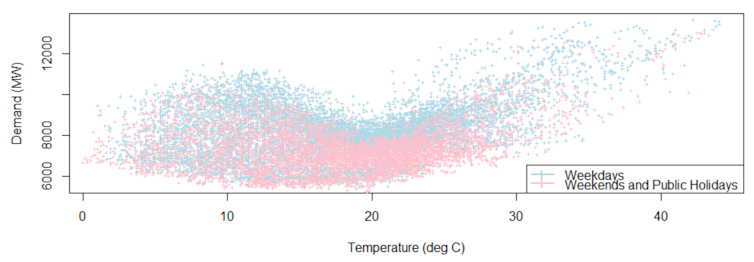
Increased air conditioning use in summer can cause demand to peak, particularly during heatwaves, as the below graph shows.
At the same time, electricity generators – including coal, gas, solar and wind – can become less efficient in hot temperatures, and so provide less energy to the system. And the hotter transmission lines get, the less electrical current they can safely carry. This lowers their capacity to transport energy.
When the electricity grid is under stress, this can lead to “load shedding” or blackouts – when power companies deliberately switch off the power supply to groups of customers to prevent the overall system from becoming dangerously unstable.
This happened in Victoria in early 2019, when more than 200,000 customers lost power during a period of extreme heat.
El Niño events are also associated with reduced rainfall. Among other effects on the electricity grid, this can reduce output from hydroelectricity generators (which produce electricity by pumping water through turbines). This occurred in Tasmania in 2016, and contributed to an energy crisis in that state.
Read more: Australia's energy market operator is worried about the grid's reliability. But should it be?
Other headwinds are blowing
Aside from facing a likely El Niño, the electricity sector faces other headaches.
Earlier this year, the Australian Energy Market Operator warned electricity demand “may exceed supply” at times over the next decade due to factors such as weather conditions or generator outages.
The market operator pointed to delays to the Snowy 2.0 hydro project and the gas-fired Kurri Kurri Power Station, both in New South Wales.
The Kurri Kurri project has been delayed for a year. It was scheduled to begin operating in December this year – in time for the first summer since the Liddell coal-fired power station closed.
The Australian Energy Market Operator said the electricity system was expected to meet the “reliability standard” in all regions for the next five years. The standard requires at least 99.998% of forecast demand be met each year. Unmet demand can lead to interrupted supply, or blackouts.
But the operator also said delays to the Kurri Kurri project posed risks to reliability in NSW this summer.
Adding to the pressures on the system, Queensland’s Callide C coal-fired power station is still not back to capacity more than two years after an explosion at the site. The station’s owners last week announced the plant would not be fully operational until mid-2024.
Combine all this with a likely El Niño, and the electricity sector may be facing a challenging summer.
Read more: Sure, no-one likes a blackout. But keeping the lights on is about to get expensive
El Niño years are not normal
In August, the Australian Energy Market Operator is due to publish a new assessment of the grid’s expected reliability over the next decade. It may well show reliability standards will be achieved.
On first blush, that sounds like good news. However, the way the assessment is derived may mask the real risk during El Niño periods.
The assessment combines a number of scenarios, which are based on different forecasts of electricity demand. The scenarios based on average weather conditions are given the most weight.
But if an El Niño arrives, this summer will not be average. We’re likely to experience very hot and dry conditions. This may lead to higher demands on the energy system, and a greater likelihood of blackouts.
This won’t be properly reflected in the assessment. So the grid may be deemed reliable even though electricity supplies are under immense pressure.
What can be done?
You might find all this news worrying. But there are measures and technologies in place to help reduce the risks.
A mechanism exists that allows the market operator to secure emergency energy reserves. It could mean, for example, calling on a large industrial plant to pause operations to reduce its electricity use, or starting up a standby diesel generator. The operator can start procuring this months ahead of time, and will no doubt be monitoring the situation closely.
In the medium term, the uptake of so-called “consumer energy resources” such as rooftop solar farms and small-scale battery storage shows promise. These technologies are located at homes and businesses. They can reduce demand on the grid at peak times and can potentially be built faster than big projects.
Longer term, we need to build more “stuff”. This includes renewable energy and other “dispatchable” resources – which can provide energy when it’s needed – as well as more transmission infrastructure.
Several federal funding measures – the Capacity Investment Scheme and Rewiring the Nation – might help realise these projects.
The reality is that ageing coal plants are closing – and while they remain open, they’re contributing to reliability challenges in the energy system. Unchecked climate change will also add considerable strain, through natural disasters and more extreme weather.
Unfortunately, investment in renewable and other low-emission technology has been slower than necessary. This has slowed Australia’s emissions reduction efforts and cast questions over the reliability of our energy supplies as an El Niño looms.
Authors: Dylan McConnell, Senior Research Associate, Renewable Energy & Energy Systems Analyst, UNSW Sydney


















