

All-electric homes are better for your hip pocket and the planet. Here's how governments can help us get off gas
- Written by: Esther Suckling, Research Associate, Grattan Institute

If every Australian household that uses gas went all-electric today, we would “save” more than 30 million tonnes of carbon dioxide emissions over the next ten years. That’s because there are more than 5 million households on the gas network, and the avoided emissions per home ranges from 5-25 tonnes over the coming decade, depending on the location.
Most people would spend less money on energy too. Electric appliances use less energy than gas appliances to do the same job, making them cheaper to run.
Our new report shows how much most households can save by switching from gas to electricity for heating, hot water and cooking. The extra cash couldn’t come at a better time: about a quarter of Australian households say they found it difficult to pay their energy bills this year.
But many households face hurdles that stop them, or make it hard for them, to go all-electric. Governments could make it easier for people and bring emissions-reduction targets closer to reality.
Read more: Want an easy $400 a year? Ditch the gas heater in your home for an electric split system
Most households save by upgrading to electric
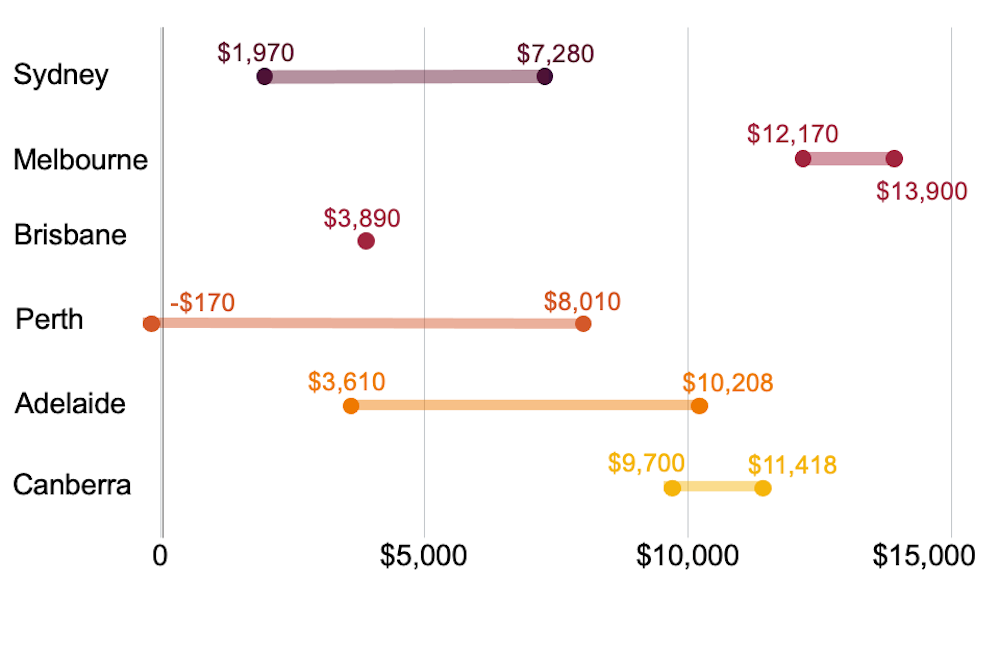
Households in Melbourne tend to use more gas than those in other mainland capitals, mainly because the winter is so cold. Our report found Melburnians who replace broken gas appliances with electric ones, or move into an all-electric home, could save up to A$13,900 over ten years. Households with rooftop solar will save even more.
It’s a similar story in most parts of Australia except the west, where gas is relatively cheap. This mainly reflects differences in the historical development of the gas markets between the west and east coasts.
Getting off gas could also be good for your health. Several studies link cooking with gas to childhood asthma.
Read more: Gas cooking is associated with worsening asthma in kids. But proper ventilation helps
Households face a series of hurdles
Renters make up nearly a third of all households, and they have little or no control over the appliances that are installed. As most electric appliances cost more to buy than gas ones – and the subsequent bill savings flow to tenants – landlords have little incentive to upgrade their properties from gas to all-electric.
Apartment living can increase the level of complexity. Multi-unit dwellings often bundle gas bills into body-corporate fees, limiting the occupants’ incentive to go all-electric. There can also be space constraints in these buildings. Centralised electric heat pumps, for example, take up more space than centralised gas water heaters.
Then there are households that simply can’t afford the upgrade. Induction stoves and heat pumps are more expensive than their gas equivalents, by up to a combined $2,000. This initial outlay will soon be recovered by cheaper energy bills, but that doesn’t help households that don’t have the cash up front. The 12% of households that skipped meals to pay their energy bills in the past year are the most likely to remain locked into high gas bills.
Some people also simply prefer cooking with gas. Some think induction cooktops will be no better than the poor-performing electric cooktops they may have used in the distant past. Others haven’t ever heard of a heat pump for hot water.
Here’s how governments can help
Governments, both state and federal, should lower the hurdles on the path to all-electric homes – to reduce people’s cost of living and to cut carbon emissions.
As a first step, state governments should ban new gas connections to homes. In 2021, more than 70,000 households joined the gas network. Trying to shift households off gas while allowing new connections is like pouring water into a bucket with a hole.
Then, governments should provide landlords with tax write-offs on new induction stoves and heat pumps for hot water, for a limited time. After that, they should require every rental property to be all-electric. Governments should pay to upgrade public housing to all-electric, where they are the landlords. And they should pay not-for-profits managing community housing to do the same.
The federal government should help all households to spread the cost of electric appliances over time. It should subsidise banks to offer low-interest loans for home electrification, via the Clean Energy Finance Corporation.
And governments should set out to change people’s preferences, from gas to electric. They should embark on a multi-decade communication campaign, not unlike the campaign to upgrade from analogue to digital television in the early 2000s.
A key challenge will be shifting people’s ideas about the best way to cook. There are precedents. In Gininderry, a new all-electric suburb of Canberra, one developer recruited chefs to run demonstrations on induction cooktops at the display village. The proportion of potential homebuyers willing to consider buying an all-electric home rose from 67% to 88%.
Induction cooking with Chef David Wei at Ginninderry.‘Green gas’ is no panacea: electricity is cheaper
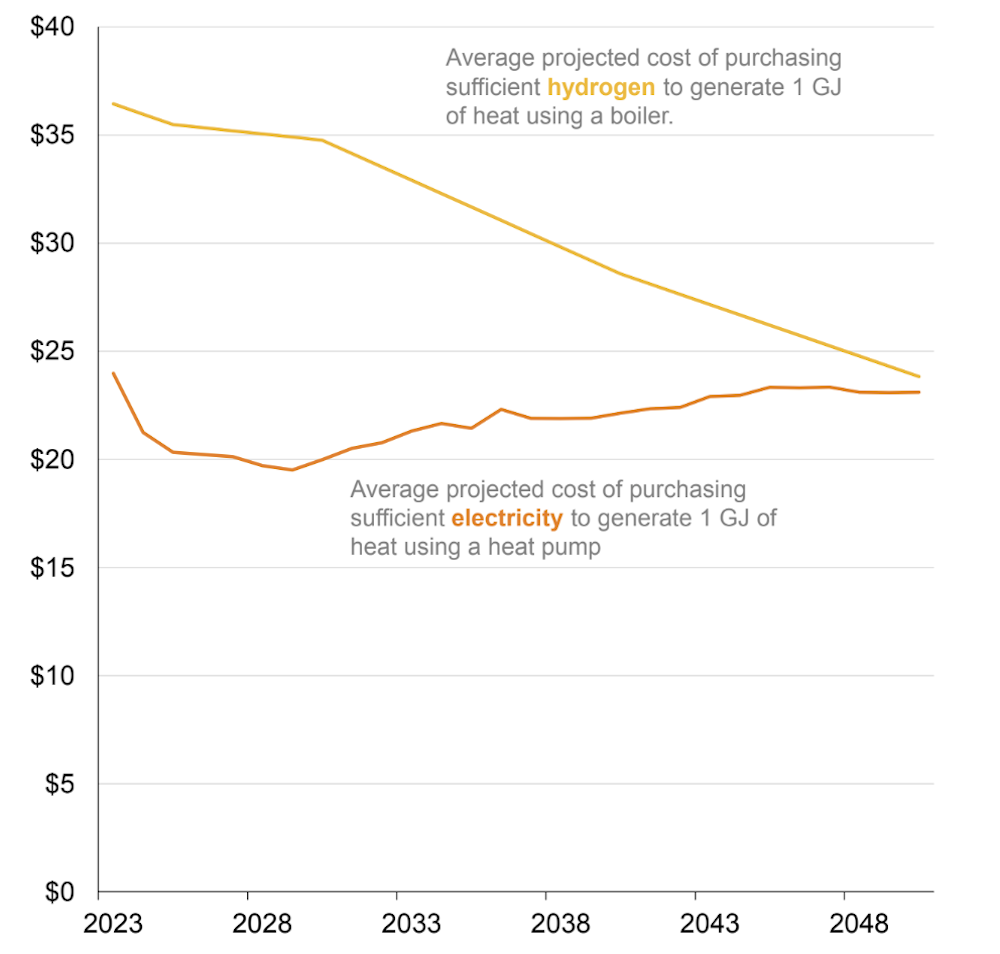 Hydrogen is more expensive than electricity and will remain so for decades.
Grattan Institute, Author provided
Hydrogen is more expensive than electricity and will remain so for decades.
Grattan Institute, Author provided
The gas industry has another solution in mind: instead of switching from gas to electricity, it suggests using “green gas” – biomethane or “green” hydrogen. Biomethane is chemically identical to natural gas, but is derived from biological materials such as food waste, sewage or agricultural waste. Green hydrogen is made by using electricity to split water into hydrogen and oxygen.
But both options are too expensive and too far away. Under the most generous of assumptions, green hydrogen will only become cost-competitive with electricity after 2045. And there is not enough biomethane commercially available to replace gas in households.
Meanwhile, more than three million Australian homes already run on electricity alone.
Getting the five million homes that use gas to the same point won’t be easy. But with good policy, it is doable. For households, and the climate, there is much to be gained.
Read more: Kicking the gas can down the road: why a gas price cap is the worst way to protect energy consumers.
Authors: Esther Suckling, Research Associate, Grattan Institute


















