survivors of modern slavery have few safe places to turn
- Written by Kyla Raby, PhD candidate researching the role of consumers in eradicating modern slavery in supply chains, University of South Australia
Australia is not immune to the rapidly growing global problem of modern slavery. In fact, new research has found the number of people living in modern slavery has more than doubled in the past four years, rising to an estimated 41,000.
Sadly, very few people are formally identified as victims and able to access vital support. For example, in the 2021-22 financial year, the Australian Federal Police received just 294 reports of modern slavery and human trafficking.
The Australian government’s recent funding boost of $23.4 million for survivors of human trafficking will enable more survivors to access support without having to report to police.
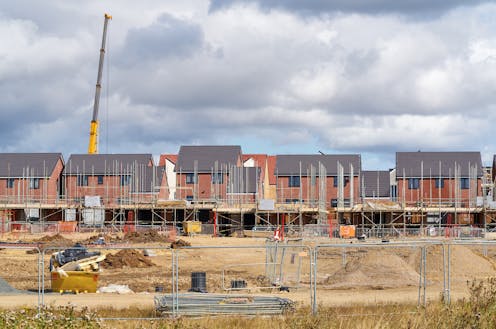
However, our research on modern slavery and housing found that much more is needed to enable access to essential support, particularly when it comes to safe and sustainable housing.
Why survivors struggle to find housing
In the UK, survivors of modern slavery are provided government-funded accommodation through trafficking-specific safe houses. But in Australia, survivors’ access to accommodation through the Support for Trafficked People Program is reliant on what services exist in the state and territory they are based.
This means survivors are often left to scramble for a limited number of housing options alongside others in need during the current housing crisis, but they face additional barriers to accessing these services.
To understand the implications for modern slavery survivors, our research surveyed 107 housing providers and 19 caseworkers who support survivors across Australia. We also interviewed a portion of these participants.
We found that survivors of modern slavery experience multiple barriers to accessing both temporary accommodation and long-term housing. The most significant challenges were linked to their lack of reliable income, insecure migration status and the ongoing effects of trauma.
For example, a quarter of all housing providers we surveyed restrict temporary migrants from accessing their services. Social housing in many Australian jurisdictions is also generally only available to Australian citizens or permanent residents. Migrant slavery survivors on temporary visas, therefore, can’t access these housing options at all.
Survivors’ visas may also restrict them from working in Australia or accessing income support. This also means they can’t access accommodation because many providers require residents to have an ongoing income.
As explained by one housing provider, their residents
need to have work rights […] so they can transition to their own property.
Another housing provider told us,
it’s not people’s visa status that matters, it’s just the fact that temporary visa holders are often not on a stable income.
Suitability of services for survivors
Even if modern slavery survivors can access accommodation, the options available to them may not be appropriate given the complex trauma they have experienced.
Many mainstream services are unsuitable for survivors because of their rules and requirements. For example, curfews are often put in place by providers to ensure the safety or comfort of all residents. Such rules restrict an individual’s freedom of movement, which can be re-traumatising for survivors whose experience of exploitation involved similar restrictions.
For male survivors or those wanting to live with family, finding suitable accommodation is even more challenging. Almost half of accommodation providers do not accept partners, children or other family members of their largely female residents. Nearly a third only do so in particular circumstances.
Our research also found that the types of accommodation most suitable for modern slavery survivors are ones which have been designed especially for them.
However, we only identified two examples of such services in Australia – the Salvation Army’s trafficking and slavery safe house in Sydney and the Lighthouse Foundation’s Young Women’s Freedom Program in Melbourne.
Insecure housing can have serious implications for survivors. It places them at risk of homelessness and further exploitation. As one provider explained to us, a lack of suitable accommodation can place a survivor
at high risk of remaining or returning to a situation where they are subjected to abuse by a person who uses violence.
It can also be disruptive to survivors’ recovery and have negative implications for their overall wellbeing.
First steps to improvement
In Australia’s federated system of governance, antislavery policy is a Commonwealth responsibility, while housing policy is a state and territory responsibility. Removing these barriers requires effective collaboration across both policy spheres and tiers of governments.
Allowing community organisations to refer survivors to the federal government’s anti-trafficking program is a first step to improving their access to accommodation and other vital supports.
We also need to change the human trafficking visa framework to ensure all migrant slavery survivors are able to access visas with rights to work and access to income support.
State and territory housing policy needs to allow survivors on temporary visas to access social housing, as well. Funding for survivor-specific accommodation services in every capital city is also urgently required.
Without such changes, survivors of modern slavery remain vulnerable to further exploitation and slavery will continue to grow in Australia.
Authors: Kyla Raby, PhD candidate researching the role of consumers in eradicating modern slavery in supply chains, University of South Australia