New Australian laws for ‘engineering’ the ocean must balance environment protection and responsible research
- Written by: Kerryn Brent, Senior Lecturer, Adelaide Law School, University of Adelaide
The Australian Labor government has introduced a bill to regulate “marine geoengineering” – methods to combat climate change by intervening in the ocean environment.
The bill would prohibit listed marine geoengineering activities without a permit.
Scientists are already experimenting with ways to store more carbon in the ocean or shield vulnerable ecosystems. They include ocean fertilisation and marine cloud brightening. But these proposals are yet to be deployed beyond small-scale outdoor tests. Further research is needed.
These technologies offer huge potential to combat climate change. But large-scale marine geoengineering could also cause harm. Targeted laws are needed to both enable crucial research and protect the marine environment. So does the bill to amend the Sea Dumping Act strike the right balance?
Getting to grips with marine geoengineering
Interest in marine geoengineering has grown over several decades as the climate crisis has worsened. Removing CO₂ from the atmosphere is now necessary to achieve “net-zero” emissions and limit global warming to 1.5℃. But marine geoengineering proposals also present risks to the marine environment.
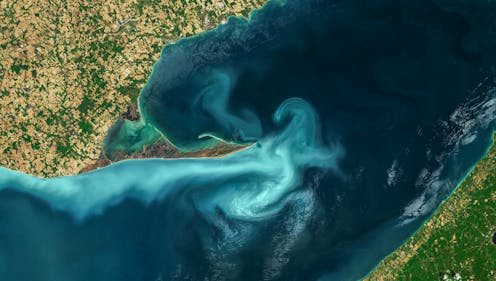
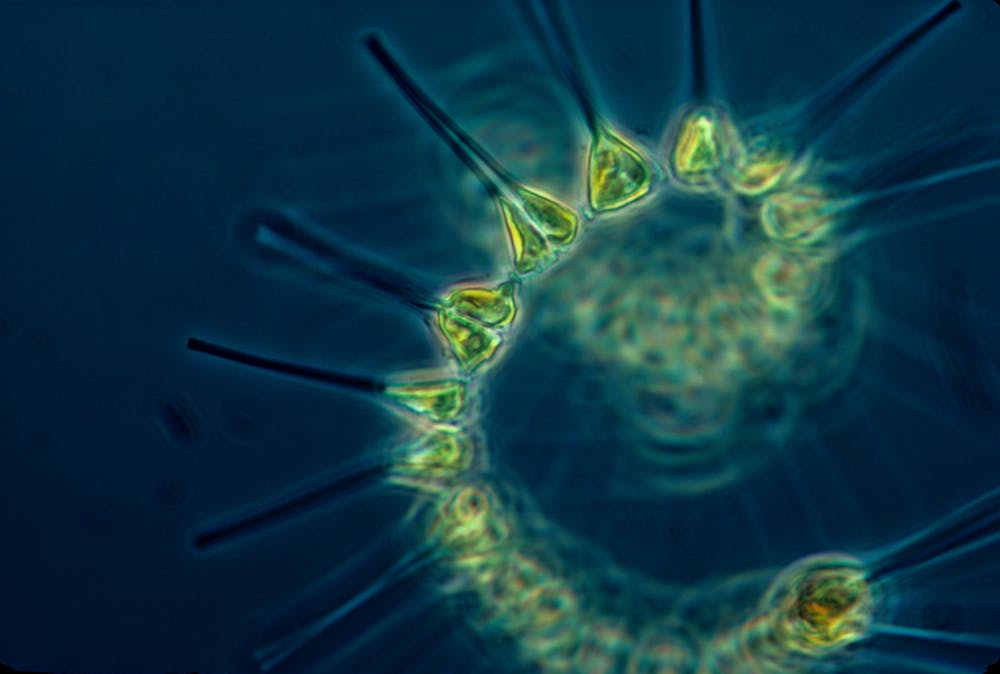
The Southern Ocean – which extends from Australia’s southern coast to Antarctica – has been identified as a suitable location for ocean fertilisation. This involves feeding iron dust to marine algae. Through the process of photosynthesis, the algae pull CO₂ from the atmosphere, which is potentially stored in the deep ocean.
Another proposal is modifying acidity in oceans. Oceans naturally absorb large amounts of CO₂, which is making the water more acidic. Ocean acidification harms marine life, especially animals with shells. It also limits the amount of CO₂ that can be stored. A technology that essentially adds “antacids” to the ocean“ could help counteract this and enable the oceans to store more.
Other proposals seek to reduce the damage from marine heatwaves. "Marine cloud brightening” seeks to limit coral bleaching on the Great Barrier Reef, by spraying sea-salt particles into clouds. The idea is to make the clouds whiter, to better reflect sunlight away from the ocean and limit further warming of the water.
Read more: Geoengineering the Great Barrier Reef needs strong rules
With help, the oceans could play an even bigger role in stabilising the climate. But there are concerns about unintended consequences of deliberately intervening. For example, ocean fertilisation could decrease water oxygen levels and “rob” neighbouring waters of nutrients, reducing marine productivity.
Marine geoengineering could also distract from efforts to cut emissions at source.
Strong rules to protect the marine environment
With this new bill, the Australian government has taken an important first step towards regulating marine geoengineering.
The bill involves proposed amendments to the Environment Protection (Sea Dumping) Act. It would introduce a permit system for legitimate scientific research activities.
Environment Minister Tanya Plibersek has said of the bill:
Regulating this type of activity, though a robust application, assessment and approval permitting process, would ensure that only legitimate scientific research activities exploring options to reduce atmospheric CO₂ can proceed. This amendment also provides for regulating other potentially harmful marine geoengineering research activities should they emerge in the future.
The bill implements Australia’s international obligations under the London Protocol, a marine pollution treaty that prohibits the dumping of waste at sea without a permit.
It follows a parliamentary inquiry that recommended Australia ratify these international rules. Australia’s support may encourage other countries to adopt these rules and make them legally binding.
Countries negotiated these rules in response to plans by private companies in the 2000s to conduct ocean fertilisation for profit. They decided new international rules were needed to protect the ocean. Currently, only ocean fertilisation is listed, and hence regulated, under these rules. But other activities may be listed in future.
The bill makes it an offence to place matter into the ocean for marine geoengineering without a permit. Permits may only be granted for scientific research activities. At present, these rules apply just to ocean fertilisation, as it is the only activity listed under the London Protocol.
If the bill is passed as it currently stands, commercial deployment of marine geoengineering cannot be conducted either in Australian waters or from Australian vessels.
Harsh criminal penalties will apply to people who conduct marine geoengineering without a permit. Offenders face 12 months imprisonment and/or a fine of up to $68,750.
The bill also establishes offences for loading and exporting material to be used for marine geoengineering without a permit.
Rules limit financial incentives for research
Prohibiting marine geoengineering deployment may be appropriate now. But without future prospects for deployment there may be little incentive to invest in research.
The treaty rules ban ocean-based research directly leading to financial and/or economic gain. This protection is important for building public trust and advancing the public interest. But broad prohibition could hamper marine geoengineering research for economic purposes such as eventual carbon crediting and trading. It could also call into question government subsidies and tax incentives encouraging private research investment.
The parliamentary inquiry did not consider the implications of the new rules for Australia’s carbon markets, or on research to save the Great Barrier Reef.
 In 2020, Southern Cross University led the world’s first outdoor trial of cloud brightening technology to combat coral bleaching.
Southern Cross University/AAP
In 2020, Southern Cross University led the world’s first outdoor trial of cloud brightening technology to combat coral bleaching.
Southern Cross University/AAP
Changes could affect research to save the reef
Since 2019, the Australian government has invested in marine cloud brightening and other interventions to protect the reef from heat stress and coral bleaching. The first outdoor experiments were conducted in 2020.
The effectiveness of marine cloud brightening is yet to be demonstrated at scale. But modelling suggests a combination of marine cloud brightening and crown-of-thorns starfish control could help protect the reef until 2040.
The treaty rules do not currently apply to marine cloud brightening. However, countries are currently considering adding marine cloud brightening to the list of regulated activities. This could allow research but prohibit deployment. The government should evaluate how this could affect its investment in marine cloud brightening research and associated programs.
Australia’s marine environment is already suffering from warming and acidification. Appropriately-managed marine geoengineering activities may help reduce the damage and/or mitigate climate change.
The treaty’s environmental safeguards are important to ensure the risks from ocean fertilisation activities are rigorously evaluated.
The current bill favours risk management, which is appropriate at the early stages of research and development. But by ruling out future deployment, Australia may undermine incentives to advance research.
Authors: Kerryn Brent, Senior Lecturer, Adelaide Law School, University of Adelaide