

What is 'reverse racism' – and what's wrong with the term?
- Written by: Mario Peucker, Associate Professor and Principal Research Fellow, Victoria University
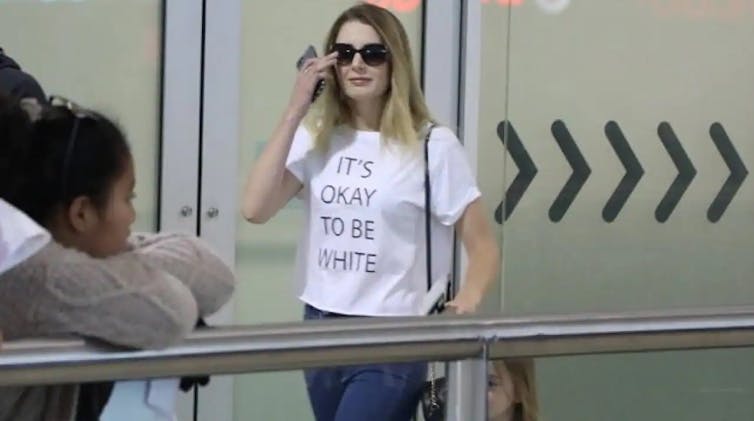
“Reverse racism” is sometimes used to describe situations where white people believe they are negatively stereotyped or discriminated against because of their whiteness – or treated less favourably than people of colour.
“Reverse racism” claims have surfaced in the current debate around the Voice to Parliament referendum. “The concept looks racist to me,” wrote Sky News commentator Kel Richards last August.
Such views misrepresent the Voice as preferential treatment of First Nations peoples, falsely suggesting it would somehow weaken the political say of non-Indigenous Australians.
Complaints of reverse racism can be found in the community more generally, too. “I think average, working-class, white Australian males have it the hardest out of anyone in society,” said one 23-year-old man in a 2023 study of Australian men, “we are the victims of reverse racism”.
“Reverse racism” is an idea that focuses on prejudiced attitudes towards a certain (racialised) group, or unequal personal treatment – namely, discrimination. But it ignores one of racism’s central markers: power.
“Prejudice plus (institutional) power” is the widely accepted basic definition of racism. Or, as two researchers defined it in 1988: “Racism equals power plus prejudice.”
In a famous 2013 sketch, comedian Ahmer Rahman said, yes, reverse racism is possible … if you go back in a time machine and convince the leaders of Africa, Asia and the Middle East to invade and dominate Europe hundreds of years ago, leading to systemic inequality across every facet of social and economic life, “so all their descendants would want to migrate [to] where black and brown people come from”.
Put simply, the concept of “reverse racism” – or “anti-white racism” – just doesn’t work, because racism is more than just prejudice.
Comedian Ahmer Rahman unpacks ‘reverse racism’, and why making it real would need a time machine.Why ‘reverse racism’ is a myth
Prejudice and discrimination are inherently tied to historically rooted and entrenched, institutionalised forms of systemic racism and racial hierarchies, injustices and power imbalance.
Read more: Explainer: what is systemic racism and institutional racism?
The continuing lack of diverse representation in political, social and economic positions of influence is just one of many indicators that we’re still a long way from living in a post-racial society.
White people may be called a derogatory name with a reference to their whiteness. They may be discriminated against: for example, by an ethnic business owner who prefers to employ someone from their community background.

This may sometimes be unlawful. At other times, it may be a lawful form of “positive action” or “affirmative action”, aimed at reducing historically entrenched, intergenerational and systemic inequalities.
But in all these instances – and regardless of whether it’s lawful or not – the term racism, or “reverse racism”, would not apply.
How common are reverse racism claims?
A representative US survey, conducted by PEW in 2019, found that around 12% of respondents believed “being white hurts people’s ability to get ahead in the country nowadays”. Among white Republicans, the proportion was 22%. It was only 3% among white Democrats.
A more recent US survey, in 2022, concluded that 30% of white respondents saw “a lot more discrimination against white Americans”.
Representative data on these issues is lacking in Australia. But there is evidence a significant minority of Australians seem convinced anti-white racism is a thing.
A 2018 Australian survey found that around 10% of respondents who stated they had witnessed racism as bystanders said the victim of the allegedly “racist” incident was a white person.
Another recent (non-representative) survey of 335 Australian men in 2021 showed that one in three respondents agreed with the statement: “white people are the victims these days”.
Australian senator Pauline Hanson has been complaining about “reverse racism” since her maiden speech to parliament in 1996, when she described “the privileges Aboriginals enjoy over other Australians”. She said:
We now have a situation where a type of reverse racism is applied to mainstream Australians by those who promote political correctness […]
Gamilaraay man Joshua Waters says most First Nations Australians have heard this kind of sentiment, and statements like: “Uh, I’m not racist. You’re racist for calling me racist. Actually, that’s reverse racism!”
But as he has argued, “To be called racist for identifying actual racist behaviours and rhetoric is not OK.”
Read more: How believers in 'white genocide' are spreading their hate-filled message in Australia
Backlash against racial justice
“Reverse racism” sometimes reflects a naïve but profound lack of racial literacy. But more often, it’s a defensive backlash against societal reckoning with racial injustices, both past and present.
And it’s often an expression of “white fragility” in the face of an increasing awareness of racism in Australia – as epitomised by Hanson’s political career.
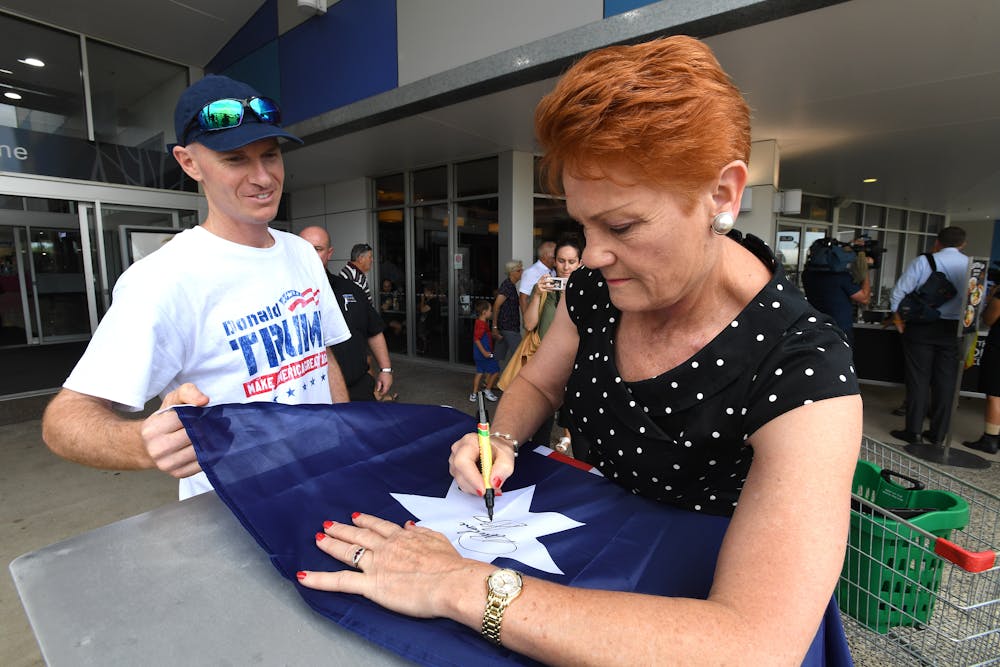 Pauline Hanson signing a flag.
Dave Hunt/AAP
Pauline Hanson signing a flag.
Dave Hunt/AAP
“Reverse racism” claims are often strategically adopted by right-wing populist political actors and far-right fringe movements, to garner support and recruit new sympathisers and members. This can manifest in political stunts such as the infamous “ok to be white” motion Hanson put to the Australian Senate in 2018, which claimed to condemn alleged “anti-white racism”.
The phrase “it’s OK to be white” had previously been used by white supremacists in the US.
Anti-white racism claims have also been expressed in more explicit, aggressive and extreme ways: as threats of “white genocide”, a core neo-Nazi belief.
In far-right extremist movements, in Australia and globally, these conspiratorial narratives are commonly used to mobilise – and in some cases, have become crucial drivers for – white supremacy terror attacks, like the 2019 Christchurch mosque shootings in New Zealand, which killed 51 people and injured 49.
“Reverse racism” is a skewed, reductionist and ultimately inaccurate understanding of racism.
Authors: Mario Peucker, Associate Professor and Principal Research Fellow, Victoria University
Read more https://theconversation.com/what-is-reverse-racism-and-whats-wrong-with-the-term-208009


















