Why is eczema sometimes treated with a diluted bleach bath? And what do I need to know before trying it?
- Written by: Michael Freeman, Associate Professor of Dermatology, Bond University
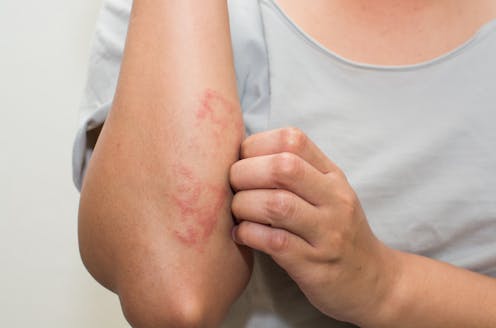
Diluted bleach baths are a common treatment doctors and nurses use for patients with more severe eczema. It is important to note they may not replace other treatments and may not be suitable for everyone.
This treatment should only ever be used under the guidance of a dermatologist or doctor, who can advise if it’s appropriate and tailor the dilution ratio to suit the individual’s condition.
So why and how does it work for some eczema sufferers? And what should one know before trying it?
Read more: I've always wondered: why do we get dark circles under our eyes?
Germs can colonise damaged eczema skin
Eczema is a genetic condition that causes a person’s skin to be easily inflamed by certain triggers, such as hot water or soaps. The person’s skin barrier becomes damaged and itchy, allowing germs to get established and cause even more problems.
The most common germ found in the damaged eczema skin is staphylococcus aureus. Certain toxic materials known as “membrane-bound vesicles” are released by the staph germ, which causes an even more profound reaction in the skin, worsening the eczema. Treating – or at least reducing – the amount of staph in the skin can help the eczema recover.
When eczema is very active, the skin literally bubbles with fluid and can begin to weep. Bacteria love to colonise and infect this type of eczema. This process is known as “impetiginisation”.
When this process occurs without eczema, it is called impetigo (also known as school sores).
A solution of water and sodium hypochlorite (in other words, bleach) will rapidly kill germs. And we know from studies on wounds that simple washing of a wound reduces the number of bacteria.
So it’s likely a gentle washing action is part of the effect, in some cases, and could be made more effective with subtle water jets.
For example, using a water squeeze toy for young children to create a gentle wash of water could help remove some of the build-up of body fluids in the broken eczema areas.
This would obviously need to be done very gently so it was not uncomfortable. Friction and rubbing of eczema – particularly with cloths and towels – generally makes things much worse.
Reducing inflammation
Researchers have also shown sodium hypochlorite can reduce inflammation in the skin. This is another reason the treatment is recommended.
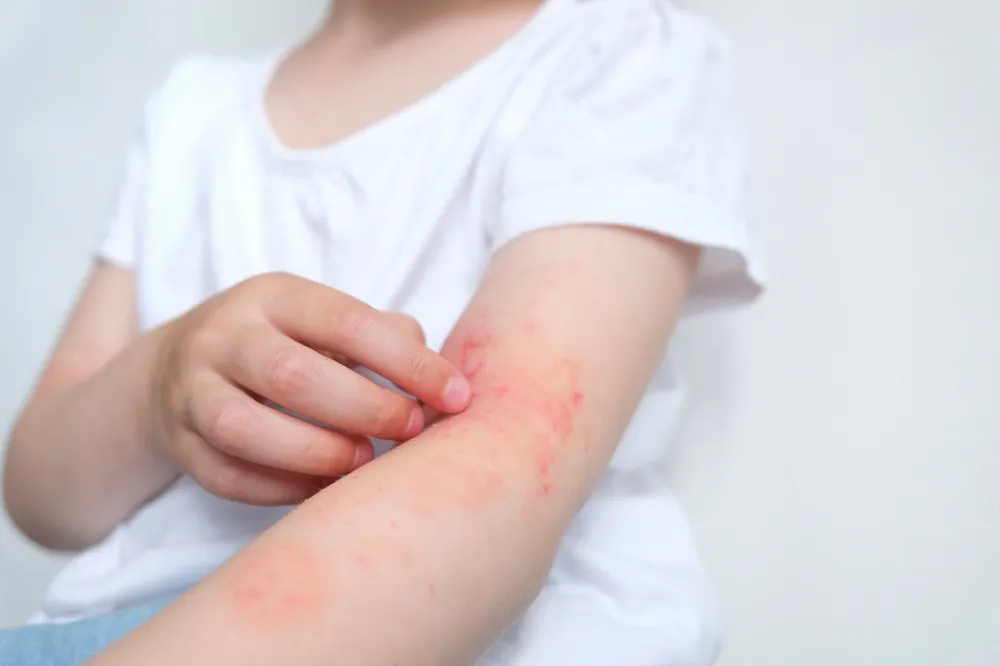
Eczema often involves a vicious cycle of inflammation, where redness and increasing itchiness leads to scratching and even more irritation. The skin breaks even more and the eczema worsens, leading to yet more inflammation.
A diluted bleach bath can help break this vicious cycle.
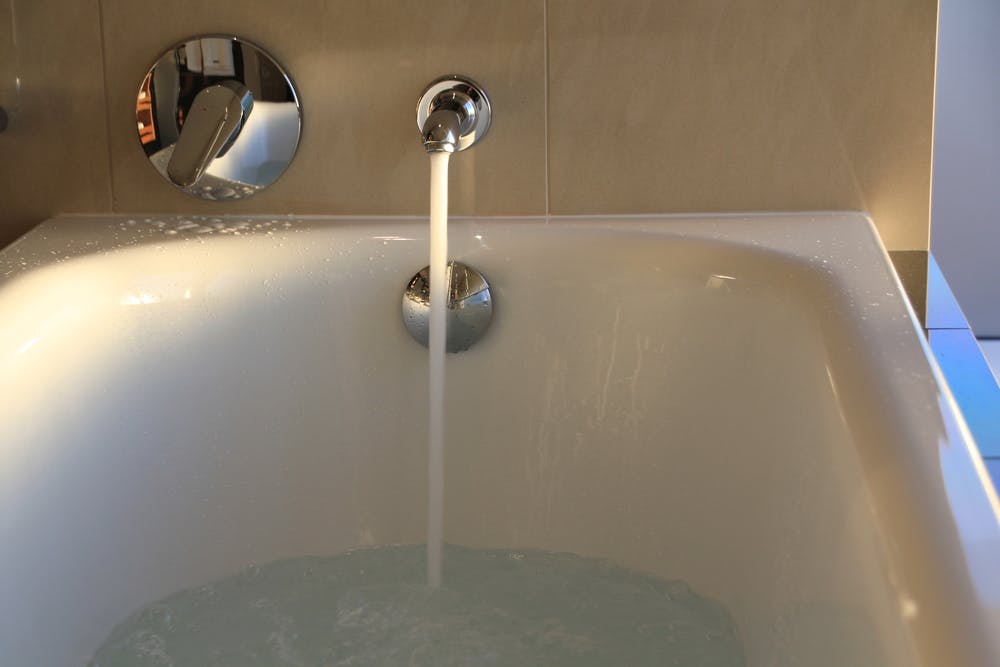 The bleach should be diluted in the bathwater to ensure it is safe for your skin.
Shutterstock
You need to know what you’re doing
Diluted bleach bath instructions need to be tailored to the eczema, so don’t try it at home unless you’ve been advised by a dermatologist or doctor. An example of how to perform a bleach bath might look like this:
1. Dilution ratio: The bleach should be diluted in the bathwater to ensure it is safe for your skin. A typical dilution ratio may be ½ cup (120 ml) of household bleach (containing 5-6% sodium hypochlorite) per 150 litres of lukewarm water. However, the exact dilution ratio may vary based on the severity of your eczema, age and other factors. Children may need less bleach in their bath. Check with your doctor because getting the ratio wrong can cause pain and harm.
2. Soak time: The recommended soak time in the bleach bath is usually around ten minutes. During this time, gently pat or submerge your affected skin areas in the water. Avoid scrubbing or rubbing the skin vigorously, as it may further irritate or damage the skin.
3. Rinse thoroughly: After the designated soak time, carefully rinse off the bleach solution from your body with cool water. Make sure to remove all traces of the bleach, as residual bleach left on the skin may cause irritation.
4. Moisturise: After the bath, promptly apply a moisturiser or emollient to your skin while it is still slightly damp. This helps lock in moisture and maintain hydration, which is crucial for eczema management.
5. Frequency: The frequency of bleach baths can vary depending on your specific condition. Typically, they are done two to three times a week, but this may vary.
6. Monitoring and follow-up: It is essential to monitor your skin’s response to bleach baths. If you notice any increased redness, irritation or discomfort, discontinue the baths and talk to your dermatologist.
Read more: How to treat scars at home – and hopefully make them disappear
Authors: Michael Freeman, Associate Professor of Dermatology, Bond University