

What is dandruff? How do I get rid of it? Why does it keep coming back?
- Written by: Lorraine Mackenzie, Associate Professor, Clinical and Health Sciences, University of South Australia
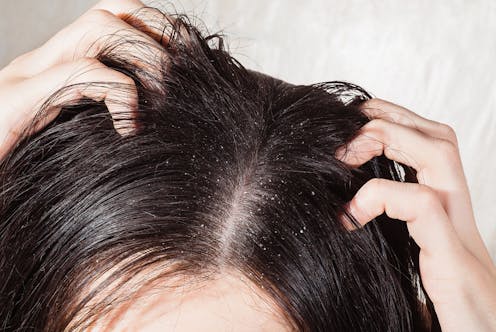
Dandruff can be dry, like snowflakes, or greasy, with yellow clumps. Up to half of all adults have had this scalp condition at one point, so you’ll no doubt know about these skin flakes and the itchiness.
Dandruff can be embarrassing. It can affect many aspects of people’s lives, such as how they socialise, how they style their hair, and what clothes they wear.
Dandruff is not a modern problem. In fact, it has been around for millennia and was described by Greek physicians. We don’t know for sure whether our ancestors were as bothered by it as much as we are today. But they were interested in what causes it.
Read more: Big hair? Bald? How much difference your hair really makes to keep you cool or warm
What causes dandruff?
Dandruff is mainly caused by the yeast Malassezia. The yeast lives on most people’s skin, either on the surface or in the opening of the hair follicle, the structure that surrounds a hair’s root and strand.
The yeast feeds on sebum, the natural moisturiser secreted by your sebaceous glands to stop your skin drying out. These glands are attached to every hair follicle and the hair provides a dark, sheltered micro-environment ideal for the yeast to flourish.
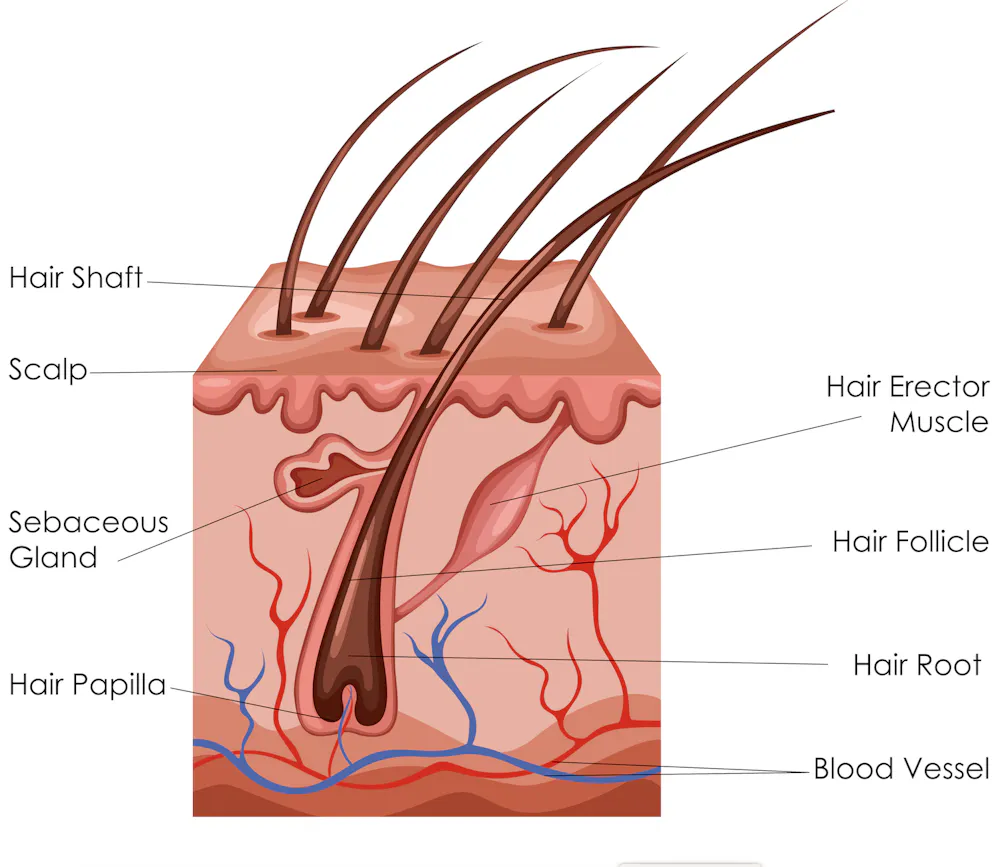
As the yeast grows, it releases molecules that irritate the skin and disrupts how the skin normally renews itself. This causes the cells to cluster together, appearing as white flakes. When there is excess sebum, this can mix with the cells and cause the dandruff to appear yellow.
The link between dandruff and yeast was made nearly 150 years ago. The person who first identified and described this yeast in 1874 was Louis-Charles Malassez (the yeast’s namesake).
Why do I have dandruff?
As Malassezia is found on most people, why do some people get dandruff and others don’t? This depends on a range of factors.
These include the quality of your skin barrier. This may mean yeast can penetrate deeper if the skin is damaged in some way, for example, if it’s sunburnt. Other factors include your immunity, and external factors, such as which hair-care products you use.
How Malassezia grows also depends on the balance of other microorganisms that live on your skin, such as bacteria.
How do I get rid of dandruff?
Dandruff is mostly treated with anti-fungal shampoos and scalp treatments to dampen down growth of Malassezia. The shampoos most commonly contain the anti-fungal agent zinc pyrithione (ZnPT for short). Other common anti-fungals in shampoos include selenium sulfide, ketoconazole and coal tar.
You can also treat dandruff with scalp masks and scrubs that help restore the scalp barrier, by reducing inflammation and irritation. But as these may not have any anti-fungal action, your dandruff is likely to return.
Home remedies include tea tree oil, coconut or other oils, and honey. There is some evidence to support their use, mostly from studies that show extracts from botanical ingredients can reduce growth of the yeast in the lab. But there is great variation in the quality and composition of these ingredients.
There is also the risk of making the problem worse by providing more oils that the yeast will enjoy, causing more imbalance to the scalp micro-organisms and leading to more irritation.
So it’s best to stick with commercial products.
Read more: Does the price of your shampoo affect how clean your hair is? Here's the science
Why does my dandruff come back?
Your dandruff is likely to return unless the active ingredients in your shampoo can reach the right spot, at the right concentration, for the right amount of time needed to kill the yeast.
Our research focussing on zinc pyrithione-based products showed these shampoos reached the skin surface. But they less-reliably ended up in the harder-to-reach hair follicles.
We found the zinc pythione seemed to target the top of the follicles rather than deep into the follicles.
So this may explain why dandruff keeps on coming back. Your shampoo’s active ingredient may not reach the yeast that causes your dandruff.
We don’t yet know how we can encourage existing formulations to penetrate deeper into the follicles.
Read more: What is toe jam? From harmless gunk to a feast for bugs
What about future treatments?
We’ll likely see new formulations of dandruff shampoos and scalp treatments that better deliver the active ingredient to where it’s needed – deeper into the hair follicles.
We can also expect new active ingredients, such as carbonic anhydrase enzymes. These might target how the yeast grows in a different way to current active ingredients.
We are also beginning to see the development of creams and lotions that aim to boost the health balance of flora of the skin, much like we see with similar products for the gut. These include pre-biotics (supplements or food for skin flora) or pro-biotics (products that contain skin flora). However we have much to learn about these types of formulations.
Read more: Your bed probably isn’t as clean as you think – a microbiologist explains
In a nutshell
Dandruff is annoying, treatment helps, but you may need to repeat it. Hopefully, we can develop improved shampoos that better deliver the active ingredient to where it’s needed.
But we need to strike a balance. We don’t want to eliminate all micro-organisms from our skin.
These are important for our immunity, including preventing more disease-causing microbes (pathogens) from moving in. They also help the skin produce antimicrobial peptides (short proteins) that protect us from pathogens.
Read more: Essays on health: microbes aren't the enemy, they're a big part of who we are
Authors: Lorraine Mackenzie, Associate Professor, Clinical and Health Sciences, University of South Australia


















