

how the work of documentary photographer Raphaela Rosella is defined by co-creation
- Written by Tom Williams, Lecturer - Visual Arts, University of Wollongong
Documentary photographers have traditionally aspired to tell other people’s stories. For 15 years, artist Raphaela Rosella and the women close to her have forged their own complex visual narratives, despite frequent interventions by the criminal justice system.
Rosella is an Italian-Australian documentary artist devoted to long-term, socially engaged collaborative projects made with participants from Nimbin, Casino, Lismore and Moree in regional New South Wales.
Aware that photographs can enable stereotypes and mislead viewers, she decided early in her career the people she photographed should be given ongoing control of their representation. This means active collaboration in making images and a body of work, as well as continually seeking consent if sharing it with an audience.
You’ll Know It When You Feel It at Brisbane’s Institute of Modern Art has evolved through these relationships.
Rosella and her co-creators have sought to reclaim and counteract the narratives formed by state records, instead telling stories of the love they feel for family and the challenges they’ve faced: both together and when separated by the geography of prison custody.
Read more: Can a photograph change the world?
Welcomed into a home
Rosella is close to the women she works with, and knows they have been routinely marginalised and denied freedoms.
Some of the audio-visual archive was produced by participants while imprisoned, in response to a legal system that confronted them at a young age. The women see their collaborative work as a “site of resistance” where they can detach their identities from the procedures and labels imposed by bureaucracy.
Rather than granting sole storytelling agency to one artist or organisation, these women take a central role in communicating their own histories and perspectives.
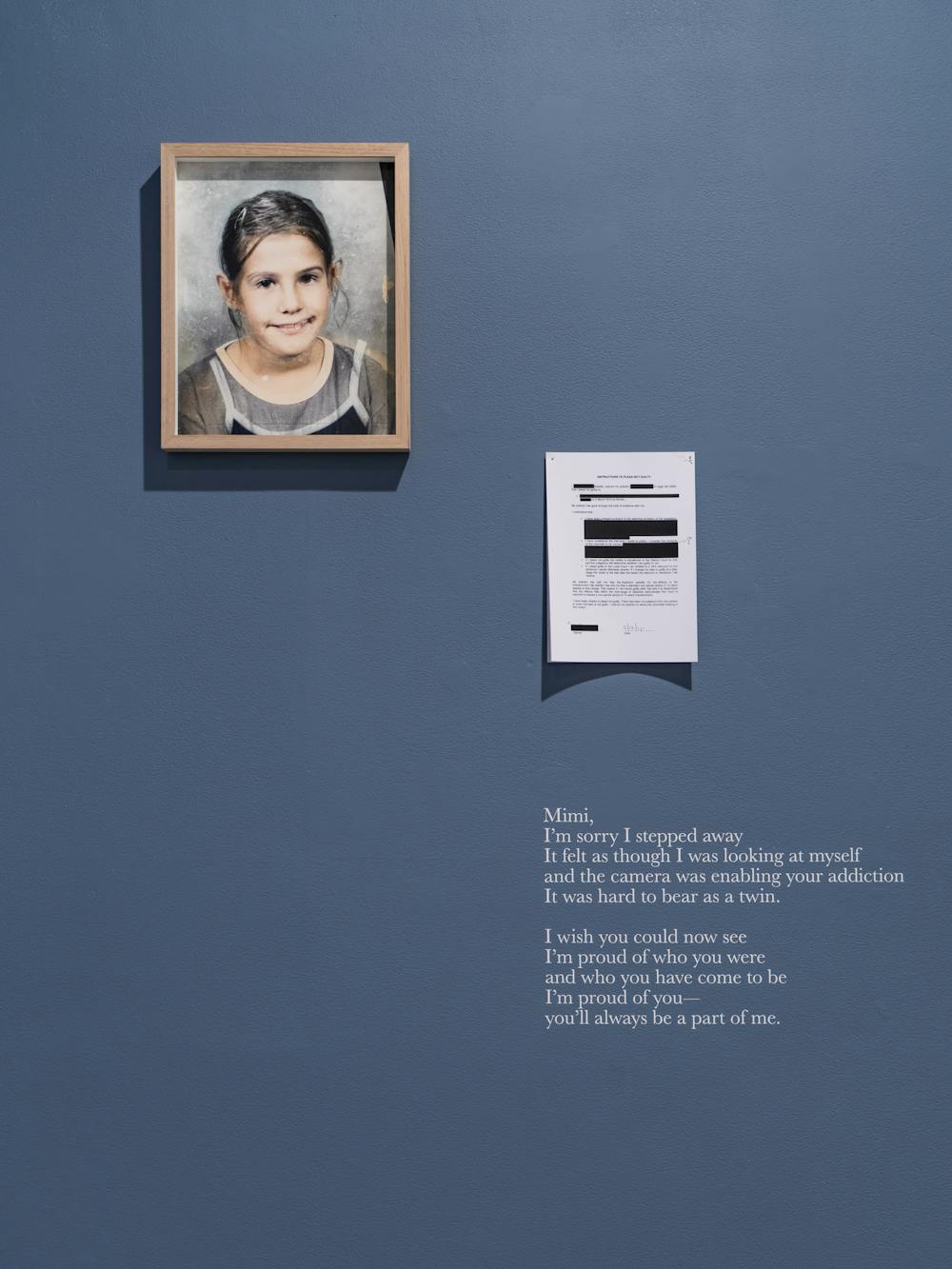
The show feels like being welcomed into someone’s home: there are fabric curtains, handwritten cards, family photos, the reassuring sound of nearby voices.
This warm familiarity contrasts with the dehumanising language of the official documents on display: “At no time are photographs to be taken of the inmate”.
Each section of the exhibition is accompanied by a short text that reads like the opening lines of a personal letter. We’re entrusted with intimate moments and heartfelt correspondence. There are no image titles or dates on most of the photographs or videos, as if in defiance of the classificatory legal papers interwoven throughout.
The first image we see as we enter is a portrait coauthored by Kamilaroi/Biripi woman Nunjul Townsend. She meets our gaze with an intensity of emotion that reflects the profound bond she has with friend and artistic partner Rosella.
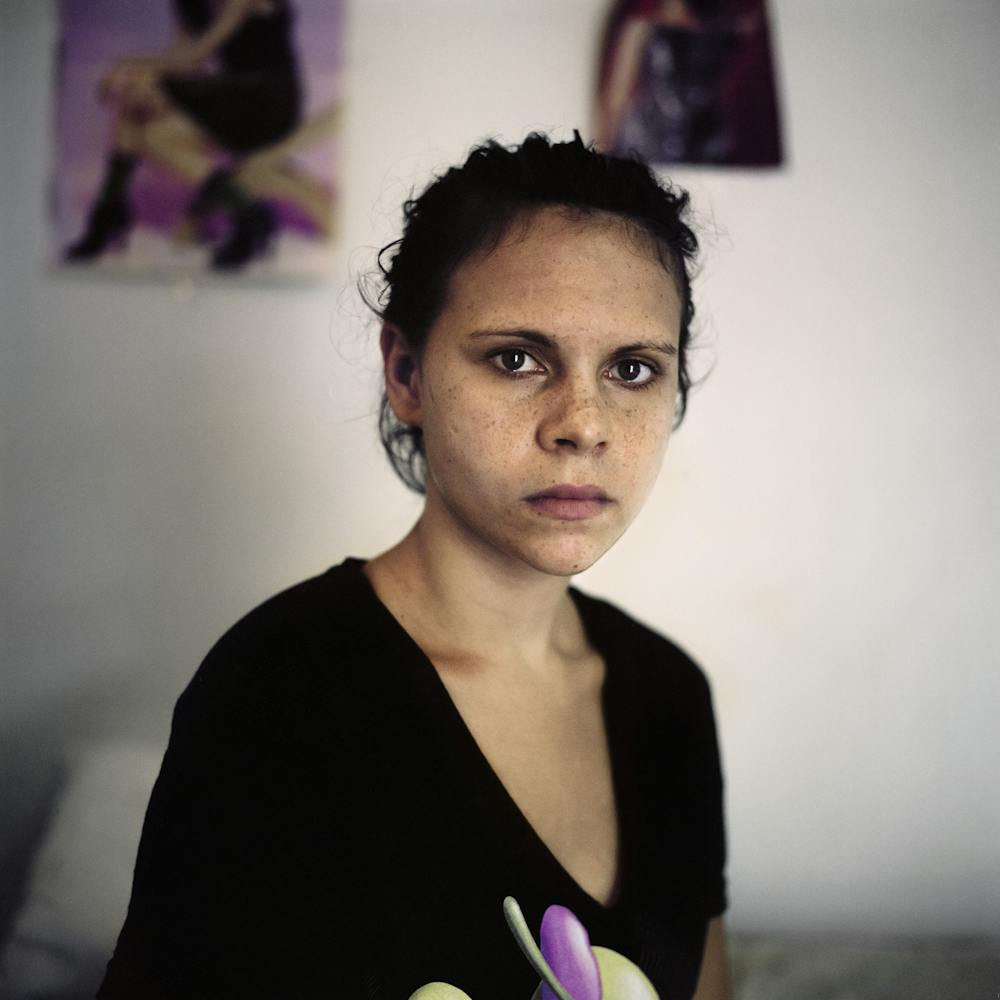 Raphaela Rosella and Nunjul Townsend, Nunjul, 2012.
Courtesy the artists.
Raphaela Rosella and Nunjul Townsend, Nunjul, 2012.
Courtesy the artists.
Next to it, a tenderly made photograph of Nunjul and her young son embracing is placed inside a sterile grid of blank “statement of truth” court documents.
The juxtaposition is moving: love between mother and son can’t be reduced to written transcripts - or even captured by a camera. But throughout the show the kinship that connects the group is palpable.
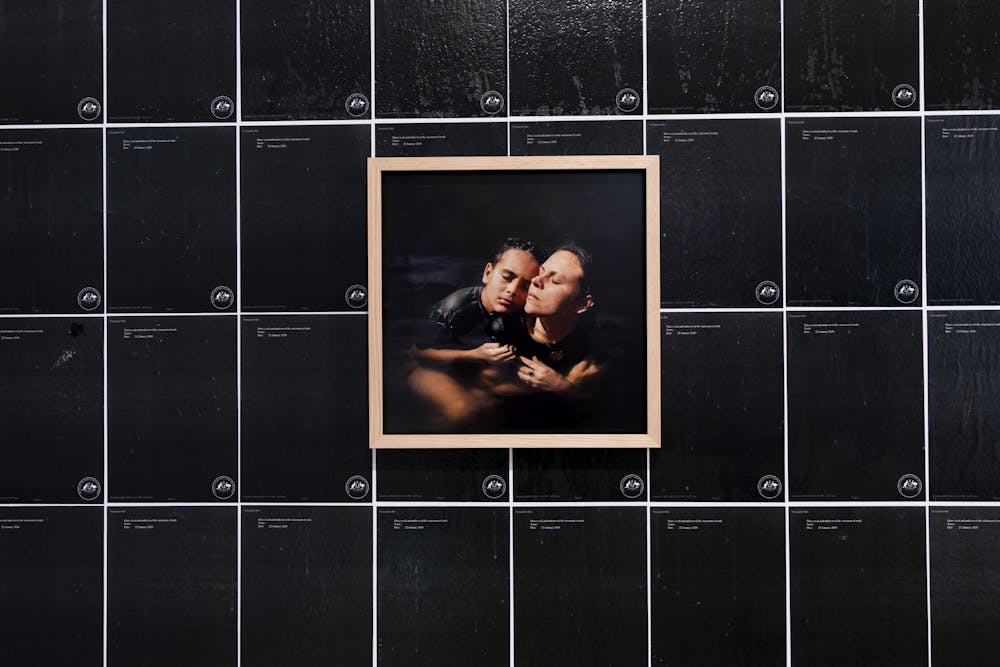 Raphaela Rosella with Dayannah Baker Barlow, Kathleen Duncan, Gillianne Laurie, Tammara Macrokanis, Amelia Rosella, Nunjul Townsend, Laurinda Whitton, Tricia Whitton, and family, You’ll Know It When You Feel It, 2011–2023. Installation view, Institute of Modern Art, Brisbane, 2023.
Photo: Louis Lim.
Raphaela Rosella with Dayannah Baker Barlow, Kathleen Duncan, Gillianne Laurie, Tammara Macrokanis, Amelia Rosella, Nunjul Townsend, Laurinda Whitton, Tricia Whitton, and family, You’ll Know It When You Feel It, 2011–2023. Installation view, Institute of Modern Art, Brisbane, 2023.
Photo: Louis Lim.
Crucial questions
Each participant has an individual curated space within the gallery, including Rosella and her identical twin. Rosella doesn’t shy away from revealing her own story to the viewer in self-portaits, video and wall text, or reflecting critically on her process (“the camera was enabling your addiction”).
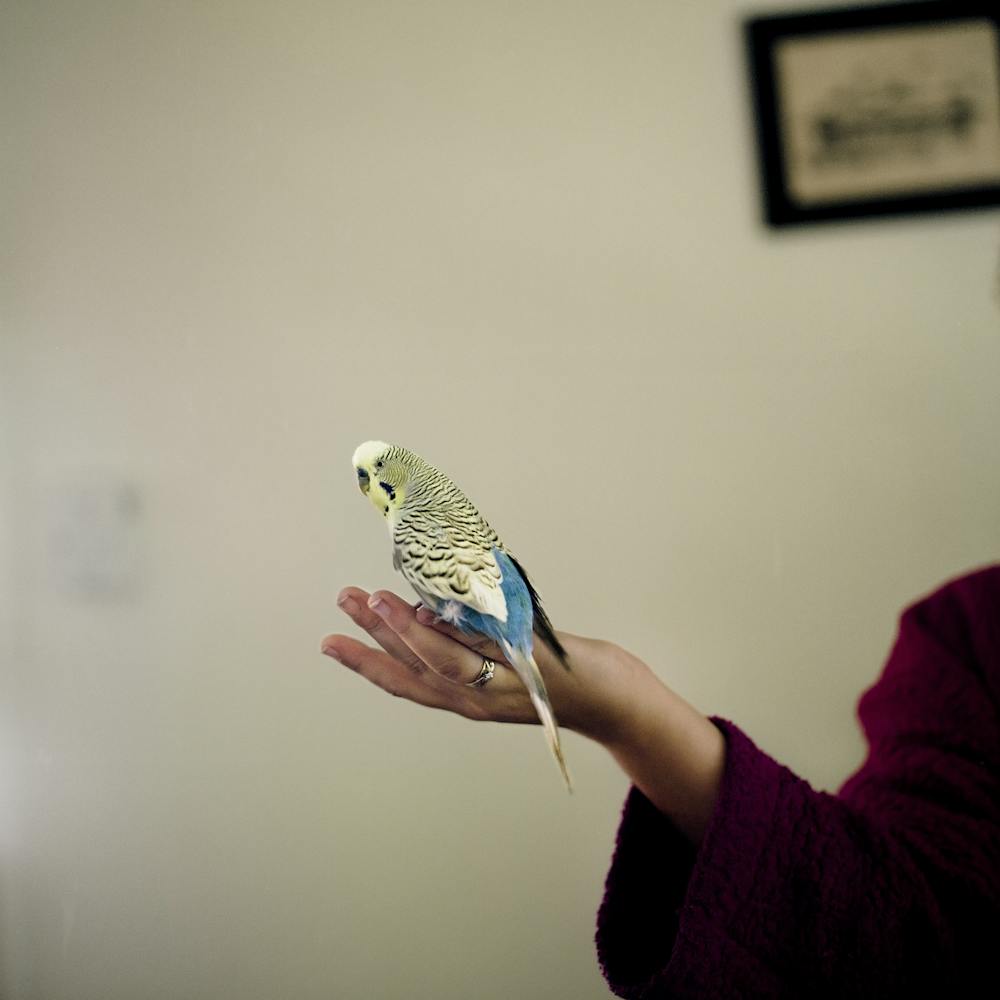 Tammara Macrokanis and Raphaela Rosella, Rescued Bird, 2012.
Courtesy the artists.
Tammara Macrokanis and Raphaela Rosella, Rescued Bird, 2012.
Courtesy the artists.
Many of the people whose lives we engage with in the show are Aboriginal, and all have been impacted by violence.
One participant, Tammara, was killed in 2020 after the pair had been working together for a decade. An image of an empty Jim Beam bottle embedded in a wall speaks of the terror of domestic violence that is so sickeningly incessant in Australia.
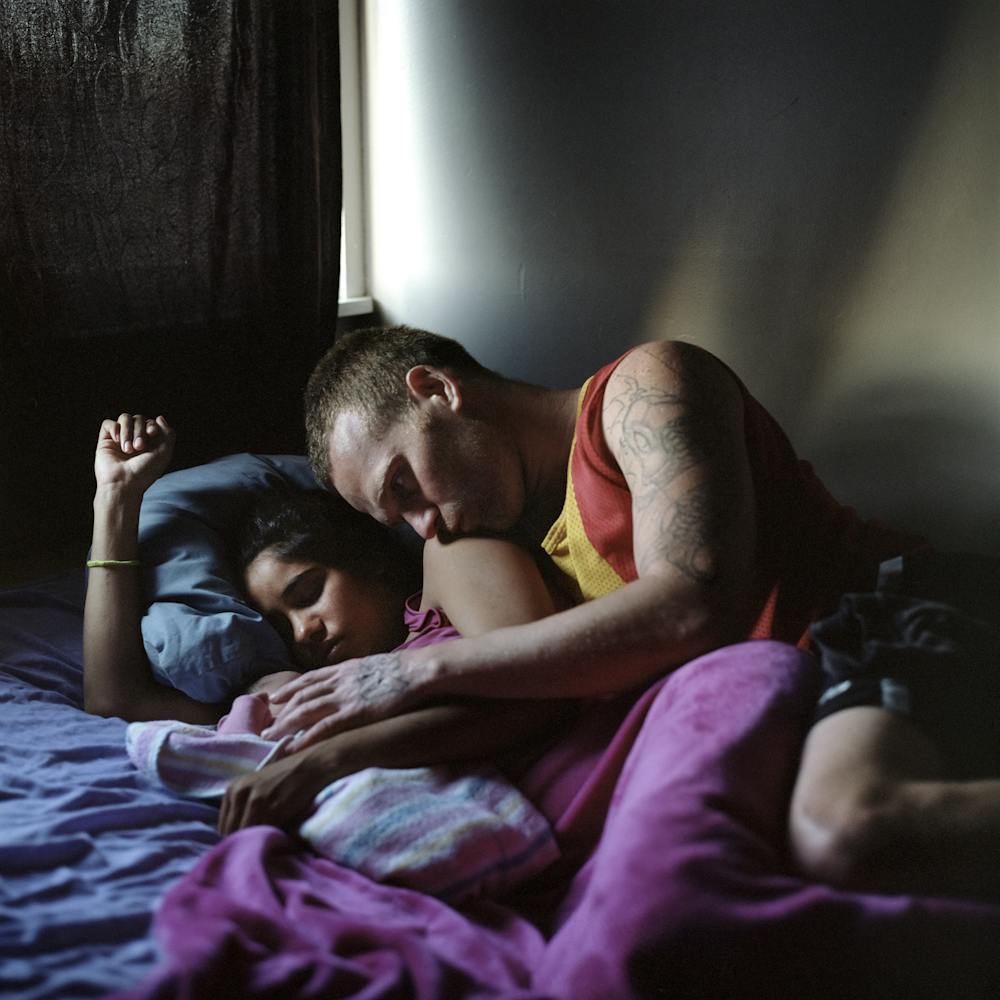 Raphaela Rosella and Tricia Whitton, Tricia, Troy and baby Ty-Leta, 2015.
Courtesy the artists.
Raphaela Rosella and Tricia Whitton, Tricia, Troy and baby Ty-Leta, 2015.
Courtesy the artists.
The space dedicated to Kathleen “Rowrow” Duncan is one of the most affecting. Wall text and a small, handwritten note from mother to her newborn baby tell us that Rowrow is under prison guard. She has given birth and will soon return to a cell.
The majority of this space, from floor to wall, is filled by a transcript that maps Rowrow’s transfers from prison to prison over four years. I counted 30 relocations. It’s hard to imagine the effect this would have on a person’s sense of home; or hope.
In a note Rosella has written to co-creator Tricia, Rosella laments how Tricia’s partner had only “spent three of his birthdays on the outside since he was nine”.
One large wall in the exhibition is filled from floor to ceiling with a mosaic of photos, contact sheets, handwritten notes, drawings, redacted documents and letters (many of them posted from behind bars). Formal portraits are assembled alongside childrens’ drawings and intimate correspondence.
There is no visual hierarchy in the installation: each element speaks of a life, a shared experience, a human connection.
As an audience, we are driven to ask questions. Why are Aboriginal and Torres Strait Islander women imprisoned so disproportionately? Why are many disadvantaged kids who come into contact with law enforcement caught in “cycles of incarceration”? Why don’t we properly address intergenerational trauma?
The strength of You’ll Know It When You Feel It is how it makes us connect with real stories that transcend statistics and theoretical debates.
Read more: Aboriginal mothers are incarcerated at alarming rates – and their mental and physical health suffers
Collaborative dialogue
Documentary photographers have historically sought to reveal problems and inequalities in the world, fuelled by a desire to provoke change.
Lewis Hine famously played a role in reforming child labour laws in the USA through his images of young children at work. Visual storytellers are documenting the effects of climate change.
 Tammara Macrokanis and Raphaela Rosella, Tammara and Tamika, 2012.
Courtesy the artists.
Tammara Macrokanis and Raphaela Rosella, Tammara and Tamika, 2012.
Courtesy the artists.
But documentary practice has been criticised by scholars for benefiting privileged photographers and institutions too often, advancing careers under the guise of concerned activism at the expense of their subjects.
Rosella, by contrast, engages in a genuine collaborative dialogue. Exhibition and publication are not the driving force.
This project is a rare example of artwork catalysing practical change. These photographs have been used to influence legal outcomes like the length of jail sentences and granting of parole. The voices of participants are heard and preserved.
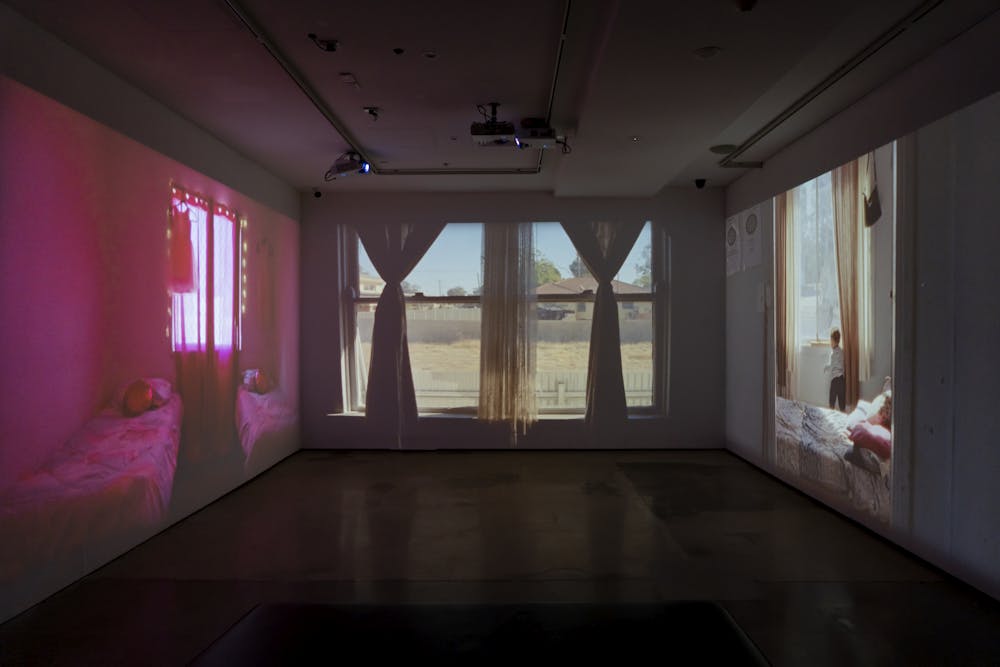 Dayannah Baker Barlow, Kathleen Duncan, Tricia Whitton, Raphaela Rosella, and family, HOMEtruths (video still), 2017–2022, three-channel video work, 21:00 min, DOP: Adric Watson. Installation view, You’ll Know It When You Feel It, Institute of Modern Art, Brisbane, 2023.
Photo: Louis Lim.
Dayannah Baker Barlow, Kathleen Duncan, Tricia Whitton, Raphaela Rosella, and family, HOMEtruths (video still), 2017–2022, three-channel video work, 21:00 min, DOP: Adric Watson. Installation view, You’ll Know It When You Feel It, Institute of Modern Art, Brisbane, 2023.
Photo: Louis Lim.
The final room of the exhibition contains HOMEtruths, an immersive three channel video installation that intercuts home movies from the collaborators with cinematic depictions of family and Country.
It is an absorbing, hope-affirming work that highlights connection to loved ones and significant places across generations. We experience the ancient landscape the artists are part of. Newborn lives engender fresh optimism.
You’ll Know It When You Feel It is at the Institute of Modern Art, Brisbane, until August 19.
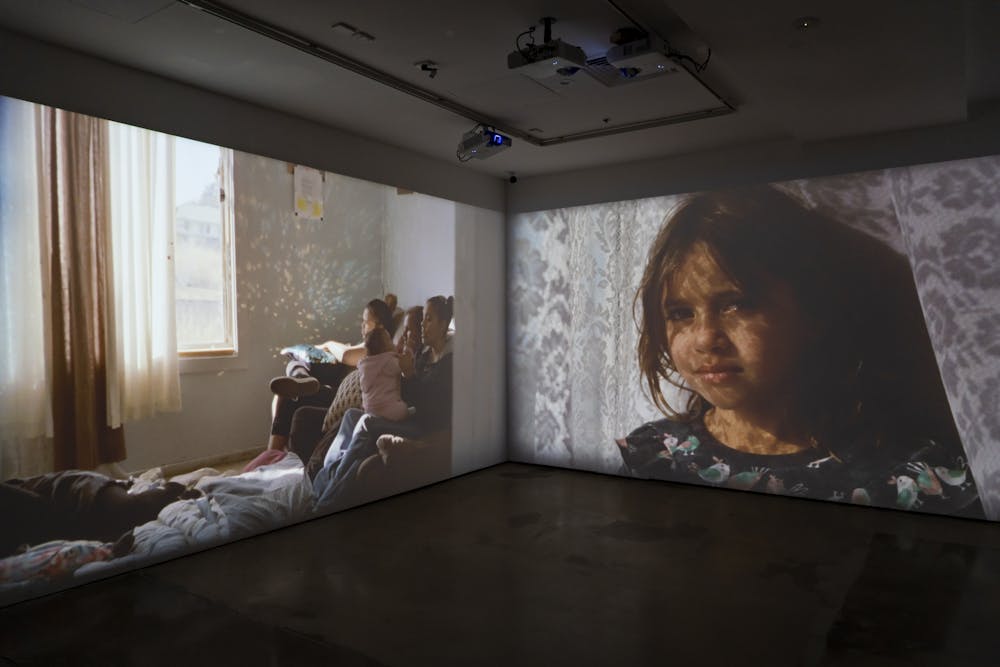 Dayannah Baker Barlow, Kathleen Duncan, Tricia Whitton, Raphaela Rosella, and family, HOMEtruths (video still), 2017–2022, three-channel video work, 21:00 min, DOP: Adric Watson. Installation view, You’ll Know It When You Feel It, Institute of Modern Art, Brisbane, 2023.
Photo: Louis Lim.
Dayannah Baker Barlow, Kathleen Duncan, Tricia Whitton, Raphaela Rosella, and family, HOMEtruths (video still), 2017–2022, three-channel video work, 21:00 min, DOP: Adric Watson. Installation view, You’ll Know It When You Feel It, Institute of Modern Art, Brisbane, 2023.
Photo: Louis Lim.
Authors: Tom Williams, Lecturer - Visual Arts, University of Wollongong

















