

Modern Australian
The Times

who were they and what did they do?

  • Written by Alice Neikirk, Lecturer, Criminology, University of Newcastle
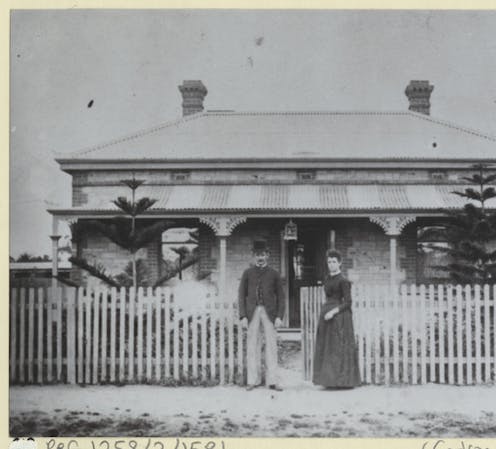
who were they and what did they do?

This year marks a significant milestone for women in policing: the 125th anniversary of the first official recognition of a police matron in Australia.

However, women worked in this role for at least 50 years before receiving official recognition.

Known as “police matrons”, these women opened the door for other women to move into the police force as officers, yet their role is still unrecognised or dismissed as an extension of her husband’s policing duties.

While many Australians will have never heard of them, they were trailblazers for women in law enforcement.

Read more: Hidden women of history: Kate Cocks, the pioneering policewoman who fought crime and ran a home for babies – but was no saint

The female touch in policing

During the Victorian era, it was considered inappropriate for men to touch a woman who was not their wife or an immediate family member. This made men policing women (at least of certain social classes) difficult, particularly if they needed to search a female suspect. To get around this, police began to call on women to search arrestees for them.

Initially, these might have been whoever was nearby – a woman living near the police station, for example. But quickly it was recognised that a “female touch” was also helpful for comforting lost children, talking to female victims of crime, and occasionally soothing an unruly male arrestee. Neighbourhood women were not viewed as entirely suited for these more complex roles, but the wives of police officers were.

In Australia, the United States and the United Kingdom, early police stations had both temporary holding cells (a lock-up) and a residence for a police officer. The officer living on site was frequently married – these women became police matrons.

Police matrons in the Victorian era searched female offenders, were responsible for lost or arrested children, kept watch over mentally unwell inmates, and occasionally allowed families facing violence at home to stay in the station.

They also performed tasks we would not generally associate with the work of a police officer. They cleaned and maintained the cells, mended clothes, and hosted clothing drives for the poor. The police stations sometimes doubled as neighbourhood medical centres. These were all tasks that fell to the police matron. They fit within assumptions of the period regarding the natural, nurturing role of women.

Discrimination leading to innovation Because these tasks were viewed as “naturally” women’s work, questions regarding compensation were skirted. For decades, these were not formal appointments. The matrons were not sworn in, they did not have access to a police pension, and they did not have any authority over male inmates (or male officers). A few received a modest stipend based on the number of searches they conducted or if they performed an extended psychiatric watch. These matrons would be on-call 24 hours a day, and diaries kept by early matrons show the long hours they kept. Yet their activities were viewed as an extension of their husband’s role, not requiring separate pay. These women did not go on patrol or have powers to arrest. But there is evidence that police matrons performed tasks that align with current approaches to policing. For example, a key role of male police in the early Victorian era was to prevent crime by being out in the community: an officer’s presence alone would often deter offending. Police matrons rarely worked outside of the station, but they did get to know the needs of their community and tried to identify causes of crime. They became advocates, trying to address what they saw as the root causes of crime: excessive consumption of alcohol leading to the violent breakdown of families. Matrons advocated for increased regulation of alcohol and for stations to provide sanctuary for domestic violence victims.
Police matrons paved the way for women to become police officers, and eventually achieve the highest ranks. Lukas Coch/AAP

Today, these efforts would be understood as forms of problem-orientated policing: identifying a problem in a community and working with the community to devise solutions for the underlying causes of crime. We cannot go as far as claiming that police matrons started the movement towards problem-orientated policing. But we can recognise that they predated today’s “best practice in policing” model by roughly 150 years.

Read more: Women have made many inroads in policing, but barriers remain to achieving gender equity

Though we know police matrons were working in this field in the mid-1800s, and gained a degree of official recognition in the 1890s, it was not until 1915 that the New South Wales Police Department advertised two positions for women police officers.

These two positions attracted nearly 500 applications. The first two female police officers in NSW were not allowed to wear a uniform and had to sign a waiver releasing the police department of any responsibility for their safety. Their tasks were similar to police matrons – they were responsible for women and children that came in contact with the criminal justice system. It wasn’t until 1979 that female officers in Australia could carry a firearm, though they were required to keep it in their handbag.

Today, women make up over 30% of police in Australia and have reached the highest ranks as police commissioners. Although Australians may not know much about the early police matrons, it was they who, more than 100 years ago, paved the way for all this to happen.

Authors: Alice Neikirk, Lecturer, Criminology, University of Newcastle

Read more https://theconversation.com/long-before-women-police-officers-came-police-matrons-who-were-they-and-what-did-they-do-210188

What’s Trending in Men’s Jewellery This Father’s Day!

Finding a Father’s Day gift that feels personal, stylish and genuinely wearable is not always easy. While socks and novelty mugs have traditionall...

Road Signs: Understanding Their Role in Clear and Effective Signage

Effective signage and display hardware can help businesses communicate information, promote products and organise customer or visitor movement. Road...

Bottle Label Printing: Key Factors to Consider Before Your Next Packaging Run

Effective packaging begins with understanding the product, bottle material, artwork and production requirements when planning bottle label printing. H...

Planning a Long-Distance Move With Interstate Movers Melbourne

Moving between states involves more planning than a typical local relocation. Along with packing and transporting household belongings, you need to...

Understanding the Role of an I/O Controller in Industrial Automation

Modern industrial systems depend on accurate communication between sensors, machines and control systems. An I/O controller can help manage this commu...

How the Right Mining Hose Supports Demanding Operations

Mining environments place considerable demands on equipment used for material transfer, water management and processing. Hoses operating in these co...

Simple Ideas for Making Social Gatherings More Memorable

We have all been to those parties where everyone just stands around the kitchen island, staring at their phones, waiting for someone else to make a mo...

Outdoor Wall Lights: Improving Exterior Lighting Around Your Home

Lighting can influence how a room looks, feels and functions, so the right fitting should be selected according to both appearance and practical req...

Commercial Office Cleaning: Combining Routine Office Cleaning With Melbourne Service

Keeping a workplace clean requires a service that can accommodate everyday tasks as well as the particular needs of the business. Professional comme...

Caravan Sales in Queensland: How to Find the Right Caravan for Sale QLD

Caravan ownership is about more than having somewhere to sleep while travelling. For many Queenslanders, it is one of the best ways to explore regio...

What Sir Walter Buffalo Turf Actually Costs in 2026 (And Why Quotes Vary So Much)

Two quotes landed on a Hills District homeowner's kitchen table last spring for the exact same 80-square-metre backyard. One said $12 a metre. The o...

Nearly 1,300 NSW Hospital Beds Are Occupied By People Who Are Ready To Go Home

1,276 people in NSW hospitals have been medically cleared for discharge but remain in hospital because they're still waiting for NDIS or aged care sup...

National Survey Launched to Measure Operational Impacts of Federal NDIS Policy Reforms

The effects of recent NDIS reforms are beginning to move beyond policy papers and into day to day service delivery. A new national survey is asking ...

Beyond the Nappy Cake: Baby Shower Gifts That Get Used

What new Australian parents unwrap, keep, and quietly thank you for months later. Six weeks after my daughter was born, I did an audit of the baby sh...

Parent-Advocates Are Reshaping Frontline Disability Service Delivery

Parents have always been part of the disability sector. They advocate, coordinate services, challenge decisions and often become the person holding ev...

Vista Cruises Enters "Two-Flagship Era" as Vista Aurora Completes Inaugural Voyage

Vista Aurora Sets Sail along the Yangtze. (Photo courtesy of the company)YICHANG, China — August 5, 2026 — Vista Aurora, a high-end interprovinc...

A Digital Preparation Checklist For International Medical Conferences

An international medical conference compresses many responsibilities into a few days. A delegate may need to present research, move between venues, ...

The Growing Popularity of Lab Grown Diamonds in Sydney and Hong Kong

The diamond industry has changed significantly in recent years as more buyers seek ethical, affordable, and sustainable alternatives to mined diamon...
















