

Fire in northern Australia’s tropical savanna is a threat to endangered fairy-wrens
- Written by Niki Teunissen, Postdoctoral researcher, Wageningen University
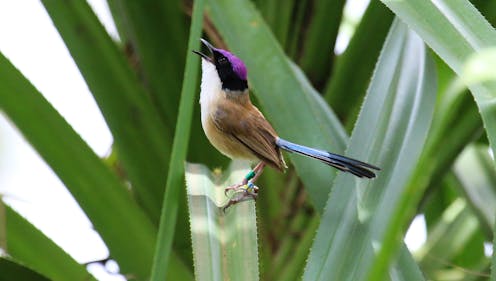
Wildfire threatens the survival of endangered purple-crowned fairy-wrens living along the rivers and creeks of northern Australia, our new research has found.
For almost two decades, we studied the fairy-wrens at a wildlife sanctuary in the far north of Western Australia.
Over this time, one low-intensity fire and one high-intensity fire burnt through our study site. Both occurred late in the wet season, when fires generally burn at lower intensity. But drought and weather conditions meant the second fire unexpectedly burnt at high intensity instead.
We wanted to find out what happened to the birds before, during and after each fire. We found even low-intensity burns reduced population density. As this species is a biological indicator of ecosystem health, our new research can help fine-tune fire management practices, to reduce the extent and intensity of fires along waterways.
Read more: Savanna burning: carbon pays for conservation in northern Australia
Fire in the tropics
Fire is particularly common in tropical monsoonal savanna. The vegetation thrives during the wet season, then dries out over the dry season. This creates plenty of fuel late in the dry season, leading to frequent fires.
Deliberately introducing fire in the early dry season, when fires generally burn at low intensity, can reduce large intense wildfires later in the year. So fire management is often used for conservation and carbon farming.
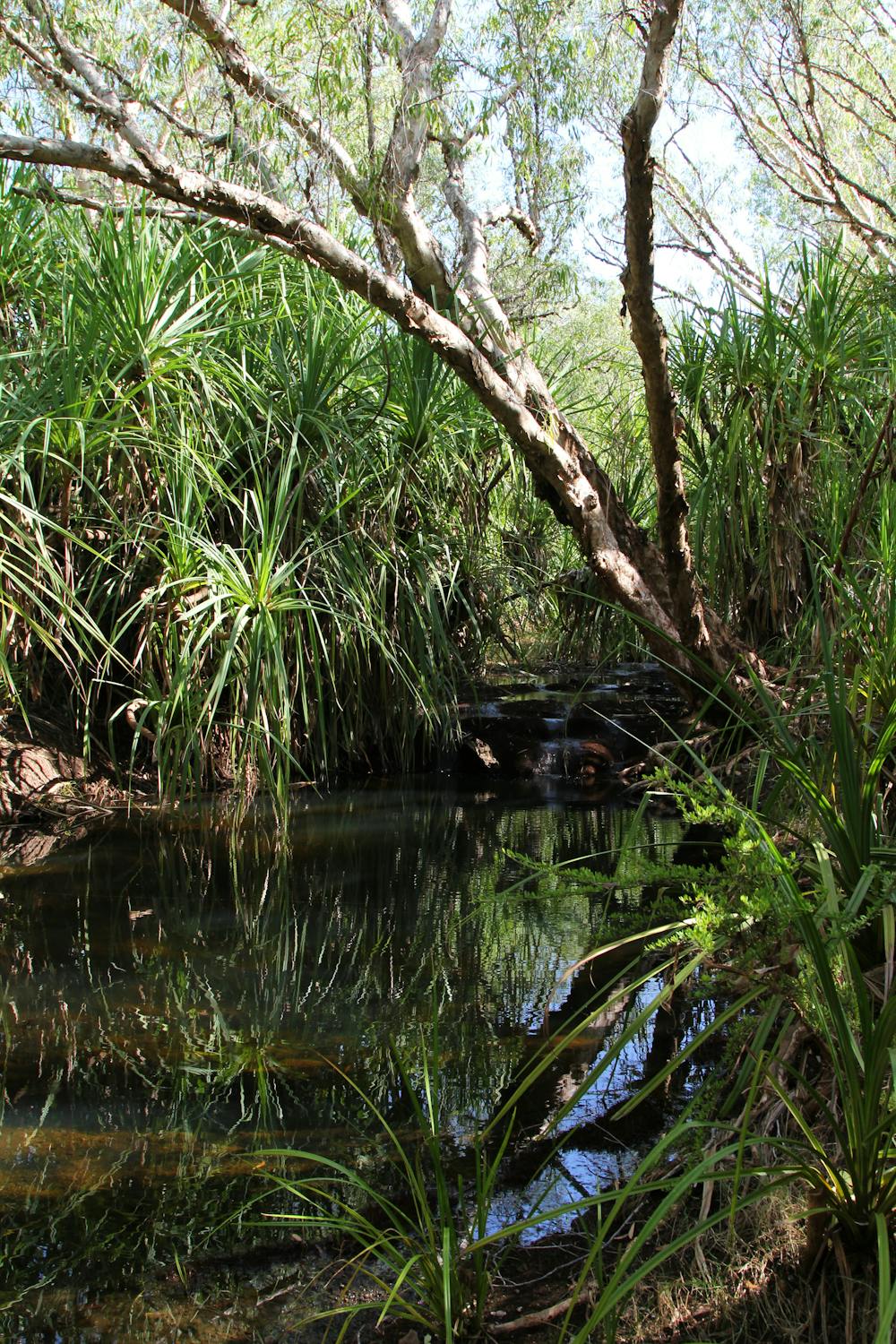 Riparian zones provide vital habitat and support a range of species.
Niki Teunissen/AWC
Riparian zones provide vital habitat and support a range of species.
Niki Teunissen/AWC
But approaches to fire management that best protect “riparian” communities are relatively poorly understood. Riparian zones are the strips of vegetation along creeks and rivers. They play an important role in tropical savanna landscapes. They support a highly diverse range of species, provide corridors for animals to move through the landscape, and form a cool refuge from heat and drought.
Unfortunately they are also particularly sensitive to fire, making it ever more urgent to better protect these key places.
Understanding how riparian fire affects the species that depend on waterway vegetation for their entire life cycle is a good place to start.
Fairy-wrens and fire
We study a population of 200-300 purple-crowned fairy-wrens (Malurus coronatus coronatus) along 15km of waterways.
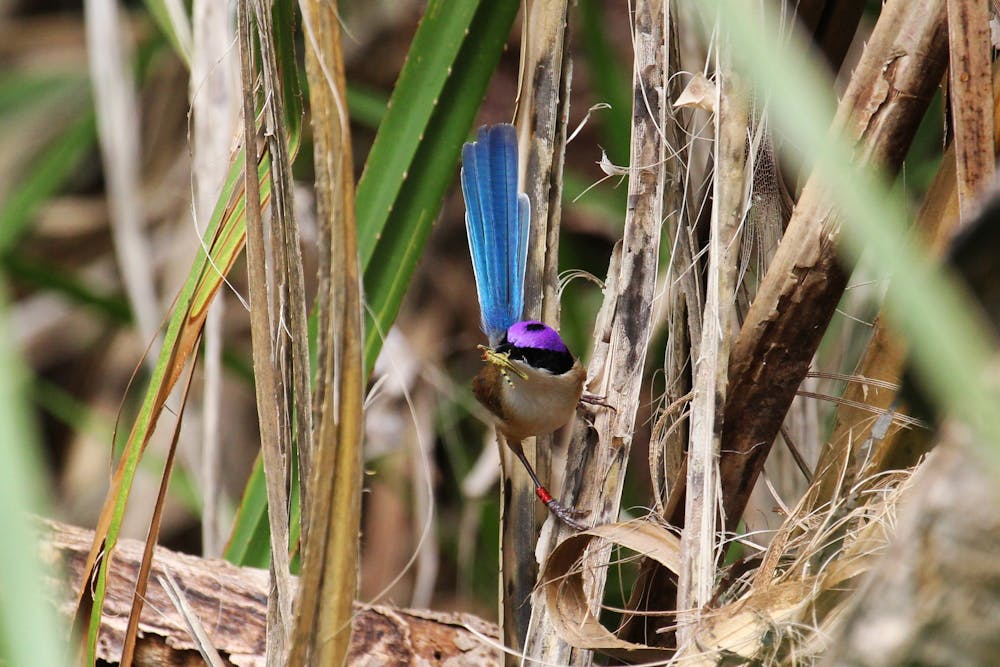
Each bird in this population has been tagged with a unique small coloured leg band. This enables us to recognise individuals and follow them throughout their life.
We gather detailed information on bird survival, movement and reproduction. This is key to quantifying how – and to what extent – fire impacts populations.
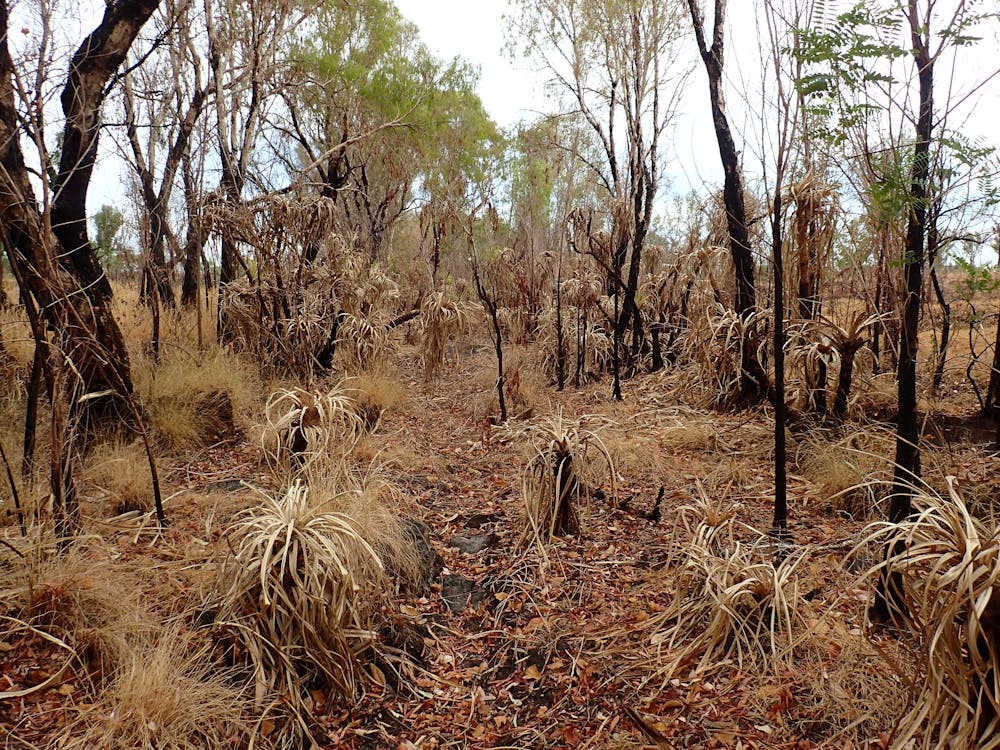 High-intensity fire greatly reduced the quality of riparian habitat.
Michael Roast/AWC
High-intensity fire greatly reduced the quality of riparian habitat.
Michael Roast/AWC
In our study we found both low-intensity and high-intensity fire reduced the number of fairy-wrens in the burnt areas for at least two and a half years. The effect of high-intensity fire was much stronger, reducing the number of fairy-wrens by half.
Next, we investigated what mechanism caused these declines. We showed birds did not move out of burnt habitat, probably because they live in such well-defined territories year-round.
Instead, we found the low-intensity fire reduced breeding success by 80% during and shortly after the fire.
The high-intensity fire caused a decline in wrens through a different mechanism. We found birds in the fire-affected area were no more likely to die during the fire itself than birds in adjacent unburnt areas. Yet, they were 30% more likely to die over the next two to eight months after the fire.
This is probably because the quality of the riparian habitat was greatly reduced by this fire, which may have made it harder for the birds to find food, cover from predators, or find protection from the heat in subsequent months.
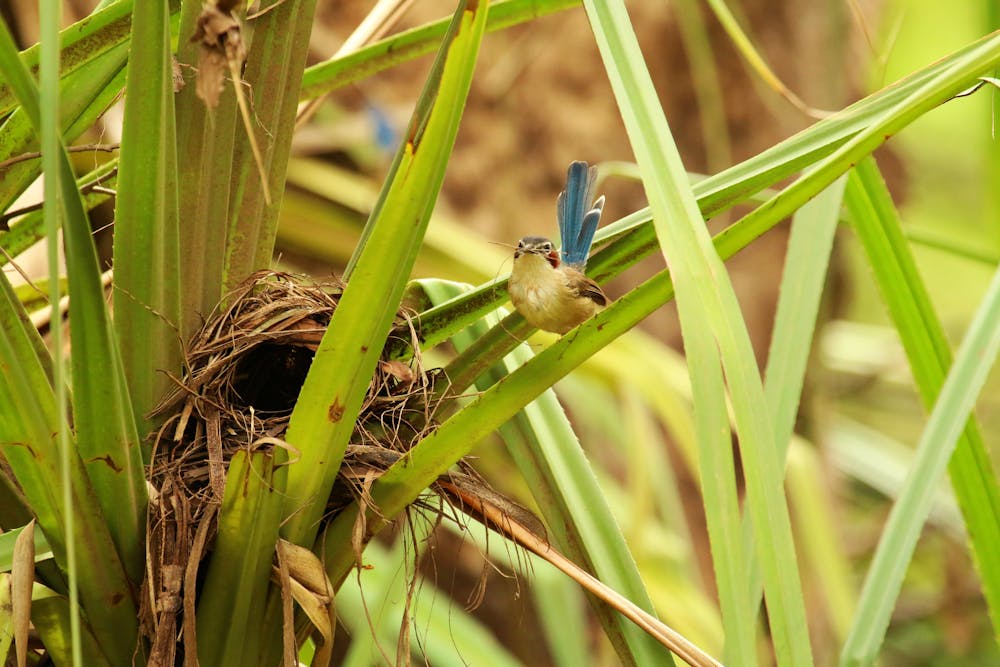 Low-intensity fire reduces breeding success of purple-crowned fairy-wrens.
Niki Teunissen/AWC
Low-intensity fire reduces breeding success of purple-crowned fairy-wrens.
Niki Teunissen/AWC
Protecting riparian zones from fire
Wildfires are becoming more frequent and severe as climate change worsens. These changes are transforming natural systems and threatening the diversity of life on Earth. We saw this in Australia in 2019-20, when the Black Summer fires pushed many species closer to extinction.
More frequent and severe fire is forecast for riparian zones, for various reasons. For example, extended droughts as well as large flood events (which deposit woody debris as fuel for fire), increase the risk of severe riparian fires. Additionally, riparian strips can become a corridor for fire under certain conditions.
The challenge for land managers is to minimise the impact of fire when it eventually enters the riparian zone. We suggest fire management can be used to reduce the extent and intensity of riparian fires. In particular, we recommend introducing low-intensity burns parallel and perpendicular to riparian zones so they have minimal impact yet create breaks along these riparian corridors, to prevent large sections burning at once.
Our study indicates the high sensitivity of riparian zones to fire, even when fire occurs during the wet season and burns at low intensity. Our findings call for more consideration by fire managers of the effects of fire on riparian habitat, and for further research to enhance our understanding of savanna riparian fire biology.
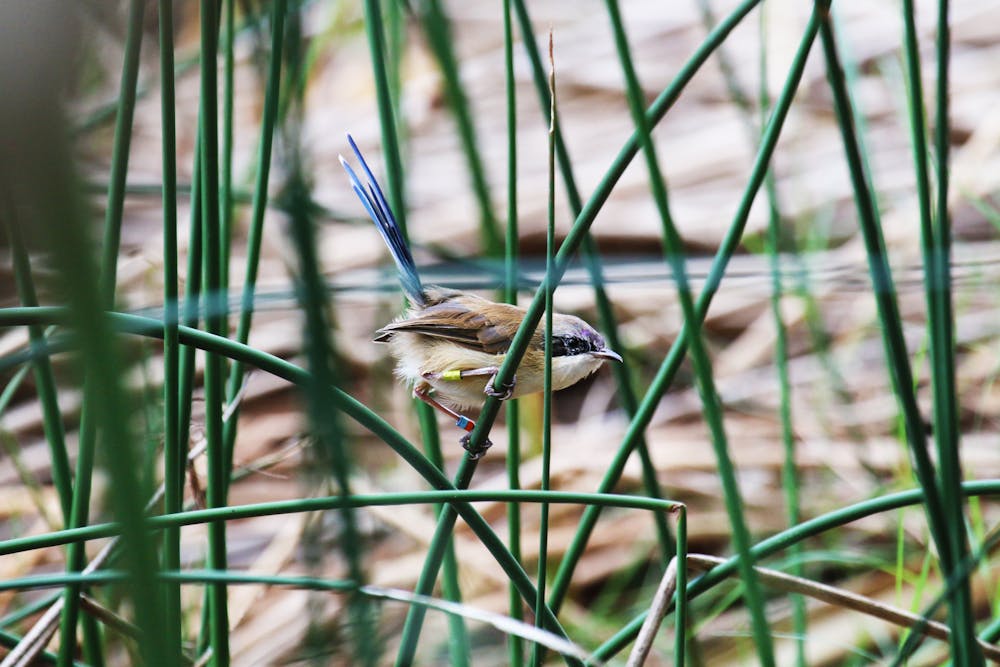 Individual birds in this study can be recognised by their coloured leg bands.
Niki Teunissen/AWC
Individual birds in this study can be recognised by their coloured leg bands.
Niki Teunissen/AWC
Our research was conducted in collaboration with scientists and land managers from Charles Darwin University and the Australian Wildlife Conservancy.
Authors: Niki Teunissen, Postdoctoral researcher, Wageningen University

















