

Modern Australian
The Times

Is this the protein plant of the future? New study finds 'sweetness gene' that makes lupins tastier

  • Written by Matthew Nelson, Plant Geneticist, CSIRO
Is this the protein plant of the future? New study finds 'sweetness gene' that makes lupins tastier

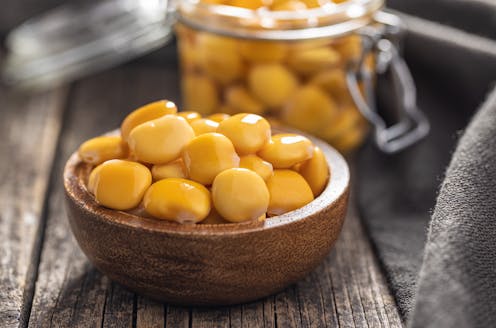
If you walk into a bar in Italy, you might be served a dish of salty, nutritious snacks: lupin beans, a legume that has been eaten around the Mediterranean and in parts of the Middle East and Africa for thousands of years.

Lupins are very high in protein and fibre, low in carbs, have a low glycaemic index, and they’re easy to grow in a variety of climates. However, some varieties also contain high levels of unpleasantly bitter alkaloids.

In new research, an international team of researchers has for the first time identified the “sweetness gene” responsible for low alkaloid levels. This discovery may make it easier to reliably produce more palatable plants.

The search for sweetness

Around 100 years ago, plant breeders in Germany found natural mutations that produced “sweet lupins” with far lower levels of bitter alkaloids. They produced sweet varieties of white lupin (Lupinus albus), narrow-leafed lupin (Lupinus angustifolius, the main type grown in Australia), and the less common yellow lupin (Lupinus luteus).

Over the past 50 years or so, lupins have become more common as food for farm animals. Sweet lupins are good for this, as they don’t require extensive washing to be usable. They are also increasingly eaten by humans – and we are very sensitive to bitterness.

To find the genetic basis for “sweet” lupins, we used a few approaches.

A genetic search

Our colleagues in Denmark studied the biochemistry of the different alkaloids in both bitter and sweet varieties. By looking at the changes in the composition of the alkaloids, we could get an idea of the genes involved.

My own work was on the genetics end. We analysed 227 varieties of white lupin and tested their alkaloid levels.

Then, with colleagues in France, we looked at markers across the lupin genome and tried to associate high and low alkaloid levels with the genetics.

A photo showing white lupin plants with tall stems and white flowers.
New research has found the ‘sweetness gene’ in white lupins. Shutterstock

We had clues about where we thought the gene would be, in a certain region of a few dozen genes. There was one we thought looked the most promising, so we designed a lot of DNA markers to work out what sequence varied in that gene.

Eventually we found a very strong link between a change in alkaloid levels and a variation of a single sequence in our gene.

Read more: Pulses are packed with goodness: Five cool things you should know about them

The final test was to find out whether a variation in this gene would also produce sweetness in other types of lupin. In some other plants we would be able to use genetic modification tools to do this, but for various reasons this is difficult in lupins.

Instead, we went to a company called Traitomic who screened a huge number of seeds of narrow-leafed lupin until they found one which naturally had exactly the mutation we were looking for. And when we tested that plant, it had low alkaloids – confirming we really had found the “sweetness gene”.

A reliable marker

In practice, growing sweet white lupin can be a bit tricky. There are several different strains that have different low alkaloid genes, and if these strains cross-pollinate, the result can be bitter lupin plants once again.

The research gives a reliable genetic marker for plant breeders to know what strains they are dealing with. This means it will be much easier to consistently grow sweet white lupin.

At the moment most of what is grown in Australia is narrow-leafed lupin, in part because the industry had a hard time keeping the white lupin sweet (and in part because white lupin was plagued by a fungal disease called lupin anthracnose). So perhaps in future we’ll see white lupin make a comeback.

Our vision is more cultivation of the high-protein, hardy lupins for consumption by humans.

Read more: Plant-based patties, lab-grown meat and insects: how the protein industry is innovating to meet demand

Authors: Matthew Nelson, Plant Geneticist, CSIRO

Read more https://theconversation.com/is-this-the-protein-plant-of-the-future-new-study-finds-sweetness-gene-that-makes-lupins-tastier-210985

Why Material Handling Hose Is Critical for Industrial Efficiency

A high-performance material handling hose is an essential component in industries that transport abrasive, dry, or bulk materials on a daily basis...

How to Choose the Right Lawyer in Melbourne for Your Situation

Choosing legal support can feel difficult, especially when the stakes are personal or business-related. The right lawyer in Melbourne should underst...

Hoteliers Look to Clever Value Adds to Increase Revenue

The Australian hospitality industry is still in recovery mode after a notoriously rough patch in recent years. While there has been a post-COVID tra...

Moving to Queensland? Here’s How to Prep Your Car for the Big Move North

There’s no sign of the northern migration slowing down, with thousands of southerners fleeing from chaotic lifestyles and cooler climates for a brig...

Diesel Shortage to Impact Trades and Contractors

Strait of Hormuz blockage affecting all major parts of trades and construction Trades and construction across residential, commercial and industria...

Why Holiday Home Owners Turn to Rental Management Agents

The Allure — and the Reality — of Renting Out Your Property Owning a holiday home is a dream for many Australians. Whether it's a beachside sha...

Why Finding Reliable Doctors In Bundoora Is Important For Long-Term Health

Access to quality healthcare plays an important role in maintaining overall wellbeing and managing health concerns early. Trusted Doctors in Bundoor...

Understanding the Different Types of Car Services: Minor vs Major

When it comes to car maintenance, one of the most important things every vehicle owner should understand is the difference between a minor and a maj...

How Superannuation and TPD Insurance Work Together

Superannuation is an essential part of financial planning in Australia. It is designed to provide individuals with income during retirement, helping...

Tiny Towns funding granted for Mt Hotham and Mt Buller upgrades

Alpine Resorts Victoria (ARV) has welcomed funding support from the Victorian Government’s  Tiny Towns Fund, with both Mt Hotham and Mt Buller se...

Locksmith Services: Why Professional Security Solutions Matter More Than Ever

Security is a critical concern for homeowners, businesses, and vehicle owners alike. Whether it involves protecting a property, replacing damaged lo...

Why Tooth Fillings Are Important For Protecting Damaged Teeth

Cavities and minor tooth damage are common dental problems that can worsen if left untreated. Professional tooth fillings help restore damaged teeth, ...

The Connection Between Visibility and Driver Confidence

Operating a vehicle safely requires an immediate, uncompromised stream of visual information from the surrounding road environment. A driver's decis...

Important Things To Know Before Starting An SMSF Setup

Planning for retirement requires careful financial decisions, and many Australians are now looking for more direct control over how their superannua...

Why Retail Cleaning Plays a Key Role in Customer Experience and Business Success

Professional retail cleaning services are an essential part of maintaining a welcoming, safe, and professional environment for customers and staff...

Simple Ways to Make a Commercial Property More Appealing to Buyers

Selling or leasing a commercial property isn’t just about listing the square metres, taking a few photos and waiting for the right person to appea...

What Café Owners Should Know Before Upgrading Their Display Setup

A café display fridge does a lot more than keep cakes cold and sandwiches fresh. It quietly shapes the way customers browse, the way staff move beh...

Creating a Backyard That Feels Comfortable All Year Round

A great backyard doesn’t need to be huge, expensive or perfectly styled. Most of the time, the spaces people actually use are the ones that feel e...
















