

Is red meat bad for you? And does it make a difference if it's a processed burger or a lean steak?
- Written by Katherine Livingstone, NHMRC Emerging Leadership Fellow and Senior Research Fellow at the Institute for Physical Activity and Nutrition, Deakin University

A juicy burger is a staple in many Australians’ diet. Yet research shows regularly eating red meat can increase your risk of developing type 2 diabetes, heart disease and certain cancers.
But is eating a beef burger worse for your health than eating a lean grass-fed steak? And how much red meat should we really be eating?
Types of red meat
First of all, it’s good to clarify that red meat refers to all mammalian muscle meat. So that includes beef, lamb, pork, veal, mutton and goat.
Then we can distinguish red meat types by how the animal has been raised and how the meat is processed. Here are some key terms to know.
Conventional meat, also called grain-fed, is meat from animals that are grass-fed for part of their lives and then given a grain-based diet for the remainder. Most red meat available in major supermarkets is grain-fed.
Grass-fed meat comes from animals that have grazed on pasture for their entire lives. This means grass-fed meat tends to have higher levels of unsaturated fats than conventional meat, and is why some research suggests it’s healthier. Grass-fed meat is also likely to cost more.
Organic meat is seen as a premium product as it has to meet government standards for organic produce. For example, meat labelled as organic cannot use synthetic pesticides or use hormones or antibiotics to stimulate growth.
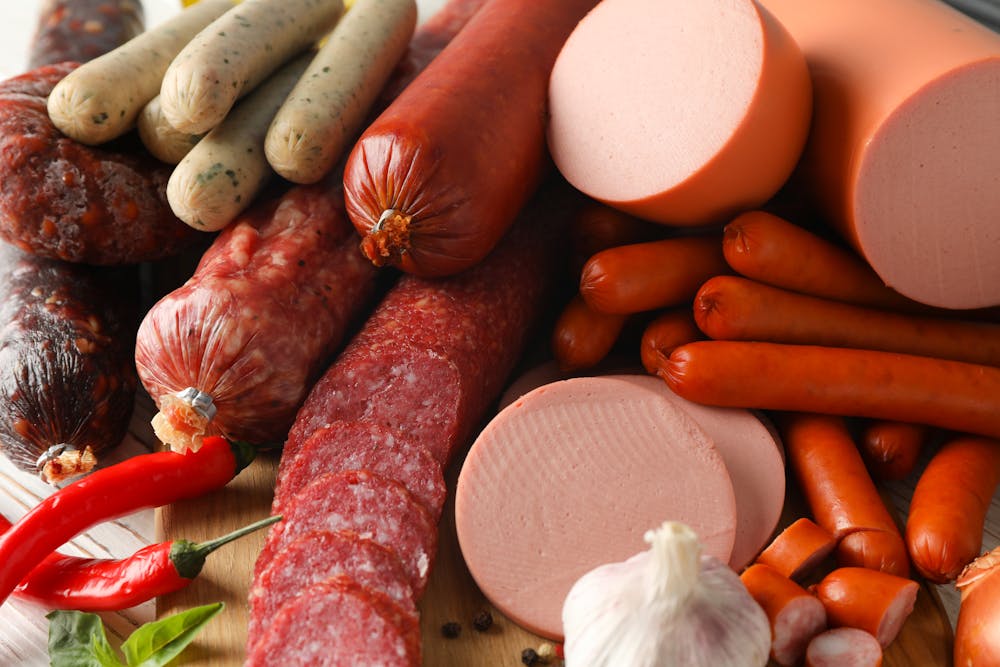
Processed meats have been preserved by smoking, curing or salting, or by adding chemical preservatives. Examples include sausages, ham, bacon and hot dogs.
What is the nutritional value of red meat?
Red meat contains many nutrients that are important for health, including protein, vitamin B12, iron and zinc. Red meat is a good source of iron and zinc as they are more easily absorbed by the body from meat than from plant foods.
Red meat is often high in saturated fats, but this can range widely from less than 1% to over 25% depending on the cut and whether it’s trimmed of fat or not. Minced meat typically ranges from 2% to 9% saturated fat depending on whether its extra lean or regular.
To limit intake of saturated fats, opt for leaner mince and leaner cuts of meat, such as pork tenderloins or beef steak with the fat trimmed off.
Wagyu beef (which simply translates to Wa = Japanese and Gyu = cow) has been touted as a healthier alternative to conventional red meat, as it tends to be higher in unsaturated fats. But research is limited, and ultimately it still contains saturated fat.
Processed meats, such as bacon, salami and sausages, contain beneficial nutrients, but they are also high in saturated fat, sodium and contain preservatives.
Read more: Here's a meaty question – are barbecues bad for your health?
Is red meat bad for your health? And does the type matter?
It’s widely reported eating too much red meat is bad for your health, because it can increase your risk of heart disease, type 2 diabetes and some cancers.
But most of the evidence for this comes from observational studies, which cannot determine whether red meat intake actually causes the condition.
Most evidence is observational because it’s simply not ethical or feasible to ask someone to eat large amounts of meat every day for many years to see if they develop cancer.
So let’s take a look at the evidence:
Heart disease and type 2 diabetes
In a review of 37 observational studies, the authors found weak evidence of an association between eating unprocessed red meat and heart disease and type 2 diabetes.
But for processed meat, a recent review showed that for each additional 50g of processed meat consumed per day, the risk of heart disease increased by 26% and the risk of type 2 diabetes increased by 44%, on average.
Cancer
Leading international organisations have declared there’s strong evidence consumption of red and processed meat increases the risk of colorectal cancer.
For example, in a study of nearly 500,000 people, each additional 50g of red meat consumed per day increased the risk of colorectal cancer by 18%. And each additional 25g of processed meat consumed per day, equivalent to a slice of ham, increased the risk by 19%.
While research has linked consumption of red and processed meat with increased risk of other types of cancer, such as lung, pancreatic and breast, the evidence is not consistent.
It also matters how red meat is cooked. For example, cooking a steak over a high heat, especially an open flame, chars the outside. This causes chemical compounds to form that have been shown to cause cancer in very high doses in animal models, and some studies in humans have found an association with increased cancer rates.
When it comes to how the animal was raised or its breed, based on current evidence, it’s unlikely the nutritional differences will have a substantial impact on human health. But research is limited in this area.
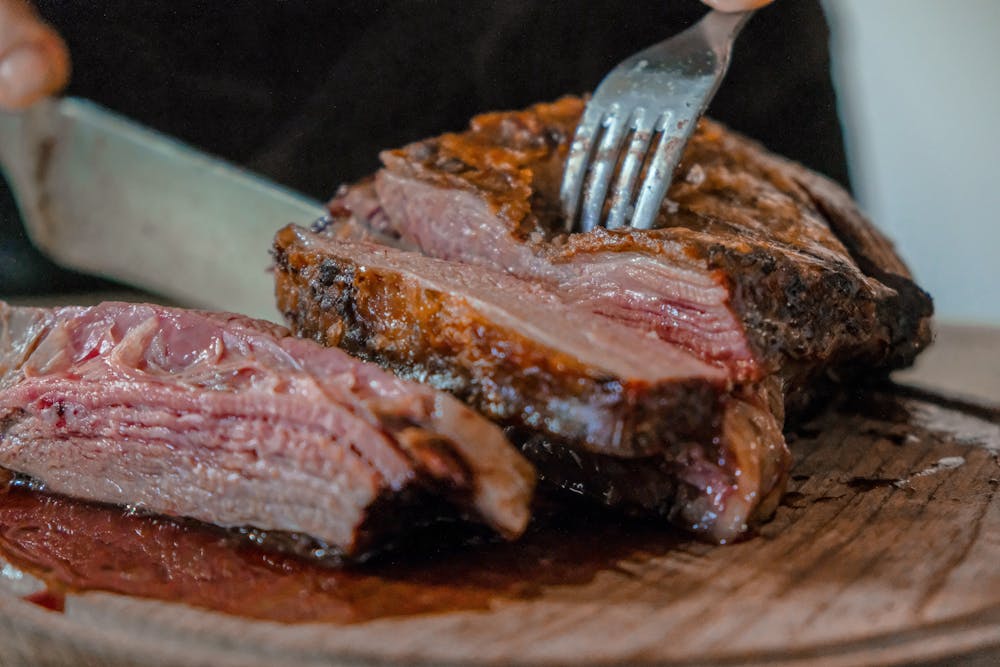 Roasting is better than cooking over an open flame.
jose ignacio pompe/unsplash, CC BY
Roasting is better than cooking over an open flame.
jose ignacio pompe/unsplash, CC BY
Read more: Yes, we still need to cut down on red and processed meat
How much red meat should you eat?
Our national dietary guidelines recommend the average adult eats a maximum of 455g of cooked lean red meat per week (or less than 65g a day, equivalent to one small lamb chop). This is also what’s recommended by the national Cancer Council.
For heart health specifically, the national Heart Foundation recommends eating less than 350g of cooked, unprocessed red meat per week (or less than 50g a day).
Many dietary guidelines around the world now also recommend limiting red meat consumption for environmental reasons. To optimise both human nutrition and planetary health, the EAT-Lancet commission recommends consuming no more than 98g a week of red meat and very low intakes of processed meat.
Read more: Should we eat red meat? The nutrition and the ethics
So what does all of this mean for your diet?
The bottom line is that red meat can still be enjoyed as part of a healthy diet, if not eaten in excess. Where possible, opt for unprocessed or lean cuts, and try to grill less and roast more. Consider swapping red meat for lean chicken or fish occasionally too.
If you are looking for alternatives to meat that are better for your health and the environment, minimally processed plant-based alternatives, such as tofu, beans and lentils, are great options.
Read more: How to get the nutrients you need without eating as much red meat
Authors: Katherine Livingstone, NHMRC Emerging Leadership Fellow and Senior Research Fellow at the Institute for Physical Activity and Nutrition, Deakin University

















