Accelerated evolution and automated aquaculture could help coral weather the heat
- Written by Paul Hardisty, CEO, Australian Institute of Marine Science
Coral on the Great Barrier Reef has regrown strongly after the big losses of 2016 and 2017, when water temperatures were significantly above the long-term average. While this is good news, it’s largely luck. The reef experienced mass bleaching in 2020 and 2022, but temperatures cooled just in time to prevent extensive coral deaths.
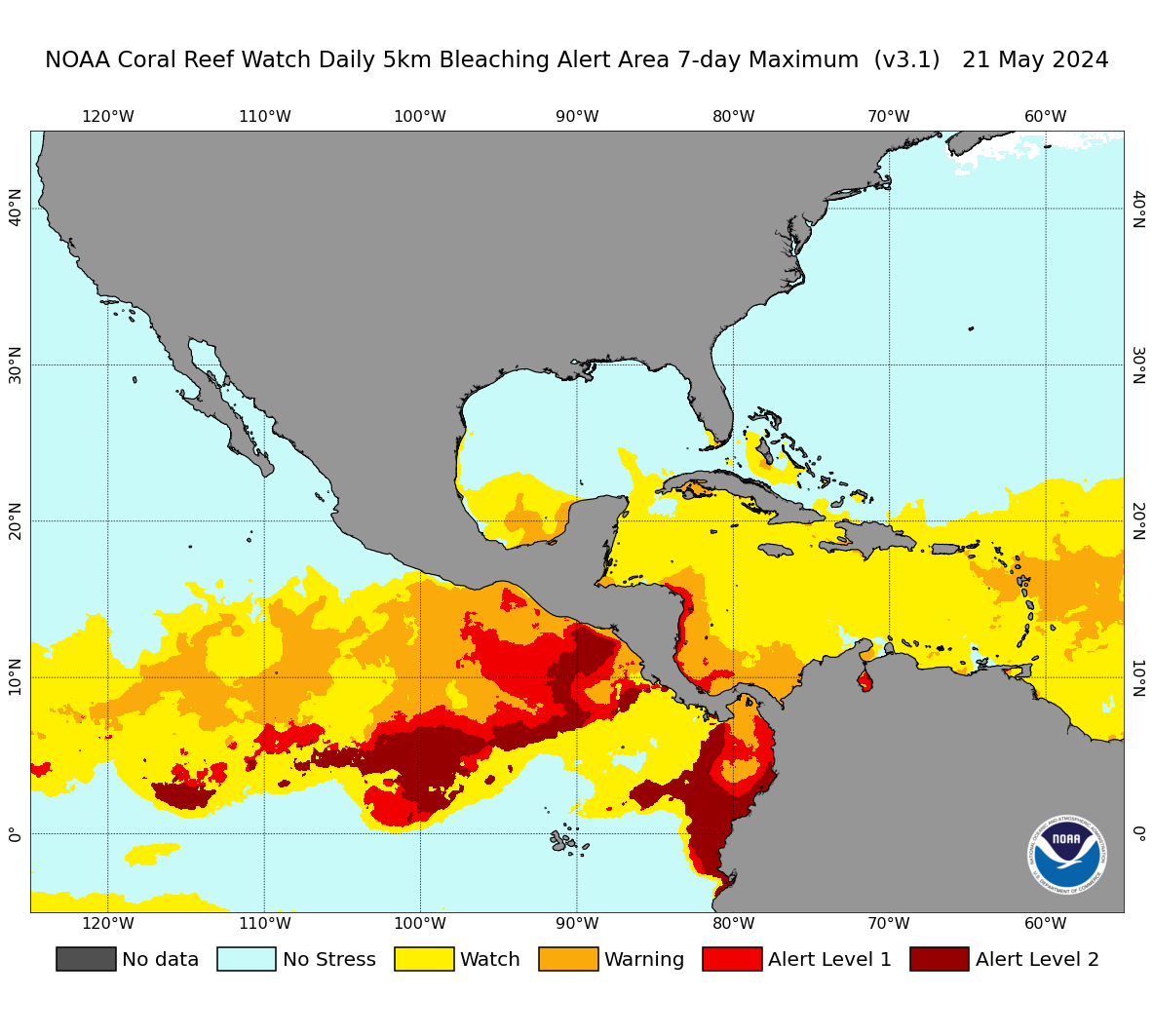
But the reef’s luck may be about to run out. Hotter El Niño conditions are returning to the Pacific, driving warmer ocean temperatures. The past few months have seen global temperature records smashed. Already, reefs in Florida, the Caribbean and parts of the Pacific are bleaching. The looming southern summer is a significant concern.
Can anything be done? Keeping emissions under control is obviously vital. But we can also support the Great Barrier Reef’s resilience by speeding up natural adaptation processes.
In our paper published today in Science, we describe methods of accelerating the natural evolution of heat-tolerant corals, next-generation aquaculture to rear large numbers of baby corals, and collaborative decision-making with First Nations groups to place these corals onto the Great Barrier Reef at meaningful scale.
How to breed heat-tolerant coral
Corals are very different in how they tolerate heat. Some can put up with hot water for longer, whereas others bleach at lower temperatures.
Globally, bleaching thresholds have increased by 0.5℃ in a decade. That is, reefs are actually becoming more tolerant of heat. This is likely because more sensitive species and colonies have died off or become less abundant.
Within species, we know individual corals in warmer waters are typically more tolerant than those in cooler waters.
Understanding why some corals have better heat tolerance, and how these attributes can be passed on, means we can figure out which corals are best placed to adapt. Then we can start selectively breeding them.
Coral reefs support a huge diversity of lifeforms, from fish to shrimp to rays and sharks. But on a tiny scale, coral polyps have their own microbial ecosystems, ranging from symbiotic algae which give coral its colour – and much of its food, from photosynthesis – through to the rest of the coral microbiome.
To breed coral better able to adapt to the heat, we have to understand how their microbiome works. One group of symbiotic algae (Durusdinium) living inside coral can actually give their host the gift of increased heat tolerance, though often at the cost of reduced growth.
But if we assist the evolution of other coral-associated algae (Cladocopium), we find heat tolerance of both coral and algae improves, usually without compromising other survival traits.
 An AIMS coral scientist examining young coral on a seeding device.
T.Whitman/AIMS, CC BY-ND
An AIMS coral scientist examining young coral on a seeding device.
T.Whitman/AIMS, CC BY-ND
This means we can inoculate the offspring of selectively bred corals with these algae to achieve greater heat tolerance. These methods have now been tested in the laboratory and should scale for mass production.
By interbreeding wild colonies of the same species of coral, we’ve found heat tolerance can be passed to the next generation.
Our researchers are developing tools to pick out these naturally more resilient individuals, during bleaching events or with rapid heat stress experiments. We are also analysing corals’ DNA to identify genetic markers.
Then we measure how heat tolerance and genetic diversity is maintained in the aquaculture facility and back in field conditions.
So while assisted evolution is still very new, our results are encouraging. There is real potential to increase coral heat tolerance to improve survival in hotter seas.
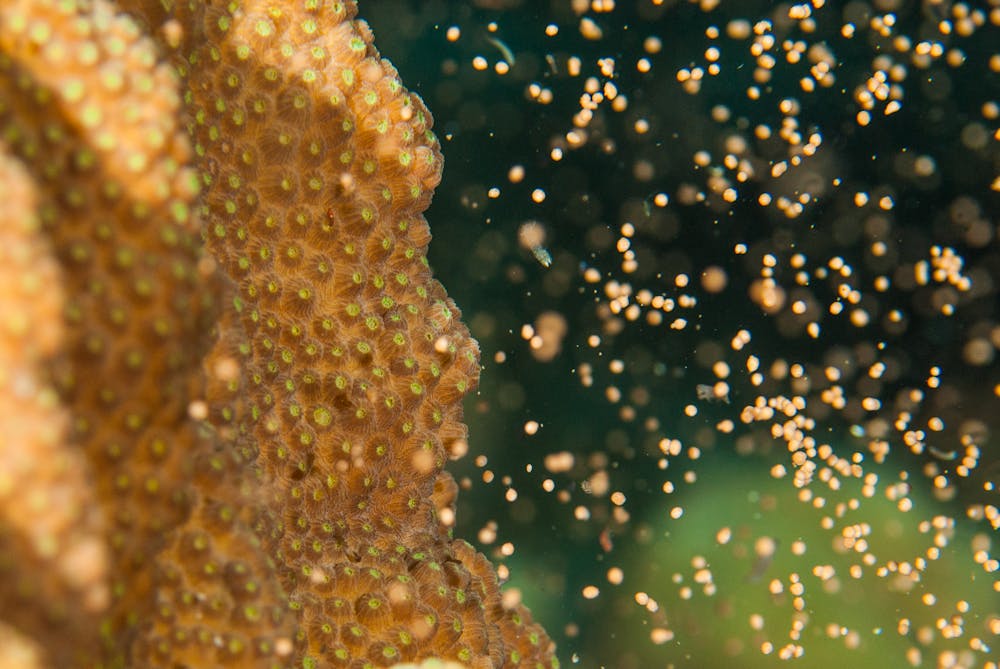 Coral spawning is an event on the reef. Can selective breeding of coral keep them healthy?
Shutterstock
Coral spawning is an event on the reef. Can selective breeding of coral keep them healthy?
Shutterstock
Accelerate aquaculture to achieve scale
This year’s marine heatwaves are breaking records. To boost our chances of preserving the Great Barrier Reef, we’ll need to be able to scale up these techniques.
To date, coral restoration and adaptation has been done at relatively small scale and high cost. Coral breeding has largely been done by hand, in small laboratory aquarium facilities, which is slow and expensive.
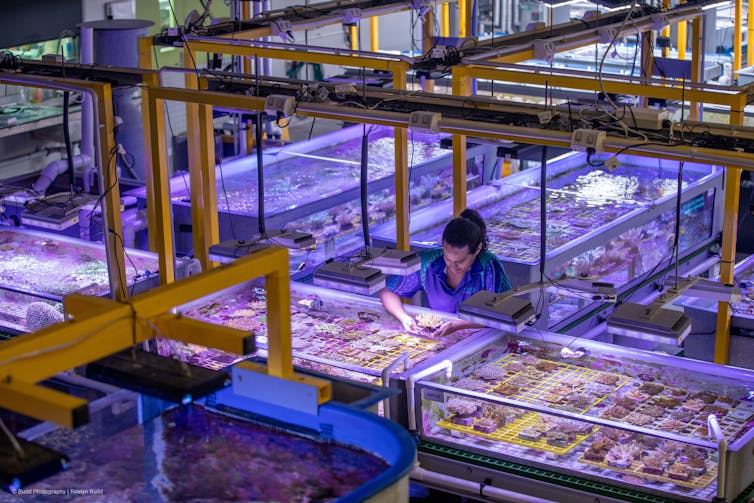
But this is changing. At our site in Townsville, we’ve made advances in coral aquaculture with the potential to significantly boost production rates while cutting costs.
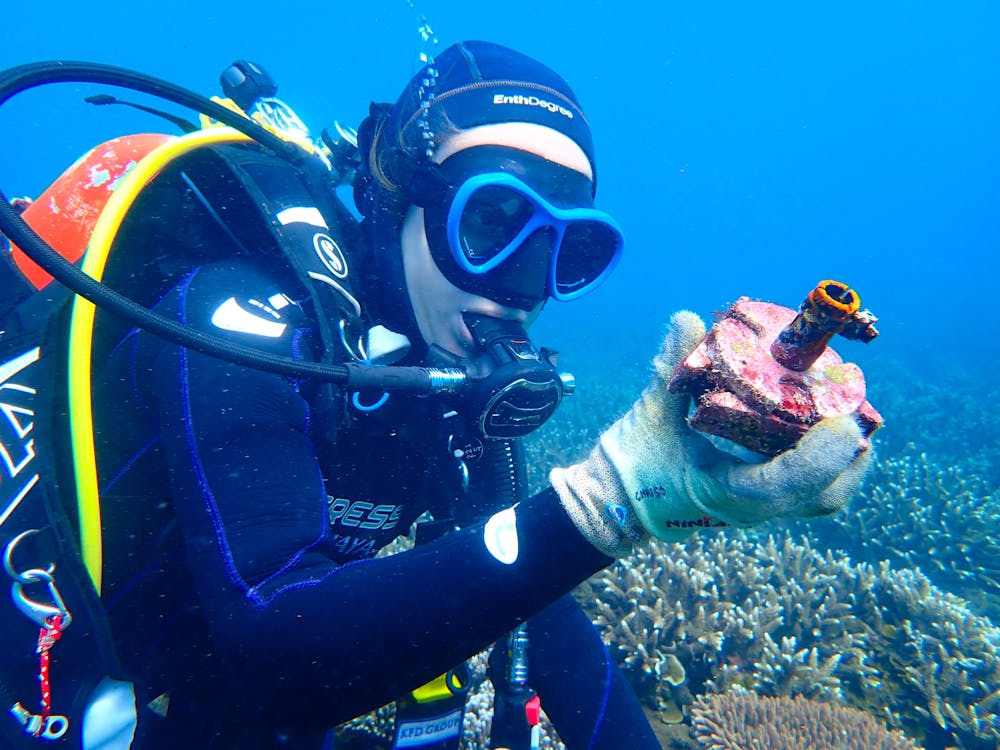
How do you produce heat-tolerant corals at scale? Settle selected baby corals on small tabs in modular sheets. Separate the individual tabs, each now home to a thriving baby coral, and attach them to special fist-sized structures designed to protect the babies in the ocean. This greatly increases their survival rate once on the reef.
We’re trialling these technologies by depositing these structures in carefully chosen places along the reef where they can grow and, eventually, reproduce. As we scale up production, we will be able to deliver large numbers of structures without requiring divers, by using boats or robots.
These technologies mean we can increasingly automate coral rearing. At present, these techniques are available for around 50 coral species on the Great Barrier Reef.
Making sure human systems work well is also vital. To ensure heat-resistant baby coral thrive, we have to have good ecological models and decision-making processes which take economic, social, and environmental factors into account.
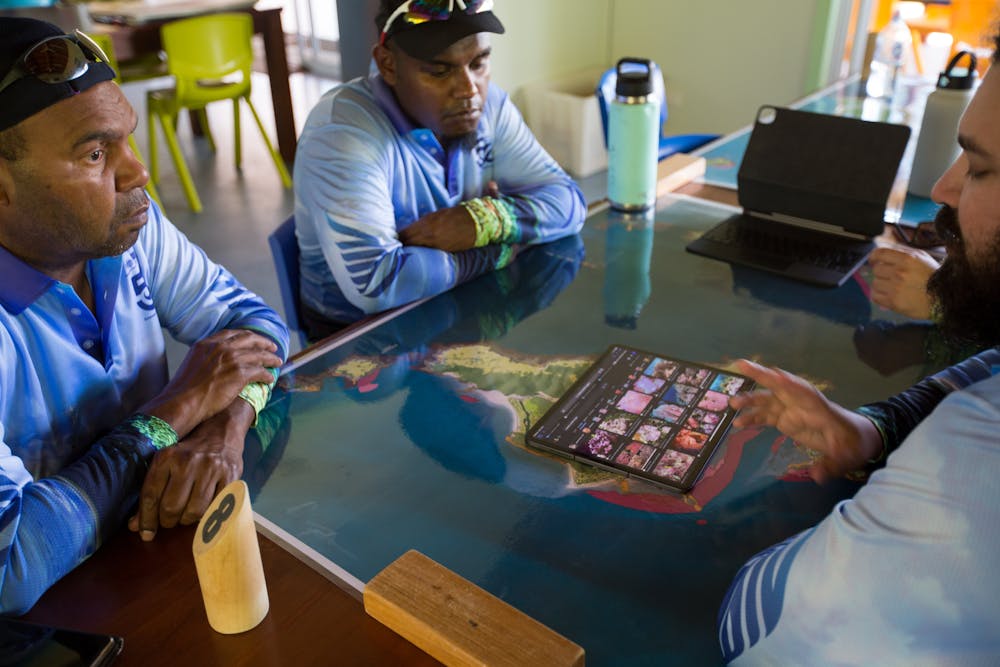 Science and traditional knowledge can complement each other.
AIMS, CC BY-ND
Science and traditional knowledge can complement each other.
AIMS, CC BY-ND
Success will also depend on meaningful partnerships with Traditional Owners. Combining conventional science and traditional knowledge can bring fresh insights. Marine management of Groote Eylandt in Australia’s north now uses maps produced by scientists working with Anindilyakwa people to combine local knowledge, in-water surveys and satellite data.
As we move towards large-scale restoration and adaptation, Australia’s First Nations rangers could provide a vital community-based workforce to deliver a new suite of management and conservation activities, especially in remote regions. Traditional Owners could also play important roles in monitoring progress.
Until recently, conservation efforts were aimed at protecting ecosystems from damage and limiting access, allowing natural systems to bounce back. But in the era of global heating, this is no longer enough. Disruptions are coming faster, challenging nature’s resilience.
We have to help. Time is short and there is much to do.
Read more: Is the Great Barrier Reef reviving – or dying? Here's what's happening beyond the headlines
Authors: Paul Hardisty, CEO, Australian Institute of Marine Science