

The intergenerational report tries to scare us about ageing. It's an old fear, and wrong
- Written by John Quiggin, Professor, School of Economics, The University of Queensland
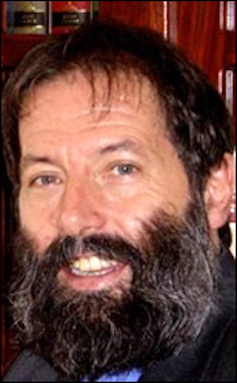
The “problem” of Australia’s ageing population has been a concern for decades. Indeed, I have aged along with it.
The first official report on the subject was produced in a report of the National Population Council entitled Greying Australia: Future Impacts of Population Ageing, which came out as I entered my 30s, sporting a full head of dark hair.
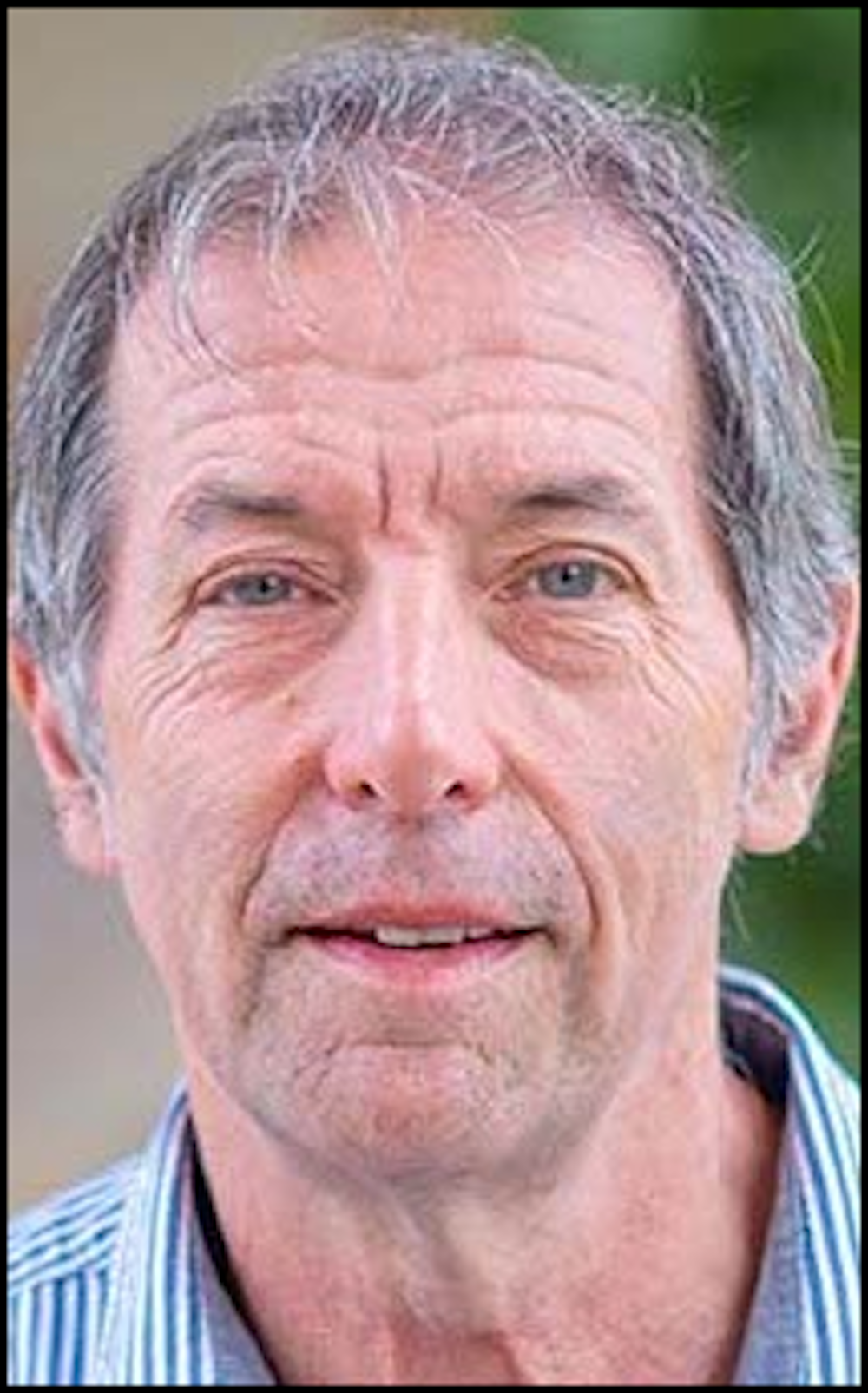
The latest Intergenerational Report, to be released on Thursday, comes weeks after – with thinner and greyer hair – I celebrated reaching the official pension age of 67 (raised from 60 for women and 65 for men).
While ageing brings with it some regrets it is, as French actor Maurice Chevalier is supposed to have said: not so bad, when you consider the alternative.
But while individual Australians continue to age at a rate of one year per year, discussion of population ageing seems stuck in a 1980s timewarp.
The 2021 Intergenerational Report contained an extensive, and gloomy, discussion of the change in what it called the “old-age dependency ratio” – which it defined as the ratio of Australians of “working age”, which it said was 15–64, to those over 65.
But it seems to have escaped the notice of the authors in the treasury that the school leaving age has climbed to 17, and the pension age has climbed to 67.
This reflects a much bigger problem. Projections of “population ageing” usually produce a future society that is exactly like the one we have at present except that there are more old people and fewer young people.
In particular, it is usually assumed people of every given age will have much the same characteristics and live in much the same way as do at present.
The idea is wrong for at least three reasons.
First, lifetime patterns of work have changed radically, and will continue to do so.
In practice, most young people are dependent on their parents into their early 20s, sometimes beyond.
Some are dependent on their 65+ grandparents, meaning they are supported by rather than supporting the age group the treasury regards as dependants.
Older Australians are twice as likely to be employed as before. 40 years ago, in 1983, only 5% of Australians aged 65 and over were employed. Now it’s 11.4%.
With an increased pension age and the end of defined-benefit superannuation (which rewarded early retirement), we can expect that trend to continue.
While the 2021 Intergenerational Report noted these trends, it seemed to ignore them in arriving at its conclusions.
Longer lives are good things
There’s a second reason why it isn’t right to assume that older people in the future will be much like older Australians have always been (except more numerous).
Those older Australians will be living longer precisely because they are healthier.
Today, the typical 65-year-old can expect to live 21 more years. In the 1950s it was only 14 more years. Medical progress, along with improvements in work safety and lifestyle changes, have made it possible to remain healthy for longer (though COVID might undermine this).
Read more: The intergenerational report sets the scene for 2063 – but what is it?
Drug treatments are now available for chronic conditions like arthritis that used to go untreated. Even dementia, where there has been little if any advance in treatment, appears to be declining in its age-specific prevalence.
This decline is a byproduct of improved cardiovascular health and (more speculatively) increased education levels among the middle-aged and old.
As before, the really big costs in the medical system are incurred in the last year of life. By definition, the last year comes only once in each lifetime, meaning more years than before are healthy.
Working different, working longer
And there’s a third reason why it’s wrong to assume that older people in the future will be much like those today: technological progress has largely eliminated many unskilled jobs.
Two things flow from this. One is that young people need to spend more time than before in education in order to acquire skills.
The other is that the decline in unskilled jobs involving hard physical labour makes it easier for people to work much longer should they want to.
Yet talk about population ageing nearly always presents it as a near-catastrophe. Treasurer Joe Hockey didn’t help, introducing the 2015 Intergenerational Report by saying Australians would “fall off their chairs” when they read it.
Read more: Intergenerational reports ought to spark action, as well as scare us
As it happens, we are facing a catastrophe, and it has scarcely been mentioned in the five intergenerational reports to date. It’s catastrophic climate change.
We are living in a world of near-continuous wildfire emergencies and other climatic disasters. Even with determined action, things are only likely to get worse for the next generation.
In these circumstances, worrying about the need to raise taxes by a few percentage points over 40 years to pay for things like more aged care shows an astonishing lack of concern about the future.
Authors: John Quiggin, Professor, School of Economics, The University of Queensland

















