
becoming a green superpower with a big role in cutting global emissions
- Written by: Rod Sims, Professor in the practice of public policy and antitrust, Crawford School of Public Policy, Australian National University
This article is part of a series by The Conversation, Getting to Zero, examining Australia’s energy transition.
Australia has three ways it can help reduce world greenhouse emissions, the only reduction that matters in tackling climate change.
First, we can remove emissions from our economy. This will reduce global emissions by just 1.3%, but it must be done so we share the transition burden with other countries.
Second, we can stop approving new coal and gas projects, which will raise the cost of these products and so reduce world demand for them to some extent. This would have an important demonstration effect, although the reduction in world emissions may be less than some advocates think.
Third, we can quickly pursue industries in which Australia has a clear comparative advantage in a net-zero world. Of any country, Australia is probably best placed to produce green iron and other minerals that require energy-intensive processing, as well as green transport fuels, urea for fertiliser, and polysilicon for solar panels.
Read more: The original and still the best: why it's time to renew Australia's renewable energy policy
Australia’s huge green industry opportunity
Of these three ways, by far the least public discussion is on the third: producing energy-intensive green exports. Yet these industries could reduce world emissions by as much as 6–9%, easily Australia’s largest contribution to the global effort. And it would transform our economy, turning Australia into a green energy superpower.
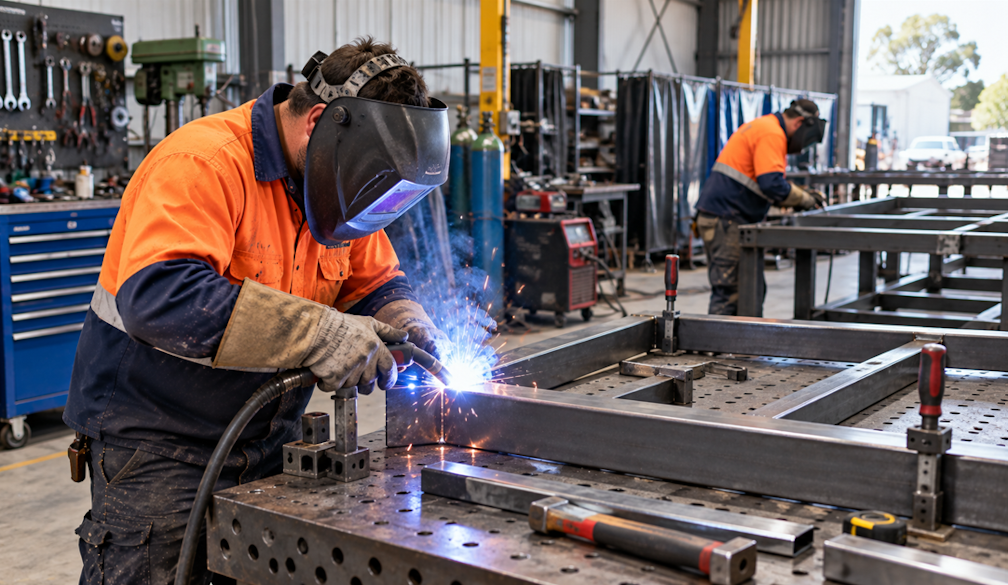
Australia produces almost 40% of the world’s iron ore. Turning iron ore into metallic iron accounts for 7% of global emissions. Our iron ore is largely processed overseas, often using Australian coal, which can be exported cheaply.
Read more: How to beat 'rollout rage': the environment-versus-climate battle dividing regional Australia
In the net-zero world, iron ore can be reduced to iron metal using green hydrogen rather than coal. Considerable renewable energy will be needed, yet renewable energy and hydrogen are very expensive to export.
Therefore, rather than export ore, renewable energy and hydrogen, it makes economic sense to process our iron in Australia, before shipping it overseas. Doing so would reduce global emissions by around 3%.
Likewise, turning Australia’s bauxite into green aluminium using low-cost renewable energy could reduce world emissions by around 1%. Making polysilicon is also energy-intensive, so again Australia is a natural home for its production. And Australian low-cost green hydrogen plus sustainable carbon from biomass are needed for making green urea and transport fuels.
From gas and coal power to clean power
Australia is the world’s largest exporter of gas and coal taken together. Some analysts focus on the costs of losing this large comparative advantage as the world responds to climate change. They overlook two key points.
First, Australia has the world’s best combination of wind and solar energy resources, and enormous sources of biomass for a zero-emissions chemical industry.
Second, we have abundant and much-needed minerals that require huge amounts of energy to process. The high cost of exporting renewable energy and hydrogen makes it economically logical for these industries to be located near the energy source.
In other words, more of Australia’s minerals and other energy-intensive products should now be processed in Australia.
If Australia seizes this opportunity it can repeat the experience of the China resources boom of around ten years ago, but this time the opportunity can be sustained, not boom and bust, with benefits spread over more regions and people.
Some of the actions governments must take to achieve the 6–9% reduction in world emissions will also help to decarbonise our economy. We must develop the skills we need, support well-staffed government bodies to provide efficient approvals for new mines and processes, build infrastructure that will often be far from the east coast electricity grid, and maintain open trade for imports and exports.
What government must do
But we also need policy changes to give private investors assistance to bridge the current cost gap between green and black products (meaning ones made by clean or by fossil fuel energy) in these new industries, and to help early movers.
If we help companies to produce these products at scale, costs will fall as processes are streamlined and technology improves. Capital grants for early movers are an option, but more work is needed to determine the best forms of support.
Let’s make a distinction between energy-intensive green products and mining. While Australia should mine the energy transition minerals the world needs – such as lithium, cobalt and rare earths – mining does not need the financial incentives just cited. Critical minerals are used in black as well as green products and Australia already has significant expertise in mining.
Read more: The road is long and time is short, but Australia's pace towards net zero is quickening
Some will argue Australia can wait until other countries have proven the technology and scaled up production so that the green-black price gap disappears; these new green industries will end up in Australia anyway because of our strong comparative advantage. This complacent argument has many flaws.
Australia is making decisions on its climate and economic direction now. If we do not focus on industries in which we have sustainable advantages we will end up damaging our prosperity. For example, we might pursue labour intensive industries that will be low margin and pay low wages, when other countries are better locations for them.
Second, while technology breakthroughs will be shared internationally, innovation is often about streamlining processes to suit local conditions. If we learn these lessons in Australia, we can achieve lowest-cost world production. If not, these industries could permanently locate elsewhere.
The need for speed
Most importantly, Australia needs to move now to put in place the incentives set out above. No other nation that has the capacity to make these energy intensive green products at scale seems focused on the task. If Australia does not do it, the reduction in world emissions could be seriously delayed.
Of all countries, Australia is best placed to show the world what is possible. Companies and countries using conventionally made steel today can say they want to use green iron but none is available. Let’s deny them that excuse.
Once the large investment, productivity and prosperity benefits of this agenda are properly explained, all Australians will applaud it.
What’s more, the level of renewable energy required by the transition will see our power prices fall to some of the lowest in the world.
Authors: Rod Sims, Professor in the practice of public policy and antitrust, Crawford School of Public Policy, Australian National University