

Friday essay: ‘It’s not over in the homes’ – impotence, domestic violence and former POWs
- Written by: Christina Twomey, Professor of History, Monash University
“It’s fine to say ‘be a man shake hands with the Japs the war is over’,” Betty, a timber worker’s wife, pleaded in 1958. “It’s not over in the homes; and especially when men are to[o] proud to ask for help.”
Betty’s husband, a former prisoner of war (POW) in the second world war, was one of 7,000 applicants to a trust fund created by the Australian government in the 1950s to provide grants to returned POWs. Almost one in three returned POWs, from both the European and Pacific theatres of war, applied to the POW Trust Fund for help during its quarter-century operation.
One of the questions on the application form caused enormous confusion:
Are you experiencing material prejudice (from other than health causes) as a direct result of your captivity?
Many wrote a simple question mark in response to the query. Others were more frank: “Don’t understand the question.”
There were also curious responses. “Yes. My married life was ruined.” “Yes. Divorced my wife for adultery whilst in captivity.” “Yes. My wife refuses to life with me as a wife though I still support her. Told me her love for me had died whilst I was a POW.” One man replied that he was “unable to have intercourse with a woman”.
These applicants, it seems, thought they were being asked about their marital situation. The trustees could not have anticipated that their form would open a vein, and that out of it would pour returned POWs’ stories of dysfunctional marriages, family breakdown and impotence. Some men believed that their experience of captivity had been, quite literally, emasculating.
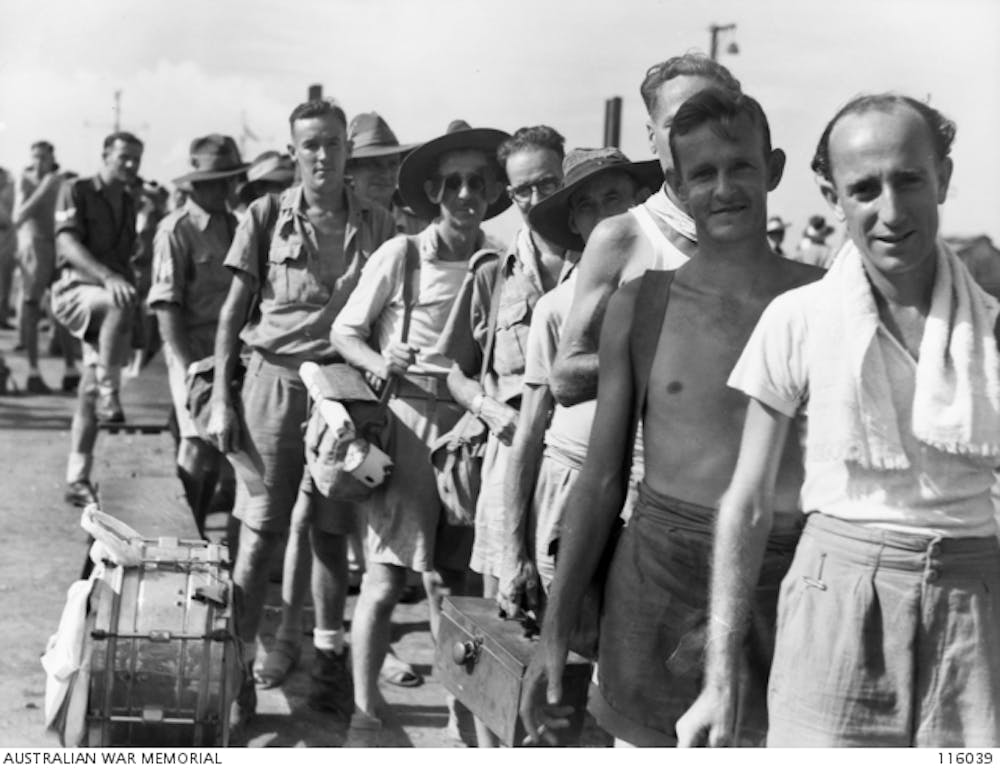 POWs released from Changi prison camp in September 1945 line up to board the Australian hospital ship Manunda in Singapore.
Australian War Memorial
POWs released from Changi prison camp in September 1945 line up to board the Australian hospital ship Manunda in Singapore.
Australian War Memorial
Over 20,000 former POWs returned to Australia at the end of the war. Evidence from the 1950s and 1960s, as former POWs and their wives renegotiated relationships, is relatively rare, especially among people not usually given to recording their feelings for posterity in the form of letters, diaries or journals. The happy life, of returned POWS as much as any other group, is the least likely to leave an archival trace. These trust fund papers, to which I was granted special access, may not tell the full story about successful relationships that were essential to the hard work of rehabilitation, but they do reveal the costs to those who failed.
Given the sensitive nature of the material contained within them, which includes hand-filled application forms, letters and the reports of doctors and psychiatrists, I have used pseudonyms to refer to particular cases.
The papers show that while women prioritised captivity as an explanation for dysfunction, medical professionals were more likely to see work-shy, evasive or sexually neurotic men.
‘Sleepless and sexless’
There were concerns during captivity that malnutrition might affect fertility and a deflection of fears about virility with the often-cited joke: “The second thing I’ll do when I get home is take my pack off.” And after the war some former POWs linked their sexual troubles to the legacy of captivity. “Through my experiences as a POW,” Robert confessed in the 1950s, “I had lost the urge or the desire to have sexual relations with my wife.”
Returned POWs who suffered from impotence assumed that their wives were entitled to sexual satisfaction and were frustrated by their incapacity to provide it. By the 1950s, experts, counsellors, therapists and, increasingly, women themselves insisted that a strong sexual connection and mutual enjoyment of sex were essential for a successful marriage. The unhappiness of wives was a common refrain among men who complained about their failure to perform.
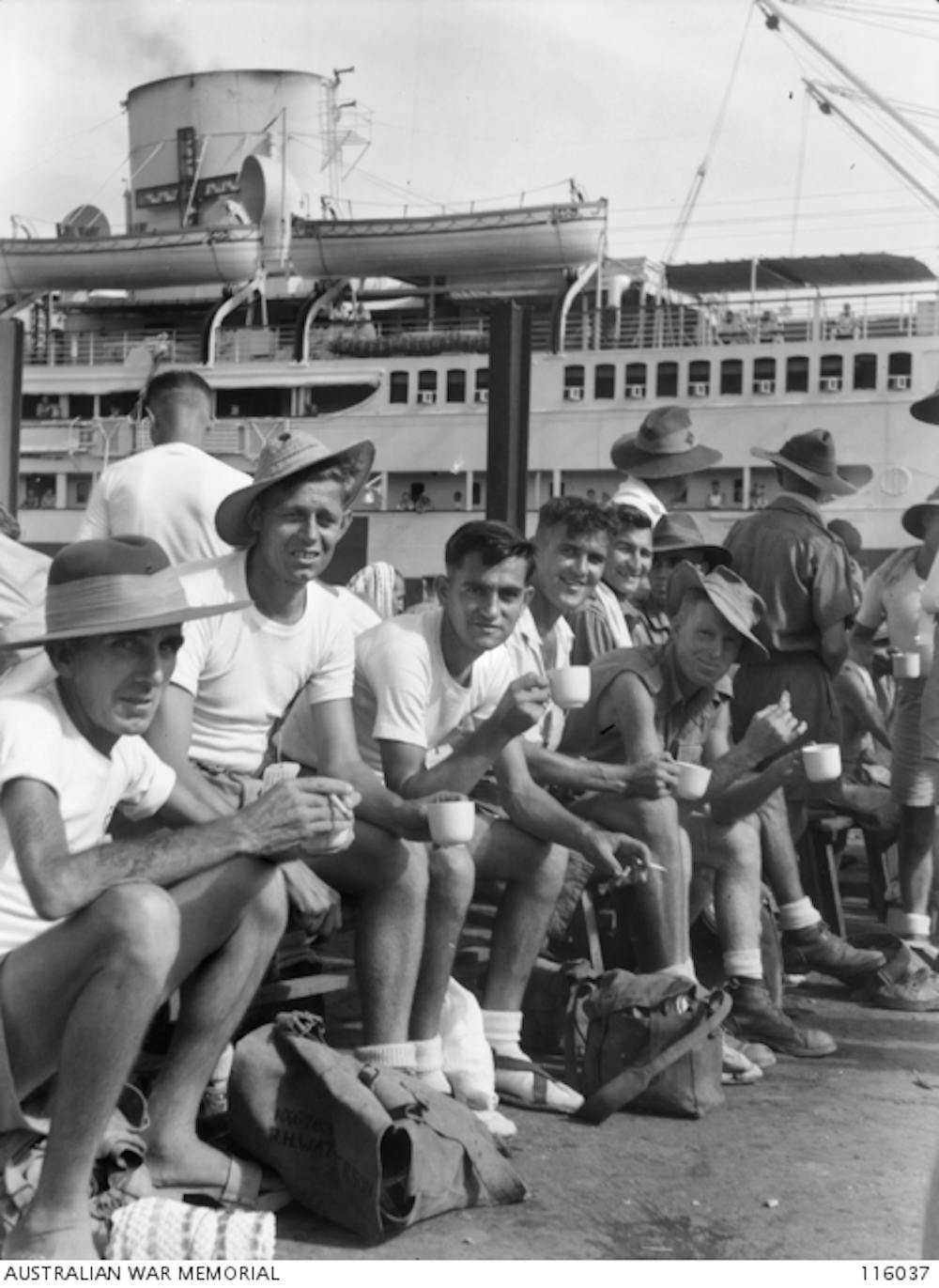 POWs have a cup of tea while waiting to board the Manunda, September 13, 1945.
Australian War Memorial
POWs have a cup of tea while waiting to board the Manunda, September 13, 1945.
Australian War Memorial
Robert blamed his wife’s suicide attempt in 1950 on his “sleepless & sexless state”. In 1952, Frank described his capacity to perform sexually as infrequent and unsatisfactory: “I have disappointed my wife”. At the time, Frank was 33 and his wife was 27. By 1960, they had separated.
Wives themselves were frequently baffled and distressed by this turn of events. One wife, whose husband was hospitalised with extreme anxiety state in the early 1970s, told the trustees that after one episode there was “a complete loss of desire for sex – absolute opposite to previous needs”. To her astonishment, the treating doctor asked if she was willing “to live the rest of her life with a boy”.
‘I’ll never return to you’
The absence of a wife or a sweetheart on the docks, at the aerodrome or at the showgrounds, where many families gathered to greet their returning POWs, came as a rude shock. Years of fantasising about reunion, the experience of being loved, eating home-cooked meals, and rolling over in bed to see a familiar face came to naught.
Returning POWs were not immune to a broader trend in Australia in the late 1940s when there was a sharp spike in the divorce rate. Some attempted to compel their wives to return via a legal remedy known as the “restitution of conjugal rights” to spouses abandoned or deserted without cause.
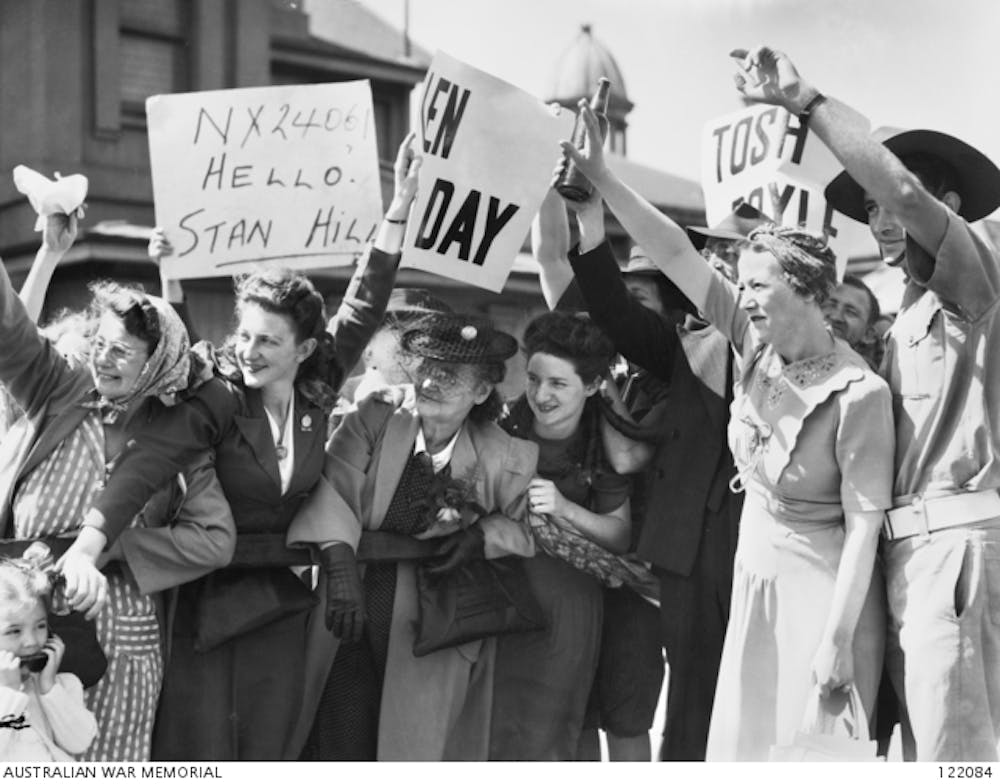 Friends and family wave banners of welcome in the hope of catching the attention of returning members of the 8th Division, following their release from captivity as prisoners of war.
Australian War Memorial
Friends and family wave banners of welcome in the hope of catching the attention of returning members of the 8th Division, following their release from captivity as prisoners of war.
Australian War Memorial
The letters that passed between couples as part of this legal process revealed heartbreak and disappointment, even as applicants tried to fortify themselves against such emotions by recourse to the law. Roy’s delight at his return from Changi turned to despair when he discovered his wife of 21 years, Ellen, was no longer living in their family home.
Please Darling I need you more than ever after those years of hell over there was bad enough, but to loose you too its too much . . I miss your lovely meals, our company and your love. I often think of those happy times when we danced to our favourite tune … and how thrilled we were with our first baby how careful we both nursed her.
Ellen was brief and resolute:
All your writing will not alter me as its definitely No I’ll never return to you.
Ellen never revealed her reason for not wanting to reunite with Roy. In other cases, a POW’s long absence allowed women to move on from marriages that had been deeply troubled before the war. Some women assumed that their husbands were never coming home and, in the loneliness of waiting, formed attachments with other men that they were unable or unprepared to break when their Lazarus returned.
‘Hating the ones I love’
Resuming a marriage after a long absence and in the wake of a difficult captivity sometimes proved more challenging than either party had expected. Complaints about psychiatric disturbance were common, the recourse to violence less so, but the incidence of family violence in the homes of former POWs is impossible to gauge on the evidence of fund applications alone.
Historians have long noted the difficulties in establishing rates of domestic violence prior to the 1990s. Even then, problems of underreporting, underpolicing and muted tolerance have militated against a full appreciation of the extent and incidence of such harm inside the home. Still, it seems unlikely that rates would have been lower in the immediate postwar period, in the time before no-fault divorce, when the use of violence for disciplinary purposes remained culturally acceptable and a man’s prerogrative as head of the household was firmly entrenched.
Former prisoners could not explain why they had trouble settling down or suddenly turned on their wives. Men reported wanting a home but frequently feeling unable to achieve any kind of peace in a space otherwise welcoming and comfortable. In the early 1950s a tailor from Adelaide described his own behaviour as a form of “nerve wracking punishment” because he could not understand why he had said “such rotten and disgusting things to the ones I loved”.
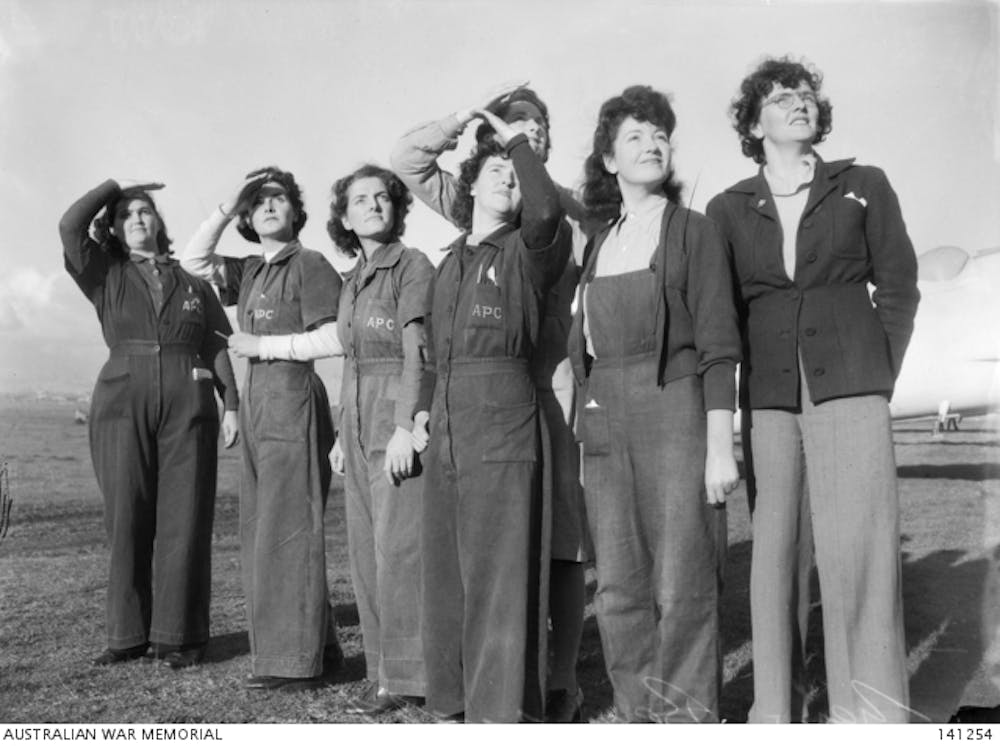 Women factory employees watching a test flight of the first Australian-built Bristol Beaufighter aircraft in 1944. The war brought greater independence to many women.
Herald newspaper/Australian War Memorial
Women factory employees watching a test flight of the first Australian-built Bristol Beaufighter aircraft in 1944. The war brought greater independence to many women.
Herald newspaper/Australian War Memorial
He was not alone in being perplexed by such self-destructive behaviour. Clarence was married with one child, struggling at work and losing the capacity to concentrate by the mid-1950s. In late 1955 all at once he “hated the ones I love and my place of abode”. He was “critical even sadistic” to his wife, “couldn’t be bothered” having sex with her and ended up admitted to a psychiatric hospital in a state of nervous collapse.
Clarence had developed a deeply ambivalent relationship to his wife and home, at once idealising and demonising them. While treating psychiatrists quizzed Clarence about the relationship with his mother and his sexual neurosis, they did not traverse the possibility that captivity itself had derailed him.
Elements of Clarence’s case echoed the imprisonment experience: the psychological tug of war in which he attempted to control his wife and was “sadistic” to her, quite possibly transferring onto her his own experience of being dominated; the idealisation of home that had been a common fantasy in prison camps, but one which struggled to meet the reality of daily existence. The divorce papers lodged by his wife in 1956 make clear that his abuse of her was more than verbal: the court found that he had “repeatedly assaulted and cruelly beaten” her for the best part of a year.
Several studies have speculated that in the immediate aftermath of both world wars, the increased independence women had enjoyed in wartime and their subsequent assertiveness were in some cases reined in by a violent reassertion of male authority. The partners and children of former POWs were perhaps even more vulnerable to the need or desire to reassert masculine power.
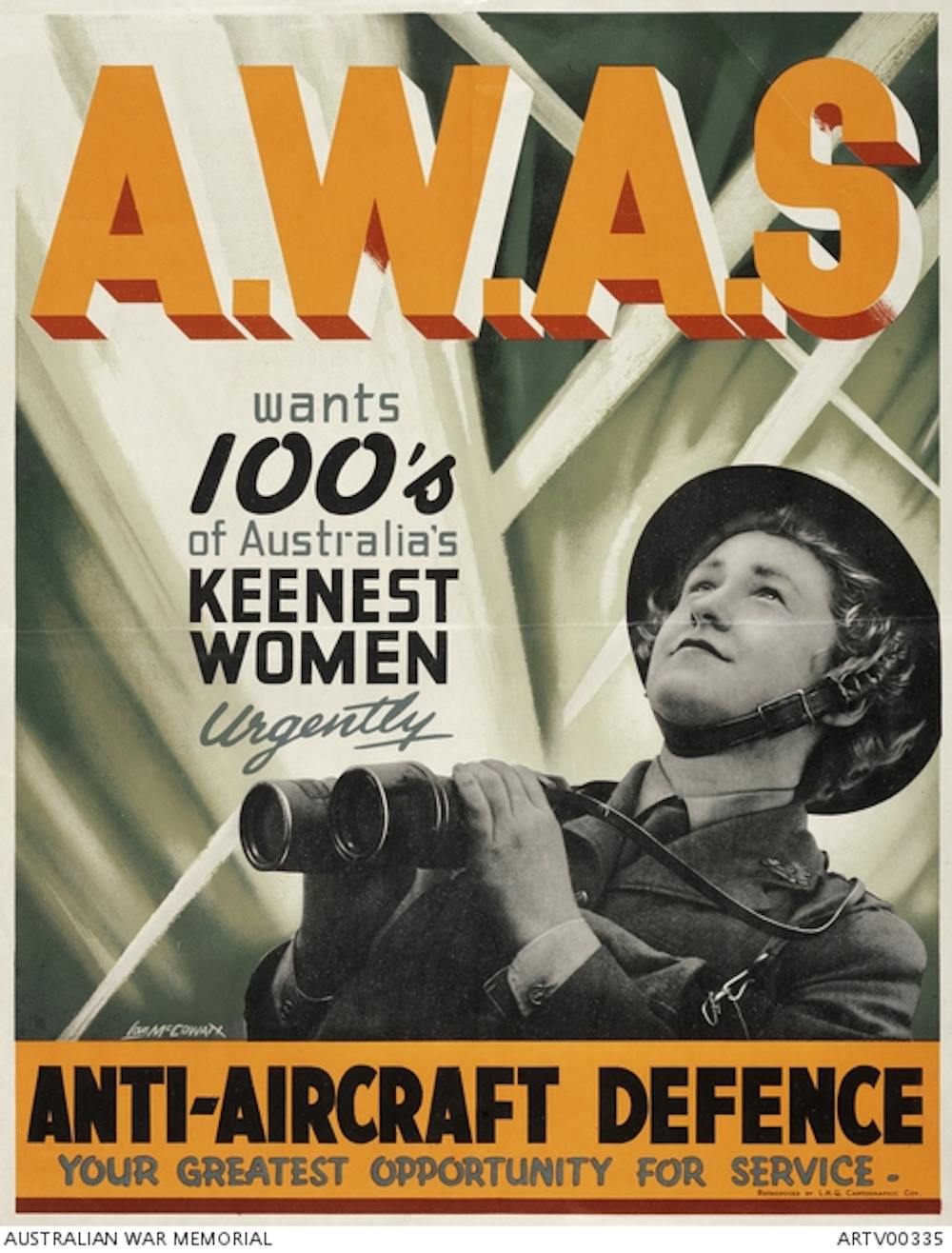 An Australian Women’s Army Service second world war anti-aircraft defence recruitment poster.
Australian War Memorial
An Australian Women’s Army Service second world war anti-aircraft defence recruitment poster.
Australian War Memorial
Given returned POWs’ potentially compromised masculinity, their difficulties in re-establishing themselves in the labour market, their related incapacity to fulfil the socially sanctioned roles as breadwinners and providers for their families and their psychiatric disorders that could be linked the experience of a long captivity, they emerge as a group with a psychological profile that might have been prone to violence.
Exactly where the impact of captivity sat in this mix, whether war itself encouraged male aggression, whether victims of brutality themselves became perpetrators, or whether some of these men already carried a proclivity for violence before enlistment: these are difficult threads to disentangle.
Divorce records cross-checked with names derived from the trust fund papers make clear that there were men who had a history of violence towards women before the war and who continued the pattern of offending thereafter. One returned POW simply stated:
Because of my captivity I find there are times when I am not responsible for my actions and either attack my wife or child.
The child was two years old. This man certainly believed that his experience of imprisonment exonerated him from blame for perpetrating violence.
Other men appear to have felt perfectly justified in terrorising their wives, as if that were their prerogative not because they were former prisoners but because they were men. Often such violence went hand in glove with the abuse of alcohol, the drunkenness itself releasing abuse and humiliation.
Sometimes the law itself sanctioned violent behaviour. One former POW, married to a woman who had served as a nurse during the war, broke her nose on Anzac Day 1950. That event had been preceded by years of threats to kill her, calling her a “filthy prostitute”, belting her with a razor strap, tearing her clothes to shreds and playing the radio loudly all night so that she could not sleep.
The wife repeatedly stated in conversations with her husband, “I just want to be free”, and ultimately left to live with her sister. Ordering this woman back to the family home after her husband applied to have his conjugal rights restored, the judge cited the applicant’s years as a prisoner as a mitigating factor – “he may have suffered a great deal from that unfortunate position”.
Fully sharing the burden
Wives could be the biggest allies of former prisoners – in their home life, in their attempt to rehabilitate and find employment, and in their battles with bureaucratic authorities. Many former POWs evinced profound gratitude to the women who cared for them.
“Fortunately I have a good wife and she fully shares the burden,” a Cabramatta man revealed in 1952. In contrast, Herbert’s first marriage had broken down when he returned from captivity and experienced what he called “a loss of virility”. In 1952 he met another woman.
She loves me for what I am, we have only just two & without her great love for me I would surely die – Even though I am completely useless with regards to personal joys of life, she loves me.
The timberworker’s wife, Betty, corresponded over many years with the trustees on behalf of her husband, Robert. Diagnosed with a nervous condition, and in the mid-1950s still suffering the after-effects of beri-beri and malnutrition, Robert was forced to wear surgical boots. The couple had twin sons and struggled to make ends meet in series of homes in country Victoria and outer-suburban Melbourne.
Betty described Robert as a “difficult man to live with, still nasty and cutting when he is worried but he does work hard”.
Betty was her husband’s champion and did not shy away from the difficulties his condition posed to her domestic life. “I don’t know how he finds the courage to keep going from day to day & suffer the way he does,” she wrote - more than 20 years after the war had ended - “and believe me from a silent man only a wife knows”.
Authors: Christina Twomey, Professor of History, Monash University


















