

how co-operative housing could take pressure off Australia’s housing crisis
- Written by: Louise Crabtree-Hayes, Professorial Research Fellow, Institute for Culture and Society, Western Sydney University
This article is part of The Conversation’s series examining the housing crisis. Read the other articles in the series here.
At a time when everything from abolishing negative gearing to capping rents are being suggested as ways to reduce Australia’s housing crisis, little attention has been given to housing co-operatives.
A housing co-op consists of a group of people who share in the management and running of their accommodation. Applicants are have to meet certain criteria, including means testing. Once accepted, they are expected to contribute according to their capacity and ability.
While only a small provider of accommodation in Australia (0.03% of all homes compared to Sweden’s 22%), new research reveals how developing the sector could relieve some of the pressure.
Working with community housing providers and co-operatives across four states and surveying about 300 co-op residents, our research is the first analysis of the operation and impact of Australia’s affordable rental housing co-operatives.
What we found can inform housing policy and choices.
How membership differs to renting or owning
Like all co-ops, housing co-operatives are defined by a “one member, one vote” principle. This means, as both tenants and members, residents have a say in how the organisation runs and how homes are maintained.
This is fundamentally different to renting and owning, providing residents with stability and a greater say in their housing.
Tenant-members can make improvements, decide on policy and make the sorts of connections to their home and community usually thought to only be available to homeowners. As one research participant said:
Even though we don’t own the space, there’s a real sense of belonging to the site, to the property.
In Australia, 184 co-operatives provide 3,732 homes. Another 25 Aboriginal and Torres Strait Islander co-operatives provide 1,287 homes as their sole purpose or within broader community service delivery.
Although only a small housing contributor in Australia, these nearly 5,000 co-operative homes are a solid base from which the sector can grow.
The cost and management of co-ops
To assess the value of housing co-operatives, we looked at sector costs, tenant-members’ inputs and outcomes.
We found the sector’s costs were similar to those of other types of community housing and that greater tenant-member involvement in managing the co-op lowers overall costs.
Read more: Huge housing costs make us slaves to our jobs and unsustainable growth. But there's another way
Further, tenant-members’ participation in their co-op also develops their skills, leading to other education and employment opportunities.
Tenant-members expressed high levels of satisfaction with their living arrangements, a strong sense of home, solid social bonds, and an improved sense of health and wellbeing. These positives were shared with their children.
Importantly, our study found participants had a strong sense of agency and voice, which is often missing in other housing tenures, especially renting.

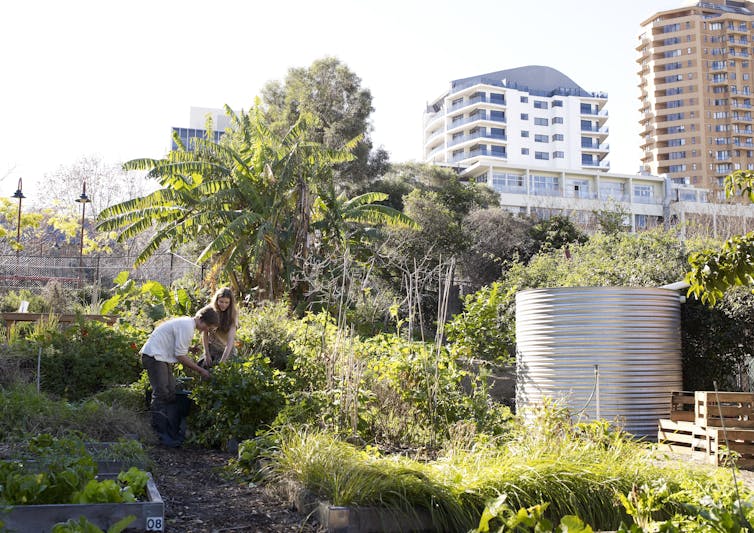
We also found the more a tenant-member enjoys getting involved in anything from planning a garden to doing building maintenance, the more they will do for the co-op. This cycle is self-reinforcing.
The value of these effects can be extraordinary, with respondents referring to living and participating in their co-operative as “life-changing”.
Co-operatives clearly provide stable long-term housing, as most survey respondents have lived in their co-operative and/or the co-operative sector for over ten years (46% and 55% respectively) and most (74%) want to live in their co-operative for the rest of their lives.
What helps housing co-operatives succeed?
We found three main contributors to co-op success:
the more a tenant-member participates in running their co-operative, the more they benefit. However, participation needs to be equitable, allowing tenant-members’ contributions to vary throughout their lives and for different tenant-members to participate differently
the more tenant-members learn about their roles and responsibilities, the better the co-op functions and the greater the benefits
there is no one right way to be a co-operative. There is value in co-ops being diverse, reflecting diverse tenant-members, locations and incomes.
Co-operatives can help people settle down, grow as individuals, build careers, keep their kids in the same school and contribute to their neighbourhoods.
Read more: Want to cut your new home costs by 10% or more? That's what building groups can do
They are an example of how Australia’s housing system could provide more affordable, stable and dignified housing choices. A research participant expressed this best:
I had to move so many times as a single mother, every time knowing I’d have to urgently find new, safe, continuous housing for three people and pay for every aspect of the move, bond and rent. The pressure, the fear, was insane.
Living here my kids grew up – the neighbours are great, the public transport is there and it’s been a pretty safe and friendly community. Lifelong friendship and family bonds continue. I love gardening here and can stay active as I age […] I love my neighbours. I’m home.
Lessons for housing policy
While Australia has both ownership and rental co-operatives, most Australian co-operatives are affordable rentals, comprising very low-moderate income households as part of the community housing sector.
Our earlier report showed in other countries, housing co-operatives form a large share of mainstream housing supply. For example, in Norway housing co-operatives comprise 15% of all homes.
Our new findings suggest Australia’s housing policies can support the growth of housing co-operatives for renters and owners, so more people can enjoy the benefits of affordable, stable homes.
Read more: The private sector housing experiment has failed: Ottawa must now step up on social housing
Authors: Louise Crabtree-Hayes, Professorial Research Fellow, Institute for Culture and Society, Western Sydney University


















