

how can Australia get more from its relationship with Vietnam?
- Written by Trang Nguyen, Southeast Asia Lead, Climateworks Centre
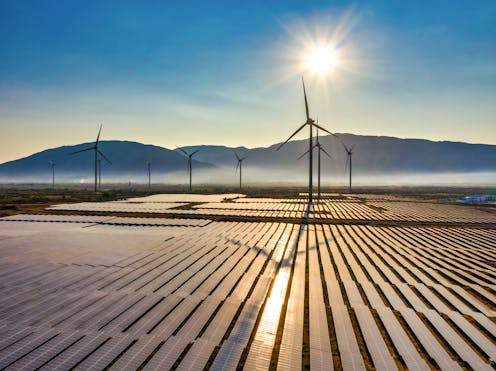
Next week, more than 100 green energy, technology, education and finance companies from Australia and Vietnam will gather in Ho Chi Minh City. The meeting is billed as the first “green economy summit” between the two nations.
The conference builds on Australian Prime Minister Anthony Albanese’s pledge at last month’s Australian ASEAN Special Summit to invest A$2 billion in Southeast Asia. There’s a focus on boosting clean technology.
So what’s on the agenda at this week’s meeting? And what are the prospects for success?
We are in Vietnam for the summit, drawing on our experience in economics, banking and finance to lead sessions on clean technology supply chains and green finance. This is the culmination of nine months of work with Australia’s National Centre for Asia Capability to increase regional prosperity while reducing emissions.
Read more: Albanese to announce $2 billion financing facility to boost economic relations with Southeast Asia
What’s in it for the two nations?
As Albanese has said, “Australia and Vietnam share an ambitious agenda across climate change and sustainability”. And there is “enormous potential to be realised through closer ties” between our two countries.
Both have net zero goals for 2050, both want to develop clean technology industries and minimise supply chain disruption. There are shared challenges around decarbonisation, as large agriculture and manufacturing sectors try to shift away from fossil fuels. And both know our broader Indo-Pacific region is extremely vulnerable to climate change.
Currently, global supply chains for clean energy technology and associated critical minerals are highly concentrated in China, especially for solar panels, wind and batteries. For electrolysers and heat pumps, the United States and the European Union play a larger role. But China still dominates the manufacturing and trade of these technologies.
This concentration of manufacturing in a limited number of countries highlights the need to diversify. As a global trade hub with progressive trade policies, Vietnam has an important role to play here. Vietnam is among the few countries outside China with existing significant solar PV manufacturing capabilities. This includes wafer production, cell manufacturing and module assembly.
Vietnam is well placed to support Australian companies in the green economy. It has policies for attracting green investment, along with an established regional supply chain and market for consumption. Then there’s the increasingly educated and skilled labour force. All will be useful in the commercialisation and scale-up of Australia’s latest solar research, as Australia begins to invest in manufacturing facilities in Vietnam.
Vietnam is also a strong export market for Australia, with the highest rate of solar uptake in Southeast Asia. Australia wants to export more solar panels to Vietnam and therefore compete with China for this export revenue.
Tackling emissions across borders
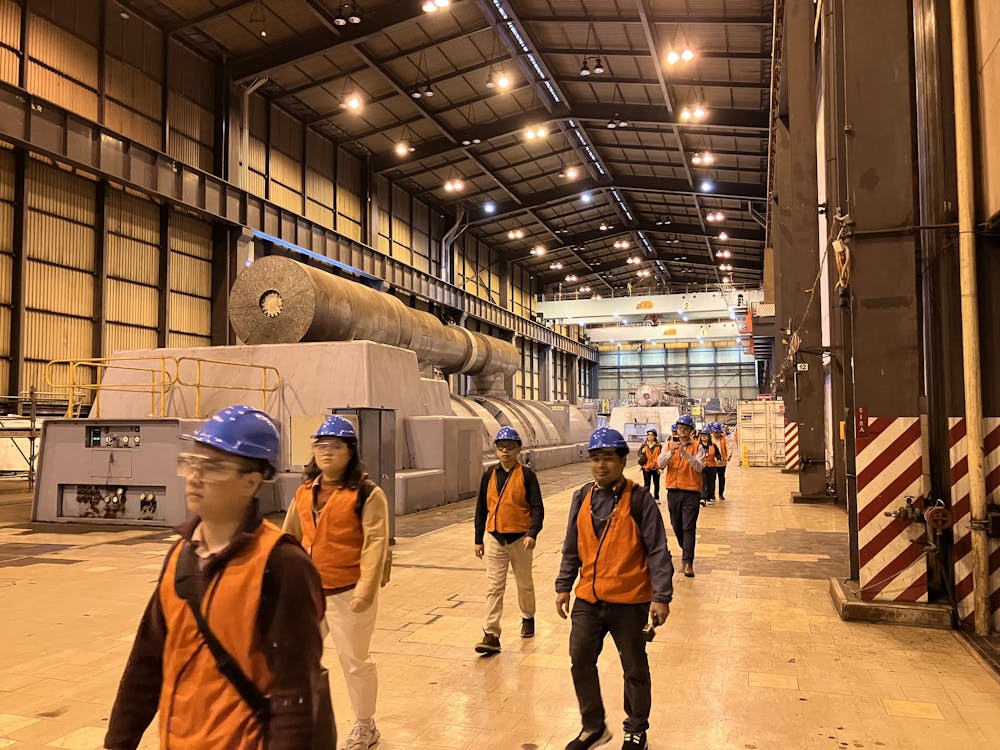
Australian companies will soon need to account not only for their own direct greenhouse emissions and indirect emissions from electricity, but also indirect emissions from upstream and downstream activities (“scope 3 emissions”). These may come from materials sourced overseas or investments outside Australia.
This is part of Treasury’s proposed bill introduced to parliament in March. It will encourage large companies to invest in green technology and renewables, rather than polluting projects or products manufactured using fossil fuels.
Australia’s $2 billion investment includes plans to support companies to invest overseas, through regional “landing pads”.
The landing pads act as regional hubs to drive Australian technology exports and investment into the region. This is intended to help businesses scale up their technology and break into new markets. Ideally these companies will be able to use these opportunities to reduce their scope 3 emissions.
Lowering the cost of capital by reducing the perception of risks
So far, Australian companies have had limited involvement in clean energy projects in Vietnam. The most notable exception was Macquarie’s green investment group Corio Generation’s partnership with FECON, a Vietnamese company, to develop an offshore wind farm in the Bà Rịa-Vũng Tàu province.
The existing pool of investors in Vietnam’s renewable market is concentrated among Southeast Asian and East Asian companies, particularly from Thailand, the Philippines, Singapore and Japan.
It is unlikely this pool of investors will be sufficient to facilitate the significant volume of generation, transmission and storage infrastructure required to achieve Vietnam’s climate targets. This will provide opportunities for Australian investors.
Unfortunately many Australian investors are not yet familiar with overseas markets. This leads to higher costs of capital for renewables projects in many emerging markets.
The increase in cost due to perceived risks can stem from things such as:
- a mismatch between clean energy project return profiles and investors return expectation
- underdeveloped climate information architecture and market transparency measures
- a lack of information or unclear policy signals related to renewable energy targets.
Increasing business-to-business connection and helping Australian investors understand this opportunity will help reduce perceived risks. This will in turn lower the cost of capital and help ignite green economy collaboration and investment into the future.
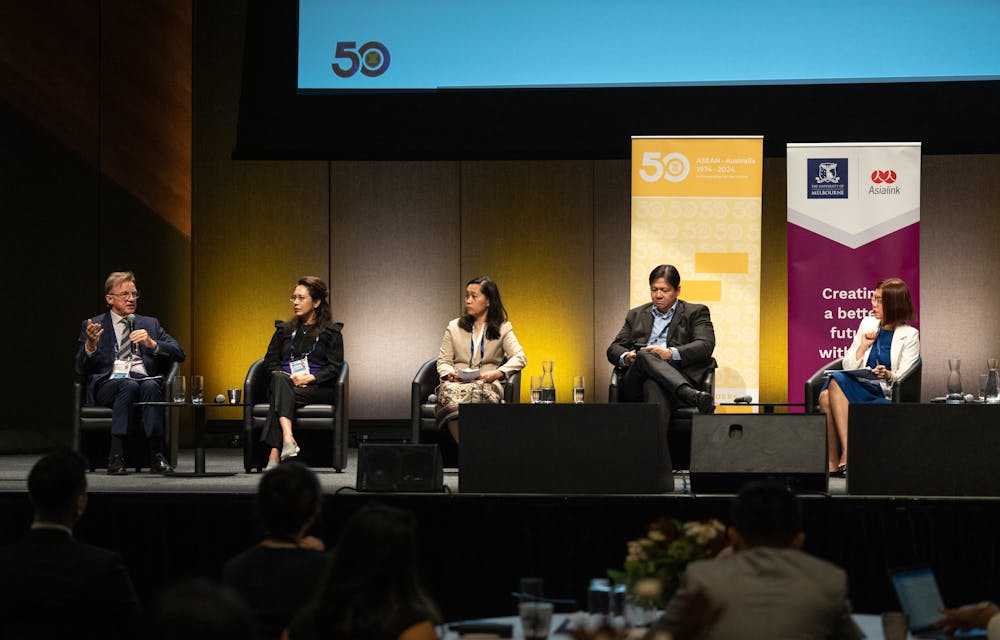 One of the authors, Trang Nguyen (far right), was part of a panel discussion on accelerating the clean energy transition at the recent ASEAN Special Summit in Melbourne.
Penny Stephens/ASEAN
One of the authors, Trang Nguyen (far right), was part of a panel discussion on accelerating the clean energy transition at the recent ASEAN Special Summit in Melbourne.
Penny Stephens/ASEAN
Governments play an important role
Having the right policy settings in place can help foster trade and investment around new technology. There is an opportunity here to nurture the emerging green economy in Southeast Asia.
The Australia-Vietnam Comprehensive Strategic Partnership announced in March, along with existing multilateral trade pacts, is most welcome.
Bringing businesses in green economy sectors together for the summit will provide a stronger case for both countries to decarbonise faster. This is crucial given Australia’s economy is still dependent on fossil fuel exports. Vietnam’s industrialised economy is grappling with growing energy demands.
As the world races towards net zero emissions, it’s clear Vietnam is poised to play a significant role in the region’s decarbonisation. Now is the time for Australia to strengthen its strategic relationship with Vietnam and the broader Southeast Asia region.
Authors: Trang Nguyen, Southeast Asia Lead, Climateworks Centre

















